China’s new energy vehicle sector has reshaped the global automotive landscape, establishing a standard of manufacturing speed, technological integration, and industrial scale that is transforming how automobiles are engineered, assembled, and sold across the world. Seventy years after the nation produced its very first commercial truck at the First Automobile Works in Changchun, China has evolved from an industrial learner into the undisputed frontrunner of modern electric mobility.
The scale of this commercial transformation is visible across worldwide markets. Today, one in every three automobiles sold across the globe rolls out of a Chinese manufacturing plant. Domestically, two out of every three passenger vehicles purchased by Chinese consumers are new energy vehicles, encompassing pure battery-electric cars, plug-in hybrids, and extended-range electric platforms. China’s new energy vehicle production and sales have held the number-one global ranking for eleven consecutive years, supported by an export boom that saw international deliveries surge 120% year-over-year in the first half of the year.
As China begins the opening year of its 15th Five-Year Plan covering the 2026 to 2030 period and targets its 2035 national modernization goals, the domestic automotive sector is moving beyond basic electrification. By integrating high-compute autonomous driving chips, advanced LiDAR optics, cell-to-pack batteries, digital steer-by-wire chassis systems, and smartphone operating ecosystems, Chinese carmakers are defining the technological architecture of next-generation intelligent transportation.
A Historic Seventy-Year Leap from Factory Floor to Global Frontrunner
The historical arc of China’s automotive industry represents one of the most remarkable industrial transformations in modern history. In July 1956, the First Automobile Works produced the Jiefang CA10 truck, ending an era when China could not manufacture a single domestic motor vehicle, tractor, or aircraft. Over subsequent decades, state enterprises developed legacy models under the Dongfeng and Hongqi nameplates, but domestic producers remained far behind Western and Japanese manufacturers in internal combustion engine engineering, transmission design, and precision metallurgy.
Following the economic reforms of the late twentieth century, China adopted a policy of trading market access for foreign technology, establishing joint ventures with leading European, American, and Japanese automakers. While this approach built a nationwide network of tier-one component suppliers and trained millions of automotive factory technicians, domestic brands remained junior partners in internal combustion technology, capturing narrow profit margins while foreign brands dominated the premium market.
The strategic pivot toward electrification broke that cycle. Recognizing that competing against century-old engine patents was a losing battle, Chinese industrial planners decided to bypass traditional internal combustion powertrains entirely. By focusing national capital and research resources on electric drives, chemical battery storage, and digital software connectivity, China opened a completely new technological track where it could establish its own engineering rules.
Tracing the Journey from First Automobile Works to 11 Years of Global Leadership
China’s ascent to global leadership accelerated in December 2008 when BYD launched the F3DM, the world’s first mass-produced plug-in hybrid passenger car. While early consumer adoption remained modest, the milestone proved that domestic engineering could commercialize advanced battery powertrains for everyday drivers.
By 2014, annual production and sales quadrupled year-over-year, marking what automotive historians describe as the true breakout year for domestic electric vehicles.
During an inspection of SAIC Motor in 2014, Chinese leadership emphasized that developing alternative-energy transport represented the only viable pathway for China to transform from a large automotive consumer into an authentic global automotive superpower.
Over the subsequent eleven consecutive years, China built a vertically integrated clean-transport supply chain. The nation secured dominant global market shares across raw lithium refining, cathode synthesis, electric motor manufacturing, and power semiconductor fabrication, cementing an industrial foundation that foreign automakers cannot easily replicate.
Unpacking the 930-Fold Sales Explosion from 17,600 to 16.49 Million Units
The statistical expansion of the Chinese new energy vehicle market has shattered historical industrial records. In 2013, annual domestic sales of new energy vehicles totaled a modest 17,600 units, representing an almost invisible 0.08% market share of all new passenger vehicles sold in the country.
By 2025, annual sales climbed to 16.49 million units, capturing a massive 47.9% of total new car sales across the country. Over this thirteen-year period:
- Total annual new energy vehicle sales expanded more than 930-fold.
- Domestic market penetration climbed more than 590-fold, overtaking traditional gasoline passenger cars across major metropolitan centers.
- The domestic industry grew from a subsidized experimental niche into a commercial market generating trillions of yuan in annual economic activity.
- The penetration rate of Level 2 driver-assistance features reached 70% across all newly registered passenger cars.
This rapid consumer transition was powered by aggressive private capital investment and fierce domestic competition. Hundreds of domestic automotive startups entered the market, forcing manufacturers to shorten vehicle development cycles from the traditional four-to-five-year Western timeline down to just 18 to 24 months.
The Strategic Triad: Integrating Electrification, Connectivity, and Intelligence
A common saying in the international automotive industry suggests that the first half of the electric vehicle race is electrification, while the second half is intelligence. However, China’s development model followed a different strategy: advancing electrification, digital connectivity, and artificial intelligence in parallel from the very beginning.
Instead of treating an electric car as a standard mechanical vehicle with a battery swapped in place of an engine, Chinese automakers designed software-defined vehicles from the ground up.
Electrification provided the physical propulsion base, high-speed cellular networks built the communications bridge, and embodied artificial intelligence set the strategic direction.
This integrated approach transformed the automobile from a mechanical transport tool into an intelligent, interactive mobile living space that updates continuously through over-the-air software packages.
Pioneering the Concept and Technical Architecture of Intelligent Connected Vehicles
China was the first major automotive manufacturing nation to formally define and standardize the concept of the Intelligent Connected Vehicle. While foreign automakers treated in-car connectivity as a collection of optional accessories—such as satellite navigation units or Bluetooth audio receivers—Chinese planners integrated digital telematics directly into vehicle control networks.
The national Made in China 2025 development blueprint, released in May 2015, established the official framework for coordinating low-carbon powertrains, onboard computing hardware, and intelligent software under a unified national standard.
That same year, the China Association of Automobile Manufacturers published the official classification architecture for intelligent connected vehicles.
The technical architecture established three foundational layers:
- The Physical Application Layer comprises high-efficiency electric motors, silicon carbide power inverters, and high-energy-density battery packs.
- The Vehicle Control and Sensor Layer integrates solid-state LiDAR, high-definition vision cameras, millimeter-wave radars, and steer-by-wire chassis actuators.
- The Cloud and Connectivity Layer links vehicles to 5G telecommunications grids, high-precision satellite positioning constellations, and centralized urban traffic management algorithms.
This unified architecture allowed domestic automakers, software developers, and telecommunications providers to collaborate seamlessly, creating a synchronized digital ecosystem that foreign competitors struggled to match.
Top-Level Industrial Frameworks and Over 100 National Policy Measures
The rapid rise of the new energy vehicle sector was supported by comprehensive government policy coordination. Since 2014, the Ministry of Industry and Information Technology, the National Development and Reform Commission, and regional municipal agencies have introduced nearly 100 distinct policy measures to support clean-transport adoption.
These policies operated across both the supply and demand sides of the economy:
- Providing upfront consumer purchase subsidies and nationwide exemptions from the 10% vehicle purchase tax.
- Issuing green license plates in tier-one cities like Beijing, Shanghai, and Shenzhen, exempting electric cars from restrictive weekly driving bans and license plate lotteries.
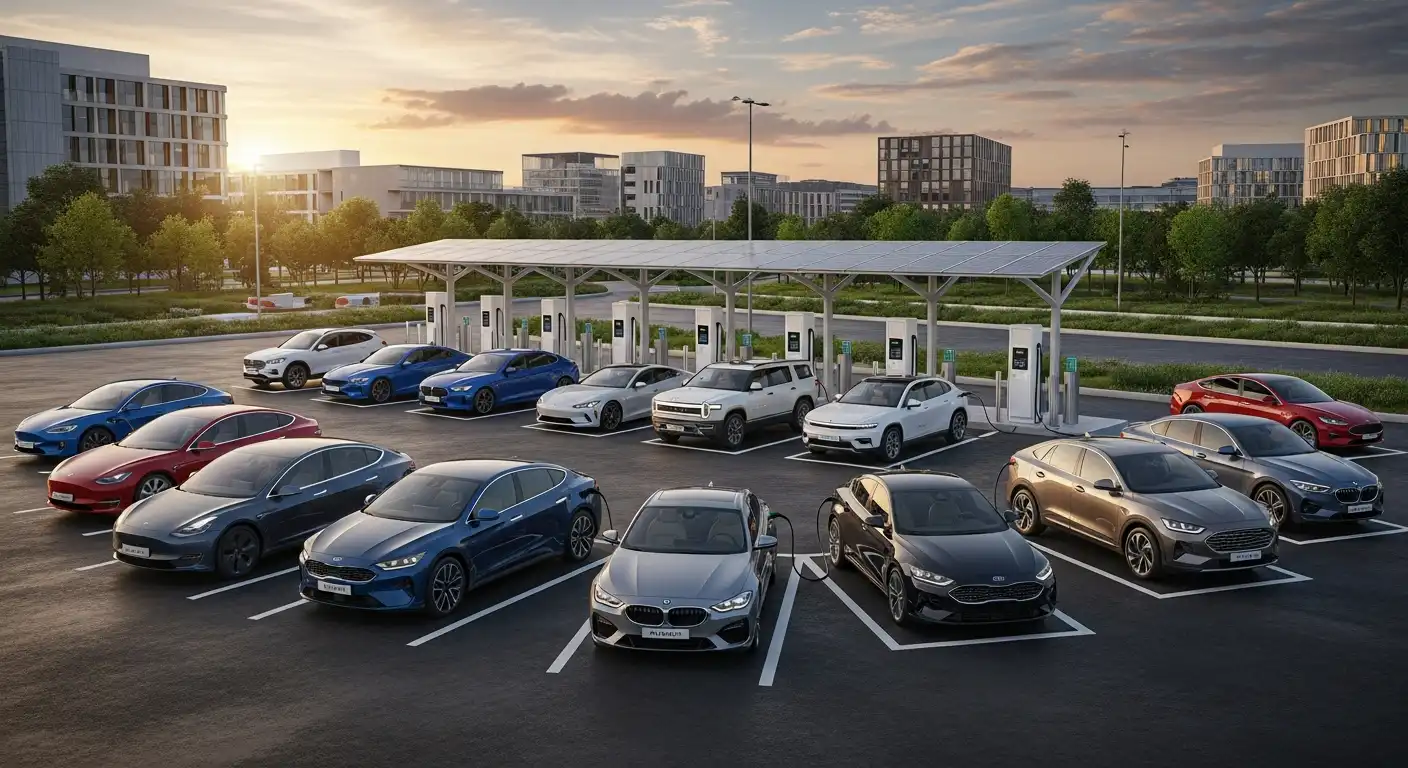
- Subsidizing the construction of the world’s largest public charging network, deploying millions of high-voltage fast-charging stalls along national highway corridors.
- Mandating dual-credit regulatory schemes that penalized automakers producing inefficient internal combustion engines while rewarding manufacturers of clean-energy vehicles.
- Establishing municipal pilot testing zones that granted regulatory approval for autonomous robotaxi fleets and commercial driverless freight trials.
This coordinated policy environment eliminated infrastructure bottlenecks, giving consumers the confidence to purchase electric vehicles without experiencing charging anxiety or regulatory uncertainty.
Deep Indigenous Breakthroughs Across the Hardware and Software Stack
China’s modern automotive strength rests on deep, proprietary technological capabilities that span every layer of the modern vehicle stack. Rather than relying on imported components, domestic enterprises have achieved self-sufficiency across battery chemistry, physical chassis design, advanced sensing hardware, and onboard computing silicon.
A wave of world-first engineering breakthroughs has provided Chinese carmakers with a multi-year technical advantage over international competitors.
These technological innovations have transformed the vehicle from a mechanical assembly into a digital computing platform that delivers superior performance, range, and passenger convenience.
Next-Gen Battery Packaging, Megawatt Charging, and Digital Steer-by-Wire Chassis
Battery engineering represents the foundation of clean-energy vehicle performance. Contemporary Amperex Technology Co. Limited, known globally as CATL, revolutionized battery architecture by introducing cell-to-pack technology, which eliminates modular internal casings to pack battery cells directly into the master enclosure, increasing volumetric energy density by more than 20%.
In parallel, BYD pioneered megawatt-level ultra-fast charging systems, allowing high-voltage electric platforms to recover hundreds of miles of driving range in less than ten minutes.
Chassis engineering has experienced a similar digital transformation:
- IM Motors, backed by SAIC Motor, commercialized the world’s first fully digital by-wire chassis, replacing mechanical steering columns and hydraulic brake lines with high-speed digital actuators.
- Geely Automobile introduced the world’s first artificial intelligence electronic and electrical architecture equipped with quantum-secure cryptographic encryption to protect connected vehicles from remote cyberattacks.
- Active air suspension systems with real-time road-scanning cameras automatically adjust damper stiffness within milliseconds, ensuring smooth passenger comfort across uneven road surfaces.
- Integrated thermal management heat pumps recover waste heat from electric motors and compute chips to maintain battery driving range in sub-zero winter temperatures.
These hardware innovations deliver precise vehicle handling, rapid acceleration, and class-leading energy efficiency across all passenger vehicle segments.
High-Compute Autonomous Driving Chips, 896-Line LiDAR, and Level 2 Dominance
Autonomous driving capabilities have become the primary battleground for consumer brand loyalty in China. With Level 2 combined driver-assistance features present in 70% of all newly registered passenger cars, domestic automakers are deploying sophisticated driverless architectures across city streets and national highways.
Domestic semiconductor and sensor manufacturers are supplying cutting-edge computing hardware:
- Li Auto placed its custom M100 assisted-driving processor into mass production, delivering up to 1,280 trillion operations per second of neural computing power to process real-time visual streams.
- Huawei’s intelligent automotive division commercialized the world’s first 896-line image-level dual-optical-path LiDAR, providing millimeter-accurate 3D point-cloud mapping through adverse weather and nighttime darkness.
- End-to-end foundation models trained on millions of real-world driving hours now handle complex urban navigation, unprotected left turns, and tight parking garage maneuvers without requiring pre-mapped high-definition maps.
- Redundant sensor suites combining solid-state LiDAR, high-resolution cameras, and ultrasonic sensors ensure complete 360-degree safety coverage around the vehicle perimeter.
By commercializing high-compute silicon and advanced optical sensors at scale, Chinese automakers have made automated highway navigation and autonomous valet parking standard features in mainstream family vehicles.
Smartphone-to-Car Ecosystems and the Rise of Xiaomi and Huawei
The convergence of consumer electronics and automotive engineering is a defining characteristic of China’s clean-transport revolution. While traditional automakers struggled to write responsive software interfaces, Chinese technology giants entered the automotive market with established operating systems and millions of loyal smartphone users.
Huawei expanded its Harmony Intelligent Mobility Alliance ecosystem, partnering with established automakers like Seres, Chery, and BAIC to manufacture premium smart vehicles. The AITO M5 Intelligent Driving Edition became one of the fastest passenger vehicles featuring advanced urban assisted-driving software to achieve large-scale commercial deployment nationwide.
In March 2024, consumer technology giant Xiaomi entered the automotive market with the launch of its SU7 electric sedan:
- Integrating Xiaomi’s proprietary HyperOS platform to provide instant, zero-latency synchronization between smartphones, smart home appliances, and in-car digital dashboards.
- Allowing drivers to transfer video calls, navigation routes, and music playlists from mobile phones to dashboard displays simply by stepping into the vehicle cabin.
- Utilizing in-house motor designs and custom die-casting manufacturing techniques that match the structural rigidity of premium sports cars.
- Generating over 100,000 firm vehicle orders within weeks of its commercial debut, proving that consumer technology brands can compete directly with legacy carmakers.
This deep software integration creates an intuitive in-cabin user experience that makes traditional automotive infotainment systems feel outdated to modern consumers.
Global Market Transformation and International Export Surges
China’s automotive expansion is reverberating far beyond domestic borders. As manufacturing capacity scales and product quality surpasses international benchmarks, Chinese automakers are executing aggressive export strategies across Southeast Asia, Europe, Latin America, and the Middle East.
In the first half of the year, Chinese new energy vehicle exports surged by 120% year-over-year, establishing China as the world’s largest automotive exporting nation.
This international export wave is challenging the market share of established American, European, and Japanese automotive conglomerates in key global growth regions.
Overseas Sales Surging 120% as Export Momentum Accelerates
The international expansion of Chinese carmakers is driven by competitive pricing, advanced technology features, and dependable supply chains. In Southeast Asian markets like Thailand, Indonesia, and Malaysia, Chinese electric vehicles capture more than 70% of the newly emerging electric passenger vehicle market.
In Latin America, commercial giants like BYD and Great Wall Motor are building localized manufacturing plants in Brazil to supply electric buses, commercial delivery vans, and hybrid passenger cars to regional buyers.
In the Middle East, high-end consumers in the United Arab Emirates and Saudi Arabia are embracing luxury electric brands like Zeekr and Yangwang for their high-performance luxury trims and extreme thermal reliability in desert climates.
To support this massive export volume, Chinese automakers have commissioned fleets of specialized ocean-going roll-on/roll-off vehicle carriers capable of transporting up to 7,000 automobiles per voyage, ensuring uninterrupted logistics access to international distribution hubs.
From Price Curiosity to Technology Licensing: The Beijing Auto Show Awakening
The global perception of Chinese automobiles has undergone a fundamental shift. At international exhibitions like the Beijing Auto Show, foreign automotive executives, engineers, and journalists no longer focus on low manufacturing costs; they focus on software architecture, cabin ergonomics, and technological innovation.
Representatives from domestic automakers noted that international visitors consistently inquire about research and development efficiency and explore opportunities to license Chinese software and battery technologies.
International industry leaders have publicly acknowledged this new reality:
- Joerg Wuttke, former president of the European Union Chamber of Commerce in China, observed that European automotive executives visiting Chinese auto exhibitions were jolted awake by displays that resembled a digital wonderland.
- European manufacturers realized that modern automobiles are no longer simply mechanical steel chassis paired with combustion engines, but sophisticated digital platforms running advanced artificial intelligence.
- Global automotive giants, including Volkswagen, Stellantis, and Toyota, have signed multi-billion-dollar joint venture and technology-sharing agreements with Chinese electric vehicle pioneers like XPeng and Leapmotor to co-develop electric platforms for international markets.
This transition from importing foreign automotive blueprints to licensing indigenous electric vehicle technology to historic Western brands confirms China’s leadership in the modern automotive era.
Strategic Implications for the 15th Five-Year Plan and 2035 Modernization Goals
As China enters the opening year of its 15th Five-Year Plan covering 2026 to 2030, the new energy vehicle sector stands as a premier showcase of national high-quality economic development. The industry supports millions of high-tech manufacturing jobs, drives domestic consumer spending, and accelerates the decarbonization of the national energy grid.
Looking toward the 2035 national modernization targets, China aims to solidify its global leadership by establishing international technical standards, building resilient localized supply chains, and expanding vehicle-to-grid energy storage networks.
However, sustaining this global growth requires navigating intensifying international trade protectionism, geopolitical tariffs, and shifting regulatory hurdles across Western markets.
Setting Global Technical Standards and Exporting Manufacturing Paradigms
China’s long-term automotive vision focuses on setting the international regulatory and technical standards for the next century of transportation. By actively participating in global standard-setting bodies, Chinese engineers are shaping the rules governing autonomous driving ethics, battery recycling protocols, and high-voltage charging interfaces.
The nation is exporting its advanced manufacturing paradigms worldwide:
- Deploying automated smart factories utilizing industrial artificial intelligence, high-precision robotics, and digital twin simulations to achieve six-sigma assembly quality.
- Expanding integrated battery recycling networks that recover over 95% of strategic materials, including lithium, cobalt, and nickel, from retired electric vehicle packs.
- Integrating vehicle-to-grid power networks that allow millions of parked electric cars to discharge stored clean electricity back into public utility grids during peak evening hours.
- Harmonizing smart-city urban infrastructure with vehicle-to-everything communications to eliminate urban traffic congestion and reduce road fatalities.
By exporting comprehensive industrial ecosystems rather than standalone physical cars, China is establishing the foundational infrastructure for global smart mobility.
Navigating Western Trade Barriers, Tariffs, and Supply Chain Localization
Despite its technological strength, China’s automotive export drive confronts significant geopolitical headwinds. The United States and the European Union have enacted steep protective tariffs and trade barriers on Chinese-manufactured electric vehicles, citing state subsidies and domestic market protection.
To overcome these trade restrictions, Chinese automakers are pivoting from direct vehicle exports toward overseas localized manufacturing:
- Constructing multi-billion-dollar assembly mega-plants in European Union member states like Hungary and Spain to assemble vehicles directly within European borders.
- Developing component supplier parks and battery assembly hubs in Southeast Asia and South America to comply with local content rules.
- Forming joint ventures with regional distribution groups to navigate localized regulatory approvals and build established consumer service networks.
- Diversifying export destinations toward non-aligned emerging markets across Africa, Central Asia, and Latin America where demand for affordable clean transport is expanding rapidly.
This global localization strategy allows Chinese automakers to bypass unilateral border tariffs, hire local engineering workforces, and build durable, multi-regional manufacturing footprints that insulate the industry from international trade disputes.
Seventy years after building its first commercial truck, China’s automotive industry has completed an extraordinary journey from a struggling domestic assembler to the premier technological leader of the global transportation sector. By uniting electrification, software intelligence, and digital connectivity into a unified national standard, Chinese automakers have redefined what the modern automobile can be. With annual new energy vehicle sales surpassing 16.49 million units, international exports surging 120%, and 70% of new vehicles featuring advanced driver assistance, China is setting the engineering pace for the global clean-energy transition. As the 15th Five-Year Plan gets underway, China’s new energy vehicle industry stands ready to power the next century of global sustainable mobility.