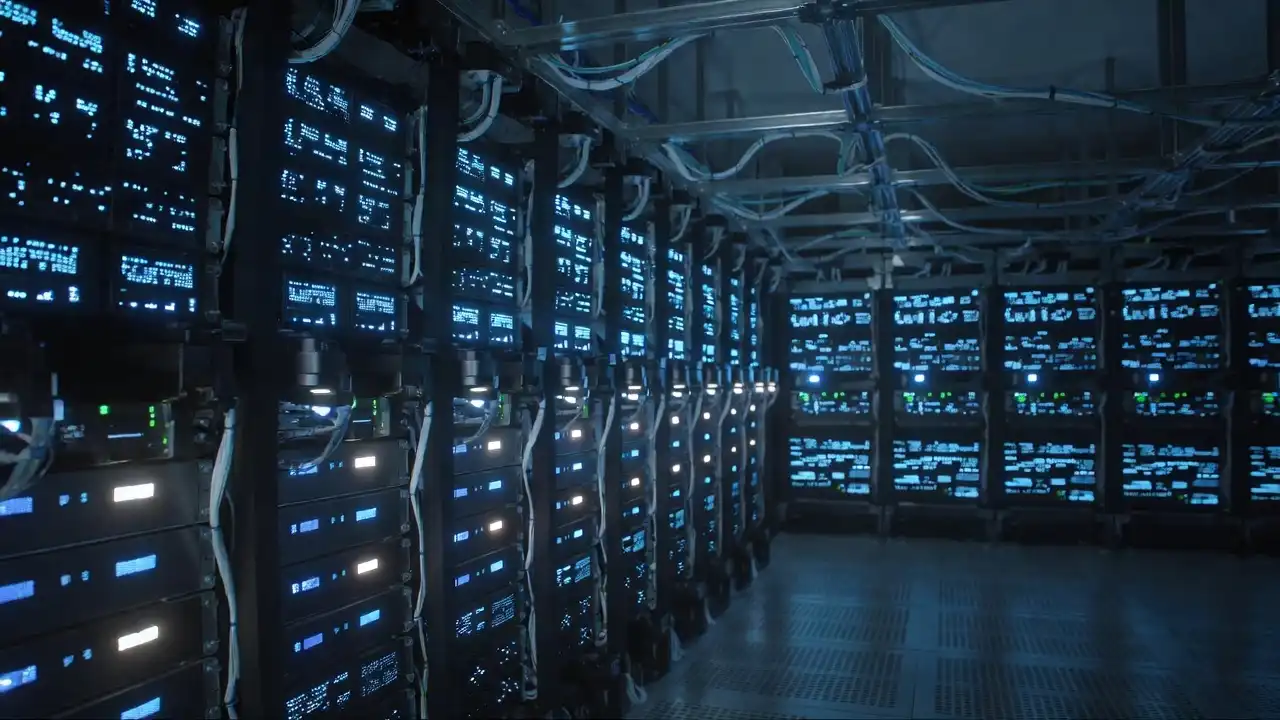
Independent Australian Senator David Pocock has challenged the federal government’s rush to embrace hyperscale computing facilities, questioning what lasting economic and social benefits everyday Australians will gain from hosting power-hungry artificial intelligence infrastructure. Ahead of high-level National Cabinet meetings between Prime Minister Anthony Albanese and state premiers, Senator Pocock warned that without strict, legally enforceable regulations, Australia risks repeating the costly policy mistakes of past resource booms.
The political confrontation arrives as international technology conglomerates pour hundreds of billions of dollars into Australian digital infrastructure. Microsoft has pledged A$25 billion toward domestic cloud and artificial intelligence infrastructure, while Amazon Web Services has committed A$20 billion, contributing to an overall national project pipeline valued at more than A$150 billion by financial analysts. Data center development has accelerated so rapidly that the sector now accounts for nearly 20% of all non-residential commercial construction nationwide.
However, Senator Pocock cautioned that welcoming foreign technology platforms without enforceable community returns could turn Australian households into the financial fall guy for multinational profits. Data centers draw enormous volumes of continuous electricity from an already strained power network, consume millions of liters of municipal water for cooling, and absorb construction labor needed for residential housing. By demanding mandatory renewable energy additions, dedicated compute access for local firms, and a specialized data center tax, Pocock is pushing parliament to establish binding guardrails before local communities bear the environmental and financial costs.
Warning Against a Digital Repeat of the Great Gas Scam
Senator Pocock anchored his criticism in Australia’s historical experience with the liquefied natural gas industry. Over the past two decades, state and federal governments have allowed multinational energy corporations to extract vast reserves of Australian natural gas for export. Yet, because policymakers failed to establish robust domestic reserve policies or comprehensive resource rent taxes, domestic consumers faced soaring domestic gas prices while multinational producers shifted billions of dollars in profits offshore.
Pocock warned that the current artificial intelligence frenzy bears striking similarities to that resource extraction model. International technology giants are arriving in Australia to secure access to abundant land, stable democratic governance, and renewable energy potential.
Once built, however, these facilities will process massive computing workloads for global clients across the Asia-Pacific region, while domestic taxpayers pay for transmission line upgrades and endure higher wholesale power bills.
The independent senator argued that Australia must stop acting as a passive host for foreign digital extraction. Instead of celebrating top-line investment figures announced in corporate press releases, government leaders must ensure that multinational technology firms pay a fair share of domestic taxes and contribute directly to regional community development.
Multinational Profit Shifting and Tax Avoidance Concerns
A central pillar of Pocock’s argument is the sophisticated tax structuring utilized by global tech conglomerates. Major software and cloud companies routinely route intellectual property royalties, cloud licensing fees, and service revenues through offshore holding entities in low-tax jurisdictions.
This financial structuring minimizes the corporate tax paid to the Australian Taxation Office:
- Global technology providers often report low taxable profits within Australia despite generating billions of dollars in local enterprise revenue.
- Digital infrastructure assets benefit from accelerated equipment depreciation allowances, reducing corporate tax liabilities for years after construction.
- Hyperscale computing facilities employ very few permanent workers once operational, generating minimal ongoing payroll tax revenue for state governments.
- The economic value generated by processing artificial intelligence tokens flows directly to foreign shareholders rather than to domestic public services.
Pocock emphasized that relying on general corporate goodwill is naive. If the Australian public provides the physical land, grid capacity, and water resources to run these facilities, the tax system must capture a direct, measurable return for the nation.
Comparing Resource Extraction to Foreign Data Center Pipelines
The physical footprint of modern data centers closely mirrors heavy resource extraction. A single hyperscale computing campus can consume between 100 megawatts and 500 megawatts of continuous power, equivalent to the electrical demand of a mid-sized industrial city or commercial smelter.
Just as mining operations extract physical minerals and ship them overseas, foreign data centers consume Australian electrical energy and freshwater to process digital workloads for international users:
- Approximately 60% to 70% of the computing capacity built in Australian facilities will serve regional enterprise clients across Southeast Asia.
- Australian consumers and businesses must compete against well-funded foreign tech giants for access to local electricity grid connections.
- The environmental burden of backup diesel generators and cooling emissions remains concentrated in Australian suburban communities.
- When power networks experience peak summer demand spikes, public utilities must manage grid stability while data centers continue drawing flat baseload power.
Pocock noted that nations like Norway successfully built sovereign wealth funds by attaching strict public conditions to resource development. He argued that Australia must adopt a similarly assertive posture toward foreign digital infrastructure.
Straining Australia’s Energy Grid and Escalating Power Bills
The rapid expansion of artificial intelligence infrastructure is creating immense operational challenges for the National Electricity Market. The national grid, which connects eastern and southeastern states, is currently undergoing an ambitious structural transition, replacing retiring coal-fired generators with solar, wind, and battery storage.
The sudden arrival of hundreds of data centers threatens to outpace the rate of new clean energy construction. Grid planners must balance aggressive corporate demand without delaying national carbon-reduction targets or driving retail electricity prices higher.
Energy analysts emphasize that without coordinated regulatory interventions, the sheer volume of power consumed by computing facilities will create severe supply deficits during evening peak hours.
Forecasting a Sevenfold Jump in Electricity Use to 34 Terawatt-Hours
Official projections from the Australian Energy Market Operator illustrate the unprecedented scale of the incoming compute load. Current modeling indicates that data center electricity consumption will treble over the next four years and expand nearly sevenfold by the 2035-2036 fiscal year.
Annual data center consumption is forecast to jump from roughly 5 terawatt-hours today to more than 34 terawatt-hours:
- Data centers will increase their share of total national grid demand from roughly 3% today to more than 13% by 2036.
- The 34 terawatt-hours of projected annual compute demand equal the total annual electricity consumption of all residential homes in New South Wales and Victoria combined.
- In Sydney, data centers are projected to consume 11% of the entire metropolitan power supply by 2030, up from 4% today.
- In Melbourne, digital infrastructure demand will more than quadruple, claiming 8% of Victoria’s total electricity output.
Supplying this enormous volume of continuous power requires generating billions of kilowatt-hours of clean electricity around the clock, placing relentless pressure on regional transmission substations.
The Risk of a 20% Surge in Wholesale Electricity Prices by 2035
The economic cost of unmanaged grid demand will fall directly on everyday consumers and small businesses. Independent research from the Climate Council warns that without massive additions of new renewable generation and long-duration storage, surging data center demand will push wholesale electricity prices more than 20% higher by 2035.
Because wholesale electricity costs make up roughly 40% of standard residential power bills, higher wholesale rates translate into hundreds of dollars in added living expenses for Australian households:
- Families already struggling with mortgage rate increases and grocery inflation will face higher monthly utility bills.
- Local manufacturers and retail businesses will see operational overheads climb, reducing domestic competitiveness.
- Heavy industrial facilities could face forced power curtailments during summer heatwaves to prevent grid blackouts.
- Public anger over rising utility bills could erode community support for the broader clean-energy transition.
Senator Pocock stressed that allowing foreign technology giants to consume cheap grid power while everyday Australians foot the bill for expensive grid upgrades is an unacceptable policy outcome.
Heavy Water Evaporation and Municipal Resource Pressures in Sydney and Melbourne
Beyond electricity, the water consumption required to cool high-density server racks represents a growing environmental hazard. Traditional data center cooling designs utilize evaporative cooling towers that spray clean municipal drinking water across heat exchangers, evaporating millions of liters of water into the atmosphere daily.
Water authority projections indicate that by 2030, operational data centers in Sydney will consume roughly 2% of the city’s total potable water supply, while facilities in Melbourne will require just under 1% of municipal water reserves.
In a nation prone to severe, multi-year droughts, consuming billions of liters of treated drinking water to cool computer chips creates direct competition with household water needs and regional agricultural irrigation.
Pocock argued that regulations must ban open evaporative cooling, forcing operators to install closed-loop liquid cooling or advanced air-cooled heat exchangers that eliminate ongoing water loss.
The A$150 Billion Infrastructure Wave and Housing Construction Squeezes
The capital expenditure flowing into Australian data centers is transforming the commercial real estate and construction sectors. Private equity infrastructure funds, real estate investment trusts, and hyperscale operators are acquiring massive tracts of industrial land to build secure server campuses.
Research from Commonwealth Bank of Australia indicates that total data center construction commitments could exceed A$150 billion by the end of the decade.
While this financial wave delivers short-term revenues to commercial construction contractors, it creates severe unintended bottlenecks for the wider economy.
Absorbing 20% of Non-Residential Commercial Construction
The construction intensity of digital infrastructure has reached unprecedented levels. Data center developments currently absorb nearly 20% of all non-residential commercial construction activity across Australia.
Building a modern hyperscale facility requires specialized engineering expertise, high-voltage electrical switchgear, precision HVAC ducting, and reinforced concrete structures:
- Tier-one commercial building contractors are dedicating entire divisions exclusively to data center delivery.
- Supply chains for heavy electrical equipment, including high-voltage power transformers and backup diesel generators, face delivery lead times exceeding three years.
- Concrete and structural steel suppliers are prioritizing large-scale technology projects over regional civic infrastructure.
- Industrial land valuations near major electrical substations in Western Sydney and suburban Melbourne have doubled over the past three years.
This concentration of capital and physical materials is distorting the commercial property market, leaving smaller commercial and community building projects facing extended completion delays.
Siphoning Skilled Trades Away from Affordable Housing Projects
The most damaging side effect of the data center construction boom is its direct impact on Australia’s national housing crisis. Australia faces a severe structural shortage of residential housing, with state and federal governments struggling to meet targets to construct 1.2 million new homes.
Building data centers consumes the exact same skilled trade workforce needed to build residential apartments and suburban houses:
- High-voltage electricians, commercial plumbers, refrigeration technicians, and heavy equipment operators are leaving residential homebuilding to work on high-paying tech campuses.
- Commercial technology developers offer higher hourly wages and overtime premiums that residential homebuilders cannot match.
- Subcontractor shortages in major capital cities are delaying residential housing completions and driving home construction costs higher.
- Scarce electrical engineering talent is diverted away from connecting rooftop solar and residential batteries to wiring server halls.
Senator Pocock warned that governments cannot ignore the connection between tech infrastructure and housing affordability. Siphoning thousands of skilled tradespeople away from home construction worsens the cost-of-living crisis for young Australians seeking affordable shelter.
Proposed Legislative Mandates and the Call for a Data Center Tax
To resolve these compounding economic pressures, Senator Pocock has outlined a comprehensive legislative framework. Rather than relying on voluntary industry promises or vague ministerial statements, Pocock is demanding binding statutory standards that hold technology companies legally accountable.
The proposed policy framework establishes clear prerequisites that commercial operators must satisfy before receiving zoning approvals or high-voltage grid connections.
These measures aim to ensure that foreign technology capital actively strengthens the Australian economy rather than draining public resources.
Rejecting Voluntary Guidelines in Favor of Enforceable Legal Rules
Senator Pocock expressed deep frustration with the Albanese government’s reliance on voluntary industry standards. Federal ministers have previously issued statements of expectations, encouraging data center operators to procure renewable energy and consult with local communities.
Pocock labeled voluntary guidelines a remarkably weak response to a voracious, multi-billion-dollar industry:
- Voluntary frameworks allow operators to bypass environmental safeguards whenever commercial deadlines tighten.
- Proposed national standards that only apply to future facilities leave hundreds of existing data centers operating without oversight.
- Vague guidelines provide zero legal recourse for suburban communities dealing with the noise and air pollution of massive backup diesel generators.
- Without binding statutory penalties, multinational companies will always prioritize corporate profitability over local community welfare.
Pocock stated that formal discussions at the National Cabinet must produce binding federal and state legislation, ensuring that every operational and planned facility meets strict environmental and economic benchmarks.
Mandating 100% Renewable Additionality and Local Compute Guarantees
The cornerstone of Pocock’s regulatory proposal is the mandatory principle of 100% renewable additionality. Under this rule, data center operators would not be permitted to simply purchase existing green energy certificates from operating wind or solar farms, which merely shuffles existing clean energy away from other consumers.
Instead, developers must directly fund and construct brand-new clean energy generation:
- Requiring data centers to build or contract new solar, wind, and battery storage capacity equivalent to at least 100% to 120% of their peak power demand.
- Feeding surplus clean energy generated by dedicated renewable projects back into the public grid to help lower wholesale electricity prices for everyday households.
- Mandating that a guaranteed percentage of high-performance computing capacity be reserved at affordable rates for Australian research institutions, universities, and domestic artificial intelligence startups.
- Introducing a dedicated data center rent tax or resource levy to capture recurring public revenue from multinational operators that shift corporate profits offshore.
Enforcing these additionality and local compute rules ensures that Australia builds sovereign technological capabilities while accelerating the national decarbonization of the electricity grid.
Strategic Implications for Australian Digital Sovereignty
The political debate surrounding data centers reflects a broader national conversation regarding digital sovereignty and economic resilience. In a fragmented global economy, possessing advanced computing infrastructure is essential for national security, medical research, and industrial automation.
However, true digital sovereignty requires building an ecosystem that benefits the entire nation rather than functioning as an offshore computing hub for Silicon Valley conglomerates.
Australia possesses unmatched natural advantages, including vast land availability, world-class solar and wind resources, and a stable legal environment. Leveraging these assets effectively requires disciplined, assertive governance.
Protecting Domestic Consumers from Bearing the Infrastructure Burden
The ultimate test of government policy is whether it protects the living standards of average citizens. As the National Cabinet debates the future of artificial intelligence infrastructure, political leaders must establish a strict user-pays framework.
Multinational technology companies generating hundreds of billions of dollars in annual global revenue must pay the full capital cost of the transmission lines, substation expansions, and water infrastructure required to run their server halls.
Shielding households from cross-subsidizing corporate infrastructure ensures that public support for technological innovation remains strong.
If managed with foresight and strict legislative rules, the data center boom can attract private capital to underwrite the modernization of Australia’s energy system, delivering cheaper clean electricity and modern digital capabilities for all Australians.
Funding Worker Retraining Amid Artificial Intelligence Displacement
A vital component of Pocock’s long-term vision is using technology revenues to support the domestic workforce. The rapid advancement of generative artificial intelligence and automated workflow agents threatens to displace thousands of Australian workers across routine administrative, customer service, and technical roles.
Senator Pocock proposed that revenues collected from a dedicated data center tax be allocated to national workforce transition funds:
- Establishing free vocational retraining programs to help displaced administrative workers transition into high-demand technical and green-energy careers.
- Funding university artificial intelligence research fellowships to keep elite domestic computer scientists working in Australia.
- Providing grants to small and medium-sized enterprises to help local businesses adopt artificial intelligence tools safely and productively.
- Supporting regional communities hosting computing facilities with new public schools, hospitals, and recreation facilities.
Reinvesting technology profits back into human capital ensures that the productivity gains of the artificial intelligence revolution are shared broadly across Australian society.
Senator David Pocock’s forceful challenge to the rapid expansion of power-hungry data centers marks a necessary turning point in Australia’s digital policy debate. By warning against a repeat of past resource mistakes, Pocock has exposed the serious risks of allowing multinational technology giants to consume massive amounts of domestic electricity, water, and construction labor without delivering fair, guaranteed returns to the public. As the National Cabinet prepares to establish national guardrails, the choice facing Australian leaders is clear: either accept voluntary corporate promises that leave households paying higher energy bills, or enact bold, legally binding mandates that lock in renewable energy additionality, local compute access, and tax fairness. True technological progress must serve the long-term interests of all Australians, ensuring that the infrastructure powering the digital future builds a fairer, cleaner, and more prosperous nation.