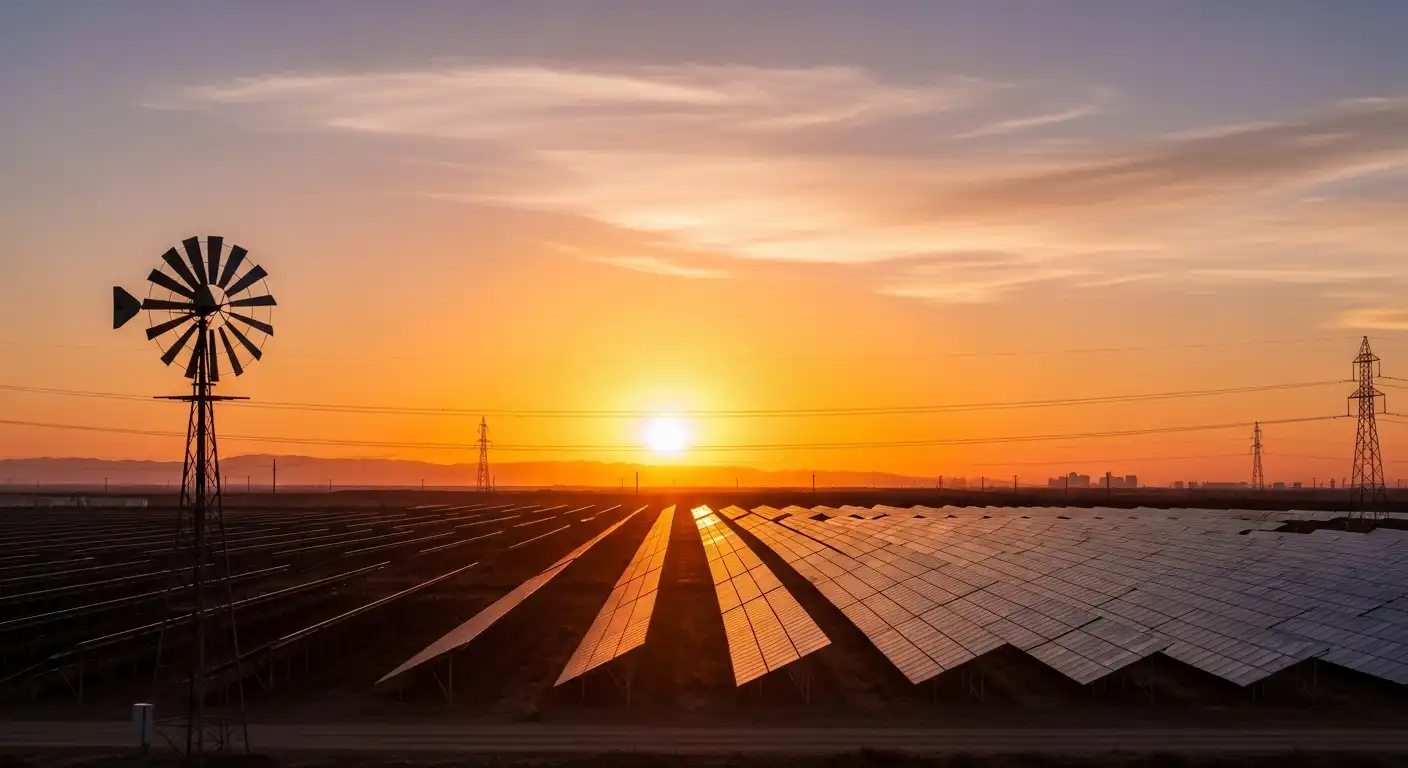
South Africa’s major mining corporations are accelerating their transition toward independent renewable power generation, deploying billions of dollars to build utility-scale solar farms, wind parks, and battery storage facilities. Confronted with compounding electricity tariff increases and ongoing reliability risks from state-owned power utility Eskom, the nation’s premier gold, platinum, coal, and iron ore producers are taking direct control of their energy supplies to protect operating margins and preserve thousands of industrial jobs.
Data from the Minerals Council South Africa reveals that the mining sector has assembled a private energy generation pipeline exceeding 7.5 gigawatts across more than 100 distinct clean-energy projects. This private capital wave represents an aggregate investment of over R150 billion, or roughly $8.2 billion, making the mining industry the single largest driver of private renewable energy deployment in sub-Saharan Africa. By developing on-site generation plants and signing long-term power purchase agreements with independent power producers, mining houses are establishing an independent energy supply that operates alongside the national grid.
The aggressive energy pivot marks a structural realignment for Africa’s most industrialized economy. For more than a century, South African mining houses relied on inexpensive, coal-fired electricity supplied by Eskom to power deep-level underground shafts, ventilation fans, and mineral processing smelters. Today, surging utility tariffs, which have outpaced domestic inflation by more than 300% over the past fifteen years, coupled with strict international carbon trade penalties, have turned self-generation from an environmental aspiration into an urgent commercial imperative.
Escaping Eskom’s Soaring Tariffs and Grid Reliability Vulnerabilities
Electricity has evolved into one of the largest and most volatile cost centers for South African mining operations. Historically, power accounted for roughly 8% to 10% of a mine’s total cash operating costs. In recent years, continuous tariff increases approved by the National Energy Regulator of South Africa have pushed electricity expenses to more than 18% to 22% of total operational outlays, squeezing margins for deep-level underground extraction.
While national power availability has stabilized compared to earlier periods of intense rotational blackouts, mining executives remain deeply concerned about long-term utility debt, maintenance backlogs, and aging coal generation infrastructure.
Eskom’s ongoing debt burden, which exceeds R400 billion, continues to force the utility to request steep price increases from industrial consumers to cover operational shortfalls and capital repayments.
By constructing dedicated renewable assets, mining companies are locking in long-term levelized energy costs that sit significantly below Eskom’s standard industrial tariffs. Private solar and wind installations deliver power at predictable rates for twenty to twenty-five years, removing utility price inflation from corporate balance sheets.
Confronting 36% Proposed Electricity Tariff Increases
The catalyst driving the latest surge in private energy commitments is Eskom’s recent tariff restructuring proposals. The state utility submitted multi-year price determination applications requesting revenue increases that could push industrial electricity tariffs up by roughly 36% to 40% across upcoming financial cycles.
A tariff increase of this magnitude represents an existential threat to marginal mining operations:
- Deep-level gold and platinum mines operate high-power ventilation chillers and continuous water pumps 24 hours a day to keep underground shafts workable at depths exceeding 3,000 meters.
- Smelting and refining complexes consume massive amounts of thermal and electrical energy to melt ore concentrates and extract precious metals.
- A 36% jump in power rates would push dozens of aging shaft complexes into immediate operational losses, forcing premature mine closures.
- Industry analysts estimate that absorbable electricity price increases cannot exceed standard consumer price index rates without triggering widespread job cuts.
Confronted with compounding price increases, corporate boards are approving capital expenditure allocations for independent energy projects, recognizing that generating private solar and wind power is far cheaper than buying power from the public grid.
Protecting Deep-Level Shaft Operations from Unexpected Power Interruptions
Beyond price considerations, operational safety represents a vital reason why mining houses are building private energy infrastructure. Deep-level underground mining requires uninterrupted power delivery to maintain life-support systems thousands of feet below the surface.
When high-voltage transmission lines trip unexpectedly or utility substations fail, the consequences underground can turn dangerous within minutes:
- Shaft hoisting winders lose electrical power, stranding thousands of miners in underground staging areas.
- High-volume ventilation fans stop circulating fresh surface air, allowing toxic gases, humidity, and heat to accumulate rapidly in active working stopes.
- Subterranean dewatering pumps shut down, increasing the risk of shaft flooding and structural equipment damage.
- Mineral processing refineries experience freeze-ups in molten furnaces, requiring weeks of expensive clean-up and repair work.
Integrating on-site renewable generation with industrial battery storage and backup generator systems provides mining engineers with reliable power microgrids. These microgrids ensure that critical life-safety systems remain energized during national transmission disruptions, allowing operations to continue without endangering underground personnel.
A 7.5-Gigawatt Private Pipeline Reshaping South Africa’s Energy Mix
The massive expansion of private mining power was unlocked by historic regulatory reforms enacted under President Cyril Ramaphosa’s Energy Action Plan. The government eliminated the restrictive 100-megawatt licensing threshold with the National Energy Regulator of South Africa, allowing private corporations to build utility-scale power plants of unlimited capacity without enduring multi-year licensing delays.
This regulatory liberalization unleashed a wave of private capital across the mining sector. Rather than waiting for public procurement rounds, mining companies moved rapidly to secure commercial land rights, finalize environmental impact assessments, and sign long-term construction contracts with global renewable energy engineering firms.
Today, the 7.5-gigawatt mining pipeline accounts for nearly half of all private clean-energy developments currently tracking toward construction across South Africa.
Unpacking the R150 Billion Capital Deployment Across Mining Hubs
The scale of the R150 billion investment wave is reshaping regional economies across South Africa’s primary mineral belts. Private capital is flowing directly into manufacturing hubs, civil engineering firms, and high-voltage grid contractors.
Project allocations span a wide variety of renewable energy technologies and geographical areas:
- More than 3.5 gigawatts of solar photovoltaic capacity is being constructed across the sunny plains of the North West, Limpopo, Free State, and Northern Cape provinces.
- Approximately 3.0 gigawatts of utility-scale wind power capacity is located across coastal and inland high-wind corridors in the Eastern Cape and Western Cape.
- Over 1.0 gigawatt-hour of advanced utility-scale battery energy storage systems to provide frequency regulation and smooth renewable intermittency.
- Thousands of direct construction jobs were created in rural communities surrounding mining operations, supporting local economic development.
Financial institutions, including major South African commercial banks, international development lenders, and private infrastructure debt funds, are providing non-recourse project finance to fund these capital-intensive builds, creating a self-sustaining private energy market.
Anglo American and Envusa Energy Target 5 Gigawatts by 2030
Global mining leader Anglo American is executing one of the most ambitious corporate decarbonization strategies in the global resource sector. The company formed Envusa Energy, a dedicated joint venture with French renewable energy pioneer EDF Renewables, to develop a regional renewable energy ecosystem across South Africa.
Envusa Energy aims to construct between 3 and 5 gigawatts of solar, wind, and battery storage capacity by 2030, supplying clean electricity to Anglo American’s extensive mining operations:
- Providing 100% renewable power to Anglo American Platinum’s open-pit and underground operations, including the flagship Mogalakwena mine.
- Supplying clean electricity to Kumba Iron Ore’s Sishen and Kolomela mining operations in the Northern Cape.
- Powering diamond processing and recovery facilities operated by De Beers across southern Africa.
- Integrating localized community equity ownership structures that allocate direct dividend earnings to host mining communities.
By building a centralized, multi-gigawatt renewable fleet, Anglo American is decoupling its operational profitability from state utility risks while building long-term clean energy infrastructure that will serve the broader South African economy for decades.
Sibanye-Stillwater, Harmony Gold, and Gold Fields Expand Solar and Wind Parks
Other major precious metal producers are deploying massive clean-energy installations across their operational footprints:
- Sibanye-Stillwater, the world’s largest primary producer of platinum and a major gold miner, is advancing a 600-megawatt renewable portfolio, anchored by the commercial commissioning of its 89-megawatt Castle wind farm in the Eastern Cape.
- Harmony Gold has deployed multi-phase solar installations exceeding 100 megawatts across its Free State operations, generating immediate cost savings and reducing its daily reliance on utility power.
- Gold Fields pioneered utility-scale mine solar in South Africa with the construction of its 50-megawatt Khanyisa solar plant at the South Deep gold mine, saving millions of rands in monthly electricity bills and providing roughly 15% of the mine’s total power requirements.
- Coal and diversified resource producer Seriti Resources, through its subsidiary Seriti Green, is constructing the 155-megawatt Ummbila Emoyeni wind farm in Mpumalanga, transforming traditional coal-mining territories into major renewable energy generation hubs.
These investments demonstrate that across all commodity sectors, mining executives view self-generation as the cornerstone of their long-term operational survival.
Decarbonization Mandates and the European Carbon Border Adjustment Mechanism
While immediate cost reduction and operational reliability drive the shift toward renewables, international climate regulations and carbon pricing mechanisms are accelerating the timeline. Global consumers, institutional asset managers, and sovereign trading partners are demanding low-carbon commodities, forcing resource companies to measure and reduce their total carbon footprints.
South Africa’s electrical grid remains one of the most carbon-intensive in the world, relying on coal combustion for more than 80% of its total generation. As a consequence, metals extracted using Eskom grid power carry heavy embedded Scope 2 carbon emissions.
To preserve access to premium international export markets, South African mining houses must decarbonize their production processes before international carbon tariffs penalize high-emission exports.
Eliminating Scope 2 Emissions from Coal-Heavy Production Lines
Scope 2 emissions represent the indirect greenhouse gas emissions associated with the purchase of electricity used to power mining equipment, processing plants, and office infrastructure. Because Eskom burns low-grade coal in aging thermal power stations, every megawatt-hour of electricity drawn from the national grid adds roughly one ton of carbon dioxide to a miner’s environmental footprint.
Transitioning to private solar, wind, and hydroelectric power allows mining companies to eliminate millions of tons of Scope 2 emissions annually:
- Anglo American plans to achieve complete carbon neutrality across its operational assets by 2040.
- Sibanye-Stillwater has established binding intermediate targets to reduce total operational carbon emissions by 20% before 2030.
- Gold Fields is targeting a 30% net reduction in carbon emissions by 2030, supported by continuous expansions of on-site solar arrays.
- Eliminating Scope 2 emissions improves corporate environmental, social, and governance ratings, lowering corporate borrowing costs on international bond markets.
Decarbonizing electricity consumption represents the fastest, most cost-effective lever available for mining houses to achieve net-zero commitments without disrupting underlying mineral production volumes.
Defending Export Market Share for Platinum, Gold, and Manganese
The strategic importance of clean electricity is amplified by international trade policies, most notably the European Union’s Carbon Border Adjustment Mechanism. The regulatory framework imposes import tariffs on carbon-intensive industrial commodities—including steel, aluminum, hydrogen, and specialized alloys—imported into the European single market.
While raw precious metals currently enjoy temporary exemptions, European policymakers are preparing to expand the carbon border tax to cover a wider spectrum of refined mineral products:
- Refined platinum group metals used in automotive hydrogen fuel cells and industrial chemical catalysts will face carbon content scrutiny.
- Manganese and ferrochrome alloys exported to European specialty steel mills will absorb heavy border taxes if smelted using coal-fired grid electricity.
- International luxury jewelry buyers are establishing strict green gold provenance standards, demanding verifiable low-carbon refining certifications.
- Automobile manufacturers are prioritizing battery metals and structural raw materials that carry transparent low-emission environmental declarations.
Generating clean electricity on-site allows South African resource exporters to defend their market share against international competitors located in regions with cleaner national power grids, ensuring that Patagonian, Australian, and Scandinavian producers do not displace South African mineral exports.
Overcoming National Transmission Grid Bottlenecks and Wheeling Obstacles
While mining companies possess the private capital and operational discipline required to build gigawatts of clean energy, the rapid expansion of private power confronts a major physical bottleneck: South Africa’s national transmission grid.
The high-voltage transmission lines operated by the newly established National Transmission Company of South Africa were historically designed to move electricity from massive coal-fired power stations in Mpumalanga to industrial demand centers across Gauteng, KwaZulu-Natal, and the Western Cape.
The nation’s best solar and wind resources are concentrated in completely different geographic regions, creating severe transmission grid congestion that threatens to delay private project connections.
Capacity Exhaustion in the Northern and Eastern Cape Corridors
The Northern Cape, Western Cape, and Eastern Cape provinces offer some of the highest solar irradiance and wind load factors in the world. Consequently, private energy developers rushed to secure project sites across these coastal and desert corridors.
However, the local transmission grid in these southern provinces has reached 100% capacity exhaustion:
- High-voltage substations and 400-kilovolt transmission lines can no longer accept new generation connections without triggering thermal line overloads.
- Developers holding completed environmental permits and land leases are waiting years for state grid operators to construct new transmission lines.
- Upgrading the national transmission network will require building more than 14,000 kilometers of high-voltage power corridors over the next decade.
- The state transmission company requires an estimated R390 billion in capital investments to execute these transmission expansions.
To bypass these regional transmission bottlenecks, mining companies are altering their development strategies, focusing on on-site solar installations located directly on mine-owned surface land and developing wind projects in provinces like Mpumalanga, where legacy grid capacity remains available near retiring coal stations.
Deploying On-Site Battery Energy Storage Systems and Virtual Wheeling Networks
To maximize energy efficiency within existing grid constraints, mining operators are pioneering advanced grid-management mechanisms, including virtual wheeling and utility-scale battery energy storage systems.
Energy wheeling refers to the financial and physical transportation of privately generated electricity across Eskom’s national transmission lines from a remote solar or wind park to an active mine site hundreds of kilometers away.
Virtual wheeling agreements leverage digital data platforms and smart meter telemetry to aggregate energy generation across multiple off-site plants, balancing corporate energy usage against monthly utility invoices:
- On-site battery energy storage systems ranging from 20 megawatts to 100 megawatts absorb surplus solar energy during sunny midday hours.
- Battery systems discharge stored power during expensive morning and evening peak tariff windows, flattening corporate demand profiles.
- Advanced energy management software dynamically routes power between on-site solar arrays, wind energy, and grid power in real time.
- Industrial microgrids maintain voltage and frequency stability, protecting sensitive computerized mining equipment from line surges.
These technologies allow mining operations to achieve 60% to 80% clean energy penetration without requiring major expansions of localized utility substations.
Strategic Implications for the Future of African Heavy Industry
The mass migration of South African mining houses toward renewable self-generation carries profound long-term implications for the broader African industrial economy. The mining sector is demonstrating that large-scale industrial decarbonization is not only technically feasible but highly profitable.
The lessons learned, supply chain relationships formed, and regulatory pathways cleared by mining companies are creating a template that other energy-intensive sectors—including commercial agriculture, automotive manufacturing, and chemical processing—are now adopting.
By building private clean-energy capacity at scale, South Africa’s heavy industrial base is securing its future in a rapidly evolving global market.
Lowering All-in Sustaining Costs to Preserve High-Wage Mining Jobs
The mining industry remains a cornerstone of the South African economy, directly employing over 475,000 workers and supporting more than 1.2 million indirect jobs across regional communities. The industry generates hundreds of billions of rands in foreign exchange earnings and accounts for a major share of national corporate tax receipts.
Lowering all-in sustaining costs through renewable energy generation protects the viability of mature, labor-intensive mining operations:
- Eliminating unpredictable double-digit utility rate hikes restores stability to long-term mine planning models.
- Reduced energy expenses allow operators to lower the economic cut-off grade for mineral extraction, extending the operational lifespans of mature shafts by five to ten years.
- Extending mine lifespans preserves high-wage employment across mining communities in Carletonville, Rustenburg, Welkom, and Burgersfort.
- Capital savings generated by on-site renewable projects can be reinvested into automated equipment, digital safety tools, and workforce upskilling.
By defending corporate profitability through low-cost energy self-generation, mining companies ensure that South Africa remains an attractive destination for international resource capital.
The Long-Term Model for Private-Sector Industrial Energy Transition
The transformation of South Africa’s mining sector offers a powerful blueprint for emerging economies navigating energy transitions amidst fiscal constraints. Rather than relying entirely on sovereign balance sheets or debt-laden state monopolies to finance clean energy infrastructure, private industrial enterprises are mobilizing institutional capital to build the power grid of the future.
This private-led development model delivers significant structural benefits:
- Decongesting the public electricity grid, leaving more generation capacity available for small businesses and residential households.
- Accelerating national decarbonization targets without requiring taxpayer-funded government subsidies.
- Fostering a competitive domestic renewable energy manufacturing and technical services industry.
- Establishing resilient, decentralized energy networks that can withstand extreme weather events and geopolitical fuel shocks.
As the 7.5-gigawatt pipeline reaches commercial completion over the coming years, South Africa’s mining houses will stand as proof that industrial competitiveness and environmental sustainability can advance hand in hand.
The rapid acceleration of South Africa’s mining sector toward renewable energy marks a historic turning point for the nation’s industrial economy. By committing over R150 billion to deploy 7.5 gigawatts of solar, wind, and battery storage infrastructure, mining giants like Anglo American, Sibanye-Stillwater, Harmony Gold, and Gold Fields are taking decisive control of their operational destinies. Escaping Eskom’s compounding tariff increases, insulating deep-level shafts from power interruptions, and eliminating Scope 2 emissions ahead of international carbon border taxes ensure the long-term survival of the nation’s most critical export sector. As mining houses build an independent, clean-energy foundation, they are not only safeguarding thousands of high-wage jobs but also leading the sustainable re-industrialization of South Africa for the modern era.