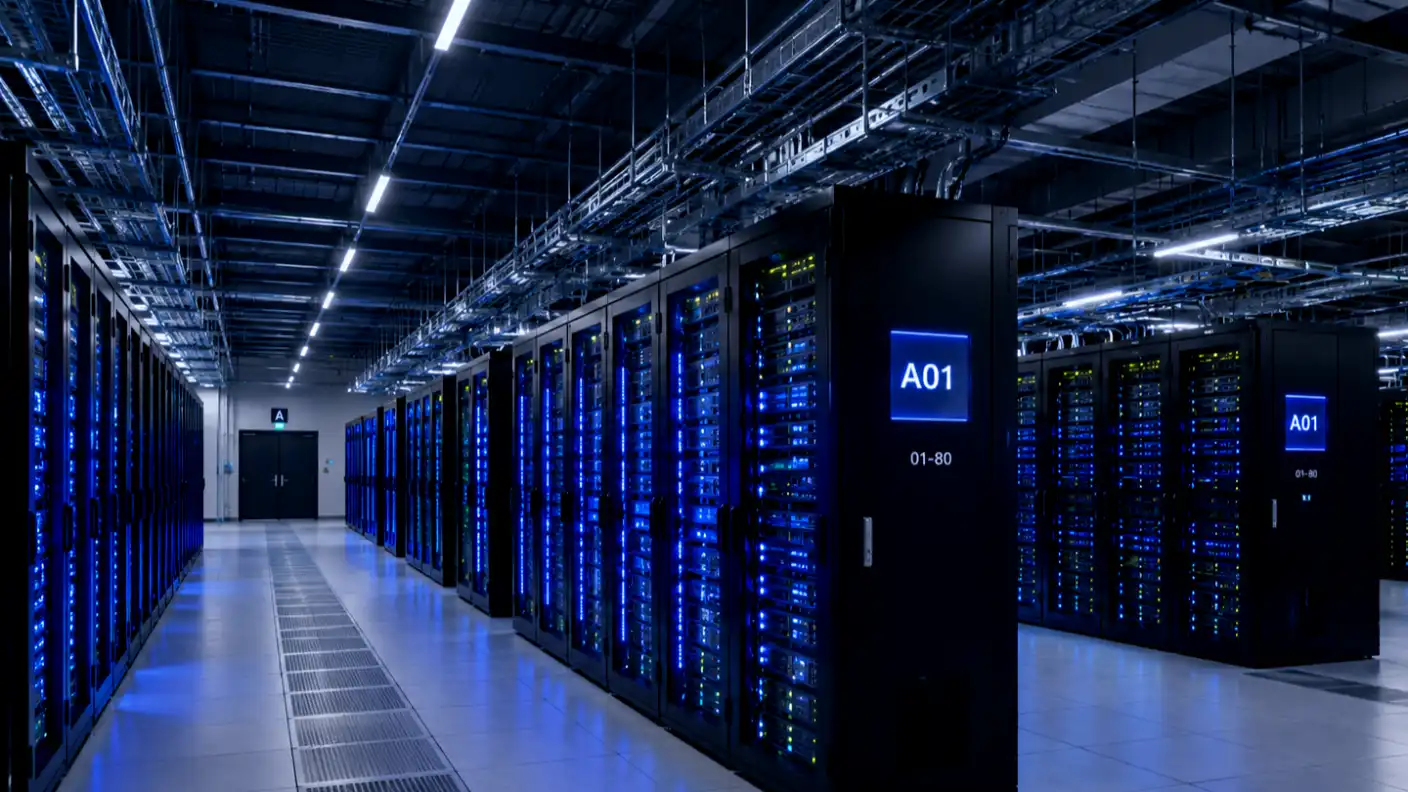
A powerful grassroots backlash against the construction of massive artificial intelligence data centers has erupted into a defining political issue across key American congressional districts and battleground states. As technology giants pour hundreds of billions of dollars into high-density computing campuses to power generative artificial intelligence models, everyday voters are expressing deep frustration over soaring residential electricity bills, overloaded regional power grids, industrial noise pollution, and heavy municipal water consumption.
The growing voter revolt is reshaping campaign messaging ahead of critical congressional, state, and local elections. In pivotal swing territories spanning Northern Virginia, Georgia, Ohio, Pennsylvania, Arizona, and Michigan, political candidates from both major political parties are finding that local opposition to hyperscale computing facilities can decide tightly contested races. Former President Donald Trump and congressional leaders from both sides of the aisle are navigating a difficult political dilemma: balancing the national strategic goal of leading the global artificial intelligence race against fierce constituent anger over the local costs of high-tech infrastructure.
The confrontation highlights the clash between Silicon Valley software ambitions and physical utility realities. A single hyperscale computing campus can consume between 100 megawatts and 1,000 megawatts of continuous electrical power, equal to the energy required to power hundreds of thousands of residential homes. When regional utilities spend billions of dollars on new power plants and high-voltage transmission lines to satisfy corporate tech demand, those capital costs often roll into general rate bases, driving residential electricity bills up by 10% to 25%. As local county boards enact emergency zoning moratoriums and state lawmakers introduce legislation to force tech giants to pay 100% of their dedicated energy costs, the data center debate has transformed into a high-stakes struggle over economic fairness and energy sovereignty.
A Growing Grassroots Revolt Over Power Grids and Utility Bills
For decades, commercial data center developments were welcomed by municipal economic development agencies as quiet, lucrative additions to local tax bases. Computing facilities generated millions of dollars in local property taxes while placing minimal demands on public schools, emergency medical services, and local road infrastructure.
The rapid arrival of high-density artificial intelligence computing clusters has completely broken that local consensus. Unlike traditional cloud facilities that housed low-power enterprise databases, modern artificial intelligence clusters operate with dense, liquid-cooled server racks that run at maximum capacity around the clock, consuming immense volumes of electricity and water.
The scale of these facilities has transformed them from quiet corporate neighbors into heavy industrial complexes. In suburban neighborhoods and rural farming communities, residents are organizing civic coalitions, packing public zoning hearings, and demanding an immediate halt to new data center approvals.
The political backlash is driven by a simple economic reality: everyday households feel that multinational technology corporations are consuming local energy supplies while ordinary families foot the bill through higher monthly utility charges.
Soaring Residential Electricity Rates Up to 25% Across Data Center Corridors
The primary economic grievance driving voter anger is the rapid increase in monthly household electricity expenses. Across major regional transmission territories that host large concentrations of data centers, residential electric utility bills have climbed at rates significantly higher than general consumer price inflation.
In key computing corridors, rate increases have placed severe strain on household budgets:
- In Northern Virginia, residential electric bills for Dominion Energy customers have climbed by 12% to 20% over recent regulatory rate review cycles, driven by multi-billion-dollar transmission grid expansions.
- In Georgia, public service commission approvals for new natural gas generation to serve tech campuses resulted in average residential rate increases exceeding $15 to $25 per month.
- In Ohio’s Columbus metropolitan area, where tech giants have committed over $50 billion to build server hubs, regional power companies warned that transmission upgrades could push retail rates up by 25% over the next five years.
- Across the broader thirteen-state PJM Interconnection grid, wholesale capacity auction prices surged by more than 800%, a multi-billion-dollar cost spike that utilities will pass directly to retail consumers on upcoming electric bills.
For working-class families and retirees living on fixed incomes, paying hundreds of dollars more per year for basic home electricity while tech companies report record quarterly corporate profits has generated immense political fury.
Swing-State Battlegrounds from Northern Virginia to Georgia and Ohio
The geographic concentration of data center developments directly overlaps with some of the most competitive political battlegrounds in the United States. Congressional districts in Northern Virginia’s Loudoun, Prince William, and Fairfax counties—collectively known as Data Center Alley—are ground zero for the national political fallout.
Local candidates in tight congressional races are discovering that data center opposition crosses traditional ideological lines:
- In Virginia’s competitive House districts, Republican and Democratic candidates are running digital campaign advertisements promising to protect residential neighborhoods from runaway industrial data center expansion.
- In Georgia, suburban voters outside Atlanta are demanding that the state legislature repeal generous state tax breaks that exempt tech conglomerates from paying state sales taxes on computer equipment.
- In Ohio, candidates in suburban congressional races are centering campaigns on protecting prime agricultural farmland from being converted into multi-hundred-acre concrete server compounds.
- In Arizona and Nevada, candidates are facing intense voter questioning over how data center evaporative cooling towers impact regional drinking water reserves amid multi-year Colorado River droughts.
Because congressional majorities are decided by razor-thin margins in these exact suburban districts, candidates who ignore constituent concerns over data centers risk suffering decisive electoral defeats.
Political Candidates Navigate the Collision of AI Leadership and Voter Outrage
The emergence of data center opposition presents a complex strategic challenge for national political figures, including Donald Trump, congressional leadership, and state governors. On the one hand, political leaders frequently highlight national technological dominance, arguing that the United States must build massive computing infrastructure to defeat geopolitical rivals like China in the race for artificial intelligence supremacy.
On the other hand, national politicians cannot afford to alienate suburban swing-state voters who are furious about rising living costs, localized environmental degradation, and industrial noise.
This political tension is forcing candidates to recalibrate their public rhetoric, shifting away from unconditional cheerleading for tech investments toward demanding accountability, consumer cost protections, and strict environmental safeguards.
Bipartisan Pressure on Donald Trump and Congressional Lawmakers
During presidential and congressional campaign stops across industrial and Sunbelt states, political leaders are confronting direct voter anger regarding utility grid capacity and tech energy use. Donald Trump has frequently advocated for maximizing domestic energy production, promising to build massive power infrastructure to support artificial intelligence leadership.
However, local political realities are forcing national figures to refine their policy stances:
- Conservative voters in rural districts argue that converting productive family farms into data center campuses destroys local agricultural heritage and strains rural electrical cooperatives.
- Progressive and environmental voters emphasize that constructing new natural gas power plants to feed data centers undermines state and federal decarbonization targets.
- Bipartisan coalitions of lawmakers are demanding that the federal government establish national guardrails preventing public utilities from socializing data center infrastructure costs onto residential ratepayers.
- Campaign strategists are warning national candidates that promising unlimited energy to tech companies while voters face elevated electricity bills creates severe political vulnerabilities.
In response, national leaders are increasingly advocating for a “tech-pays” policy model, asserting that if technology conglomerates want to build multi-gigawatt artificial intelligence clusters, they must generate their own private power without burdening public utility grids.
Local Zoning Moratoriums and County Board Rebellions
The most immediate political impact of the data center backlash is taking place at the municipal and county government levels. County boards of supervisors and city zoning commissions, which historically approved commercial building permits with minimal debate, have become high-stakes political arenas.
Grassroots community groups are successfully electing anti-data-center candidates to local office:
- In Prince William County, Virginia, grassroots community coalitions successfully ousted pro-data-center county supervisors in local primary and general elections.
- Municipalities across Georgia, Indiana, and Michigan have enacted emergency six-month to two-year moratoriums on all new data center zoning applications.
- Local planning commissions are rejecting multi-million-dollar tax abatement proposals, demanding that technology developers pay full commercial property tax rates.
- Suburban town councils are passing strict setback ordinances that require data centers to be built thousands of feet away from residential homes, public schools, and community parks.
These local political rebellions are introducing significant unpredictability into Big Tech’s construction roadmaps, delaying project groundbreakings and forcing developers to spend millions of dollars defending zoning permits in local courts.
The Noise, Water, and Diesel Generator Pollution Complaints
Beyond financial costs, local opposition is fueled by the immediate physical impacts that large computing facilities inflict on surrounding residential communities. A major source of community frustration is the continuous acoustic noise generated by massive rooftop industrial cooling chillers.
Residents living adjacent to data centers describe a constant, low-frequency hum that vibrates through residential walls 24 hours a day, disrupting sleep and lowering local residential property values:
- In Virginia and Georgia, homeowners have filed civil nuisance lawsuits against data center operators, demanding the installation of multi-million-dollar acoustic sound barrier walls.
- Water consumption represents another major flashpoint, with traditional evaporative cooling facilities consuming up to 3 million to 5 million gallons of treated drinking water daily in drought-stressed regions.
- Air quality advocates have raised alarms over massive backup power systems, which house dozens of large industrial diesel generators that emit particulate soot and nitrogen oxides during testing and grid emergencies.
- Community groups are demanding that state environmental agencies require continuous air-quality and acoustic monitoring around all commercial data center perimeters.
These quality-of-life grievances provide community organizers with powerful emotional arguments that resonate deeply with local voters across all political backgrounds.
Legislative and Regulatory Remedies Pushed by State and Federal Lawmakers
Confronted with mounting public outrage, state legislatures and public utility commissions are advancing sweeping regulatory reforms to rein in data center impacts. Lawmakers are recognizing that voluntary corporate promises and vague sustainability pledges are insufficient to protect consumers and electrical grids.
The emerging legislative consensus focuses on establishing binding statutory rules that protect residential ratepayers from bearing the capital expenses of tech expansion.
These policy initiatives aim to ensure that technology conglomerates operate under transparent, fair, and sustainable market rules.
Enforcing Large-Load Tariffs to End Ratepayer Subsidies
The cornerstone of the emerging regulatory response is the establishment of mandatory large-load customer tariffs. In traditional utility regulation, infrastructure costs are shared among all customers across a utility’s service territory based on generalized rate classes.
State public utility commissions in Virginia, Ohio, North Carolina, and Georgia are rewriting utility tariff structures to enforce a strict user-pays model:
- Mandating that data center operators pay 100% of the upfront capital costs required to construct dedicated high-voltage substations, transmission lines, and transformers.
- Requiring tech companies to execute minimum 10-to-15-year take-or-pay commercial power contracts, ensuring that utilities recover infrastructure investments even if the tech company downsizes operations.
- Imposing heavy termination penalties to prevent technology firms from abandoning utility contracts if they transition to private behind-the-meter generation.
- Enforcing mandatory demand-response rules that require computing facilities to curtail non-essential artificial intelligence model training workloads by 20% to 30% during extreme winter freezes or summer heatwaves.
Enforcing large-load tariffs insulates everyday residential consumers and small businesses from cost spillovers, ensuring that public utility bills reflect fair local consumption.
Mandating Behind-the-Meter Clean Power and Direct Nuclear Co-Location
To resolve the conflict between data center growth and carbon-reduction mandates, lawmakers are pushing technology companies to develop private, on-site clean power generation. Rather than drawing power from congested public utility grids, developers are being encouraged to build behind-the-meter energy infrastructure.
Legislative frameworks are incentivizing advanced, carbon-free baseload power:
- Encouraging tech companies to execute direct power purchase agreements with operational nuclear power plants, such as the landmark agreement between Microsoft and Constellation Energy to restart the Three Mile Island nuclear facility.
- Streamlining state environmental permitting for on-site small modular nuclear reactors producing 50 to 300 megawatts of dedicated clean electricity.
- Mandating that newly constructed computing campuses incorporate on-site solar arrays, advanced geothermal microgrids, and multi-hour battery energy storage systems.
- Requiring data center operators to install closed-loop liquid cooling systems or direct-to-chip water loops that eliminate continuous evaporative water loss.
By requiring tech giants to build their own dedicated clean power plants, policymakers aim to support artificial intelligence innovation without overloading public transmission grids or driving up carbon emissions.
Big Tech’s Multi-Hundred-Billion-Dollar Infrastructure Race Under Political Fire
The political and community backlash arrives at a critical moment for the world’s most valuable technology corporations. Hyperscale technology giants—including Microsoft, Amazon Web Services, Alphabet, Meta, and Oracle—are engaged in a multi-hundred-billion-dollar infrastructure arms race to build the computing foundation required for next-generation generative artificial intelligence foundation models.
Capital expenditure allocations across the tech sector have surged to historic records, with combined industry capital outlays projected to exceed $300 billion annually.
However, technology executives are discovering that capital and silicon chips alone are not enough; physical construction requires local political goodwill, regulatory permits, and community acceptance.
The growing public opposition is introducing severe project execution risks, threatening corporate development timelines and inflating construction overhead.
Amazon, Microsoft, Google, and Meta Scramble to Secure Community Goodwill
Recognizing the severity of the political threat, major technology corporations are overhauling their public relations, lobbying, and community engagement strategies. Tech companies are spending millions of dollars to rebuild relationships with local residents, civic leaders, and political candidates.
Corporate public affairs teams are deploying new community benefit initiatives:
- Investing directly in municipal infrastructure, funding local public school modernizations, community recreation centers, and emergency fire rescue equipment.
- Sponsoring local job-training programs and community college apprenticeships to train local residents as certified data center technicians and high-voltage electrical engineers.
- Purchasing regional water rights and funding local watershed restoration projects to return more water to municipal aquifers than computing facilities consume.
- Launching public educational campaigns highlighting the local commercial property taxes paid by computing campuses to fund public municipal services.
While these philanthropic investments provide welcome local resources, community organizers often view them as surface-level public relations maneuvers that fail to address the core problems of rising utility bills and industrial noise.
The Risk of Infrastructure Permitting Freezes and Construction Delays
The ultimate commercial risk facing the artificial intelligence industry is widespread permitting paralysis. When local county boards freeze zoning approvals and state utility commissions delay transmission connection agreements, computing infrastructure timelines stretch from months to years.
Energy market research firms estimate that more than 50% of proposed data center capacity across the United States is currently facing significant construction and operational delays:
- Waiting times to secure formal high-voltage transmission interconnection approvals have stretched to four to seven years across major regional utility territories.
- Siting and zoning lawsuits filed by local community groups are tying up multi-billion-dollar computing developments in state and federal courts.
- Delays in energizing new computing campuses are forcing cloud providers to postpone planned artificial intelligence software rollouts and scale back enterprise capacity commitments.
- Corporate developers are being forced to abandon premier computing markets, redirecting capital toward remote secondary regions that possess excess electrical capacity.
Unless technology companies and political leaders establish workable compromises that protect local communities, regulatory and political bottlenecks will become the primary pacing factor capping the growth of the artificial intelligence economy.
Strategic Implications for the American Artificial Intelligence Super-Cycle
The political battle surrounding data center construction carries profound consequences for the broader American economy and national competitiveness. In a global economy defined by high-technology innovation, possessing world-class artificial intelligence infrastructure is essential for scientific discovery, industrial automation, and national security.
However, sustaining an artificial intelligence super-cycle requires recognizing that digital algorithms depend entirely on physical real-world infrastructure.
Building a sustainable computing foundation requires modernizing federal transmission permitting, expanding clean baseload power generation, and establishing an equitable social compact between technology corporations and local communities.
Re-Engineering Federal Transmission Permitting and Grid Modernization
The data center power crisis has elevated national electrical grid policy to a top-tier legislative priority in Washington. Congressional committees and federal agencies are advancing bipartisan legislation to overhaul how energy infrastructure is permitted and constructed across the country.
Key federal policy priorities include:
- Passing comprehensive permitting reform legislation to streamline federal environmental reviews and judicial challenge timelines for interstate high-voltage transmission lines.
- Empowering the Federal Energy Regulatory Commission to coordinate interstate transmission planning and allocate regional grid expansion costs equitably.
- Expanding federal funding and loan guarantees under the Department of Energy to accelerate the domestic manufacturing of large power transformers, electrical steel, and high-voltage switchgear.
- Sponsoring advanced research into grid-enhancing technologies, including dynamic line ratings and high-temperature superconducting cables that can double power capacity along existing transmission rights-of-way.
Modernizing the national electrical grid ensures that the United States can power both the artificial intelligence revolution and the broader electrification of transportation and manufacturing.
The Long-Term Horizon for Public Acceptance of AI Infrastructure
The ultimate success of the artificial intelligence revolution will depend on maintaining public trust and social license to operate. Technology companies cannot assume that the public will passively accept the physical environmental burdens of computing infrastructure without demanding tangible, verifiable benefits.
Building long-term public acceptance requires adopting transparent development practices:
- Committing to 100% on-site or contracted clean energy additionality, ensuring that computing facilities directly finance the construction of new renewable and nuclear generation.
- Retrofitting existing server halls with direct-to-chip liquid cooling and advanced acoustic insulation to eliminate water evaporation and industrial noise.
- Providing transparent, audited public reporting on facility electricity consumption, water utilization efficiency, and local tax contributions.
- Engaging in early, respectful dialogue with host communities before purchasing commercial land or submitting formal zoning applications.
By aligning corporate infrastructure investments with community welfare and clean energy expansion, the technology sector can build a resilient foundation that powers the digital economy while preserving the quality of life for everyday citizens.
The emergence of data center construction as a major political flashpoint across American congressional elections marks a critical moment of reckoning for the high-technology sector. As voters in swing states and suburban communities rebel against soaring electricity bills, grid saturation, and industrial noise, the assumption that artificial intelligence infrastructure can expand without local accountability has been shattered. Political leaders across both parties are being forced to choose between unconstrained tech expansion and protecting household living standards, driving a nationwide shift toward large-load customer tariffs, zoning restrictions, and behind-the-meter clean energy mandates. As technology giants invest hundreds of billions of dollars to build the digital infrastructure of the future, the industry must recognize that long-term artificial intelligence leadership requires more than advanced silicon; it demands an unwavering commitment to fairness, environmental stewardship, and community consent on every single project.