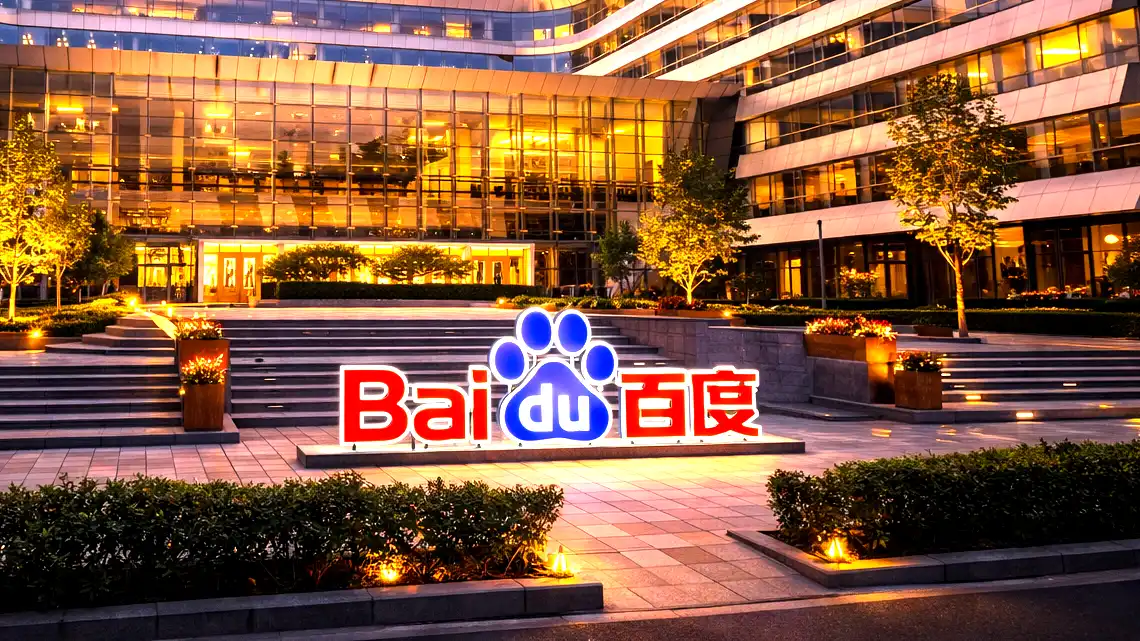
Chinese artificial intelligence and search leader Baidu has completed its voluntary conversion from a secondary listing to a dual-primary listing on the Main Board of The Stock Exchange of Hong Kong Limited. The corporate milestone elevates the Beijing-based tech giant to primary listed status on both the Hong Kong exchange and the Nasdaq Global Select Market, opening a direct financial gateway to mainland Chinese investors through the cross-border Stock Connect mechanism.
The conversion took effect with the removal of the secondary listing stock marker from Baidu’s Hong Kong dollar trading counter and renminbi dual-currency counter. The strategic maneuver required zero new share issuances or dilutive capital raises, ensuring that existing ordinary shares in Hong Kong and American Depositary Shares in New York remain fully interchangeable. By satisfying the stringent corporate governance standards required of a primary issuer, Baidu has cleared the main regulatory hurdle to join the Southbound Stock Connect trading program.
The timing of the listing upgrade represents a pivotal turning point for Baidu’s equity valuation. Major investment banks, including Morgan Stanley, estimate that inclusion in Southbound Stock Connect could channel between $3.0 billion and $6.8 billion in net capital inflows from mainland institutional funds and retail investors over the coming quarters. As Baidu commercializes its Ernie foundation model, expands its Apollo Go autonomous robotaxi network across major metropolitan centers, and accelerates enterprise AI Cloud revenues, access to domestic Chinese capital provides a powerful financial buffer against Western geopolitical volatility.
A Historic Conversion from Secondary to Dual-Primary Status
Baidu originally debuted on the Hong Kong Stock Exchange in March 2021 as a secondary-listed issuer, following its initial public offering on the Nasdaq exchange in 2005. While a secondary listing allowed the company to establish an Asian trading presence, it restricted access to the vast pool of domestic capital residing across mainland China.
Under cross-border market rules established by the Shanghai and Shenzhen stock exchanges, secondary-listed foreign companies are legally barred from participating in the Southbound Stock Connect program.
To qualify for mainland capital inflows, a company must hold a primary or dual-primary listing on the Hong Kong exchange, subjecting its executive board and financial reporting to local regulatory supervision.
Baidu’s successful transition to dual-primary status resolves this limitation. The company now operates under the full oversight of the Hong Kong Securities and Futures Commission, providing mainland regulators with the legal protections required to authorize domestic retail and institutional trading.
Removing the “S” Marker Across Hong Kong Dollar and Renminbi Counters
The practical execution of the dual-primary conversion produced an immediate, visible change across Hong Kong trading terminals. The exchange formally stripped the “S” designation from Baidu’s stock short names for both its primary Hong Kong dollar counter (stock code 9888) and its offshore renminbi counter (stock code 89888).
This administrative change carries significant structural meaning for institutional market participants:
- The removal of the secondary marker confirms that Baidu complies with all statutory listing rules governing primary issuers in Hong Kong.
- The company’s dual-currency counters allow international investors to settle trades in Hong Kong dollars while mainland institutions can transact directly in renminbi, eliminating foreign currency exchange friction.
- Passive index trackers managing billions of dollars across Asian emerging market funds can now expand their weighting allocations to Baidu without encountering secondary listing restrictions.
- The dual-primary status guarantees that if regulatory disputes or geopolitical friction ever disrupt American trading on the Nasdaq, Baidu’s primary Hong Kong listing ensures uninterrupted global trading liquidity.
The operational transition was executed seamlessly, providing existing shareholders with continuous trading access across both hemispheres without requiring physical share certificate exchanges.
Boardroom Governance Overhaul to Satisfy Hong Kong Primary Listing Rules
Achieving primary listing status required Baidu to execute a comprehensive restructuring of its internal corporate governance architecture. Under Hong Kong listing rules, primary issuers must maintain independent board oversight, adhere to strict connected-transaction reporting rules, and comply with the Hong Kong Code on Takeovers and Mergers.
Baidu implemented major governance adjustments ahead of the effective conversion date:
- Reconstituting the corporate Audit Committee, appointing independent non-executive directors with deep financial and regulatory experience, including former securities executives.
- Restructuring the Nominating and Corporate Governance Committee to ensure that independent directors control all decision-making seats regarding executive appointments.
- Phasing out administrative waivers previously granted to secondary issuers, bringing corporate communications, monthly equity returns, and insider interest disclosures into full compliance with Hong Kong standards.
- Appointing certified joint company secretaries in Hong Kong to coordinate real-time regulatory compliance with exchange authorities.
These governance enhancements reassure institutional investors that Baidu’s corporate operations adhere to the highest standards of financial transparency and minority shareholder protection.
The Southbound Stock Connect Gateway and Inflow Projections
The primary commercial motivation behind Baidu’s dual-primary conversion is securing entry into the Southbound Stock Connect program. Established as a bilateral investment channel linking bourses in Shanghai, Shenzhen, and Hong Kong, Stock Connect allows qualified mainland Chinese investors to purchase eligible Hong Kong-listed shares directly through domestic brokerage accounts.
Cumulative Southbound capital inflows have expanded dramatically over recent years, surpassing $500 billion as mainland asset managers, insurance funds, and retail investors seek diversified exposure to innovative technology leaders.
Because mainland investors understand Baidu’s domestic consumer search engine, mobile applications, and artificial intelligence products firsthand, market analysts anticipate aggressive capital accumulation once trading channels open.
Unlocking $3.0 Billion to $6.8 Billion in Mainland Capital Inflows
Financial modeling conducted by premier global investment banks highlights the immense liquidity potential of Southbound inclusion. Drawing on historical trading data from large-cap technology peers that executed identical dual-primary conversions, equity analysts project substantial institutional buying pressure.
Morgan Stanley and regional brokerage analysts outlined specific capital flow projections:
- Initial Southbound capital allocations are estimated to range between $3.0 billion and $6.8 billion within the first twelve to eighteen months of eligibility.
- Mainland mutual funds and private wealth managers are expected to absorb roughly 5% to 9% of Baidu’s total outstanding free-float equity.
- Daily trading liquidity on the Hong Kong exchange is projected to increase by 25% to 40%, reducing share price volatility during international market downturns.
- Domestic retail investors utilizing popular mobile brokerage apps across China will gain one-click access to purchase Baidu shares using domestic renminbi savings.
This continuous inflow of mainland capital provides structural support for Baidu’s valuation, helping the stock re-rate closer to its intrinsic technological value.
Expanding Inclusion Across the Hang Seng Tech and CSI Connect Indexes
Beyond direct retail and institutional purchasing, dual-primary status triggers automatic inclusion across specialized benchmark stock indexes. Passive exchange-traded funds and institutional benchmark trackers must purchase underlying shares to match updated index weightings.
Baidu is positioned to capture substantial passive index flows:
- Immediate eligibility for inclusion in the CSI Hong Kong Stock Connect Internet Index, prompting automated buying from dozens of domestic Chinese thematic exchange-traded funds.
- Rebalancing across flagship Hong Kong benchmarks, including the Hang Seng Index, the Hang Seng China Enterprises Index, and the Hang Seng Tech Index.
- Quarterly index weighting adjustments that expand Baidu’s representation as Hong Kong trading turnover increases relative to its American depositary shares.
- Increased allocations from global emerging market funds that track benchmarks requiring primary exchange listings for full weighting credit.
These systematic index-tracking flows create predictable, multi-million-dollar purchasing tranches that absorb secondary market selling pressure.
Following Precedents Established by Alibaba and NetEase Conversions
Baidu’s corporate roadmap follows a proven playbook established by other prominent Chinese internet leaders. E-commerce giant Alibaba Group and gaming pioneer NetEase executed voluntary dual-primary conversions, securing rapid inclusion in the Southbound Stock Connect.
The market outcomes of those previous conversions provide clear empirical precedent:
- Following its dual-primary conversion, Alibaba attracted billions of dollars in net Southbound inflows within weeks of inclusion, with mainland investors rapidly accumulating significant equity stakes.
- NetEase experienced substantial liquidity expansion, with domestic institutional funds providing stable ownership that lowered historical price volatility.
- Video-streaming platform Bilibili and electric vehicle manufacturer XPeng recorded immediate surges in daily trading turnover following their respective dual-primary upgrades.
- Tech companies with primary Hong Kong listings enjoyed higher valuation resilience during periods of geopolitical tension compared to peers maintaining secondary-only structures.
By executing its conversion, Baidu joins an elite tier of Chinese technology champions that have successfully aligned their capital structures with both international and domestic investor bases.
Baidu’s Artificial Intelligence Pivot and Monetization Strategy
The opening of mainland capital channels arrives at a critical juncture in Baidu’s corporate evolution. Under the leadership of Co-Founder and Chief Executive Officer Robin Li, Baidu has transformed from a traditional internet search and advertising company into a dedicated artificial intelligence and autonomous mobility conglomerate.
The company has invested over 20% of its core annual revenues into research and development for more than a decade, building a comprehensive, vertically integrated artificial intelligence technology stack.
Access to domestic capital provides Baidu with the financial flexibility required to monetize its generative models, expand its enterprise cloud infrastructure, and scale commercial robotaxi services nationwide.
Scaling Ernie Bot and Generative AI Search Architecture
At the center of Baidu’s artificial intelligence portfolio is the Ernie foundation model family. Recognized as one of China’s premier foundation models, Ernie powers conversational consumer assistants, automated enterprise coding tools, and intelligent search retrieval across the Chinese internet.
Baidu is executing an aggressive monetization strategy across its consumer and enterprise products:
- Ernie Bot has scaled to serve hundreds of millions of daily user queries, processing complex natural language reasoning, multimodal image generation, and document synthesis.
- The company overhauled its core consumer search engine, integrating generative artificial intelligence summaries directly into standard search results to improve user engagement.
- Enterprise API token pricing has been structured aggressively, allowing commercial developers to access lightweight Ernie models at minimal cost while monetizing premium enterprise reasoning tiers.
- Over 65% of Baidu’s traditional mobile search results now incorporate AI-generated interactive elements, driving higher advertising conversion rates for commercial merchants.
By embedding generative artificial intelligence directly into its high-margin digital advertising engine, Baidu is transforming search into an interactive, multimodal knowledge assistant.
Apollo Go Robotaxi Fleet Expansion and Autonomous Mobility Revenues
Baidu operates the world’s largest autonomous ride-hailing service, marketed under the Apollo Go brand. Unlike Western autonomous vehicle programs that remain restricted to small geographic testing zones, Apollo Go has achieved massive commercial scale across major Chinese metropolises.
Operational milestones across the autonomous driving division include:
- Completing millions of commercial ride-hailing trips across more than a dozen major Chinese cities, including Wuhan, Beijing, Shanghai, and Shenzhen.
- Deploying the sixth-generation RT6 autonomous electric vehicle, which features Level 4 autonomous driving capabilities at a manufacturing cost below $30,000 per unit.
- Achieving operational break-even in high-density urban deployment zones like Wuhan, where hundreds of driverless vehicles operate 24 hours a day without safety drivers.
- Commercializing proprietary automotive software suites, licensing autonomous highway navigation, automated valet parking, and intelligent cabin operating systems to leading domestic automakers.
The rapid commercial expansion of Apollo Go establishes Baidu as a dominant global leader in autonomous mobility, creating a multi-billion-dollar transportation service that operates alongside its digital software businesses.
Enterprise AI Cloud Acceleration Across Domestic Manufacturing
The commercial engine driving Baidu’s non-advertising revenue growth is Baidu AI Cloud. As Chinese industrial enterprises, municipal governments, and financial institutions accelerate digital transformation programs, demand for high-performance computing and domain-specific artificial intelligence models has surged.
Baidu AI Cloud delivers specialized infrastructure tailored to heavy industry:
- Supplying high-density computing clusters and proprietary Kunlun artificial intelligence accelerators to power enterprise model training.
- Deploying custom industry foundation models across smart manufacturing plants, municipal traffic management grids, and regional electrical utilities.
- Providing standardized software development platforms like Qianfan, allowing corporate enterprise clients to fine-tune custom AI agents on private internal corporate data.
- Generating double-digit annual revenue growth, establishing the cloud division as Baidu’s fastest-growing operational business segment.
By providing the software and computing infrastructure that powers domestic industrial automation, Baidu has diversified its revenue base, creating durable enterprise software cash flows.
Geopolitical Insulation and Cross-Border Share Fungibility
The decision to establish a dual-primary listing serves as an essential risk-mitigation strategy against escalating geopolitical tensions between Washington and Beijing. For years, Chinese companies listed on American exchanges faced persistent delisting threats under the Holding Foreign Companies Accountable Act, alongside tightening investment restrictions from Western regulatory bodies.
While cross-border audit inspections conducted by the Public Company Accounting Oversight Board temporarily eased immediate delisting risks, long-term regulatory uncertainty continues to hang over American Depositary Receipts.
A dual-primary listing provides Baidu with complete structural insulation, ensuring that the company’s public market existence does not depend on a single regulatory jurisdiction.
Preserving Nasdaq ADS Interchangeability Without Dilutive Equity Issuance
A critical technical feature of Baidu’s dual-primary conversion is the complete fungibility between its Hong Kong ordinary shares and its Nasdaq American Depositary Shares. Each American Depositary Share traded in New York represents eight Class A ordinary shares registered in Hong Kong.
The mechanics of cross-border fungibility provide seamless flexibility for international investors:
- Institutional shareholders can convert Nasdaq-listed ADSs into Hong Kong-listed ordinary shares at any time through standard custodial clearing facilities.
- Cross-border arbitrage mechanisms ensure that share prices on the Nasdaq and the Hong Kong Stock Exchange trade in tight alignment, reflecting identical underlying corporate value.
- The company avoided issuing new equity or selling discounted shares during the conversion, preventing dilution for existing equity holders.
- Global asset managers can dynamically shift share custody between New York and Hong Kong based on regional trading hours, tax efficiency, and currency preferences.
This fungible architecture preserves Baidu’s access to deep Western institutional capital markets while establishing an independent, fully functional trading hub in Hong Kong.
Protecting Corporate Capital Against US Regulatory and Delisting Pressures
Operating with two independent primary listings provides Baidu with permanent legal and operational security. Under international securities law, if a company maintains a secondary listing and its primary listing is canceled, the secondary listing can be terminated automatically.
Under a dual-primary framework, the two listings operate completely independently:
- If regulatory restrictions, executive orders, or trade sanctions ever force a delisting from the Nasdaq, Baidu’s primary listing on the Hong Kong Stock Exchange continues to trade without interruption.
- The company is insulated from changes in American securities regulations, ensuring that global investors retain a legally secure, highly liquid venue to trade shares.
- Domestic Chinese institutional investors participating via Southbound Stock Connect provide a permanent liquidity floor, mitigating the impact of potential capital outflows from Western funds.
- The dual-primary structure allows Baidu to execute future debt or equity financing rounds in either Hong Kong dollars, offshore renminbi, or United States dollars.
Establishing this dual-track capital structure protects the company’s multi-decade artificial intelligence investments, ensuring that geopolitical disputes do not disrupt corporate capital access.
Strategic Implications for Chinese Tech Valuations and Hong Kong Liquidity
Baidu’s listing upgrade carries broad implications for the wider Chinese technology sector and the financial status of Hong Kong. Over the past four years, Chinese technology equities traded at historically depressed valuation multiples due to domestic regulatory crackdowns, real estate headwinds, and Western institutional capital flight.
However, the expansion of the Southbound Stock Connect program is injecting fresh vitality into the Hong Kong financial ecosystem, transforming the city from an offshore Western financing hub into the premier wealth management gateway for domestic Chinese capital.
Baidu’s conversion accelerates this structural transformation, demonstrating how Chinese technology leaders are repatriating their capital bases to achieve fair market valuations.
Narrowing Valuation Disconnects Between Domestic and International Investors
A persistent feature of Chinese equities has been the valuation gap between domestic A-shares traded in Shanghai and Shenzhen and offshore shares traded in Hong Kong and New York. Domestic mainland investors, who have fewer international investment options, traditionally award significantly higher price-to-earnings multiples to innovative technology leaders.
Connecting Baidu to domestic retail and institutional investors will help bridge this valuation divide:
- Baidu has historically traded at a forward price-to-earnings ratio of 8 to 12 times, representing a substantial valuation discount compared to global artificial intelligence peers that trade at 25 to 35 times earnings.
- Mainland institutional investors, who view artificial intelligence as a top national strategic priority, are willing to pay higher valuation multiples for pure-play autonomous driving and foundation model developers.
- The influx of Southbound capital creates upward pricing pressure on Hong Kong shares, forcing international short sellers and hedge funds to close bearish positions.
- Narrowing the valuation discount provides Baidu with higher equity currency to fund future strategic acquisitions, attract top engineering talent, and reward long-term employees.
By democratizing share access for millions of domestic users who interact with Baidu products daily, the company is aligning its shareholder base with its core commercial consumer market.
The Long-Term Horizon for Asian Capital Repatriation
The broader macroeconomic trend highlighted by Baidu’s move is the structural repatriation of Asian corporate capital. As geopolitical fragmentation divides the global financial system into regional economic blocs, multinational corporations are designing localized financing strategies that rely on regional domestic savings.
Key structural trends shaping the next decade of Asian technology finance include:
- The mass conversion of remaining secondary-listed Chinese technology firms into dual-primary issuers on the Hong Kong Stock Exchange.
- The steady expansion of the Southbound Stock Connect program to include a wider spectrum of foreign-incorporated technology innovators and international debt instruments.
- The rapid growth of the offshore renminbi ecosystem is allowing cross-border trade and equity investments to settle directly in Chinese sovereign currency.
- Hong Kong is solidifying its role as the indispensable financial bridge connecting global institutional capital with mainland China’s domestic wealth.
Baidu’s proactive execution of its dual-primary conversion positions the company at the vanguard of this financial evolution, ensuring that it remains an enduring, well-capitalized pillar of the global digital economy.
Baidu’s successful voluntary conversion to a dual-primary listing on the Main Board of the Hong Kong Stock Exchange marks a defining milestone in the company’s corporate history. By eliminating secondary listing restrictions, removing the “S” stock marker across dual-currency counters, and overhauling boardroom governance to meet primary regulatory standards, Baidu has opened the door to an estimated $3.0 billion to $6.8 billion in Southbound Stock Connect capital inflows. As the company accelerates the commercialization of its Ernie artificial intelligence models, expands its world-leading Apollo Go robotaxi fleets, and scales enterprise AI Cloud infrastructure, access to domestic Chinese capital provides essential financial strength. By uniting full share fungibility with Nasdaq American Depositary Shares and securing permanent insulation against geopolitical delisting pressures, Baidu has built an optimized, resilient capital structure that will power its artificial intelligence leadership for decades to come.