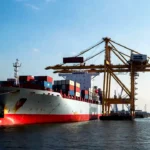
State-owned Chinese energy conglomerates are accelerating their upstream investments and physical crude oil imports from Brazil, deepening an expansive multi-billion-dollar energy partnership that spans deepwater offshore exploration, maritime vessel fabrication, and nationwide power grid infrastructure. Led by national oil champions China National Offshore Oil Corporation (CNOOC), China National Petroleum Corporation (CNPC), and Sinopec, Beijing is channeling massive capital reserves into Brazil’s prolific pre-salt oilfields while securing high-volume, long-term crude shipments to fuel domestic refining hubs.
The energy alliance marks a major strategic realignment in global commodity trading. As geopolitical conflicts in the Middle East and maritime blockades along the Strait of Hormuz disrupt traditional Persian Gulf shipping lanes, China is deliberately diversifying its hydrocarbon procurement toward the South Atlantic. Brazil, which produces roughly 3.5 million barrels of crude oil per day and holds vast offshore pre-salt deposits buried beneath thousands of meters of ocean water and salt sheets, has emerged as China’s premier non-OPEC crude oil supplier, exporting tens of millions of tons of medium-sweet pre-salt crude to Asian terminals every year.
The bilateral relationship extends far beyond raw commodity purchasing. Chinese energy giants have acquired significant equity stakes in Brazil’s most productive offshore mega-fields, including the flagship Búzios and Mero projects in the Santos Basin, partnering directly with state-run Petróleo Brasileiro SA (Petrobras). In parallel, Chinese state utilities, led by State Grid Corporation of China, are investing billions of dollars to construct ultra-high-voltage direct-current transmission lines spanning thousands of kilometers across the Brazilian interior. By uniting deepwater oil extraction with electrical grid modernization and local currency trade settlement, China and Brazil are building an enduring energy corridor that reshapes the geopolitical balance of the Western Hemisphere.
A Deepening Strategic Energy Alliance in the Southern Atlantic
The strategic convergence between China and Brazil reflects mutual economic and industrial necessities. China operates as the world’s largest crude oil importer, consuming more than 11 million barrels of foreign crude daily to power its industrial manufacturing sector, commercial transportation networks, and expanding petrochemical mega-complexes. To protect national economic security against overseas supply disruptions, Beijing has executed an aggressive supply chain diversification policy, reducing its structural dependence on any single geographic region.
Brazil offers an ideal commercial partner. Under the political administration of President Luiz Inácio Lula da Silva, Brasília has actively pursued closer economic integration with fellow BRICS members, seeking long-term foreign direct investment to finance capital-intensive offshore drilling campaigns and national infrastructure modernization.
The resulting bilateral energy trade has expanded at a double-digit annual pace. Brazilian crude oil exports to China generate tens of billions of dollars annually, accounting for more than 45% of Brazil’s total crude exports and establishing crude petroleum as the nation’s single largest export revenue generator.
By combining long-term purchase agreements with direct equity ownership in upstream extraction blocks, Chinese energy companies ensure that physical oil flows smoothly from South Atlantic offshore platforms directly into state-owned refineries in Guangdong, Shandong, and Zhejiang.
Unpacking Multi-Billion-Dollar Pre-Salt Investments by CNOOC and CNPC
The scale of Chinese corporate equity in Brazil’s offshore energy sector represents one of the largest concentrations of foreign investment in Latin America. Rather than operating purely as passive financial buyers, CNOOC and CNPC hold substantial working interests in production-sharing contracts managed by Brazil’s state-run pre-salt management entity, Pré-Sal Petróleo SA.
Chinese state enterprises have established formidable equity footholds across the Santos and Campos basins:
- CNOOC and CNPC hold combined equity stakes of 10% in the massive Búzios field production-sharing contract alongside operator Petrobras, which maintains an 85% majority operating interest.
- In the landmark Libra consortium operating the high-yield Mero field, CNOOC and CNPC each hold 10% working interests, collaborating with European majors Shell and TotalEnergies.
- CNOOC executed multi-billion-dollar rights acquisitions to expand its production share in the Búzios field, committing over $2.5 billion in direct capital payments to secure higher production allocations.
- Sinopec maintains an established deepwater presence through its Repsol Sinopec Brasil joint venture, holding strategic exploration acreage in the Campos Basin.
These equity participations grant Chinese companies direct entitlement to physical crude oil production, providing millions of barrels of equity crude every month that can be shipped directly to China or traded on international spot markets.
Brazil Solidifying Its Position as China’s Premier Non-OPEC Oil Supplier
Brazil’s ascent as a primary energy supplier to China has altered traditional oil trading hierarchies. For decades, China relied heavily on state-directed shipments from Middle Eastern OPEC producers, including Saudi Arabia, Iraq, and the United Arab Emirates, alongside pipeline and seaborne deliveries from Russia.
However, Brazilian pre-salt crude delivers distinct commercial and chemical advantages for Chinese refiners:
- Favorable API Gravity: Brazilian grades like Búzios and Tupi feature medium API gravity ranging between 28 and 30 degrees, with low sulfur content below 0.4%, making them ideal feedstocks for producing high-grade transportation fuels.
- Environmental Compliance: Low-sulfur pre-salt crude requires significantly less hydrotreating and desulfurization processing, lowering refining emissions and operational energy consumption in Chinese processing plants.
- Commercial Flexibility: Brazilian crude trades on competitive international pricing benchmarks, allowing Chinese independent refiners, known locally as teapots, to purchase spot cargoes on flexible delivery terms.
- Open Maritime Corridors: Shipping routes from Brazilian offshore terminals sail across open Atlantic and Indian Ocean sea lanes, bypassing narrow maritime chokepoints and war-risk zones in the Persian Gulf.
These competitive advantages have established Brazilian crude as a foundational feedstock across China’s petrochemical hubs, driving consistent monthly import volumes that exceed 700,000 to 900,000 barrels per day.
Deepwater Offshore Operations: Mastering the Santos and Campos Basins
The geological reality of Brazil’s pre-salt fields presents some of the most challenging operating conditions in the global offshore energy industry. Located between 150 and 300 kilometers off the southeastern coast of Rio de Janeiro and São Paulo, the oil deposits sit beneath deep oceanic waters, layers of marine sediments, and an unstable, two-kilometer-thick salt formation.
Extracting hydrocarbons from depths exceeding 5,000 to 7,000 meters below sea level requires immense capital expenditure, specialized deepwater drilling rigs, and massive floating processing infrastructure.
Petrobras and its Chinese joint-venture partners have mastered these extreme-engineering techniques, driving deepwater production costs down toward $35 to $40 per barrel.
The deployment of massive, newly built production vessels across the Santos Basin is elevating Brazilian pre-salt fields into the most prolific offshore production complexes in the world.
Búzios Mega-Field Expansion and Mero FPSO Deployments
The crown jewel of Brazil’s offshore production is the Búzios field, recognized as the world’s largest deepwater oilfield in terms of recoverable reserves and daily output. The field currently produces over 800,000 barrels of oil equivalent per day, with production projected to scale past 2.0 million barrels per day by 2030 as additional production platforms achieve commercial operation.
The physical expansion of Búzios and Mero is anchored by the deployment of massive Floating Production Storage and Offloading (FPSO) vessels:
- Petrobras and its consortium partners are deploying a fleet of eleven ultra-large FPSO platforms across the Búzios complex, with individual vessels capable of processing up to 225,000 barrels of crude oil and 12 million cubic meters of natural gas daily.
- In the Mero field, the consortium has commissioned four consecutive dedicated production units—the Guanabara, Sepetiba, Marechal Duque de Caxias, and Alexandre de Gusmão FPSOs—each adding 180,000 barrels of daily processing capacity.
- Advanced high-pressure subsea separation systems reinject extracted carbon dioxide directly back into subterranean reservoir formations, enhancing oil recovery while eliminating operational greenhouse gas venting.
- Subsea gathering manifolds connect dozens of complex horizontal production wells to surface platforms via flexible dynamic risers that withstand intense ocean currents.
These mega-platforms operate as floating industrial cities, processing, separating, storing, and offloading hundreds of thousands of barrels of oil directly into ocean-going shuttle tankers every week.
Next-Generation Ultra-Deepwater Extraction Technology Beyond 2,000 Meters
Operating in water depths exceeding 2,000 meters requires continuous innovation in subsea robotics, materials science, and digital reservoir modeling. Traditional fixed platforms cannot operate in deep oceanic waters, forcing operators to deploy robotic subsea infrastructure across the sea floor.
Petrobras and Chinese engineering teams are deploying cutting-edge deepwater technologies:
- Autonomous Underwater Vehicles (AUVs): Deploying deep-sea robotic inspection submarines to monitor subsea wellheads, pipeline manifolds, and mooring lines at depths of 2,500 meters without human divers.
- High-Torque Electric Subsea Pumps: Installing seabed multiphase booster pumps that accelerate the flow of heavy crude from reservoir formations to surface FPSOs, increasing total recovery factors by 15%.
- Digital Twin Reservoir Simulations: Utilizing high-performance computing clusters to model fluid dynamics, pressure changes, and salt-layer deformation inside pre-salt rock formations in real time.
- Corrosion-Resistant Metallurgy: Utilizing specialized titanium alloys and lined flexible pipes to withstand the high concentrations of corrosive carbon dioxide and hydrogen sulfide found in deepwater deposits.
Mastering these ultra-deepwater engineering disciplines provides Chinese energy corporations with valuable technical expertise that they can deploy across domestic offshore projects in the South China Sea and international deepwater blocks worldwide.
Chinese Shipyard Dominance in Floating Production Vessel Fabrication
A vital, high-value component of the Brazil-China energy partnership is the deep integration of Chinese maritime shipyards into Brazil’s offshore construction supply chain. Constructing a modern ultra-large FPSO vessel requires an upfront capital investment between $2.5 billion and $3.5 billion, demanding vast dry docks, automated steel-cutting facilities, and specialized engineering labor.
Chinese maritime shipbuilders have captured the dominant global market share in FPSO hull fabrication and topside module integration:
- Major Chinese state-owned shipyards, including CIMC Raffles, Cosco Shipping Heavy Industry, and Shanghai Waigaoqiao Shipbuilding, have secured multi-billion-dollar contracts to build hulls and modules for Petrobras platforms.
- The P-78, P-79, and P-80 series FPSOs destined for the Búzios field feature hulls and topside processing modules manufactured and integrated in Chinese shipyards.
- Chinese yards utilize advanced modular assembly techniques, constructing 20,000-ton processing blocks indoors before lifting them onto vessel hulls using 20,000-ton gantry cranes.
- Direct shipyard contracts provide thousands of high-wage engineering jobs in China while ensuring that Petrobras receives advanced production vessels on predictable commercial timelines.
This maritime manufacturing nexus connects Chinese heavy industrial shipyards directly to Brazilian offshore energy fields, establishing a closed-loop industrial supply chain that operates across both continents.
Power Transmission and Clean Energy Grid Infrastructure
The expansion of Chinese energy capital in Brazil extends far beyond offshore petroleum extraction. On the Brazilian mainland, Chinese state-owned power utilities have emerged as the dominant investors in high-voltage electricity transmission, renewable energy generation, and distribution infrastructure.
Brazil operates an expansive, continent-sized electrical grid that relies heavily on renewable hydroelectric generation, utility-scale solar arrays, and commercial wind parks.
However, the nation’s best renewable resources are concentrated in the remote northeastern states, while its primary industrial demand centers are located thousands of kilometers away in the southeastern metropolitan corridor spanning São Paulo, Rio de Janeiro, and Belo Horizonte.
State Grid Corporation of China and China Southern Power Grid have stepped into this infrastructure gap, deploying world-leading Ultra-High-Voltage transmission technology to build long-distance power highways across the country.
State Grid’s $4 Billion Ultra-High-Voltage Transmission Mega-Concession
The flagship showcase of Chinese electrical engineering in Latin America is State Grid Corporation of China’s successful execution of massive transmission concessions. State Grid secured a landmark 30-year concession contract to construct and operate the Northeast-to-Southeast Ultra-High-Voltage Direct-Current (UHVDC) transmission line, representing an investment of $3.8 billion to $4.0 billion.
The transmission megaproject establishes historic engineering milestones:
- Constructing an 800-kilovolt direct-current transmission corridor spanning approximately 1,500 kilometers across the states of Maranhão, Tocantins, Goiás, and Minas Gerais.
- Delivering a continuous transmission capacity of 5.0 gigawatts, enough clean electricity to power more than 12 million residential homes in southeastern metropolitan centers.
- Constructing specialized converter substations in Graça Aranha and Silvânia to convert alternating current into high-voltage direct current, lowering transmission losses to less than 3.0% over long distances.
- Creating over 30,000 direct and indirect local construction jobs, providing training in advanced electrical grid engineering to Brazilian technicians.
The mega-project represents the largest single electrical transmission concession ever auctioned in Latin America, establishing State Grid as one of the largest private utility operators in Brazil.
Integrating Hydro, Solar, and Wind Power Across Brazilian States
Chinese utilities are also investing heavily in renewable generation assets, acquiring operational hydroelectric dams, constructing greenfield solar parks, and building utility-scale wind farms across Brazil’s northeastern interior.
The integrated clean energy portfolio delivers comprehensive grid capabilities:
- State Grid and China Three Gorges Corporation operate dozens of major hydroelectric generation facilities across the Paraná and Tocantins river basins, controlling thousands of megawatts of baseload clean power.
- Developing massive utility-scale solar photovoltaic farms across the high-irradiance deserts of Bahia and Piauí, generating low-cost clean power during daylight hours.
- Installing commercial wind parks along the high-wind coastal corridors of Ceará and Rio Grande do Norte, providing steady overnight generation.
- Deploying advanced digital grid management software that dynamically balances variable solar and wind output with dispatchable hydroelectric reservoirs.
Connecting clean northeastern generation directly to southeastern industrial factories lowers electricity tariffs for Brazilian manufacturers while advancing national carbon neutrality targets.
Macroeconomic Catalysts and De-Dollarization in Commodity Settlement
The rapid deepening of the Brazil-China energy relationship is driven by fundamental macroeconomic realignments in international finance and trade. For decades, global commodity transactions were settled almost exclusively in United States dollars, requiring international buyers and sellers to route payments through correspondent commercial banks in New York.
However, the weaponization of Western financial clearing rails, the aggressive use of unilateral economic sanctions, and chronic dollar liquidity shortages across emerging markets have accelerated the transition toward local currency trade settlement.
Brazil and China have established comprehensive bilateral financial clearing agreements that allow energy, agricultural, and industrial transactions to settle directly in Chinese renminbi and Brazilian reais.
This financial infrastructure insulates bilateral trade from foreign exchange volatility, lowers transaction fees, and strengthens the economic sovereignty of both BRICS partners.
Bypassing Middle Eastern Chokepoints and Strait of Hormuz Risks
A primary geopolitical catalyst driving Chinese procurement toward Brazil is the acute vulnerability of international energy shipping corridors. The Strait of Hormuz, which handles roughly 20% of global petroleum consumption, remains subject to recurring military conflicts, naval drone attacks, and mine warfare involving Iran and regional adversaries.
The Middle Eastern maritime crisis has highlighted the strategic value of South Atlantic crude:
- Persian Gulf export disruptions and soaring maritime war-risk insurance premiums have added high costs to Middle Eastern crude delivered to Asia.
- Shifting procurement to Brazil allows Chinese refiners to load crude from deepwater Atlantic terminals that operate thousands of miles away from Middle Eastern conflict zones.
- Ocean routes from Rio de Janeiro to Qingdao sail through the open South Atlantic and Indian oceans, providing uninterrupted transit free from narrow geopolitical chokepoints.
- Brazilian pre-salt producers maintain long-term operational stability, with zero risk of sudden state-directed embargoes or cartel production halts.
Diversifying crude sourcing to Brazil provides China with a vital strategic energy buffer, ensuring that domestic refineries maintain continuous operations during international crises.
Scaling Bilateral Renminbi and Real Financial Clearing Networks
The operational mechanics enabling local currency trade settlement have matured rapidly over recent years. Following landmark bilateral agreements signed between the People’s Bank of China and the Central Bank of Brazil, authorized clearing banks have been established in both capitals.
Direct local currency clearing delivers substantial financial efficiencies:
- The Industrial and Commercial Bank of China operates a designated renminbi clearing bank in São Paulo, processing cross-border commercial transactions directly through China’s Cross-Border Interbank Payment System (CIPS).
- Brazilian agricultural exporters and crude oil producers can receive payment directly in renminbi, utilizing their Chinese currency balances to purchase imported Chinese industrial machinery, solar panels, and chemical fertilizers.
- Direct currency settlement eliminates the need to execute double foreign exchange conversions into and out of United States dollars, saving commercial traders between 1.5% and 2.5% on total transaction values.
- Bilateral central bank currency swap agreements provide multi-billion-dollar liquidity backstops, ensuring that trade clearing continues smoothly during global foreign exchange volatility.
By decoupling bilateral trade settlement from the dollar, Brazil and China are establishing a resilient, sovereign financial corridor that will support expanding commodity and industrial trade for decades to come.
Strategic Implications for Hemispheric Energy and Global Trade Architecture
The comprehensive energy and infrastructure alliance between China and Brazil carries profound consequences for the global balance of power and the geopolitical architecture of the Western Hemisphere. Historically, the United States maintained undisputed economic and diplomatic preeminence across Latin America under the principles of the Monroe Doctrine.
Today, China has emerged as South America’s primary trading partner, premier source of infrastructure financing, and most dependable buyer of natural resources.
By embedding its state-owned energy enterprises into Brazil’s core offshore petroleum fields and electrical transmission backbones, Beijing has established an enduring economic presence in the Western Hemisphere that Washington cannot easily counter through diplomatic rhetoric alone.
Petrobras Deepens Long-Term Joint Ventures Amid Global Decoupling
For Brazilian state oil giant Petrobras, partnering with Chinese energy conglomerates provides critical capital, shipyard capacity, and long-term market access. While Western energy majors face intense pressure from activist investors and ESG regulations to divest from fossil fuel extraction, Chinese state oil companies maintain massive balance sheets and multi-decade investment horizons.
The deep institutional partnership between Petrobras and Chinese enterprises delivers long-term strategic benefits:
- Guaranteed Export Demand: Securing long-term off-take commitments from Chinese state refiners guarantees continuous commercial demand for expanding pre-salt production.
- Non-Recourse Project Financing: Chinese state banks, including the China Development Bank and the Export-Import Bank of China, provide multi-billion-dollar low-interest loans to finance offshore exploration campaigns.
- Shared Technological Innovation: Joint research centers in Rio de Janeiro and Beijing co-develop advanced deepwater drilling algorithms, subsea separation systems, and carbon-capture technologies.
- Strategic Sourcing Synergies: Petrobras secures priority access to world-class Chinese dry docks and modular construction yards to build next-generation FPSO vessels without multi-year shipyard backlogs.
This close institutional alignment ensures that Petrobras can execute its multi-billion-dollar strategic development plan, transforming Brazil into one of the top four oil-producing nations in the world by the 2030s.
The Long-Term Horizon for South American Hydrocarbon and Clean Energy Integration
Looking toward the end of the decade, the energy relationship between China and Brazil is poised to expand into emerging green technology sectors, transforming South America into a global powerhouse for low-carbon industrial manufacturing.
Key structural trends that will shape the next decade of bilateral energy cooperation include:
- Green Hydrogen and Ammonia Mega-Projects: Utilizing Brazil’s abundant offshore wind and hydroelectric power to construct world-scale green hydrogen synthesis plants in northeastern industrial ports like Pecém, exporting clean zero-carbon fuels to Asian industrial hubs.
- Critical Battery Mineral Supply Chains: Expanding Chinese foreign direct investment into Brazilian lithium, nickel, and rare earth mining complexes in Minas Gerais and Bahia, building localized refining facilities for electric vehicle batteries.
- Integrated Smart Cities and Electrified Transit: Deploying fleets of Chinese-built electric buses, passenger rail systems, and smart-grid monitoring software across major Brazilian metropolitan centers.
- Multilateral South-South Technology Transfers: Establishing joint educational fellowships, engineering exchange programs, and technical standards bodies to foster sovereign technological capabilities across the Global South.
By uniting raw material abundance, advanced deepwater engineering, clean electrical infrastructure, and sovereign financial clearing, China and Brazil are constructing a transformative model of South-South economic cooperation for the twenty-first century.
The aggressive expansion of Chinese energy giants across Brazil’s offshore pre-salt oilfields, maritime manufacturing corridors, and national electrical transmission networks marks a defining milestone in the global energy transition. By securing equity control in the world’s most prolific deepwater fields like Búzios and Mero, financing $4 billion ultra-high-voltage transmission lines, and executing direct local currency settlements, CNOOC, CNPC, and State Grid have built an unbreakable economic bridge across the South Atlantic. As international commodity markets navigate Middle Eastern geopolitical volatility and global supply chain realignments, the Brazil-China energy partnership provides both nations with vital strategic advantages. Brazil secures the massive capital, technological scale, and export demand needed to achieve global energy leadership, while China locks in the secure, low-carbon crude oil and clean infrastructure required to power its industrial future. In uniting deepwater engineering excellence with sovereign economic diplomacy, China and Brazil are redefining the geopolitical and commercial landscape of the modern world.