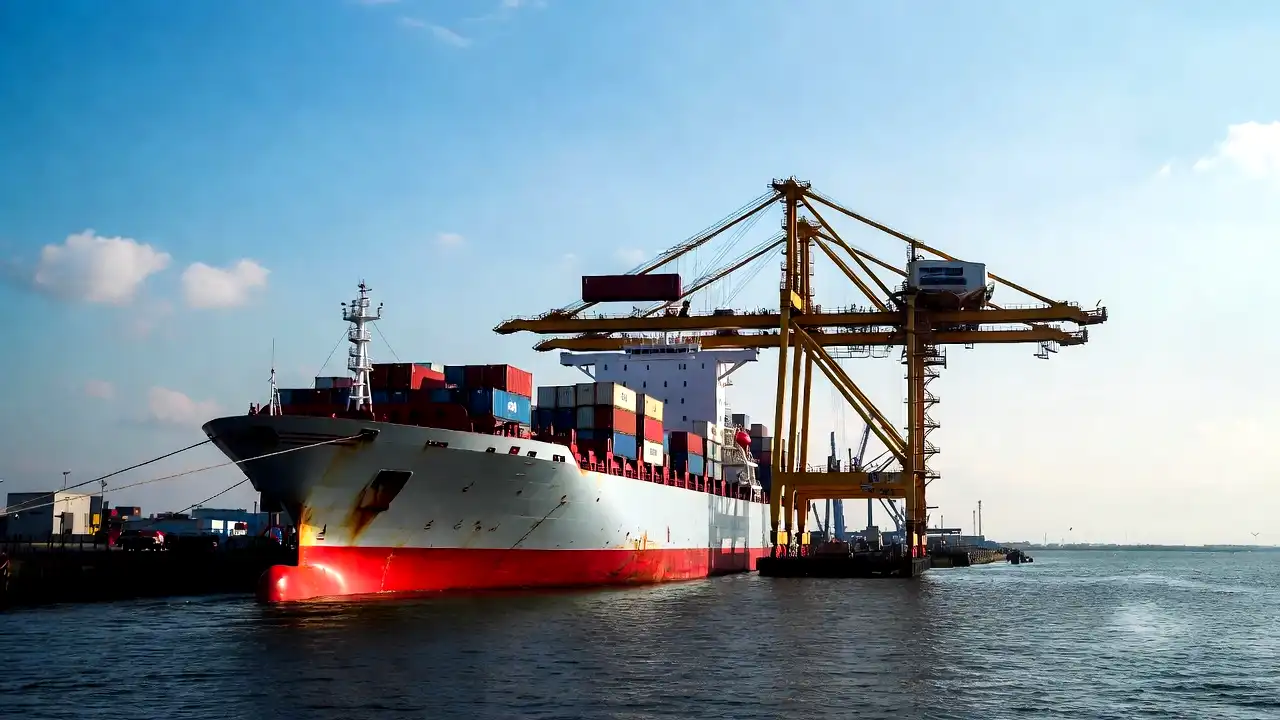
International maritime trade moves more than 80% of global freight by volume, but the massive ships that haul iron ore, coal, grain, and container boxes burn hundreds of millions of tons of fossil fuels every year. With global shipping generating nearly 3% of the world’s total greenhouse gas emissions, ocean carriers face immense pressure to decarbonize their fleets. Fuel bills regularly account for 50% to 60% of a merchant vessel’s total voyage operating expenses, making energy efficiency both an environmental necessity and a financial survival strategy.
To solve this dual challenge, Japan’s largest shipping conglomerates are looking directly back to the ocean’s oldest power source. Companies like Mitsui O.S.K. Lines, Kawasaki Kisen Kaisha, and Nippon Yusen Kabushiki Kaisha are outfitting massive commercial carriers with high-tech rigid sails, automated telescopic wings, and giant autonomous flying kites. These modern wind-assisted propulsion systems capture ocean winds to pull mammoth bulkers and tankers across the Pacific and Atlantic, reducing reliance on main diesel engines and dramatically cutting fuel consumption.
The Urgent Economic and Environmental Push for Wind Propulsion
The transition toward wind-assisted propulsion is accelerating because traditional efficiency measures have largely reached their physical limits. For decades, naval architects squeezed marginal fuel savings out of bulbous bows, optimized hull coatings, and waste-heat recovery systems. However, these incremental tweaks cannot deliver the deep emissions cuts required by modern environmental mandates.
Tightening Maritime Regulations and Net-Zero Goals
The International Maritime Organization has established a strict regulatory roadmap targeting net-zero greenhouse gas emissions from international shipping by or around 2050. Intermediate checkpoints require the global industry to slash carbon intensity by at least 20% by 2030, with an aspirational target of 30%, compared to 2008 baseline levels. Ships that fail to meet annual operational carbon intensity benchmarks face operational penalties, speed restrictions, or loss of commercial operating licenses.
Regional regulations create even steeper financial penalties. The European Union has integrated commercial shipping into its Emissions Trading System, requiring vessel operators to surrender carbon allowances for voyages entering, departing, or traveling between European ports. Shipping lines that continue to burn standard heavy fuel oil face tens of millions of dollars in carbon tax bills each year. By deploying wind systems that cut absolute fuel burn by 5% to 20% per voyage, vessel operators directly lower their regulatory compliance costs and protect their profit margins.
Volatile Bunker Fuel Prices and Carbon Levies
Fuel price volatility adds tremendous financial risk to global supply chains. A single Capesize bulk carrier carrying 180,000 deadweight tons of cargo can burn 30 to 45 metric tons of marine fuel oil each day at sea. With very low sulfur fuel oil frequently trading between $550 and $750 per metric ton, fueling a single trans-Pacific journey easily exceeds $500,000.
Emerging green fuels such as green methanol, ammonia, and bio-LNG offer zero-carbon alternatives, but their price tags remain two to four times higher than conventional fossil fuels. Furthermore, global bunkering infrastructure for green hydrogen derivatives will remain scarce for years. Wind power offers an immediate, zero-cost energy source that operators can capture anywhere on the open ocean. Every megawatt of mechanical thrust generated by wind reduces the volume of expensive fuel a carrier must buy, insulating ship owners from volatile oil markets.
Hard Sails and Telescopic Wings on Giant Bulk Carriers
Rather than relying on cloth canvas handled by large crews, Japanese naval engineers have built automated, rigid wings made of composite materials. These towering structures act like upright airplane wings, rotating automatically to catch prevailing breezes and produce forward aerodynamic lift.
MOL’s Wind Challenger Deployment and Expansion
Mitsui O.S.K. Lines, widely known as MOL, has taken an industry-leading position in rigid sail technology through its Wind Challenger program. Developed in collaboration with domestic shipbuilders, academic institutions, and classification societies, the Wind Challenger uses a massive telescoping hard sail made of lightweight glass-fiber reinforced plastic.
The system stands approximately 53 meters tall and spans 15 meters wide when fully extended at sea, providing an aerodynamic surface area of roughly 800 square meters. When entering a port or navigating underneath low bridges, the sail collapses downward like an automated telescope to maintain overhead clearance and ensure harbor safety.
MOL launched its first operational Wind Challenger vessel, the coal carrier Shofu Maru, in late 2022. Operating on long-distance bulk routes between Japan, Australia, and North America, the vessel proved that rigid sail technology could perform reliably under severe oceanic weather conditions. MOL has outlined aggressive expansion plans, targeting 25 Wind Challenger-equipped vessels across its active fleet by 2030 and expanding that number to 80 operational vessels by 2035. The company is actively installing these sails not only on dry bulk carriers but also on liquefied natural gas carriers and liquefied carbon dioxide transport ships.
Fuel Savings and Real-World Ocean Performance
Real-world operational data from open-ocean voyages confirms the economic viability of hard sail technology. On standard Pacific trade routes between Japan and the West Coast of North America, a single rigid sail reduces daily bunker fuel burn by 5% to 8% across an entire round-trip voyage. Under optimal beam-wind conditions, where strong winds blow perpendicular to the vessel’s heading, instantaneous fuel savings jump to 17% or higher.
When naval architects install multiple rigid wings along the deck of a single large carrier, fuel reduction numbers climb substantially. Computational fluid dynamics modeling and sea trial simulations show that fitting two to four hard sails on a Capesize bulk carrier can reduce annual fuel consumption by 15% to 30%. On a typical voyage burning 1,200 tons of marine fuel, a 15% reduction saves 180 metric tons of fuel, keeping roughly 560 tons of carbon dioxide out of the atmosphere on a single transit.
Autonomous Towing Kites Flying in High-Altitude Winds
While rigid deck sails capture surface-level winds, other Japanese shipping innovators are looking higher into the sky. High-altitude winds blow with greater velocity and far more consistency than winds right at sea level, offering immense potential energy for cargo propulsion.
K Line and Oceanicwing’s Seawing Innovation
Kawasaki Kisen Kaisha, universally known as K Line, has committed heavily to automated power kites through its French subsidiary, Oceanicwing. Their flagship development, the Seawing system, consists of a massive parafoil kite attached to a long tether anchored directly to the bow of a commercial freighter.
The Seawing system deploys fully autonomously from a compact deck storage pod. When bridge navigation systems detect favorable wind conditions, an automated mechanical arm hoists the kite into the air. The kite is unreeled on a high-strength synthetic tether to an altitude of roughly 300 meters above the water surface.
Once airborne, flight control software steers the kite in continuous, dynamic figure-eight patterns. This dynamic flight path increases the relative wind speed across the kite’s surface, generating forward pulling traction that is far greater than the force produced by a static sail of identical surface area. Classification societies, including Bureau Veritas and ClassNK, have verified that a 300-square-meter Seawing kite produces a continuous pulling tension of 25 metric tons. K Line is developing larger 600-square-meter and 1,000-square-meter versions designed to generate up to 50 tons of forward thrust.
Harnessing Upper Atmosphere Wind Energy
Operating at altitudes between 200 and 300 meters gives towing kites a distinct physical advantage over mast-mounted sails. At sea level, surface friction slows wind speed and creates turbulence. At higher altitudes, wind velocity is typically 50% to 100% stronger and remains steady for days at a time. Because the aerodynamic force generated by a wing increases with the square of the wind velocity, tapping upper-altitude air currents delivers massive pulling power from a relatively compact textile structure.
On long-distance oceanic routes across the North Pacific and Atlantic, automated towing kites can reduce a commercial vessel’s main engine load by an average of 20%. When traveling along prevailing trade wind belts, fuel savings can reach 35% on specific legs of a journey. When wind conditions deteriorate or when a ship approaches harbor waters, the automated system rapidly winches the tether back down, safely folding the kite back into its bow compartment in less than 20 minutes without requiring manual intervention from the deck crew.
Retrofitting Existing Fleets Versus Building New Vessels
Decarbonizing global maritime shipping requires addressing the tens of thousands of conventional cargo vessels already in service. Building a brand-new merchant ship costs anywhere from $40 million for a mid-sized bulk carrier to more than $150 million for a large container vessel, and these hulls typically remain in commercial operation for 25 to 30 years. Shipping companies cannot simply wait for old vessels to retire; they must find practical ways to upgrade the ships they currently operate.
Engineering Challenges of Deck Space and Crane Clearance
Retrofitting wind systems onto existing vessels presents complex engineering hurdles. Container ships present the greatest difficulty because standard cargo operations require stacking steel shipping containers across the entire open deck. Installing rigid sails on container vessels can block bridge sightlines, interfere with dockside loading cranes, and reduce total container carrying capacity.
Dry bulk carriers and oil tankers offer better opportunities for wind retrofits, but engineers must still overcome spatial constraints. On bulk ships, rigid masts must avoid obstructing the massive hatch covers and shoreside loading chutes used to pour thousands of tons of ore into cargo holds. Naval architects solve this issue by designing folding mechanisms and placing sails along the centerline between hatches or directly on the forecastle deck.
Towing kites avoid deck clutter almost entirely. Because the kite, launch mast, and automated winch fit inside a compact container-sized footprint at the bow of the ship, the system can be retrofitted onto bulkers, tankers, and roll-on/roll-off vehicle carriers with minimal modifications to cargo hold arrangements.
Payback Periods and Capital Expenditure Dynamics
Investing in wind-assisted propulsion requires a clear financial return for shipowners and charterers. Installing a commercial wind system—whether a rigid telescopic wing, a rotor sail, or an automated kite—typically requires a capital expenditure between $1.5 million and $4 million per vessel, including equipment manufacturing, hull reinforcement, and shipyard installation labor.
The financial payback period depends directly on global bunker fuel prices, carbon allowance costs, and the specific trade routes sailed. On windy routes across the North Pacific or South Atlantic, a system that saves $300,000 to $600,000 in fuel annually achieves a capital payback in roughly three to five years. As maritime carbon taxes expand and alternative fuels become more expensive, the payback timeline shortens, making wind retrofits an attractive capital investment for commercial fleet operators.
The Digital Backbone of Wind-Assisted Shipping
Modern wind propulsion relies heavily on computing power, satellite data, and machine learning. Unlike ancient mariners who relied on physical charts and intuition, modern captains manage wind systems through fully automated digital control platforms.
Artificial Intelligence and Weather Routing Algorithms
Wind energy varies constantly across oceans, requiring vessels to navigate intelligently to capture optimal wind patterns. Japanese shipping lines are deploying sophisticated weather-routing software that merges satellite weather data, ocean current models, and vessel hydrodynamics in real time.
These algorithmic routing systems analyze thousands of possible route variations between origin and destination ports. Rather than taking the shortest geographical straight line, the software directs the ship along a slightly curved path that maximizes favorable wind exposure while avoiding dangerous storm surges. By combining optimized routing algorithms with wind-assist propulsion, ships can reduce total voyage fuel consumption by an additional 3% to 5% without adding significant transit time.
Sensors mounted across the sails and hull measure aerodynamic load, vessel tilt, and hull resistance hundreds of times per second. An onboard computer processes this telemetry and automatically adjusts the angle of attack, height, or rotation of the sails to maximize thrust while maintaining total vessel stability. If an unexpected gust threatens ship balance, the automated control system trims the sail or releases tether pressure instantly, eliminating the risk of human error during severe weather events.
Hybrid Propulsion Systems Combining Alternative Fuels
Wind propulsion does not replace marine engines; it works in partnership with them. The true power of wind assistance lies in its synergy with emerging zero-emission fuels.
When a ship operates on green methanol, bio-ammonia, or hydrogen fuel cells, the fuel itself represents the single largest operational cost of the voyage. Because green fuels have lower energy density than heavy bunker oil, a vessel must dedicate large internal hull volumes to specialized fuel storage tanks. By generating a significant portion of cruising thrust directly from wind, a vessel reduces its daily alternative fuel consumption.
This reduction allows shipping companies to install smaller, cheaper fuel storage tanks and buy less high-cost green fuel. NYK Line is exploring concept vessels like the Super Eco Ship, which merges automated rigid sails, solar panels, and hydrogen fuel cells into a single hybrid design aiming to eliminate more than 70% of greenhouse gas emissions compared to conventional cargo ships.
Long-Term Impact on Global Ocean Logistics
The revival of wind power across commercial maritime trade marks a profound technological evolution. Rather than abandoning modern engineering for antique methods, Japanese shipping giants are combining advanced aerodynamics, composite materials science, satellite meteorology, and automated robotics to create an entirely new class of merchant vessels.
As international climate regulations tighten and the financial cost of fossil fuels escalates, wind-assisted propulsion systems are moving from experimental novelties into standard commercial maritime architecture. With hundreds of wind-equipped vessels scheduled to hit the water over the next decade, the global shipping industry is entering an era where clean ocean breezes will once again carry international commerce across the seas.