The world’s largest automotive market is experiencing a sharp divergence between domestic retail weakness and record-breaking export activity. Passenger car retail sales across China fell nearly 24% year on year to 1.54 million units, extending a continuous domestic sales slump to eleven straight months. Cautious household spending, rising domestic refined fuel prices, and fading policy stimulus have combined to keep local car shoppers on the sidelines.
To offset softening demand on the mainland and escape a brutal domestic price war, automakers are steering their production lines directly toward foreign markets. Passenger vehicle exports surged 77.5% year on year to reach 894,000 units in a single month. Industry leaders like BYD, Geely, Chery, and Tesla are shipping hundreds of thousands of electric and hybrid vehicles across Europe, Southeast Asia, Latin America, and the Middle East. This strategic pivot highlights how Chinese automotive manufacturing capacity is reshaping the global vehicle trade while domestic retail dealerships struggle to clear showroom floor inventory.
Anatomy of the 24 Percent Domestic Sales Contraction
The double-digit downturn in China’s automotive retail sector reflects broader macroeconomic shifts in consumer spending. While overall month-on-month showroom traffic showed modest seasonal improvement, annual comparisons reveal a marketplace that has shrunk by nearly 2.65 million units across the first eight months of the year.
Gasoline Vehicles Suffer Heavy Losses Against High Fuel Costs
The hardest-hit segment of the domestic market remains traditional internal combustion engine vehicles. High international crude prices pushed domestic retail gasoline and diesel tariffs up by nearly 985 yuan, or roughly $145 per ton over two consecutive pricing cycles. These escalating fuel expenses significantly increased the daily operating costs of gasoline-powered sedans and sport utility vehicles.
As a result, retail sales of conventional fuel-powered passenger cars plummeted roughly 40% year on year. Chinese car buyers in tier-two and tier-three cities, who historically formed the backbone of entry-level gasoline vehicle purchases, are walking away from combustion engines entirely. Dealerships specializing in traditional foreign joint-venture brands have seen foot traffic drop by more than half, forcing many legacy retail networks to downsize showroom footprints and slash wholesale inventory orders from regional assembly plants.
Electric Vehicles Take Record Market Share Despite Cooling Demand
While total car deliveries dropped, the structural mix of vehicles sold inside China reached a historic milestone. New energy vehicles—encompassing pure battery electric cars and plug-in hybrids—captured a record 65.2% share of all passenger vehicle retail sales. Nearly two out of every three new passenger cars driven off domestic dealership lots now feature an electric plug.
However, even the electric segment is feeling the chill of domestic consumer hesitation. Total new energy vehicle retail sales slipped 10.1% year on year to 1.005 million units. While battery electric vehicle sales managed a tiny 1% increase to 698,000 units, the explosive domestic growth rates of prior years have leveled off. Chinese consumers are holding onto their existing cars longer, waiting for deeper price cuts or more generous state trade-in vouchers before committing to big-ticket purchases.
Automakers Pivot to Overseas Shipments to Clear Inventory
Faced with shrinking profit margins and excess factory capacity at home, domestic and multinational manufacturers are turning their attention outward. Export terminals in Shanghai, Ningbo, and Guangzhou are operating around the clock to load car-carrying vessels bound for international ports.
BYD Leads the Global Export Charge Across Europe and Latin America
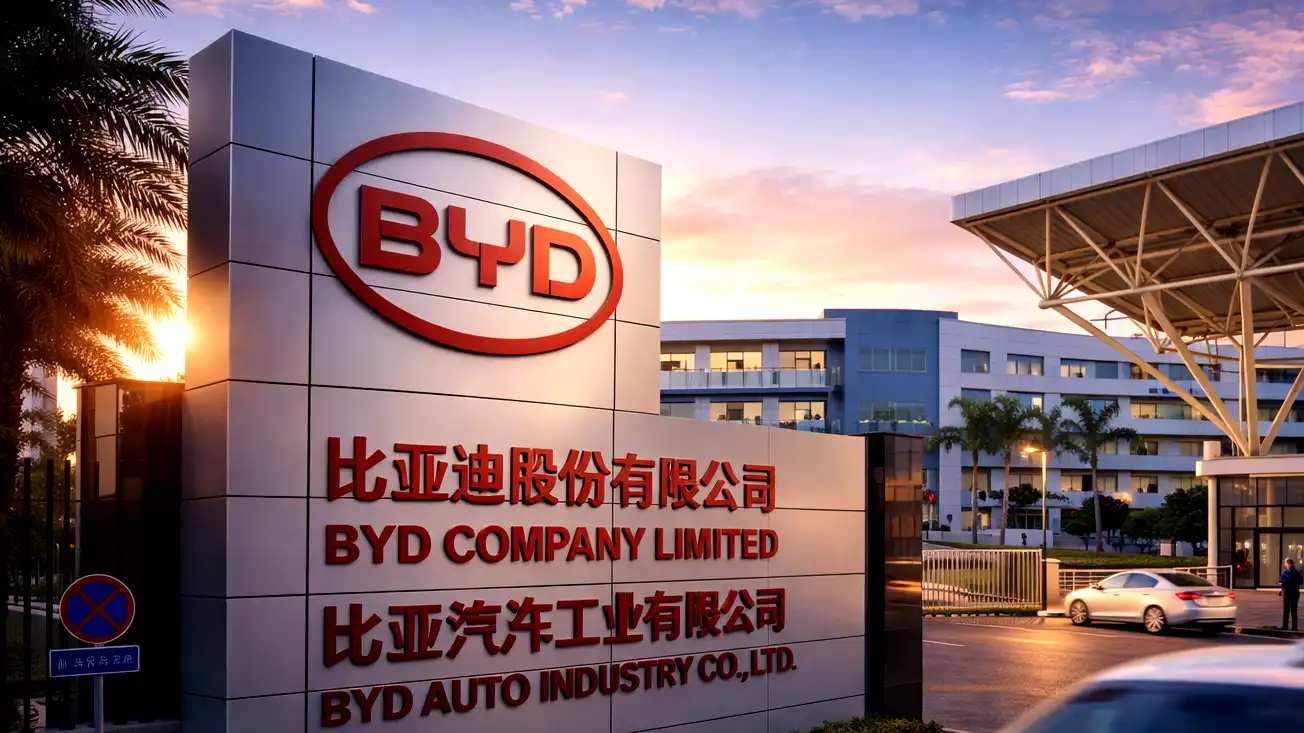
BYD has positioned itself as the driving force behind China’s international auto offensive. While the company’s domestic monthly sales experienced competitive pressure, its overseas deliveries surged to record heights, shipping 188,700 passenger vehicles and pickups abroad in a single month. BYD now generates more than half of its total vehicle revenue outside mainland borders, achieving an international transformation that few analysts predicted two years ago.
The company is deploying its own fleet of purpose-built roll-on/roll-off transport ships, such as the BYD Explorer No. 1, each capable of hauling up to 7,000 vehicles per voyage. In markets like Brazil, BYD already outsells all other electric vehicle brands combined, capturing a dominant share of the emerging green transport sector. Across Europe, the manufacturer is expanding retail franchise networks in Germany, the United Kingdom, and Scandinavia, offering long-term seven-year warranties and competitive standard feature packages that undercut legacy European rivals by 15% to 25%.
Tesla Shanghai Factory Leverages Export Hub Strategy
The global trade pivot is not limited to domestic Chinese brands. American electric vehicle pioneer Tesla has turned its Shanghai Gigafactory into its primary international export center to buffer against sliding domestic retail numbers.
Tesla sold 50,047 vehicles at retail within China during the month, marking a 12.4% year-on-year drop and its third straight monthly domestic decline. The company’s share of China’s pure electric vehicle retail market slipped to 7.17%, down from 8.33% a year earlier. To keep its Shanghai assembly lines running near full capacity, Tesla exported 36,119 Shanghai-built Model 3 and Model Y vehicles overseas, representing a 38.7% jump in export volume. Year-to-date, cumulative vehicle exports from the Shanghai Gigafactory have officially surpassed the total volume of cars Tesla sold directly to Chinese retail buyers.
Price War Dynamics and Changing Consumer Sentiment
The domestic sales slowdown has intensified an ongoing price war that began late last year. Automakers are burning through cash reserves to protect their market share, triggering price cuts across every vehicle category.
Deep Discounts Fail to Revive Hesitant Domestic Buyers
To stimulate sluggish foot traffic, manufacturers have launched sweeping promotional campaigns. Tesla introduced rare inventory cash discounts in mainland China, cutting Model 3 prices by 5,000 yuan, or about 2.1%, and trimming Model Y prices by 10,000 yuan, or roughly 3.8%. On top of direct price cuts, Tesla rolled out 8,000 yuan cash subsidies toward insurance policies and offered zero-interest financing terms for up to five years.
Domestic rivals responded immediately with equivalent price reductions. Geely, Leapmotor, and Chery launched limited-time cash rebates ranging from $1,000 to $3,000 across their compact and mid-sized electric lineups. In the premium segment, smartphone maker Xiaomi expanded its extended-range sport utility vehicle series to challenge established luxury marques. However, widespread discounting has created an unintended psychological effect: many prospective car buyers are delaying purchases, anticipating that vehicle prices will fall even further in subsequent quarters.
Fading Government Subsidies and Replacement Fatigue
The automotive retail sector is also grappling with the natural aftermath of aggressive government stimulus programs. Over the past two years, national and municipal authorities have poured billions of dollars into vehicle trade-in subsidies, offering consumers up to 20,000 yuan to scrap older gasoline cars in exchange for new energy vehicles.
These subsidies pulled forward a massive wave of replacement demand that would have naturally occurred in later years. With trade-in incentives winding down in several major metropolitan regions and local municipal budgets facing tighter fiscal constraints, that artificial demand boost has receded. Furthermore, central planners are preparing to phase down broad tax exemptions on electric vehicles, increasing the net purchase price for retail consumers and adding another headwind to domestic showroom sales.
Western Trade Barriers and Geopolitical Headwinds
As Chinese automotive exports break volume records every month, foreign governments are taking aggressive steps to shield their domestic car manufacturers from low-cost imports.
Navigating Rising Tariffs in the European Union and North America
The European Union has finalized countervailing tariffs on Chinese-made electric vehicles, adding provisional duties of up to 38% on top of the standard 10% import levy. European trade officials argue that extensive state subsidies, subsidized battery supply chains, and low-cost land grants give Chinese automakers an unfair competitive advantage over domestic manufacturers like Volkswagen, Stellantis, and Renault. In North America, the United States and Canada have imposed 100% tariffs on Chinese-built electric vehicles, effectively shutting Chinese brands out of those regional markets entirely.
Despite these heavy trade barriers, Chinese automakers continue to make commercial progress in Europe. Even with a 30% or 35% tariff tacked onto the sticker price, advanced manufacturing efficiencies, vertically integrated battery production, and lower domestic labor costs allow companies like BYD and SAIC Motor to sell well-equipped electric vehicles at prices competitive with European-built alternatives.
Establishing Overseas Assembly Plants in Key Regions
To permanently bypass trade tariffs and neutralize political backlash, Chinese automakers are transitioning from pure vehicle exporters to localized global manufacturers. Companies are investing billions of dollars to construct complete knockdown assembly plants and gigafactories across strategic geographic hubs.
BYD is investing over $1 billion to build major automotive manufacturing facilities in Hungary and Turkey, giving the brand direct, tariff-free access to the European single market. In Southeast Asia, Chinese brands have poured more than $1.5 billion into Thailand, Malaysia, and Indonesia, establishing regional supply chains that turn the Association of Southeast Asian Nations into a major export base for right-hand-drive electric cars. In South America, BYD took over a former Ford industrial complex in Brazil to assemble electric cars and buses locally, embedding its operations directly into local economies.
Long-Term Outlook for China’s Automotive Landscape
The sharp contraction in domestic retail sales alongside booming overseas exports marks a decisive turning point for the global automotive industry. China’s auto sector is moving past its early hyper-growth phase into a mature, highly competitive environment characterized by industry consolidation.
Industry Consolidation and the Survival of Pure-Play EV Makers
China currently hosts more than 100 distinct passenger vehicle brands, a fragmented market structure that industry analysts view as financially unsustainable during a prolonged domestic slump. Smaller, unprofitable electric vehicle startups that lack deep balance sheets or strong export distribution networks are facing severe financial strain.
Over the next two to three years, industry experts project that dozens of marginal automakers will be acquired, forced into bankruptcy, or forced out of the automotive market entirely. Capital, engineering talent, and manufacturing scale will consolidate around five or six dominant industrial conglomerates—including BYD, Geely, SAIC, and state-backed champions—capable of sustaining multi-billion-dollar price wars at home while building global distribution networks abroad.
The Next Frontier for Global Auto Competition
As domestic car retail sales adjust to a lower baseline, China’s automotive champions will continue to rely on international markets for long-term revenue growth. The competitive battleground is expanding beyond electric powertrains into automated driving software, smart cockpit operating systems, and connected vehicle ecosystems.
Chinese manufacturers are equipping mass-market vehicles priced under $20,000 with advanced driver-assistance features, artificial intelligence voice assistants, and fast-charging 800-volt battery architectures that Western automakers typically reserve for luxury vehicles costing over $60,000. By exporting high-tech, cost-effective vehicles to developing economies across Latin America, Africa, Central Asia, and the Middle East, Chinese automakers are locking in brand loyalty among millions of first-time car buyers.
China’s auto market is navigating a turbulent transition. While domestic retail sales remain weighed down by cautious consumer spending, fading subsidies, and low demand for gasoline vehicles, the nation’s automakers are leveraging their manufacturing scale to capture market share on the global stage. The 77.5% surge in monthly exports demonstrates that while domestic showrooms may be quiet, the global expansion of Chinese automotive technology is moving forward at full speed.