

Key Points:
- Analysts expect Apple to launch its first foldable iPhone in the fall of 2026.
- The device features a book-style design that opens into a small tablet.
- Apple plans to use a special Samsung display that eliminates the visible center crease.
- The phone will likely drop Face ID and use a Touch ID power button instead.
Apple held a major product launch last week, but fans waiting for a folding phone walked away empty-handed. The company still refuses to officially confirm the existence of a foldable iPhone. Despite the corporate silence, supply chain leaks and insider reports continue to flood the internet. Industry experts now confidently point to a release window in the second half of 2026. This timeline gives Apple plenty of runway to perfect its first major entry into the folding smartphone market.
Tech reporters Mark Gurman and Ming-Chi Kuo both agree on the fall 2026 target. Factories might even begin mass production by the middle of that year. Apple usually launches new iPhones in September, so a folding model would likely debut right alongside the upcoming iPhone 18 series. However, Apple holds a strict reputation for delaying products that fail to meet internal quality standards. If engineers hit snags with the delicate hinge or flexible screen, the company could easily push the release into 2027.
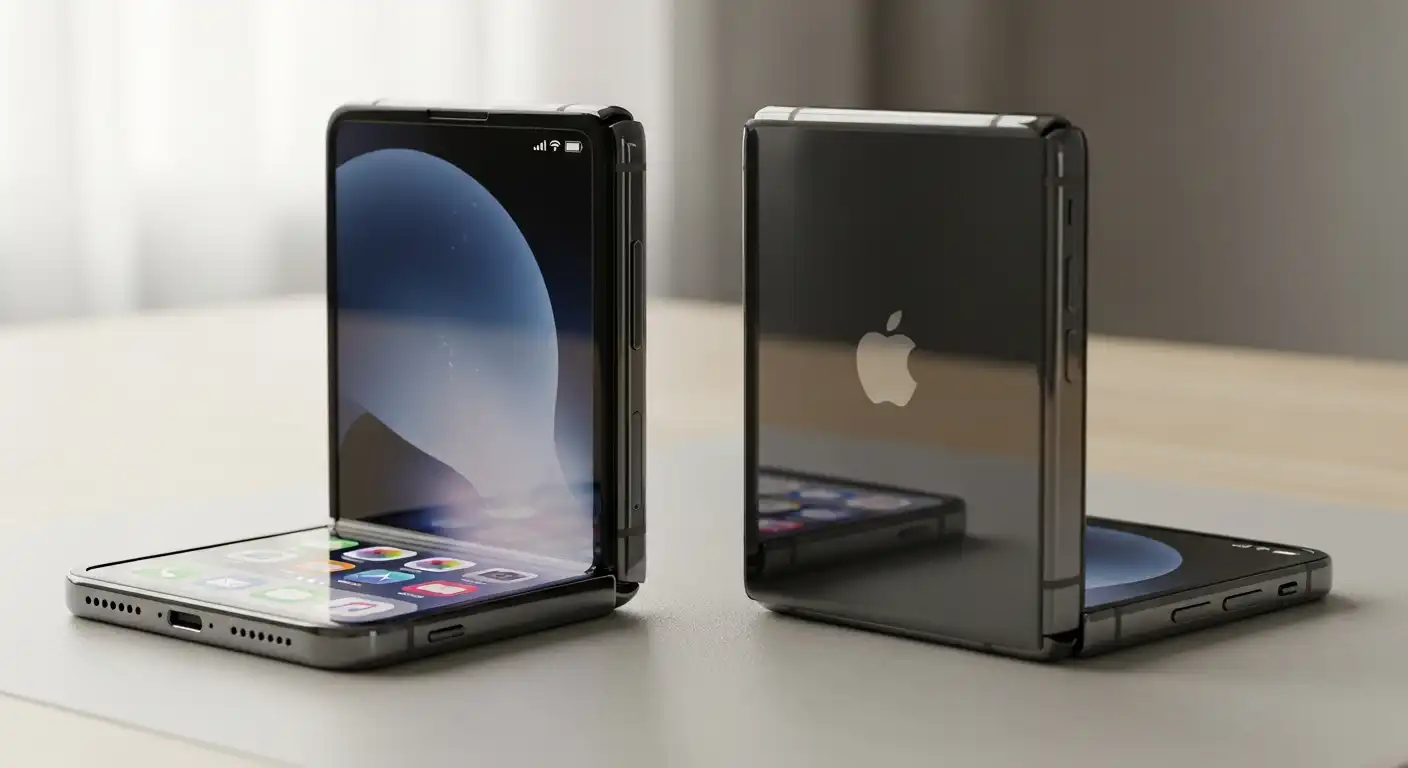
Current consensus says Apple chose a book-style design for its first foldable. The device will open like a book to reveal a large inner screen, similar to the Samsung Galaxy Z Fold. When unfolded, the display will measure around 7.8 inches, giving users an experience close to an iPad mini. When snapped shut, the phone will offer a 5.5-inch outer screen for quick tasks and normal phone calls.
Leaked CAD files from tipster Sonny Dickson give us a clear idea of the physical shape. The blueprints show a phone that looks slightly shorter and wider than a standard iPhone. This square footprint makes the inner screen much better for reading and watching videos. Apple also wants to make this device incredibly thin. Kuo predicts the open phone will measure just 4.5 to 4.8 millimeters thick. When folded, it will sit around 9 millimeters, putting it right in line with the sleek profile of the rumored iPhone Air.
Getting the display right remains the biggest hurdle for any folding device. Apple reportedly tapped Samsung Display to supply the primary OLED panels. Samsung recently showed off a new crease-less screen technology that Apple plans to adopt. This panel uses a laser-drilled metal plate to support the screen and spread out the physical stress of folding. Apple considers a completely smooth, invisible crease an absolute requirement before it will sell a folding phone to the public.
The mechanical hinge holds everything together. Reports indicate Apple will build the hinge using Liquidmetal. This metallic glass alloy offers incredible strength and resists bending much better than standard titanium. Using Liquidmetal helps improve the long-term durability of the moving parts while keeping the phone light in your pocket.
Users will capture photos using a four-camera system. Leaks point to a rear camera bump featuring a 48-megapixel main lens and an ultra-wide lens. You get a standard punch-hole selfie camera on the front cover and a hidden 24-megapixel under-display camera on the large inner screen. To save space and keep the screens clean, Apple will drop Face ID entirely. Instead, the company will build a Touch ID fingerprint sensor straight into the side power button.
A large screen drains battery life quickly. To combat this, Apple is testing massive, high-density batteries ranging from 5,000 to 5,800mAh. A new A-series processor and a custom Apple C2 modem will manage performance and connectivity. On the software side, the phone will run an interface resembling iPadOS. It will feature iPad-like layouts with sidebars and split-screen multitasking so users can easily view and control multiple apps at once.
All this custom technology carries a steep premium. Analysts universally agree that this will become the most expensive iPhone Apple has ever created. Current estimates place the retail price somewhere between two thousand and twenty-five hundred dollars. This puts the folding phone in the exact same financial territory as high-end MacBooks. While Apple keeps tweaking the final details, shoppers should start saving now if they want to own Apple’s biggest design shift in years.






