Key Points:
- Apple’s shares dropped nearly 2% after the company failed to provide a definitive launch timeline for its highly anticipated Siri AI upgrade.
- The tech giant revealed a major partnership with Google, renting its Gemini model for roughly $1 billion a year to power the new Siri.
- To monetize its artificial intelligence services, Apple is integrating advanced usage limits with its $10 billion iCloud+ subscription tier.
- While bulls like Wedbush target a $400 share price, skeptics warn the stock could fall as low as $215 if the AI premium unwinds.
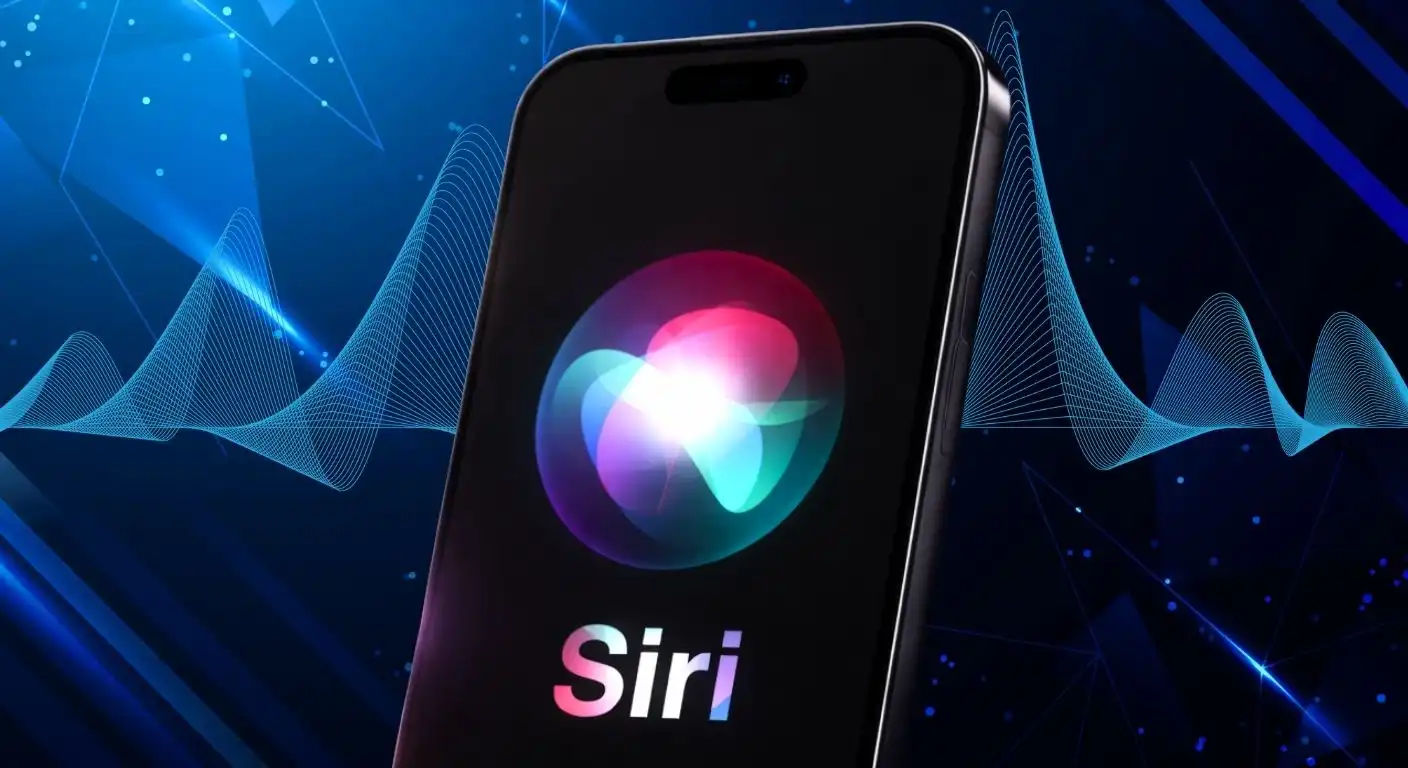
The highly anticipated public debut of Apple’s next-generation artificial intelligence strategy has left Wall Street feeling distinctly underwhelmed. During the opening day of its Worldwide Developers Conference (WWDC) on Monday, the tech giant showcased a complete rebuild of its virtual assistant, dubbed “Siri AI,” alongside its broader “Apple Intelligence” platform. However, the market’s reaction was swift and unambiguous. Apple’s shares slumped by 1.89% to close at $301.54, pulling back from an all-time intraday high of $316.94. This sharp market reversal highlighted a deep and growing divide between the revolutionary breakthroughs investors had priced in and the actual, evolutionary timeline that Apple presented.
The primary catalyst behind the sudden stock market pullback was not what Apple announced, but rather what the company left unsaid. According to a market report on Investing.com, the Apple Siri AI delay spooks retail investors because the company failed to provide a definitive, concrete launch date for its revamped voice assistant. While many on Wall Street expected a full-scale commercial rollout alongside the upcoming iPhone 17 launch this autumn, software engineering chief Craig Federighi merely confirmed that Siri AI will launch in “beta” later this year. This vague timeline has led veteran analysts to predict that a fully functional, stable version of the assistant will likely not reach the public until early or mid-2027.
Gene Munster, managing partner at Deepwater Asset Management and a veteran Apple analyst who has covered the company for decades, put the market’s disappointment into plain terms. On Monday, Munster pointed out that the lack of a definitive Siri timeline explained the immediate sell-off. He explained that most investors fully expected the software to be ready in time for the autumn hardware cycle to spark a massive, much-needed upgrade supercycle. Because Apple has already delayed its full AI rollout multiple times since first teasing its machine-learning ambitions at WWDC 2024, the continued reliance on vague “soon” promises has reignited investor skepticism about the company’s internal development pace.
Compounding this timeline anxiety, the keynote revealed a highly unexpected strategic concession that shook investors’ perception of Apple as an independent technology powerhouse. Rather than running its most advanced, conversational Siri tasks entirely on its own proprietary large language models, Apple has signed a multi-year deal to rent Google’s Gemini model. Reports indicate that the agreement will cost Apple approximately $1 billion annually to license Gemini as the primary engine powering Siri’s “broad world knowledge” queries. For investors who had bid up Apple’s valuation on the assumption that the company would develop its own sovereign, leading-edge AI models, the realization that Apple is renting its core AI brain from a direct competitor represented a significant disappointment.
Despite the market’s cautious reaction, Siri AI’s actual technical capabilities represent a major leap forward over the company’s old command-taking assistant. Rebuilt as a standalone application featuring a modern, chat-based interface, Siri AI can now analyze whatever is displayed on a user’s screen in real time. Because the assistant possesses conversational continuity, users can refer back to previous queries naturally, with the software autonomously retrieving small details from emails and messages. To protect user privacy, Apple will route these personal context queries through its custom “Private Cloud Compute” infrastructure, ensuring that sensitive data remains encrypted and out of reach of external companies like Google.
While investors focus on the immediate rollout delays, the long-term, structurally meaningful story of WWDC lies in how Apple plans to monetize these new AI services. According to Apple’s official newsroom disclosures, some of the most advanced Apple Intelligence features, such as real-time image generation and complex document rewriting, will carry daily usage limits. To bypass these restrictions and unlock unlimited access, consumers must subscribe to Apple’s iCloud+ subscription tiers. This strategic move effectively converts advanced AI capabilities into a powerful, high-margin services revenue lever, accelerating the growth of a division that already generates more than $10 billion in annual revenue.
This long-term monetization potential has kept several prominent Wall Street bulls firmly committed to the stock. Wedbush Securities analyst Dan Ives reiterated his highly optimistic Outperform rating and $400 price target for Apple shares following the keynote presentation. Ives argued that the event represents a massive step in the right direction, predicting that the integration of Apple Intelligence and iCloud+ subscription tiers will eventually add between $75 and $100 per share to the company’s total valuation as users gradually adopt the new services. He believes that the current market sell-off represents a classic, short-term “sell-the-news” reaction rather than structural damage.
However, other prominent Wall Street firms are taking a far more cautious approach to the stock’s valuation. Analysts at global investment bank UBS maintained their Neutral rating on Apple with a price target of $296, warning that the company’s high trading multiple—currently sitting near a price-to-earnings ratio of 37 times—is far too expensive for a hardware company experiencing slow single-digit growth. Some bear-side analysts have even warned that if the market’s premium for Apple’s AI capabilities fully unwinds due to further product delays, the stock could drop to a floor of $215 per share, wiping out over $1 trillion in market value.
The ongoing re-pricing of Apple shares highlights how deeply the global tech sector’s fortunes are linked to the success of its artificial intelligence roadmaps. As tech giants collectively spend over $100 billion annually to construct high-performance data centers, investors are demanding immediate financial execution rather than long-term promises. Even a minor 1.5% adjustment in global hardware sales or subscriber retention can heavily impact a company’s quarterly earnings. By relying on Google’s Gemini model to power its virtual assistant, Apple is highlighting how challenging it has become for even the world’s most valuable consumer brands to build advanced AI systems entirely in-house.
Ultimately, Apple’s mixed WWDC 2026 keynote represents a critical transition phase for the legendary hardware pioneer. While the tech giant successfully unveiled a highly advanced, privacy-first software suite and a clever monetization model built around iCloud+ subscriptions, its inability to provide a definitive launch date for Siri AI has temporarily soured investor enthusiasm. As the developer beta testing begins this week and public betas roll out in July, the coming months will serve as a vital testing ground. How successfully Apple executes its delayed software roadmap will determine whether Siri AI can finally trigger the massive hardware upgrade cycle investors are waiting for, or whether the company will continue to lag behind its more agile, cloud-native competitors.