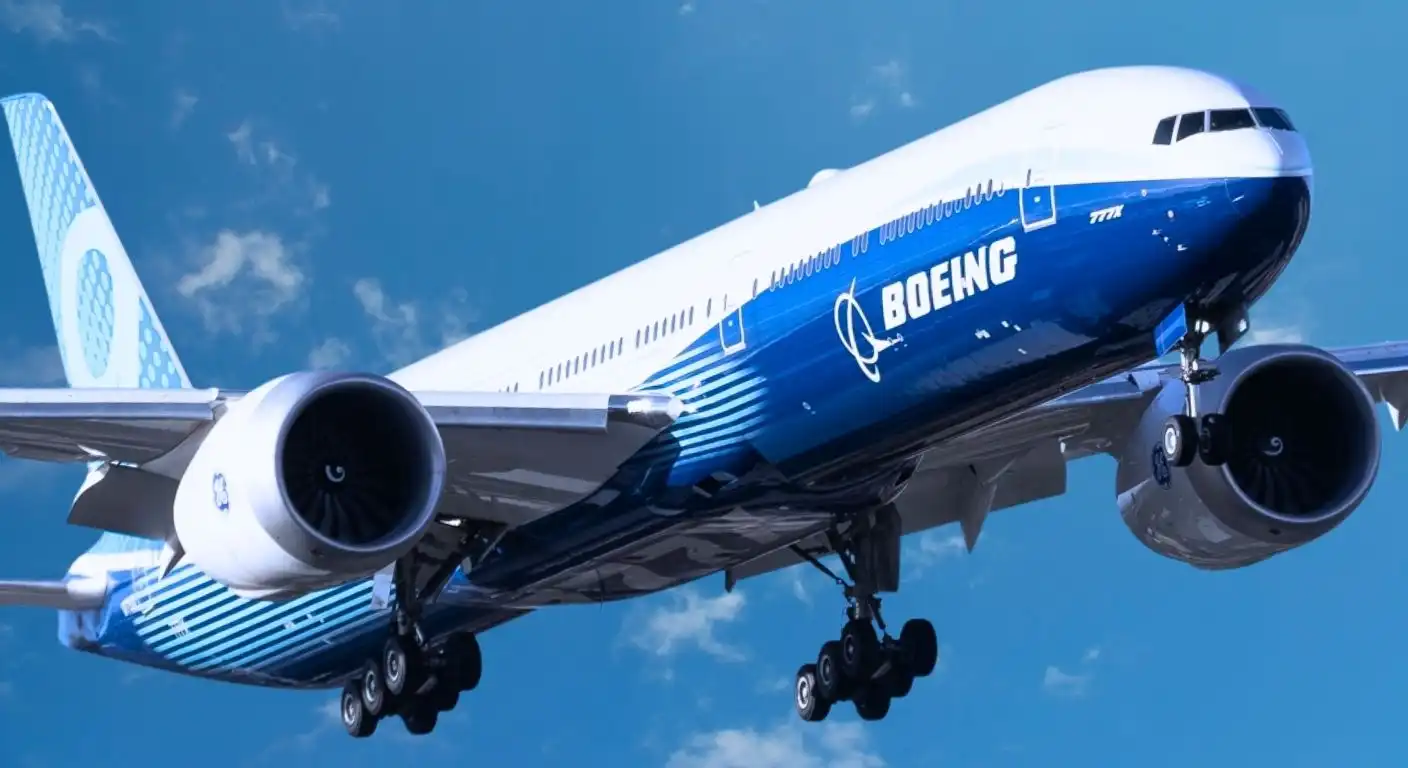
The smallest variant of Boeing’s single-aisle workhorse is finally entering the final stretch of its regulatory journey. After years of technical setbacks, intense political scrutiny, and manufacturing adjustments, the Boeing 737 MAX 7 is nearing a critical Federal Aviation Administration milestone. This progress signals a pivotal step forward for the aerospace giant as it tries to move past a series of safety crises and stabilize its highly complex production footprint.
According to statements from aviation regulators, the certification campaigns for both the MAX 7 and the larger MAX 10 are converging on a single, coordinated timeline. Federal Aviation Administration Deputy Administrator Chris Rocheleau confirmed that the agency has entered the final stages of certifying both narrowbody models. At the same time, European Union Aviation Safety Agency Executive Director Florian Guillermet stated that EASA is making very good progress on closing the last remaining items, calling the validation a top priority for the European regulator.
With roughly 80% of certification flight testing completed, the FAA expects to grant official approval for the MAX 7 during the summer of 2026, potentially as early as August. This timeline matches the expectations of launch customer Southwest Airlines, which plans to introduce the smaller narrowbody into passenger service by the first quarter of 2027. For Boeing, securing this regulatory sign-off is not just about delivering planes; it is about proving that its redesigned safety processes can satisfy the most demanding safety standards in commercial aviation history.
Navigating Regulatory Purgatory: The Home Stretch for Boeing’s Smallest MAX
The path to certifying the MAX 7 has been long and challenging. Originally scheduled to enter commercial service years ago, the aircraft became trapped in regulatory limbo following the global grounding of the MAX fleet in 2019. Subsequent manufacturing quality lapses further eroded regulatory trust, leading to an unprecedented level of oversight from global aviation watchdogs.
The MAX 7 is a shortened version of the operational MAX 8 and MAX 9 models, which have already logged tens of thousands of flight hours. Despite sharing the same basic fuselage design and aerodynamic enhancements, such as split-tip winglets, the smaller model required a separate certification program to validate its unique flying characteristics and structural weight distribution.
This prolonged delay has heavily impacted Southwest Airlines. The Dallas-based carrier holds a dominant stake in the program, accounting for approximately 90% of all firm orders for the MAX 7. Southwest has committed to firm orders for 289 of these aircraft as part of its long-term fleet modernization strategy. Due to the certification delays, Southwest had to adjust its capacity forecasts and keep older, less fuel-efficient Boeing 737-700 models in service longer than anticipated. The airline’s current planning assumes zero MAX 7 deliveries in 2026, with initial operations slated to begin in early 2027 once the carrier completes its internal pilot training and operational integration programs.
Overcoming the Icing System Overheat Bottleneck
The primary engineering obstacle holding up the certification of both the MAX 7 and MAX 10 involves the Engine Anti-Ice system. In late 2023, Boeing attempted to bypass a lengthy physical redesign process by requesting a temporary safety exemption from the FAA. The company sought permission to certify the MAX 7 with the existing EAI design until May 31, 2026, promising to develop and deploy a permanent physical fix in the meantime.
The timing of this request proved problematic. In January 2024, a mid-air door-plug blowout on an Alaska Airlines MAX 9 triggered intense public anger and direct congressional oversight. Recognizing that pushing for a safety exemption amid a public relations crisis was untenable, Boeing officially withdrew its request. The company committed to developing a physical engineering solution before delivering any MAX 7 or MAX 10 aircraft.
The technical issue centers on the engine cowl nacelle, which is made of carbon composite materials. Under specific atmospheric and operational conditions, running the engine anti-ice system in dry air can cause the inlet structure to overheat. This overheating risks structural damage, which could cause a portion of the engine cowl to break off and strike the aircraft fuselage or window panels. To resolve this, Boeing’s engineering teams had to design, build, and test a modified EAI architecture that automatically regulates temperatures or uses more heat-resistant materials, eliminating the risk of structural failure without requiring pilots to constantly monitor dry-air thresholds.
Cockpit Alerting Systems and Regulatory Convergence
Aside from the de-icing system, Boeing had to address modern regulations governing cockpit alerting systems. Following the congressional passage of the Aircraft Certification, Safety, and Accountability Act in late 2020, all new passenger aircraft certified by the FAA must feature a modern flight crew alerting system, known as an Engine Indicating and Crew Alerting System.
The baseline 737 cockpit architecture, which dates back to the late 1960s, does not utilize a centralized EICAS. Modifying the MAX 7 and MAX 10 to incorporate a fully compliant system would have created cockpit differences, requiring airlines to establish separate pilot training programs for different MAX variants.
Ultimately, Boeing reached an agreement with regulators to implement enhanced cockpit safety features on the remaining uncertified MAX variants. These enhancements include a system that allows pilots to easily silence erroneous warnings during high-workload situations, such as an unstable approach or engine malfunction. These upgrades improve pilot reaction times and prevent the cognitive overload that contributed to the historic MAX accidents.
The FAA and EASA: Ending Bilateral Hegemony
The certification process of the MAX 7 highlights a fundamental shift in how global aviation authorities collaborate. Historically, international regulators like EASA routinely validated FAA certifications of American-built aircraft with minimal independent testing. The safety crises of the past decade changed this dynamic, leading to a much more rigorous and independent validation process.
The close coordination between FAA Administrator Bryan Bedford and EASA Executive Director Florian Guillermet on the MAX 7 and MAX 10 represents a major milestone. Rather than conducting separate, isolated safety reviews, the two regulatory bodies have aligned their technical assessments.
This coordinated approach is helping Boeing resolve the final action items of the certification program. The joint effort ensures that once the FAA grants the type certificate, EASA validation will follow quickly. This agreement reduces the time between U.S. and European deliveries and restores a level of predictability to international aviation commerce.
Rebuilding the Factory Floor: Production Ramps and the Everett North Line
As Boeing nears the final regulatory approval for its remaining MAX models, the company is also rebuilding its manufacturing capabilities. In January 2024, the FAA took the unprecedented step of capping 737 MAX production at 38 aircraft per month to ensure quality control. Boeing spent over a year operating under this cap while overhauling its manufacturing processes and stabilizing its supply chain.
By late 2025, the FAA authorized Boeing to increase production to 42 planes per month. In late May 2026, Boeing cleared another hurdle by passing the FAA’s “capstone review,” which allowed the company to raise monthly output to 47 aircraft. The federal regulator supports this ramp-up, with Administrator Bryan Bedford stating that the agency is comfortable with the move and expects further production rate increases later in the year.
To support this expansion, Boeing activated a fourth final assembly line for the 737 MAX at its massive Everett, Washington facility on July 6, 2026. Internally designated as the “North Line,” this new facility closely mirrors the three existing assembly lines located at the Renton, Washington plant.
The Everett line gives Boeing the physical capacity to scale up 737 production to 52 planes per month by early 2027. While the Renton plant remains the primary home of the 737 family, the Everett line provides the flexibility needed to clear Boeing’s backlog of nearly 6,000 commercial aircraft.
Managing the Supply Chain Backlog
Ramping up production requires careful coordination with Boeing’s vast supplier network. The company’s primary fuselage supplier, Spirit AeroSystems, has faced its own financial and manufacturing challenges, requiring direct support from Boeing to ensure structural components meet strict quality tolerances.
Engine manufacturing is another critical constraint. CFM International, a joint venture between GE Aerospace and Safran, produces the LEAP-1B engines that power the entire 737 MAX family. High global demand for commercial engines, coupled with persistent raw material shortages, has kept engine supply tight.
Boeing must also balance its single-aisle manufacturing with its widebody programs. The 787 Dreamliner has faced production constraints due to passenger seat certification delays and supply bottlenecks for GE Aerospace engines. By stabilizing the 737 lines and utilizing the new Everett facility, Boeing hopes to free up resources to resolve these widebody supply chain issues.
Financial Implications of the Certification Lock-In
The financial stakes of the MAX 7 and MAX 10 certification campaigns are incredibly high. Over the past several years, Boeing has accumulated a large inventory of already-assembled aircraft that could not be delivered to customers due to the ongoing regulatory delays. These parked jets represent billions of dollars in tied-up capital and incur significant storage and maintenance costs.
The impending certification of the MAX 7 will allow Boeing to begin preparing these stored aircraft for delivery. When an airline takes delivery of a new plane, it typically makes the final, largest payment on the contract, which will provide a major cash infusion for Boeing.
Wall Street analysts estimate that clearing this inventory and ramping up production will help Boeing achieve sustainably positive free cash flow by the end of 2026. This cash flow is vital for repairing Boeing’s balance sheet, which carries more than $45 billion in debt accumulated during the twin crises of the MAX grounding and the global pandemic.
The Strategic Importance of the MAX 10
While the MAX 7 is crucial for Southwest Airlines, the larger MAX 10 is the key to Boeing’s long-term commercial competitiveness. The MAX 10 is the largest variant of the 737 family, designed to seat up to 230 passengers in a single-class configuration.
This model is Boeing’s direct competitor to the Airbus A321neo, which has dominated the single-aisle market. Airbus has captured a massive share of the mid-range market, largely because Boeing did not have a certified, high-capacity narrowbody to offer airlines looking to maximize capacity on high-density routes.
The MAX 10 has attracted more than 1,200 orders from major global carriers, including United Airlines, Ryanair, Delta Air Lines, Alaska Airlines, and WestJet. To prevent tail strikes during takeoff and landing due to its longer fuselage, Boeing had to design a unique, telescoping landing gear system for the MAX 10.
The system extends the landing gear during takeoff to provide additional tail clearance, then retracts into the standard wheel well during flight. With the MAX 10 undergoing Type Inspection Authorization Phase 2 testing, the FAA expects to certify the model by the end of 2026, setting up Ryanair to receive its first deliveries in the spring of 2027.
Prioritizing Narrowbodies Over the Long-Delayed 777X
The focus on the MAX 7 and MAX 10 has forced Boeing to make difficult choices regarding its widebody product development. The ambitious 777X program, designed as the successor to the highly successful 777 and 747 widebodies, has faced substantial delays.
In late 2024, Boeing took a $4.9 billion pre-tax charge on the 777X program after discovering a structural issue with a thrust link component during flight testing. This setback pushed the first planned delivery of the 777-9 variant out to 2027.
Boeing CEO Kelly Ortberg has prioritized stabilizing the high-volume 737 MAX program over accelerating the widebody programs. The narrowbody aircraft line represents the primary source of recurring revenue for the commercial airplanes division. By focusing engineering and regulatory resources on clearing the MAX 7 and MAX 10 certifications first, Boeing is building the financial foundation required to support the long-term development of the 777X and 787 platforms.
Turning the Page on a Decade of Safety Crises
The progress toward certifying the final MAX variants comes during a broader leadership transition at Boeing. CEO Kelly Ortberg, who took the helm with a mandate to rebuild the company’s safety culture, has made structural reforms a priority. Ortberg has worked to rebuild relationship trust with the FAA, shifting Boeing away from its previous combative stance to a more transparent, collaborative partnership.
This cultural shift has led to a gradual return of delegated authority from the regulator. The FAA has recently begun allowing Boeing employees to issue airworthiness certificates for certain 737 MAX and 787 Dreamliner aircraft under federal oversight. This restoration of trust is a vital milestone, as it allows Boeing to streamline its delivery processes without compromising safety.
Boeing is also making progress in key international markets. During a recent trip to China, Ortberg secured a 200-aircraft purchase commitment, marking a breakthrough in a narrowbody market that had been closed to Boeing for nearly a decade. While the Chinese domestic market is increasingly competitive due to the rise of the state-supported COMAC C919, Boeing’s return to favor with Chinese airlines is a positive indicator for its global sales pipeline.
The upcoming FAA certification of the MAX 7 represents more than just the approval of a shorter aircraft model. It marks the beginning of the end of the 737 MAX regulatory saga, a decade-long period that forced the aviation industry to rethink aircraft certification, pilot training, and manufacturing oversight. By working closely with regulators, addressing technical hurdles, and expanding its factory footprint, Boeing is positioning itself to close this difficult chapter and chart a more stable course for the future of flight.