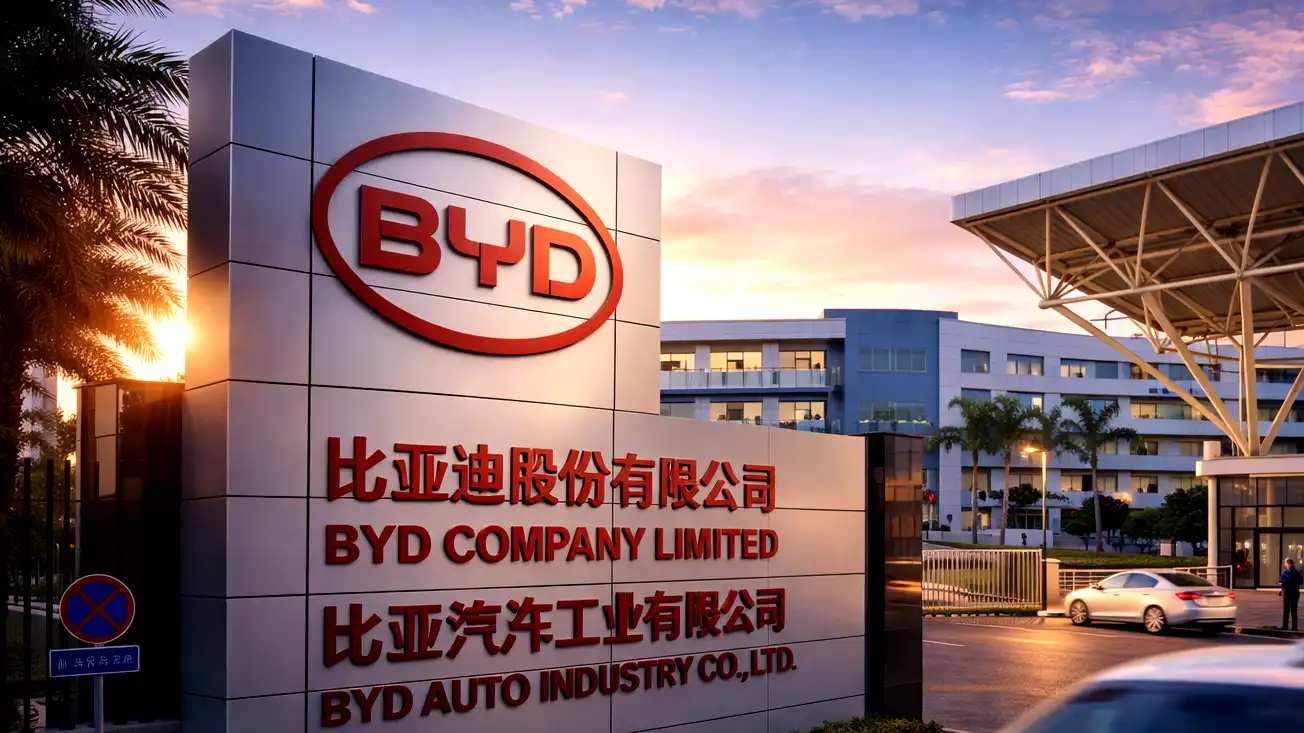
The rapid global expansion of the Chinese electric vehicle industry has run into severe regulatory, environmental, and human rights hurdles on European soil. In late June 2026, emergency services and local police confirmed that a second construction worker died at the building site of BYD’s flagship passenger car manufacturing facility in Szeged, southern Hungary. The fatal incident has intensified the spotlight on the Chinese automaker, which was already facing mounting pressure from European Union lawmakers and human rights organizations over allegations of systemic labor exploitation and environmental non-compliance.
The Szeged manufacturing facility is the cornerstone of BYD’s European strategy. As the company’s first passenger vehicle factory within the European Union, the plant is scheduled to begin initial vehicle assembly before the end of the year. This local production footprint is critical for BYD, allowing the company to bypass the steep import tariffs that Brussels recently proposed on Chinese-made electric vehicles. However, the recurring safety failures and documented reports of worker abuse have raised serious questions about the cost of this rapid expansion, turning the Hungarian factory into a central battleground for labor safety and corporate governance in Europe.
With police launching criminal investigations and regional governments issuing sanctions against subcontractors, the project is serving as a major test case. It highlights the difficulties European regulators face when trying to enforce strict occupational safety, migration, and environmental standards on foreign multinational firms eager to establish a foothold inside the European single market.
Details of the Tragic Incidents at the Szeged Site
The latest workplace tragedy occurred on a Thursday in mid-June 2026, within the active construction zone of the Szeged facility. According to reports from the Csongrád-Csanád County Police Headquarters, a Chinese migrant laborer was killed after being struck by a transport vehicle.
The initial police investigation indicates that a truck travelling on the construction site had stopped next to a heavy loading machine. After the loader operator signaled that the path was clear, the truck began to move forward. At that exact moment, the Chinese worker stepped directly between the two industrial vehicles and was run over.
The National Ambulance Service responded rapidly, dispatching multiple rescue units and an air ambulance helicopter to the scene. Despite prolonged resuscitation attempts by paramedics and the helicopter crew, the worker’s life could not be saved. Local police have since initiated criminal proceedings against the vehicle operators on suspicion of causing a fatal traffic accident.
This tragic loss of life is not an isolated incident at the Szeged project. In February 2026, another worker died at the construction site during a high-risk loading and crane operation carried out by an on-site subcontractor. Following that initial death, Hungarian labor inspectors and police launched an investigation on suspicion of negligent endangerment resulting in death in the course of employment. The occurrence of two fatal workplace accidents in a span of just four months has drawn sharp criticism from local labor advocates, who argue that the general contractors are prioritizing rapid construction speeds over basic human safety.
The China Labor Watch Investigation: Systemic Forced Labor Allegations
The fatal accidents at the Szeged factory are occurring against a backdrop of deep, documented concerns regarding the treatment of the construction workforce. In April 2026, New York-based non-profit organization China Labor Watch (CLW) released a comprehensive investigative report that exposed brutal, highly exploitative working conditions at the BYD site.
The CLW investigation was based on extensive field research, including direct interviews with 50 Chinese migrant workers who were flown into Hungary to construct the plant. The findings revealed a highly organized, deceptive recruitment and subcontracting system designed to exploit vulnerable migrant laborers while shielding the parent company from direct legal liability.
Unpacking the Extreme Working Conditions Exposed by Activists
The detailed findings of the CLW report suggest that the working conditions at the Szeged site violate both Hungarian labor laws and international human rights conventions, matching several indicators of forced labor defined by the International Labor Organization (ILO).
Continuous Seven-Day Workweeks and Forced Overtime
According to the testimony of the workers interviewed by CLW, the labor force at the Szeged construction site faces extreme, systematic overtime abuse. Laborers consistently work nine to ten hours a day, and during the hot summer months, shifts frequently extend to twelve or fourteen hours.
To make matters worse, subcontractors routinely enforce continuous seven-day workweeks with no guaranteed rest. Many workers reported working 30 or 31 consecutive days without a single day of rest.
Furthermore, the payment structures are deliberately designed to obscure these extreme overtime hours. Instead of calculating and paying legal overtime premiums, subcontractors pay flat hourly rates or lump sums that fail to compensate workers for their extra labor, representing a massive violation of Hungary’s national labor code.
Financial Coercion and Opaque Wage Arrangements
To prevent workers from leaving the site or complaining to local authorities, subcontractors utilize highly coercive financial retention mechanisms. The CLW report revealed that subcontractors routinely withhold 20% to 30% of the laborers’ earned wages, depositing the money into restricted bank accounts located in China.
If a worker attempts to quit their job, return home, or speak out about safety violations before the contract term is complete, the subcontractor refuses to release these withheld funds. Workers are also forced to pay high recruitment fees, often around RMB 8,000 (approximately $1,100), and cover their own international airfare and visa fees out of pocket.
Because these upfront expenses plunge the workers into significant debt before they even begin working, they become financially trapped, forced to endure abusive conditions in a foreign country simply to earn back their initial investments.
Visa Irregularities and Forced Deception During Inspections
The investigation also uncovered serious irregularities regarding the legal immigration status of the construction workforce. Many Chinese laborers reported being flown into Hungary on business or non-work-authorized visas, rather than the valid industrial work permits required by European Union law.
By operating in this regulatory gray area, subcontractors can keep these workers hidden from local labor registries, depriving them of legal protections and basic medical insurance. When workplace injuries occur, injured workers are frequently denied adequate medical care or forced to return to work before they have fully recovered.
Additionally, workers testified that when official Hungarian labor inspectors visited the site, company managers instructed them to lie about their actual working hours and falsify their timesheets. Those who refused to comply or expressed a desire to speak to inspectors faced immediate intimidation, threats of immediate deportation, and the permanent forfeiture of their withheld wages.
European Union Scrutiny and Local Regulatory Crackdowns
The revelations of the CLW report and the subsequent workplace deaths have triggered a significant political backlash in both Brussels and Budapest, bringing the issue of Chinese labor practices in Europe to the highest levels of government.
Members of European Parliament Demand Action from Brussels
Following the publication of the CLW findings in April, three members of the European Parliament formally petitioned the European Commission to investigate the alleged labor abuses at the Szeged site. According to checks by legal experts, this represents the first time that claims of labor exploitation linked to a Chinese-owned automotive manufacturing business operating within the European Union have been formally brought to the attention of the European Commission.
European lawmakers have expressed deep concern that allowing foreign multinational firms to import substandard, exploitative labor practices into the EU would set a highly dangerous precedent. They argue that if BYD is permitted to build its European supply chain using exploited migrant labor, it will undermine the domestic labor market, disadvantage local European manufacturers who comply with strict union wages and safety laws, and violate the EU’s core commitment to human rights and fair competition.
Sanctions and Fines Imposed by Hungarian Regional Authorities
In response to the mounting international pressure and local media reports, Hungarian regional authorities launched a targeted investigation into the Szeged construction site. In early June 2026, a spokesperson for the Csongrád-Csanád County Government Office confirmed that inspectors had uncovered multiple violations of occupational safety and labor regulations.
As a result of these findings, the government office officially sanctioned three subcontractors associated with the construction of the BYD plant and imposed a financial fine on one of them. Regional authorities stated that they will continue to regularly monitor the Szeged site to ensure compliance with national safety laws, promising to enforce safe, lawful working conditions through further legal proceedings if necessary.
However, labor rights advocates remain highly skeptical that these modest fines will trigger real change. They point out that for a multi-billion-dollar corporation like BYD, small administrative fines are simply viewed as a minor cost of doing business, rather than a deterrent to stop systematic labor exploitation.
Environmental Disputes and Corporate Defensiveness
The safety and labor controversies surrounding the Szeged facility are further complicated by a series of parallel environmental disputes that have drawn intense scrutiny from local communities and environmental regulators.
In May and June 2026, the Csongrád-Csanád County Government Office filed an official complaint alleging that the construction project had seriously violated its environmental permits. The complaint accused subcontractors of depositing soil that exceeded legal contamination limits at several unauthorized, external agricultural locations instead of processing the toxic soil in accordance with environmental safety guidelines.
This environmental probe triggered immediate concerns among local residents in Szeged, who worry that toxic materials from the massive industrial site could contaminate local farmlands and water supplies. László Gajdos, the Minister of the Environment, addressed the issue publicly on social media, firmly calling on BYD’s leadership to immediately cease any activities harmful to the environment and fully comply with local laws. Gajdos emphasized that the health and safety of the Hungarian people are more important than any economic interest, promising that the government will not make compromises for corporate gain.
BYD has moved quickly to defend its reputation, rejecting the environmental allegations. During an international business conference in Belgrade, BYD Executive Vice President Stella Li declared that the claims of environmental violations were entirely false.
Li stated that the company has engaged legal teams to respond to the allegations and remains fully committed to the Szeged project. While subsequent soil testing by local agricultural agencies did not find widespread contamination on surrounding farms, the incident has highlighted the growing public anxiety surrounding the environmental footprint of the rapid EV and battery manufacturing boom in Hungary.
The High Stakes of the European EV Supply Chain
The mounting controversies at the Szeged site are occurring at a time of immense geopolitical and economic pressure for the global automotive industry. The European Union has moved aggressively to protect its domestic carmakers from cheap Chinese imports, proposing a series of anti-subsidy tariffs on Chinese-made electric vehicles that can reach up to 38.1%.
To survive these tariff walls, BYD must establish a local manufacturing footprint inside the European Union as quickly as possible. The Szeged plant is designed to be the company’s primary gateway into the European single market, allowing it to stamp its vehicles with a “Made in Europe” label and evade the expensive import duties.
The financial stakes are massive. BYD’s European sales are growing rapidly, with the company’s new car registrations in the EU more than doubling in the first few months of the year to reach 29,291 units. Any significant delay to the construction of the Szeged facility—whether due to labor strikes, regulatory shutdowns, or environmental injunctions—would severely damage BYD’s global expansion plans, giving legacy European carmakers more time to scale their own electric vehicle lineups.
This immense pressure to build the factory quickly is the primary reason why subcontractors are forcing Chinese migrant laborers to work extreme, exhaustive shifts under highly dangerous conditions. By importing their own workforce and relying on a complex web of intermediary labor agencies, the general contractors can bypass local wage standards and push construction speeds to the absolute limit.
However, as the second tragic fatality in Szeged proves, this high-speed, low-cost model is extractable only at an unacceptable cost to human life, creating a major reputational crisis for a brand that is trying to win over environmentally and socially conscious European consumers.
The Fragile Ground of Overseas Expansion
The second workplace fatality at BYD’s Szeged factory, combined with persistent labor and environmental investigations, has exposed deep structural vulnerabilities in the automaker’s European expansion strategy. By relying on highly exploitative, subcontracted labor systems that bypass local safety and wage laws, the project has run directly into a wall of European Union scrutiny.
While BYD remains determined to begin vehicle assembly at the plant by the fourth quarter of the year to escape European tariffs, the human and environmental costs of this rapid construction can no longer be ignored.
For the European Union, the unfolding situation in Hungary serves as a critical warning. To protect the integrity of its single market and uphold its commitment to human rights, Brussels must look past superficial corporate promises and enforce strict, unyielding compliance with labor, migration, and environmental standards across the entire EV supply chain.
Until foreign multinational firms prove they can build their products without exploiting vulnerable migrant workers or risking their lives on the factory floor, the green energy transition will continue to rest on a highly fragile, ethically compromised foundation.