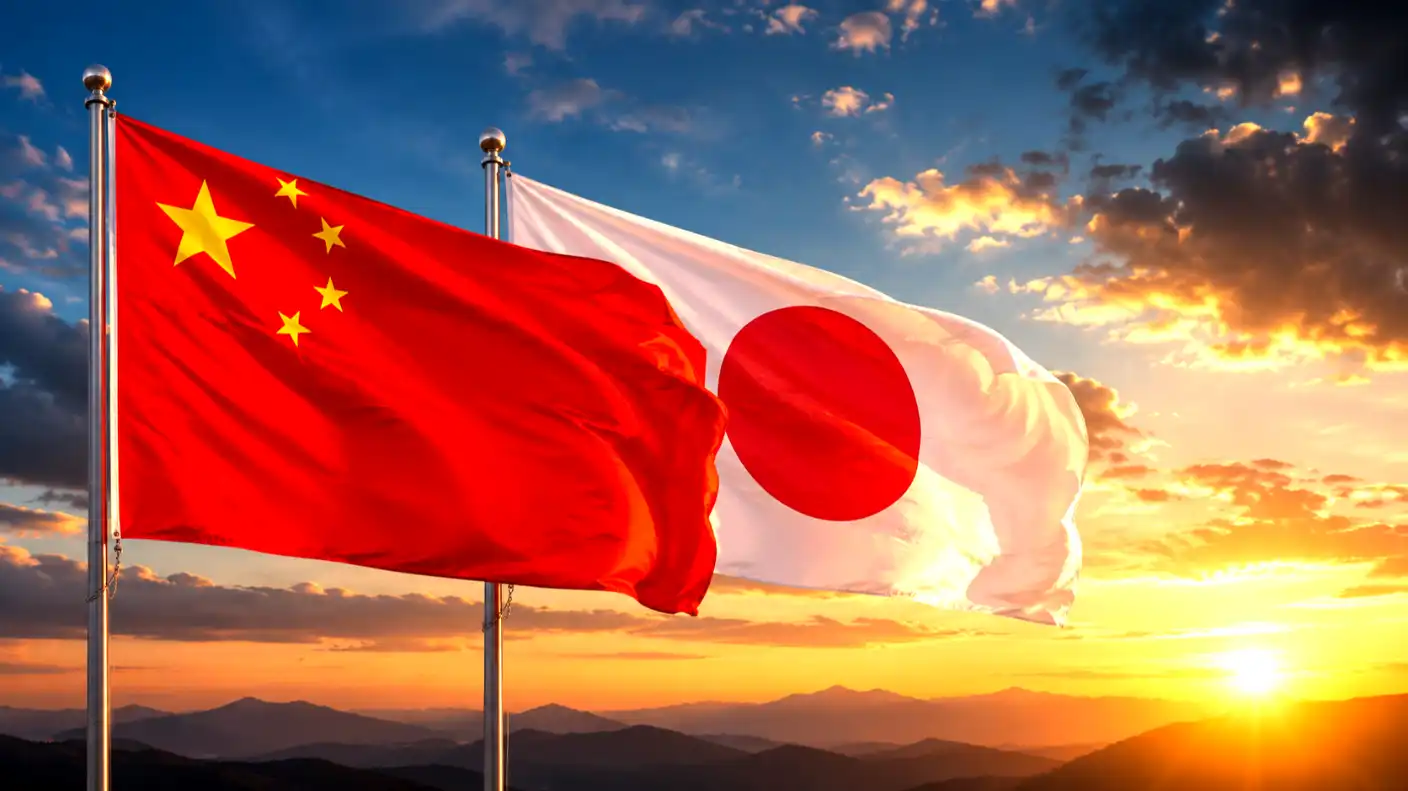
A major international incident has unfolded in the northeastern Chinese port city of Dalian, sending shockwaves through the global technology supply chain and further destabilizing the fragile relationship between Tokyo and Beijing. On Wednesday, June 24, 2026, both the Japanese and Chinese governments confirmed the detention of two Japanese nationals. The individuals work as employees for the China-based unit of a major Japanese heavy electric machinery manufacturer.
According to sources familiar with the matter, local customs authorities arrested the two employees over separate but linked attempts to take highly restricted, rare-earth-related products out of China, directly violating Beijing’s recently tightened export controls.
This development marks a significant escalation in the geopolitical struggle for control over the critical raw materials that power modern high-tech industries. Rare earth elements are essential for manufacturing everything from electric vehicle motors and wind turbines to highly advanced guided missile systems and consumer electronics.
Because China controls more than 70% of the world’s rare earth extraction and over 90% of its processing and magnet production, any disruption to this supply chain represents an existential threat to foreign technology companies.
By arresting executives from a prominent Japanese heavy machinery firm, Beijing is sending a clear message: it will aggressively police its borders and weaponize its resource monopoly to counter what it views as a hostile, U.S.-aligned security posture in Tokyo.
The detentions have introduced a new wave of fear and uncertainty for multinational corporations operating inside China. As trade friction turns into criminal prosecution, business groups warn that doing business in China has become increasingly risky, with standard corporate procurement and research activities now carrying the threat of state surveillance and long-term imprisonment.
The Anatomy of the Dalian Arrests
The circumstances surrounding the arrests highlight the precision and intensity with which Chinese state security and customs officials are enforcing the country’s expanded export control laws.
The Timeline of the Customs Crackdown
According to a press statement delivered by Japan’s Chief Cabinet Secretary Minoru Kihara, the arrests occurred in the strategic shipping hub of Dalian. Local customs officials detained the first Japanese employee on May 18, 2026, and subsequently arrested the second employee on May 25, 2026.
Both individuals work for the same heavy electric machinery manufacturer, and the Japanese Foreign Ministry has confirmed that their arrests are linked to the exact same smuggling investigation.
Although the Japanese government has withheld the names of the employees and their employers to protect their privacy, the physical nature of the allegations is clear. The employees allegedly attempted to bypass Chinese export licensing protocols by carrying restricted rare earth magnets and specialized alloys out of the country in their personal luggage or shipping them under false customs declarations.
Traficom and other regional customs bodies have stepped up physical inspections of all outbound cargo and passenger baggage, utilizing advanced X-ray scanners and automated database tracking to prevent unauthorized shipments of dual-use technologies.
Chinese Foreign Ministry Issues a Blunt Warning
In Beijing, Chinese Foreign Ministry spokesman Guo Jiakun confirmed the detentions, stating that the two Japanese nationals were caught violating Chinese laws regarding the smuggling of prohibited imports and exports.
During a regular press conference, Guo dismissed complaints from Tokyo, issuing a blunt warning to the Japanese government.
He urged Japan to educate and remind its citizens and companies operating in China to strictly abide by Chinese laws and regulations, reinforcing Beijing’s stance that foreign corporations will receive no special legal treatment if they attempt to bypass domestic resource restrictions.
The Japanese government, operating through its consular offices in Shenyang and Dalian, has secured consular access to the detained employees.
Kihara confirmed that diplomatic staff are communicating with the detainees and their families to provide appropriate protection, adding that both individuals are currently in stable health.
However, given the sensitive nature of the allegations and China’s historically tough stance on national security violations, securing their release will require a complex, high-level diplomatic intervention that could take months or even years to resolve.
The Strategic Importance of Rare Earths and the Silicon Blockade
To understand why the attempted export of these materials has triggered such a severe national security response from Beijing, one must analyze the critical role that rare earths play in the global economy and the defense sector.
China’s Global Resource Monopoly
Rare earths are a group of 17 specialized elements, including neodymium, dysprosium, and terbium, that possess unique magnetic, luminescent, and electrochemical properties.
These elements are the lifeblood of the modern clean energy transition.
An average electric vehicle motor requires approximately 1.5 kilograms of high-performance rare earth magnets to run efficiently, while a single industrial wind turbine requires more than 600 kilograms of these specialized materials.
In the defense sector, the dependence is even more critical.
The United States’ next-generation F-35 fighter jet requires approximately 417 kilograms of rare earth materials to operate its navigation, radar, and weapon-targeting systems, while Virginia-class nuclear submarines require over 4,000 kilograms.
Because China dominates the global supply of these elements, any country seeking to build advanced weapons or high-tech consumer products remains heavily dependent on Chinese miners and processors.
The Structural Tightening of Export Controls
As geopolitical tensions between China and Western nations escalated over the last year, Beijing systematically moved to weaponize its resource monopoly.
In January 2026, China’s Commerce Ministry implemented strict, new controls on Japan-bound shipments of dual-use items—materials and technologies that can be used for both civilian and military purposes—including rare earths, critical minerals, and specialized processing software.
The Chinese government openly justified these restrictions as a defensive measure designed to slow down Japan’s rapid “remilitarization” and nuclear ambitions.
Under the new regulations, Chinese exporters must obtain specialized, state-approved licenses before shipping any rare earth elements, processing equipment, or finished magnets to Japanese buyers.
By limiting the flow of these critical inputs, Beijing aims to create a technological bottleneck, making it more difficult and expensive for Japanese manufacturers to produce high-tech military hardware, advanced robotics, and electric vehicles.
The Broader Impact on the Japanese Business Community
The arrests in Dalian have sent a wave of panic through the Japanese business community operating in China, reinforcing fears that foreign executives are being targeted as political pawns in a wider diplomatic confrontation.
The Collapse of Rare Earth Magnet Exports
The impact of Beijing’s tightened export controls is already visible in bilateral trade data. According to a report published by the Japanese Chamber of Commerce and Industry in China, exports of critical rare-earth magnets from China to Japan have plunged over the last six months, disrupting production schedules for multiple Japanese automotive and electronics manufacturers.
While the Chinese Commerce Ministry originally claimed that the export curbs would target only a small number of specific entities and would not affect “normal economic and trade exchanges,” Japanese business groups paint a very different picture.
The Chamber of Commerce revealed that the restrictions have increasingly been applied to items that are used purely for civilian purposes, such as standard consumer appliances and civilian automotive parts.
By holding up shipments at ports, demanding excessive documentation, and arresting employees over minor compliance issues, Chinese authorities have effectively choked off the supply of critical components to Japan’s manufacturing sector.
The Spying Precedent: The Astellas Pharma Case
The detentions in Dalian are particularly alarming to Japanese executives because they follow a highly controversial precedent.
In July 2025, a Chinese court sentenced a Japanese former executive of Astellas Pharma Inc. to three years and six months in prison after finding him guilty of engaging in espionage activities.
The former pharmaceutical executive had been detained in Beijing in March 2023, just days before he was scheduled to return to Japan.
He was a highly prominent member of the expatriate business community, having served as a senior official within the Japanese Chamber of Commerce and Industry in China.
His long-term detention, subsequent trial behind closed doors, and prison sentence proved that serving as a high-level corporate representative no longer provides any protection from Chinese national security laws.
For many Japanese firms, the Astellas case was a clear signal that standard business intelligence gathering, market research, and corporate lobbying are now viewed by Beijing as potential spying activities, making the Chinese market an incredibly hostile environment for foreign managers.
The Geopolitical Context: Sanae Takaichi and the Taiwan Friction
The escalating trade and legal war between Tokyo and Beijing is being driven by a deep, underlying diplomatic feud over the future of Taiwan.
The November Parliamentary Remarks
The current wave of bilateral tension was set in motion by a series of highly controversial statements made by Japanese Prime Minister Sanae Takaichi.
Takaichi, who has adopted a highly hawkish foreign policy stance since taking office, suggested during a parliamentary debate that a Chinese military attack on Taiwan, a self-ruled democratic island that Beijing claims as its sovereign territory, would represent an immediate threat to Japan’s national security.
Takaichi went on to suggest that such an attack could prompt a direct military response by the Japan Self-Defense Forces in coordination with the United States.
These comments marked a significant shift away from Japan’s traditional, highly cautious stance of strategic ambiguity regarding Taiwan, representing one of the most explicit warnings Tokyo has ever issued to Beijing.
Beijing’s Aggressive Countermeasures
In Beijing, Takaichi’s comments were met with fury. The Chinese government views any foreign statements regarding Taiwan as a direct violation of its sovereignty and an interference in its internal affairs.
Chinese state media launched a coordinated campaign accusing the Takaichi administration of attempting to resurrect Japan’s World War II-era militarism.
The economic retaliation followed quickly. By tightening export controls on critical rare earths, blocking key semiconductor shipments, and arresting Japanese corporate employees, Beijing is attempting to punish Japan’s industrial sector for its government’s geopolitical alignment with Washington.
By demonstrating that it can instantly disable Japan’s high-tech manufacturing sector by cutting off its raw materials, China is trying to pressure Japanese business lobbies to influence their government to adopt a more conciliatory foreign policy.
The Path Forward for High-Tech Supply Chains
The arrests in Dalian represent a critical turning point for the global high-tech supply chain. For decades, multinational corporations operated under the assumption that they could build highly integrated, global supply chains that separated economic trade from geopolitical conflict.
The detentions of the machinery executives prove that this assumption is no longer viable.
For Japanese technology firms, the crisis has highlighted the urgent need to diversify their raw material supply chains away from China.
Companies are actively investing in alternative extraction projects in Australia, the United States, and Vietnam, and are researching new manufacturing techniques that require fewer rare earth elements.
However, building independent mining and processing infrastructure is a slow and incredibly expensive process that will take years to complete.
In the near term, Japanese businesses must learn to navigate an increasingly hostile and unpredictable regulatory environment in China.
With corporate compliance now carrying the threat of state detention and long-term imprisonment, multinational firms must establish incredibly rigorous legal auditing protocols, ensuring that every shipment, purchase, and employee activity complies fully with China’s complex national security laws.
As Tokyo and Beijing remain locked in a high-stakes geopolitical standoff, the survival of the world’s most advanced manufacturing industries will depend on their ability to adapt to a fragmented global economy, where the flow of critical raw materials is increasingly governed by the harsh realities of superpower geopolitics.