Key Points:
- China expressed strong dissatisfaction after several major Chinese firms were added to a Pentagon military list.
- The updated Section 1260H roster adds 65 entities, bringing the total to 188 Chinese firms.
- New blacklisted additions include tech champions Alibaba, Baidu, BYD, Nio, and solar giant Trina Solar.
- The U.S. Defense Department will face strict prohibitions on contracting directly with these firms starting in 2027.
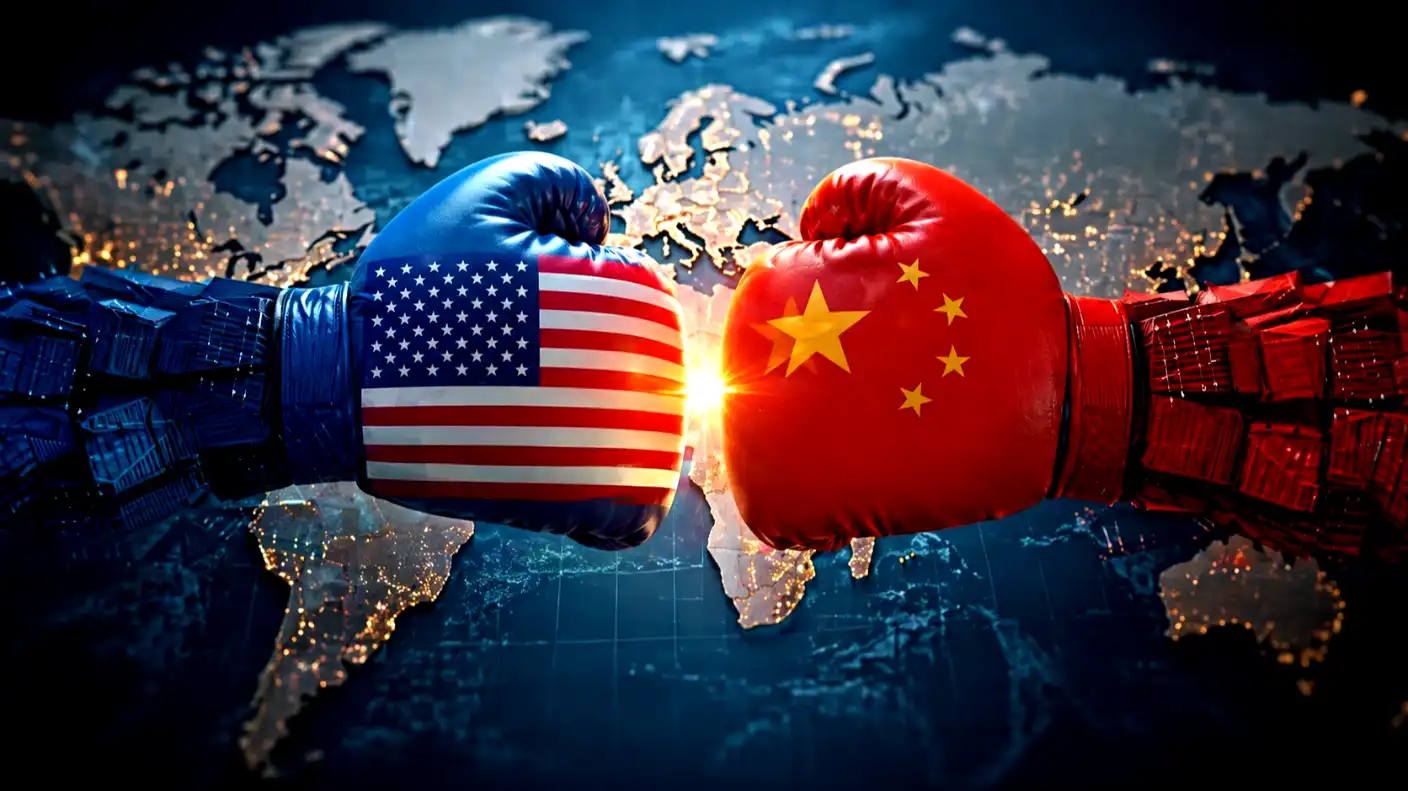
China Slams Pentagon’s decision to add several of its largest technology and industrial conglomerates to a military-linked blacklist, throwing a fresh wrench into already strained bilateral relations. The Chinese Ministry of Commerce expressed “strong dissatisfaction” and firm opposition to the U.S. Department of Defense’s newly expanded Section 1260H list. The blacklist identifies Chinese commercial companies that Washington believes are aiding the People’s Liberation Army and supporting Beijing’s military-civil fusion program. This dramatic move marks a significant escalation in the ongoing technological Cold War between the world’s two largest economies, directly targeting the crown jewels of China’s advanced industrial sector.
The long-awaited update, which the Pentagon published on Monday, reaches much further into China’s economy than previous iterations. The Department of Defense added 65 new entities to the roster, including 17 parent-level companies and 48 subsidiaries. This massive expansion pushes the total number of blacklisted firms to 188 Chinese entities, up from 134 in the previous official revision. While the list does not trigger immediate financial sanctions or outright trading bans for U.S. citizens, it poses severe reputational risks. It could lead to future restrictions on access to U.S. capital markets.
The newly blacklisted entities include some of the most prominent household tech names in Asia. The Pentagon targeted e-commerce giant Alibaba Group Holding, search engine and artificial intelligence pioneer Baidu, and electric vehicle makers BYD and Nio. The department subsequently expanded the roster to include the world’s largest solar panel manufacturers, Trina Solar and JA Solar Technology. By targeting these specific companies, Washington is directly zeroing in on the advanced industries—electric vehicles, renewable energy, and artificial intelligence—that Beijing views as the primary engines of its future economic and military prowess.
The expanded list also captures critical players across the high-tech supply chain, including display-panel manufacturer BOE Technology Group, battery makers CALB and EVE Energy, and lidar sensor developers Hesai and RoboSense. Furthermore, the inclusion of leading biotechnology firm WuXi AppTec and robotics pioneer Unitree highlights the widening scope of U.S. security concerns. The blacklisting of WuXi AppTec is particularly significant, as it intersects with upcoming bipartisan “Biosecure” legislation in Congress. This upcoming law will restrict the use of federal funding, loans, and grants to procure services from listed biotechnology companies of concern, threatening to sever WuXi’s lucrative contracts with American healthcare organizations.
While the designations do not entirely lock these companies out of the U.S. commercial market, they carry severe operational consequences. Federal law strictly prohibits the Department of Defense from contracting directly with any company on the Section 1260H list. More importantly, beginning in 2027, the military will face tight restrictions on purchasing any products or services from these blacklisted entities through third-party contractors. This pending ban will effectively strip these Chinese companies of lucrative federal supply opportunities. It could prompt other Western governments and multinational corporations to drop them as suppliers to ensure compliance.
The aggressive update arrives at an incredibly sensitive diplomatic moment, directly undermining recent efforts to stabilize bilateral ties. The Pentagon released the expanded list just one month after U.S. President Donald Trump and Chinese President Xi Jinping met in Beijing, where they maintained a fragile, highly delicate trade truce. During that high-profile meeting, both leaders committed to managing their competitive differences through constructive dialogue. The Chinese Commerce Ministry pointedly noted that the Pentagon’s sudden unilateral action ignored the consensus reached by the two leaders during their recent face-to-face summit.
In a defiant public statement, the Chinese Commerce Ministry firmly opposed the designations and urged Washington to immediately reverse its decisions. The ministry urged the United States to stop its erroneous and discriminatory practices, withdraw the relevant blacklisting measures, and return to the correct track of building a stable, constructive relationship. Furthermore, the Chinese government issued a blunt, explicit warning to Washington, stating that if the U.S. does not treat Chinese firms fairly, Beijing will inevitably retaliate resolutely and forcefully to protect the legitimate rights and interests of its enterprises.
The escalating dispute over the Pentagon’s blacklist demonstrates that the technological divide between the United States and China has become permanent and structural. Despite occasional diplomatic handshakes and fragile trade truces, both superpowers remain locked in a zero-sum struggle to control the foundational technologies of the 21st century. As Washington continues to build legal and procurement barriers around Chinese technology champions, Beijing will likely accelerate its drive to build entirely domestic, self-sufficient supply chains. This ongoing decoupling will force global businesses to navigate an increasingly fragmented and high-risk regulatory landscape where corporate compliance and national security dictate the boundaries of global commerce.