Key Points:
- Medical teams in China launched their first multicenter trial of a fully implanted brain-computer interface.
- The initial test group includes exactly 32 patients who suffer from severe spinal cord injuries.
- Doctors use direct brain connections to collect clear signals and decode patients’ movement intentions.
- Engineers completely developed this new high-throughput medical technology inside the country.
Chinese medical researchers launched a major clinical trial on Monday to test a fully implantable brain-computer interface. This new system aims to help people who cannot move their arms or legs. Engineers built this high-throughput technology completely inside the country. The start of this multi-center trial indicates that doctors are ready to test the hardware on real patients in hospital settings.
Doctors consider quadriplegia one of the hardest problems to solve in modern medicine. When a person suffers a severe spinal cord injury, the damage breaks the connection between the brain and the body. The brain still sends movement commands, but those signals never reach the muscles. Standard physical therapy offers very little help for these patients. They often spend 100% of their time relying on family members and nurses for basic daily tasks.
To fix this broken connection, scientists developed brain-computer interfaces. These systems currently use 3 different technical approaches. Some doctors use non-invasive methods that involve placing a tight cap with sensors over the patient’s head. Other teams use semi-invasive systems that sit just under the skull but do not penetrate the brain tissue. The third method involves fully invasive systems that place hardware directly inside the brain.
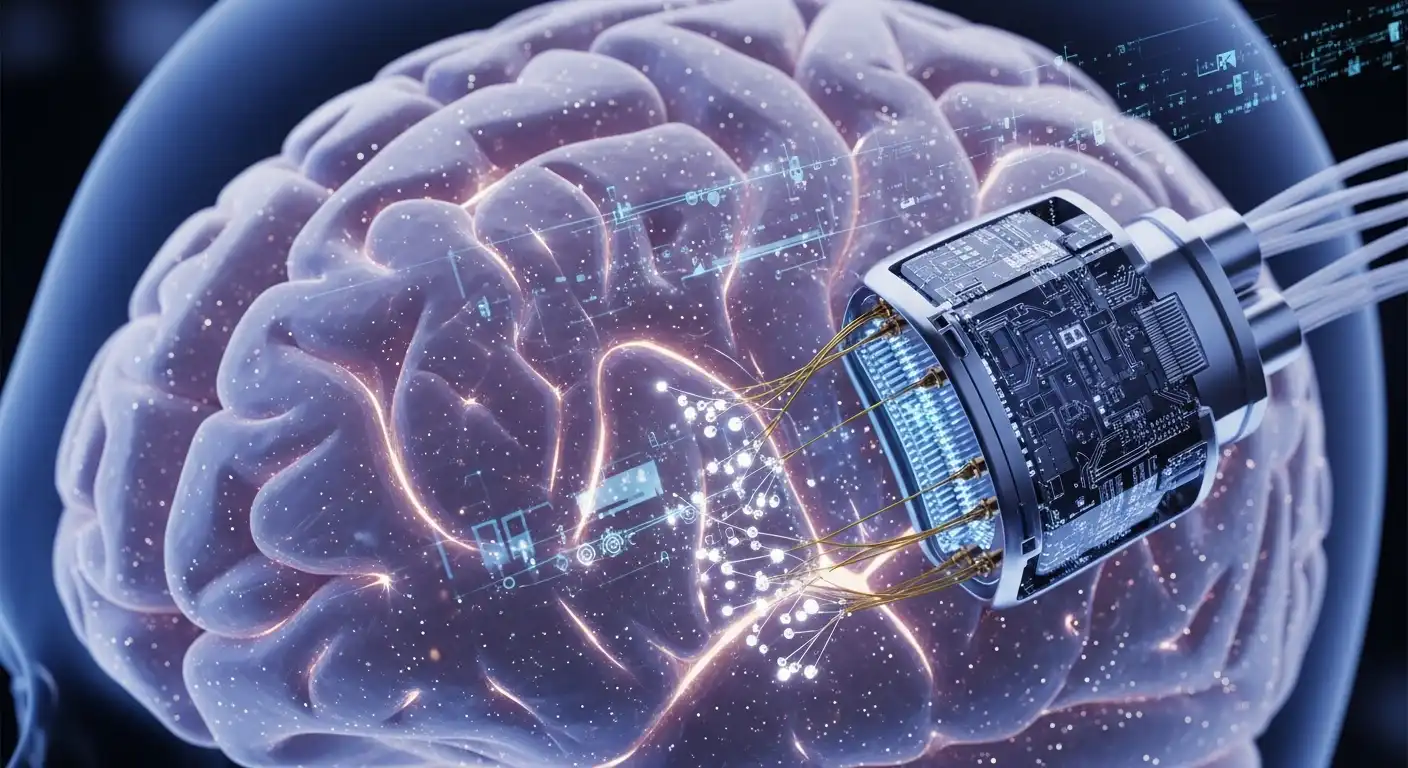
The new Chinese trial strictly uses the fully invasive method. Surgeons place tiny electrodes directly into the brain tissue. These small wires sit right next to the active neurons. Because the sensors touch the cells directly, they capture highly precise electrical signals. Outside sensors often pick up too much noise from the human skull and skin. The implanted wires skip that noise entirely and record high-quality data.
Researchers need these clear signals to figure out exactly what the patient wants to do. When a paralyzed person thinks about moving their hand, the brain fires specific electrical patterns. Computers read these high-quality signals and decode the user’s movement intentions. Once the computer understands the thought, it can send a command to a robotic arm, a wheelchair, or a computer screen.
The medical team selected exactly 32 patients for this first round of testing. Every person in this group suffers from severe limb dysfunction because high cervical spinal cord injuries damaged their nerve pathways. These injuries happen high up on the neck, causing the patient to lose control over almost their entire body. By starting with a focused group of 32 people, doctors can closely monitor implant safety and track the software’s performance over time.
Medical trials take time, and researchers plan to expand this program gradually. If the first 32 patients show good results, the team will invite more people to join the study. Expanding the trial gives the engineers more data. More data helps the software learn how to translate brain waves into physical actions much faster. The ultimate goal is to build a system that works quickly and flawlessly for any patient.
Severe spinal cord injuries cost families millions of dollars over a lifetime. Patients often need 24-hour care, expensive medical equipment, and special vans for transportation. If a brain chip can restore even a fraction of a person’s independence, it drastically lowers these financial burdens. Operating a computer, sending an email, or controlling a motorized wheelchair with just a thought gives immense power back to the patient.
The success of this trial would lay a strong foundation for advanced rehabilitation therapies. Right now, doctors can only manage the symptoms of paralysis. With a working brain-computer interface, medical teams take a major step toward restoring function. They hope to eventually send those decoded computer signals directly back into the patient’s muscles, bypassing the broken spinal cord entirely.
Engineers and doctors will spend the next few years monitoring this technology. They need to ensure the tiny electrodes do not cause infections or damage brain tissue over long periods. As the software improves and the hardware proves safe, this domestic technology could completely change how hospitals treat severe nerve damage. For now, the 32 patients in the trial give hope to thousands of families dealing with permanent paralysis.