Key Points:
- Crude oil prices fell sharply as U.S.-Iran ceasefire negotiations triggered a massive sell-off.
- Brent crude fell toward $86.45 per barrel, while WTI futures dropped below $84.
- Maritime war risk insurance premiums for Gulf transit are expected to drop from 1.5 percent to baseline levels.
- The price drop offers a major opportunity for the U.S. to replenish its Strategic Petroleum Reserve.
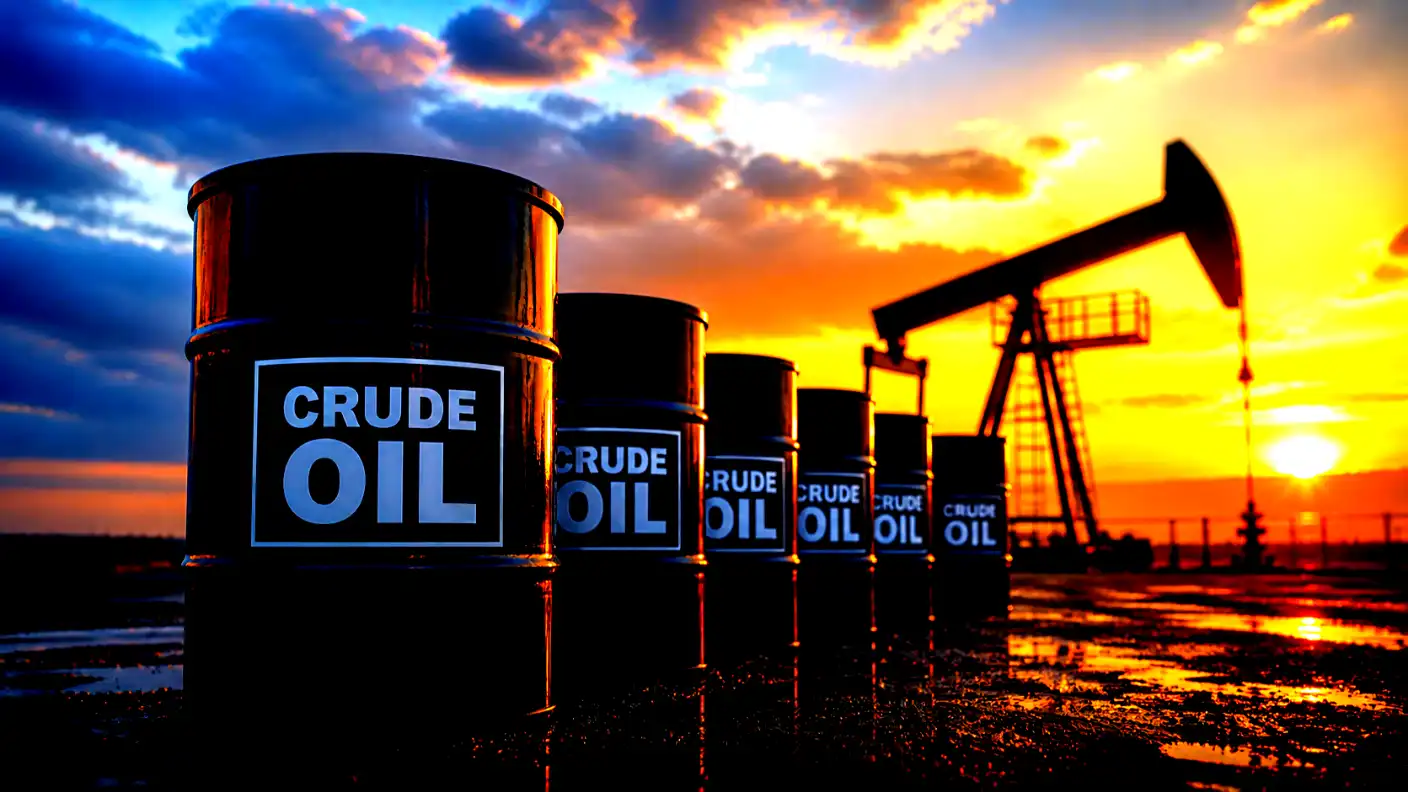
Crude Oil Plummets as global energy markets react to a sudden, highly anticipated breakthrough in ceasefire negotiations between the United States and Iran. This dramatic price drop occurred after President Donald Trump announced that negotiators had finalized the core parameters of a comprehensive peace treaty, which both nations could sign as early as this weekend. The sudden de-escalation of Middle East military tensions has triggered a massive unwinding of geopolitical risk premiums across international commodity exchanges, throwing a vital lifeline to inflation-weary consumer economies and permanently altering the near-term outlook for global energy supplies.
The sheer scale of the market sell-off shows how quickly investor sentiment has shifted from fear of scarcity to anticipation of abundance. On international commodity exchanges, Brent crude, the global benchmark, fell by more than 4% over consecutive sessions to settle around $86.45 per barrel. Meanwhile, West Texas Intermediate (WTI) futures, the U.S. benchmark, dropped below the key $84 threshold, trading near $83.80 per barrel. This steep decline represents a complete reversal from previous weeks, when military strikes and escalating threats had pushed crude prices toward $100 per barrel, squeezing corporate profit margins worldwide.
The most immediate physical consequence of the proposed ceasefire is the scheduled reopening of the Strait of Hormuz, the world’s most critical maritime transit chokepoint. The monthslong military blockade had effectively halted the flow of approximately 20 million barrels of crude oil and liquefied natural gas per day, representing roughly 20% of the world’s daily petroleum consumption. By restoring standard, unhindered shipping access through the narrow waterway, the peace agreement will allow major Gulf producers to quickly resume their normal export schedules, eliminating the massive, artificial supply bottleneck that had paralyzed international shipping lanes.
This geopolitical de-escalation will also deliver immediate, massive cost savings to the global shipping and logistics industries. During the height of the Middle East conflict, maritime war risk insurance premiums for tankers transiting the Persian Gulf spiked to an expensive range of 1.0% to 1.5% of a vessel’s total value, adding up to $1 million in extra costs per voyage. Insurance analysts expect these prohibitive premiums to collapse back to baseline levels of around 0.05% to 0.1% once the peace treaty takes effect. This dramatic reduction in transit insurance costs will lower the landed price of oil for international buyers, easing global import bills.
The prospective peace deal also introduces complex new dynamics for the OPEC+ producer alliance, which has spent the last year enforcing voluntary production cuts of 2.2 million barrels per day to support prices. A normalized trade environment will enable Iran to rapidly scale up its seaborne crude exports, potentially returning up to 1.5 million barrels per day of highly competitive supply back to the global market. With non-OPEC+ nations in the Americas already producing at record levels, this influx of newly unlocked Iranian crude will likely force the producer cartel to maintain its strict supply curbs well into next year to prevent a massive market glut.
For the United States government, the sudden price plunge presents a highly strategic opportunity to rebuild its emergency fuel stockpiles. Over the past several years, Washington aggressively drew down the Strategic Petroleum Reserve (SPR) to a historic low of approximately 360 million barrels to cushion consumers from post-pandemic inflation and war-driven price spikes. Now, with WTI futures trading comfortably below the $84-a-barrel level, the Department of Energy can aggressively buy back cheap crude to replenish the underground caverns in Texas and Louisiana, restoring the nation’s emergency energy shield at a highly favorable price.
Beyond physical supply and demand, the commodity sell-off reflects a massive shift in speculative capital flows. For months, hedge funds and institutional managers held massive net-long positions in crude futures as a hedge against war-driven inflation. However, as the geopolitical risk premiums dissolve, these financial managers are rapidly liquidating their oil contracts. This speculative capital is rotating into other high-growth sectors, particularly artificial intelligence equities and the highly anticipated, record-breaking initial public offering of SpaceX, which has sucked billions of dollars of speculative liquidity out of traditional commodity markets.
Ultimately, the dramatic fall in global oil prices proves that diplomacy remains the most effective tool to manage international energy crises. By choosing a structured ceasefire over destructive military escalation, both governments have successfully averted a catastrophic global energy shock that could have plunged major economies into a deep recession. As commercial shipping lines prepare to return to the Persian Gulf, the gradual normalization of energy trade will provide the cost relief needed to ease persistent global inflation. For both everyday consumers and multinational businesses, this historic stand-down provides a much-needed financial buffer to navigate the complex economic landscape.