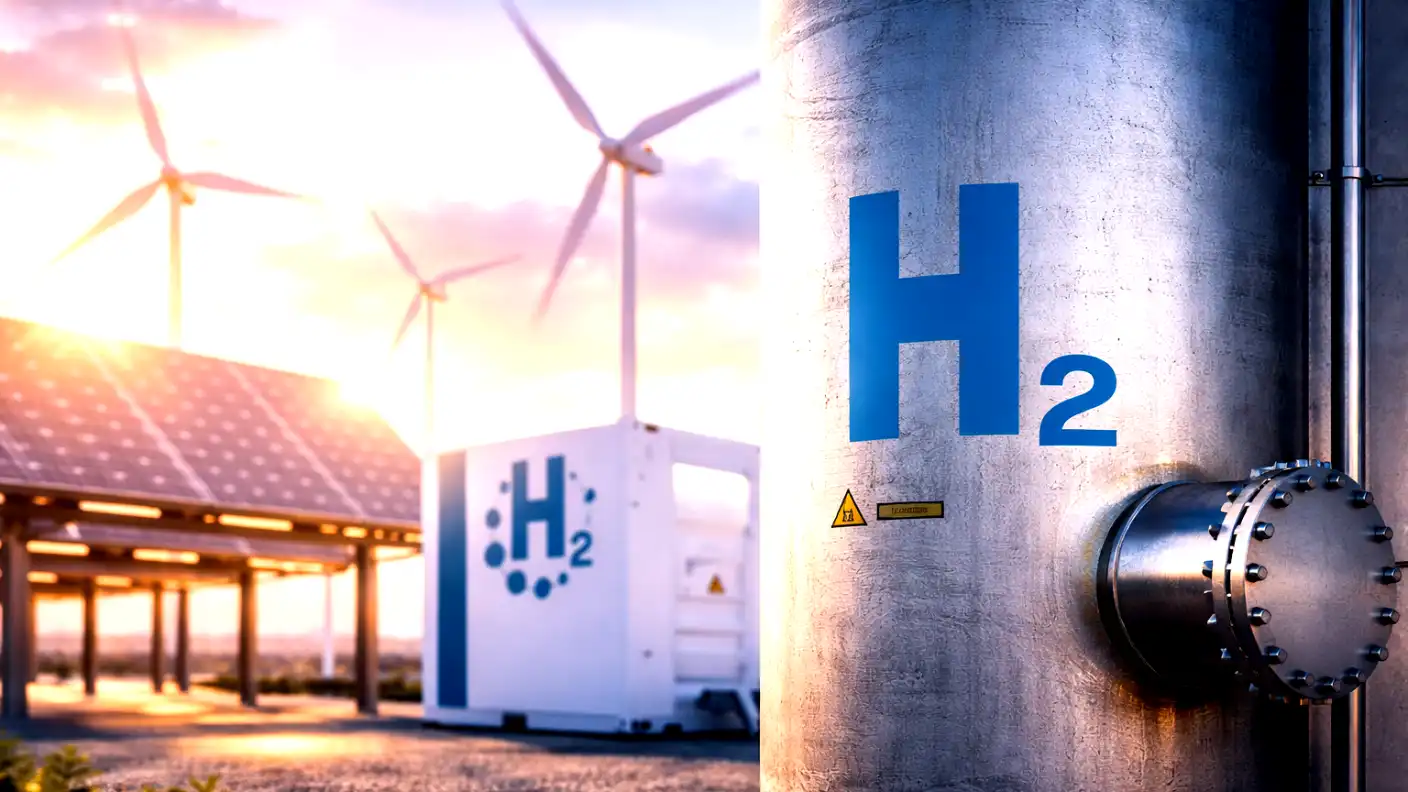
The global clean energy transition has achieved a monumental milestone in Bermeo, northern Spain. Finnish engineering group Wärtsilä has successfully fired up the world’s first large-scale hydrogen engine running on 100% pure hydrogen, delivering real electricity directly into Spain’s national power grid.
For years, the international energy sector has debated “hydrogen-ready” boilers, theoretical engine designs, and small-scale laboratory experiments. This successful real-world trial takes the concept of utility-scale hydrogen power generation out of the brochure and places it directly under real, highly demanding grid operating conditions.
The demonstration centers on the Wärtsilä 31H2, a massive 13,000-horsepower piston engine the size of a city bus. While renewable energy systems like solar arrays and wind farms are expanding rapidly across Europe, their natural, weather-dependent intermittency leaves power grids highly vulnerable to sudden generation drop-offs. By proving that a massive, utility-scale internal combustion engine can run safely and continuously on pure, zero-emission hydrogen fuel, this technical breakthrough provides a critical, dispatchable safety net to keep national electricity grids perfectly stable.
Understanding the Mechanics of the Wärtsilä 31H2 Engine
To understand the physical scale of this achievement, we must first look at the underlying hardware platform. The Wärtsilä 31 engine family is already certified by Guinness World Records as the most efficient four-stroke diesel engine in existence. By using this highly optimized, ultra-efficient platform as the foundation of its hydrogen transition, the company has developed a zero-emission engine that delivers unmatched thermal efficiency and power density.
Operating a massive piston engine on 100% pure hydrogen is an extraordinary engineering challenge. Hydrogen burns significantly faster and at much higher temperatures than natural gas or diesel, creating a severe risk of engine knock, pre-ignition, and high nitrogen oxide (NOx) emissions.
To control this volatile combustion process, Wärtsilä’s engineers redesigned the engine’s fuel injection systems, cylinder heads, and air-to-fuel ratio controls. The resulting engine can adjust its combustion parameters in real time, ensuring a smooth, highly reliable power stroke even during rapid load changes.
Key Components of Wärtsilä’s Hydrogen Power Platform
The physical security and stability of the 31H2 power plant rely on several critical technical, mechanical, and safety systems:
- Double-Wall Gas Piping Systems: Constructing highly secure, double-layered fuel delivery pipes to isolate the volatile hydrogen gas and prevent leaks completely.
- Advanced Optical Hydrogen Detection: Integrating rapid-response optical and electrochemical sensors throughout the engine housing to detect microscopic leaks instantly.
- Dual-Fuel Versatility: Designing the engine to burn 100% pure hydrogen while retaining the physical capability to switch back to natural gas if the local H2 supply runs low.
- Water-to-Watts Storage Loop: Integrating the engine with water electrolyzers that use surplus midday wind or solar power to split water, storing the resulting hydrogen for evening combustion.
- Rapid-Synchronizing Inverters: Enabling the engine to sync with the national power grid in under 30 seconds to prevent sudden brownouts during wind drops.
The Grid Balancing Dilemma: Why Intermittent Renewables Need Help
The rapid rise of solar and wind power has successfully reduced global reliance on fossil fuels, but it has also introduced a massive, systemic challenge for utility operators. According to international energy forecasts, global renewable energy capacity is set to grow by nearly 4,600 gigawatts (GW) by the year 2030, with countries like Spain leading the charge.
However, wind and solar are inherently intermittent energy sources. Solar panels do not produce power during the night, and wind turbines stop spinning when the weather settles.
If a national grid relies on these intermittent sources for 80% of its electricity, a sudden cloud system or a calm weather front can trigger a massive power deficit in a matter of seconds. If the grid cannot quickly find an alternative source of electricity to fill this gap, the system’s frequency will drop, risking catastrophic, regional blackouts.
To prevent these failures, utilities need “dispatchable” power plants—systems that can turn on and generate megawatts of power in less than a minute. Historically, utilities used natural gas and coal plants to provide this backup power. Using a 100% pure hydrogen engine allows utilities to maintain this critical balancing capacity without releasing a single gram of carbon dioxide into the atmosphere.
The Bermeo Grid Trial: Proving the Concept under Real-World Conditions
The successful demonstration in Bermeo, northern Spain, has proved that large-scale hydrogen engines can move beyond laboratory theory and enter real-world energy infrastructure. During the June trials, energy executives, utility operators, and regulatory officials from around the world traveled to the Basque Country to witness the 13,000-horsepower engine generating electricity and feeding it directly into Spain’s national grid.
This trial represents a massive step beyond “hydrogen-ready” systems. Most hydrogen-ready boilers and engines currently on the market are designed to burn a blended fuel containing up to 20% or 30% hydrogen mixed with natural gas, requiring substantial natural gas infrastructure to operate.
The Wärtsilä 31H2 is designed to operate on 100% pure hydrogen from day one, offering a true zero-emission power generation system.
Rasmus Teir, the Director of Technology Strategy & Decarbonization at Wärtsilä, explained that this trial represents the future of renewable power. He noted that as countries rapidly scale up wind and solar energy, the biggest challenge facing the energy transition is maintaining reliable, sustainable electricity supplies during periods of low renewable generation. The Bermeo trial demonstrates that large-scale hydrogen engines can provide the flexible, dispatchable power needed to support future renewable energy grids.
The Thermodynamic Nightmare: Explaining the Hydrogen Loop Inefficiency
While the successful grid trial is a massive technical victory, energy economists and engineers must confront a severe physical reality: the green hydrogen loop is incredibly inefficient.
Using clean electricity to generate hydrogen, storing the gas, and burning it back into electricity results in massive energy losses at every stage of the process.
The thermodynamic calculation of this circular power-to-power loop illustrates the scale of the energy loss:
- The Green Electricity Starting Point: You start with 100 units of clean electricity generated by a wind farm.
- Water Electrolysis Loss: You use that electricity to run a water electrolyzer, splitting water into hydrogen and oxygen. This process is only 70% to 75% efficient, instantly losing 25 to 30 units of energy as waste heat.
- Compression and Liquefaction Costs: Because hydrogen is the lightest gas in the universe, you must compress it to extremely high pressures (often up to 350 or 700 bar) or liquefy it to -253 degrees Celsius to store and transport it. This compression step consumes another 10% to 15% of the original energy.
- Combustion Thermal Limits: Finally, you feed pure hydrogen into Wärtsilä’s 13,000-horsepower engine to burn it, producing electricity. Even the most efficient four-stroke internal combustion engines have a thermodynamic thermal efficiency of around 40% to 45%, meaning you lose more than half of the remaining energy as waste heat during combustion.
By the end of this circular process, you are left with only 35 to 40 units of electricity for every 100 units of wind power you started with. This means you lose over 60% of the original clean energy in the loop. This extreme thermodynamic inefficiency is why green hydrogen remains three to five times more expensive than natural gas, requiring massive, continuous government subsidies to be commercially viable for utility-scale electricity generation.
Safety and Infrastructure: Tackling the Smallest Molecule in Existence
Operating a large-scale hydrogen power plant also requires solving a series of highly complex physical and safety challenges. Hydrogen is the smallest, lightest element in the periodic table, possessing unique physical characteristics that make it incredibly difficult to store, transport, and contain.
Because of its tiny molecular size, hydrogen gas can easily leak through microscopic gaps in standard metal pipes, gaskets, and valves that are perfectly sealed against natural gas. Furthermore, hydrogen molecules can physically penetrate the crystalline structure of high-strength steel pipes.
Over time, this molecular penetration causes a chemical reaction called “hydrogen embrittlement,” which makes the metal highly brittle and prone to sudden, catastrophic cracking under high pressure.
Wärtsilä’s engineers solved these physical challenges by implementing a highly advanced, multi-layered safety architecture. The 31H2 engine features specialized, double-wall gas piping that encases the high-pressure fuel line in a secondary, pressurized protective sleeve.
The system also includes an automated inerting process in which nitrogen gas is used to purge the fuel lines of any remaining oxygen or hydrogen before maintenance, eliminating the risk of accidental combustion. Additionally, the plant’s advanced optical sensors can detect microscopic hydrogen leaks in milliseconds, automatically shutting down the fuel supply and purging the system before a hazardous gas concentration can develop.
Future Outlook: Where Hydrogen Actually Fits in the Global Energy Transition
Despite the thermodynamic inefficiencies of the power-to-power loop, the successful demonstration of the Wärtsilä 31H2 engine opens up a clear, viable pathway toward fully renewable power systems.
Decarbonizing Heavy Industry over the Grid
Because of the 60% energy loss in the power-to-power loop, many energy economists argue that burning hydrogen to generate grid electricity should be a last resort. Instead, green hydrogen’s true calling lies in decarbonizing “hard-to-abate” heavy industries, such as steelmaking, chemical manufacturing, and oil refining, where electricity cannot easily replace fossil fuels.
Using green hydrogen as a direct chemical reducing agent in these heavy industries offers a far more efficient and valuable path to decarbonization than converting the gas back into grid electricity.
Utility-Scale Power Plant Clusters
Despite these efficiency debates, the need for flexible, zero-emission grid balancing remains critical as countries phase out their coal and natural gas plants. Wärtsilä is preparing to combine multiple 31H2 engine units into larger, utility-scale power plants capable of generating hundreds of megawatts of flexible, dispatchable power.
These modular plants can be placed near major load centers, industrial zones, or offshore wind terminals, providing a highly reliable safety net to support future renewable energy grids and helping nations meet their 2030 climate goals.
Conclusion
The successful grid integration of Wärtsilä’s 100% pure hydrogen engine in Bermeo, Spain, is a historic milestone for clean energy engineering. While the thermodynamic inefficiencies of the hydrogen loop and the physical challenges of gas storage remain significant hurdles, this 13,000-horsepower giant has proved that zero-emission, flexible power generation is fully possible under real-world grid conditions. By offering a reliable, dispatchable safety net to back up intermittent wind and solar networks, this technology represents a vital milestone in our journey toward a fully renewable, secure global energy grid.