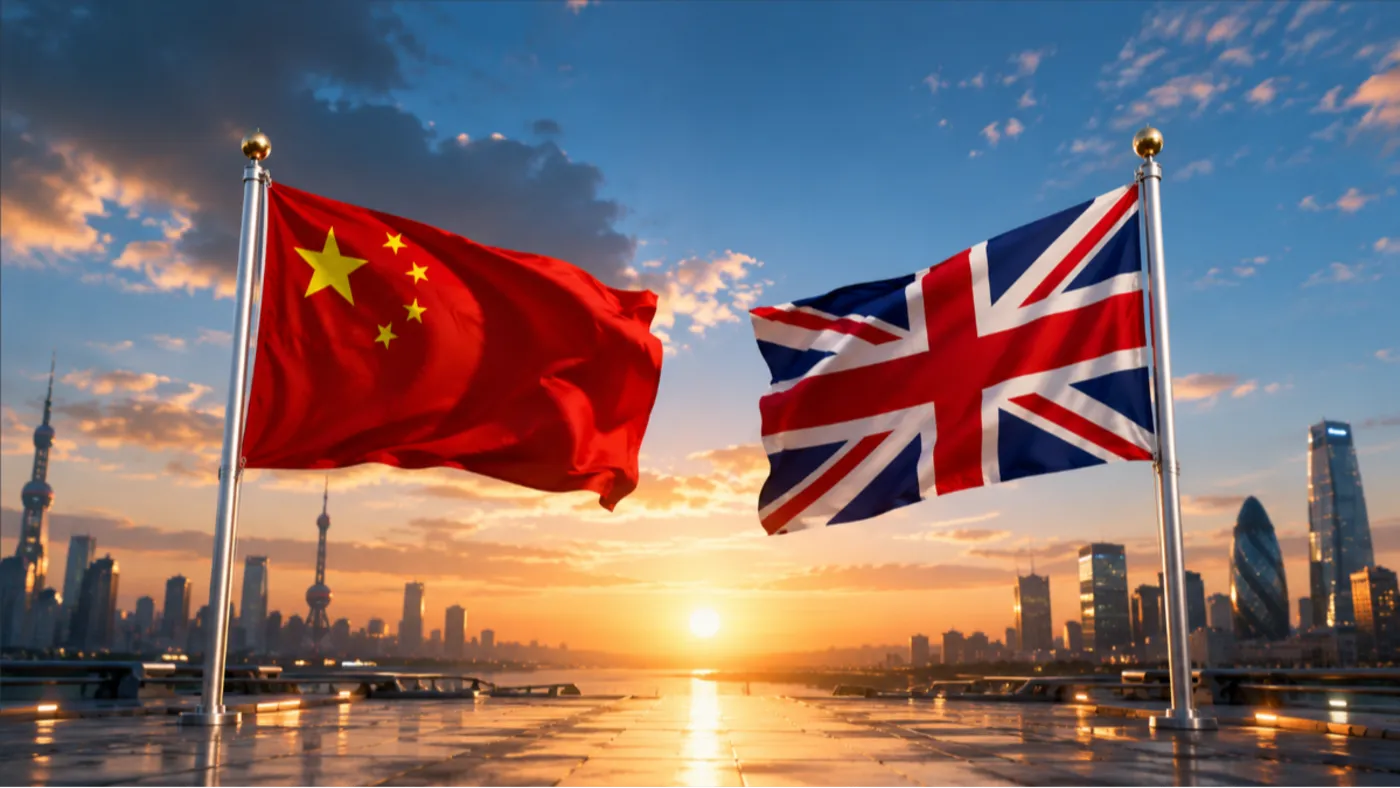
The global industrial and geopolitical landscapes are experiencing a profound, highly volatile realignment, as national governments increasingly prioritize sovereign security over open-market trade principles. In a major diplomatic escalation that has severely strained relations between London and Beijing, the Chinese government has issued a stern, public warning to the United Kingdom. This intervention follows the UK government’s historic, unilateral decision to fully nationalize British Steel, taking operational control away from its private Chinese parent company, Jingye Group.
The nationalization of British Steel represents one of the most aggressive, direct state interventions in the Western industrial sector in decades. On Thursday, July 16, 2026, the British government completed the public takeover of the company under the newly passed Steel Industry (Nationalisation) Act, which had received Royal Assent only twenty-four hours prior. British Business Secretary Peter Kyle declared that the move was necessary to protect the nation’s sovereign steelmaking capacity, secure domestic supply chains for critical infrastructure and the defense sector, and safeguard approximately 2,700 jobs at the historic Scunthorpe steelworks in northern England.
The response from Beijing was immediate, sharp, and highly critical. China’s Ministry of Commerce expressed “strong protest and deep dissatisfaction” over the forced nationalization, accusing the UK government of abusing its administrative powers and utilizing “national security” as a convenient, protectionist pretext to illegally seize a valuable Chinese asset. This high-profile clash has injected a massive wave of geopolitical uncertainty into the European industrial sector, raising serious questions about whether Western nations can successfully transition to green, domestic manufacturing without triggering a destructive investment war with global economic superpowers.
The Sovereign Reclamation: Inside Britain’s Historic Nationalization of British Steel
The decision to take British Steel into public ownership marks a defining, historic shift in the United Kingdom’s economic policy. For decades, successive British administrations championed a laissez-faire, market-driven approach to heavy industry, allowing foreign conglomerates to purchase, manage, and close domestic factories based strictly on commercial profitability. Under Prime Minister Keir Starmer, that hands-off era has officially ended, replaced by an active, highly interventionist industrial strategy designed to protect the nation’s core sovereign capabilities.
The Scunthorpe steelworks, located in Lincolnshire, is the last remaining primary steelmaking site in the United Kingdom, housing the country’s last operational, coal-fired blast furnaces used to manufacture crude steel from raw iron ore and coke. When the private Chinese owner, Jingye Group, indicated that it was preparing to permanently shut down these furnaces due to unsustainable financial losses, the British government decided it had no choice but to step in.
Kyle stated flatly that “British Steel now belongs to the British people,” asserting that the public takeover was the only way to stabilize the business, protect the local communities that rely on the steelworks, and build a sustainable, competitive, and decarbonized steel sector for the future.
The Financial Fallout: Jingye Group Demands Full Compensation
The financial history of the relationship between Jingye Group and British Steel is a story of immense capital consumption and mounting operational losses. Jingye, which stands as one of the 100 largest private corporations in China, purchased the bankrupt British Steel in March 2020 for a modest £70 million (approximately $94 million) to rescue the business from complete liquidation.
Following the acquisition, the Chinese conglomerate injected hundreds of millions of pounds into the struggling steelworks, modernizing equipment, upgrading environmental filters, and keeping the business afloat after years of deep structural losses.
However, by 2025, the financial burden of operating the legacy, coal-fired blast furnaces became unsustainable, with Jingye reporting that the Scunthorpe facility was losing a staggering £700,000 (roughly $942,000) every single day, prompting the company to initiate discussions to close the blast furnaces.
The Dispute Over Past Investments and the Green Transition
The primary source of financial friction between the two sides involves the valuation of the investments made by Jingye since the 2020 acquisition. The Chinese conglomerate published a public statement asserting that it will demand prompt, adequate, and effective compensation from the British government for its multi-million-pound investments in modernizing the Scunthorpe equipment, protecting local jobs, and planning the transition to cleaner, electric arc furnaces.
Jingye argues that its significant capital injections saved British Steel from insolvency, and that the UK government’s forced takeover represents an outright expropriation of a valuable private asset.
The British government, however, has taken a much more cautious financial stance.
While the state has assumed full operational control, Business Secretary Peter Kyle confirmed that the government will appoint an independent valuer to conduct a comprehensive audit of the company’s books.
This independent valuation will determine whether any financial compensation is legally payable to Jingye Group under the nationalization framework, a process that analysts predict will lead to a prolonged, highly contentious legal battle in the international courts.
The Staggering Operating Losses Inherited by the Taxpayer
By nationalizing British Steel, the British taxpayer has officially inherited an incredibly expensive, loss-making industrial business. While the public takeover successfully protected 2,700 high-skilled manufacturing jobs at the Scunthorpe works and shielded the wider supply chain from immediate collapse, the financial cost of running the legacy facility remains immense.
Operating a primary steelworks requires continuous, high-volume energy consumption, and with global coal and electricity prices remaining elevated, the Scunthorpe plant will likely continue to lose hundreds of thousands of pounds every single day.
Furthermore, the government must find a way to finance the multi-billion-pound green transition of the facility, meaning the nationalization is not a simple, low-cost acquisition, but a massive, long-term financial commitment that will require significant, ongoing taxpayer subsidies to survive.
The Geopolitical Chessboard: The Chilling Effect on China-UK Investment
The public protest launched by China’s Ministry of Commerce represents a significant escalation in the ongoing technological and economic cold war between China and Western nations. Beijing has warned the United Kingdom that its forced nationalization of British Steel has seriously undermined the confidence of Chinese enterprises in investing in the UK market.
A spokesperson for the Chinese Ministry of Commerce accused the UK government of abusing its administrative powers under the pretext of national security, completely ignoring the massive capital contributions that Jingye Group had made to support the British economy and society.
China has urged the UK to abide by international trade rules, fulfill its legal obligations under the bilateral China-UK investment protection agreement, and treat Chinese-invested enterprises in the UK fairly and equitably.
“National Security” as a Protectionist Pretext
The primary diplomatic grievance raised by Beijing is the UK’s use of “national security” to justify the forced seizure of a commercial asset. Chinese trade officials argue that Western governments are increasingly utilizing overbroad, vague definitions of national security to block foreign competition, implement protectionist trade barriers, and nationalize foreign-owned properties without fair compensation.
This regulatory trend is highly visible across Europe and North America, where governments have banned Chinese telecommunications hardware, restricted electric vehicle imports, and audited Chinese battery manufacturing investments.
China warns that if Western nations continue to use national security as a blanket excuse to violate the property rights of foreign investors, it will destroy the foundation of the global economic system, triggering a dangerous wave of retaliatory trade barriers and restricting the flow of international capital.
Navigating the China-UK Investment Protection Agreement
The legal battle over the nationalization of British Steel will likely focus on the bilateral China-UK investment protection agreement, a binding international treaty designed to protect investors from both countries from arbitrary, uncompensated government seizures.
Under the terms of the treaty, if a government nationalizes a foreign-owned business, it is legally obligated to provide prompt, adequate, and effective compensation based on the fair market value of the asset immediately before the nationalization occurred.
China has stated its firm intention to closely monitor the developments and support Chinese enterprises in safeguarding their rights through legal means.
If the independent UK valuer determines that no compensation is payable to Jingye Group, Beijing could launch a formal state-to-state dispute settlement process under the treaty, potentially triggering retaliatory tariffs on British exports and further chilling bilateral trade relations.
The Death of Coal-Fired Steel and the Fight for Green Steel
The structural crisis facing British Steel is not an isolated event; it represents a major, highly disruptive transition occurring across the entire European steel sector. Historically, steelmaking was a highly carbon-intensive industry, with traditional blast furnaces consuming millions of tons of coal and coke to melt raw iron ore, making the steel sector responsible for approximately 7% of total global greenhouse gas emissions.
To combat climate change, the European Union and the United Kingdom have implemented strict carbon taxes and industrial emission caps, forcing steelmakers to transition away from coal-fired blast furnaces toward clean, electric arc furnaces (EAF).
EAF technology uses high-power electrical currents to melt recycled scrap metal instead of smelting raw ore, reducing carbon emissions by up to 75% compared to traditional blast furnaces.
The High Cost of the Green Transition
While the environmental benefits of electric arc furnaces are undisputed, the transition is incredibly expensive and logistically complex. Building a modern, utility-scale EAF facility requires an extraordinary capital investment, ranging from £1.25 billion to £2 billion or more per plant.
Furthermore, these massive electrical furnaces require a highly reliable, high-capacity connection to the local power grid, which is often difficult to secure in rural areas.
These massive structural costs have pushed several European steelmakers to the brink of insolvency, requiring significant state subsidies to survive.
The UK government recently agreed to provide a £500 million subsidy package to help Tata Steel transition its Port Talbot facility in Wales to electric arc technology.
By nationalizing British Steel, the government has assumed the direct responsibility of funding the green transition of the Scunthorpe works, a massive financial commitment that will require billions of pounds in public capital over the next decade.
Preserving the “Silicon Shield” of Sovereign Defense Manufacturing
Despite the immense financial cost of the nationalization, the UK government has defended the move as an absolute necessity to protect the nation’s defense and infrastructure industries. Steel remains the primary, irreplaceable building block of modern sovereign defense hardware.
The military requires specialized, high-strength steel alloys to manufacture Silent submarines, aircraft carriers, armored vehicles, and guided missile systems.
If the UK lost its last remaining primary steelmaking site at Scunthorpe, its defense industry would become entirely dependent on imported steel from international markets, creating a severe, highly dangerous national security vulnerability during times of global conflict.
By taking British Steel into public ownership, the government is securing a domestic supply of key structural materials, ensuring that major national infrastructure projects like HS2 and domestic naval shipyards do not rely on foreign, potentially hostile suppliers for their basic industrial inputs.
Strategic Outlook: Can Public Ownership Save British Steel?
The upcoming public management of British Steel represents a high-stakes, multi-decade gamble for the United Kingdom. While the nationalization has successfully protected local jobs and secured a critical national defense asset in the short term, the long-term success of the project is far from guaranteed.
The government must prove that it can run a massive, highly complex industrial business more efficiently and profitably than its private Chinese predecessor, a task that has historically proven incredibly difficult for state-owned enterprises.
If the government fails to manage the operational costs of the Scunthorpe facility or struggles to secure the massive, multi-billion-pound funding required to complete the green transition, the nationalization will transform into a permanent, highly unpopular drain on the national treasury.
The key to the project’s long-term survival will be the successful implementation of Prime Minister Keir Starmer’s broader, pro-market industrial strategy.
The government must work collaboratively with private-sector technology partners, international utility developers, and local labor unions to streamline operations, cut administrative red tape, and build a highly competitive, low-carbon steel sector that can survive without permanent state subsidies.
The eyes of the global industrial community are focused on Scunthorpe.
If the British government can successfully prove that public ownership can modernize, decarbonize, and revitalize a legacy, loss-making steelworks, it will set a new global template for industrial policy, demonstrating that national sovereignty, labor protection, and environmental responsibility can successfully coexist in the 21st century.