The global energy transition has reached a critical inflection point. As countries grapple with geopolitical instability, supply chain disruptions, and rising electricity demands, the focus of clean energy policy is shifting from simply building generation capacity to ensuring that clean energy is effectively integrated and consumed. No country illustrates this transition more clearly than China, the world’s largest consumer and producer of renewable energy.
The National Development and Reform Commission (NDRC) and the National Energy Administration (NEA) jointly issued the “15th Five-Year Plan for Building a New Energy System.” The release of this comprehensive blueprint marks the official launch of China’s energy transition strategy for the 2026-2030 planning cycle. The plan signals a major shift in Beijing’s economic planning, moving away from voluntary clean energy incentives toward mandatory consumption targets, absolute carbon caps, and deep technological integration across all sectors of the economy.
This strategy coincides with an extraordinary milestone in China’s domestic power sector. According to official data from the National Energy Administration, China’s total installed power generation capacity has officially surpassed 4 billion kilowatts, reaching 4.01 billion kilowatts.
The pace of this expansion has accelerated. While it took China eight years to grow its capacity from 1 billion kilowatts in 2011 to 2 billion in 2019, and another five years to hit 3 billion in 2024, the last 1 billion kilowatts of capacity took only about two years to build. This massive expansion has been overwhelmingly driven by clean energy, with non-fossil fuel capacity now accounting for 62% of China’s total energy mix, while coal-fired capacity has plunged to 32% from 61% in 2010.
Shifting from Capacity Expansion to Mandated Consumption
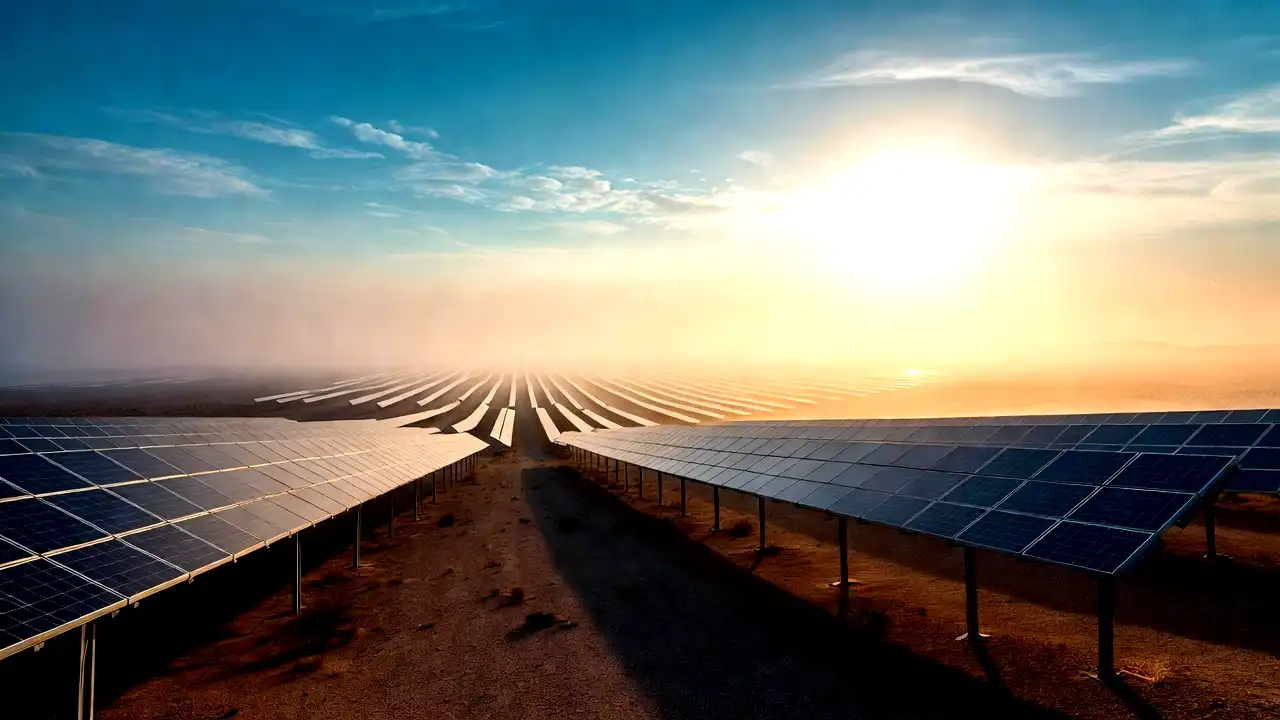
For the past decade, China’s green energy policy focused almost entirely on supply-side growth. The government provided generous subsidies and policy support to build massive solar and wind farms in its western deserts, turning the country into a global clean-tech powerhouse. However, this rapid supply expansion created a major challenge: the national grid struggled to transmit and consume all of the green electricity being generated, leading to significant energy waste.
The Core Mandate of Order No. 42
To solve this integration bottleneck, the Chinese government is shifting its focus to the demand side. Four key ministries, including the National Development and Reform Commission and the Ministry of Transport, jointly issued Order No. 42, which outlines the “Measures for the Minimum Share of Renewable Energy Consumption”.
Taking full effect on August 1, 2026, these measures transform clean energy consumption from a voluntary choice into a mandatory legal obligation for both provinces and major industrial enterprises. Under the new rules, companies and regional governments will face quarterly monitoring and annual evaluations of their clean energy consumption.
Laggards who fail to meet their minimum consumption shares will be forced to purchase Green Electricity Certificates (GECs) to comply with the law. This regulatory shift is expected to trigger a massive new growth cycle for the clean energy sector, creating a highly reliable source of revenue for solar and wind farm operators by driving up the value of green credits.
Creating a Dual-Restraint Compliance Framework
Order No. 42 introduces a sophisticated dual-restraint compliance framework that overhauls the previous regulatory model. Historically, the government focused almost exclusively on power generators, forcing utility companies to meet clean energy quotas. The new system extends this assessment coverage to energy consumers, targeting both power and non-power applications of renewable energy.
For power consumption, the measures establish binding consumption targets for solar photovoltaic and wind power. For non-power applications, the policy introduces a landmark innovation by officially bringing renewable-based hydrogen, ammonia, and methanol production under the mandatory assessment framework. This regulatory change will force heavy industries, such as chemical manufacturing and shipping, to replace fossil-fuel-based inputs with green alternatives, accelerating the decarbonization of sectors that cannot be easily electrified.
Building an Integrated and Resilient New Energy System
The newly unveiled energy plan provides a clear, five-year roadmap to reshape China’s energy system. The plan emphasizes that a modern, resilient grid must integrate different types of generation and consumption to ensure absolute reliability and energy security.
Balancing Centralized and Distributed Renewable Generation
To manage a grid dominated by intermittent wind and solar power, the plan calls for the integrated development of new energy. China will continue to build massive, centralized clean energy hubs in its interior deserts, but it will pair these mega-projects with a renewed focus on distributed energy systems in its eastern industrial provinces.
By developing localized solar arrays, rooftop installations, and microgrids close to major demand centers, the country can reduce its reliance on long-distance transmission lines and improve overall grid resilience. The plan also mandates the complementary development of multiple energy types, requiring developers to pair new solar and wind installations with dedicated energy storage systems and pumped-hydro facilities to smooth out supply fluctuations.
Elevating the Role of Non-Power Renewable Applications
A critical element of the new energy plan is its focus on non-power clean energy, which has historically lagged behind power-sector decarbonization. The plan includes specific consumption targets for green heating and renewable transportation fuels, providing a massive boost to the country’s clean-tech manufacturing sector.
This policy is expected to drive substantial demand for green hydrogen and its derivatives, which China has identified as critical industries for its long-term development. By mandating the use of green hydrogen in steelmaking, chemical production, and heavy transport, the government aims to build a scalable domestic market for electrolyzers and fuel cells, driving down technology costs through manufacturing scale and replicating the success it achieved in the solar and battery sectors.
The Strategic Climate Targets of the 15th Five-Year Plan
The energy plan is a central component of China’s broader 15th Five-Year Plan (2026-2030), which serves as the national blueprint for economic and social development. The next five years are widely viewed by climate scientists as a critical window that will determine whether China can successfully fulfill its international pledge to reach peak carbon dioxide emissions before 2030.
Target Carbon Intensity Reduction and Dual Control Systems
The 15th Five-Year Plan outlines a target to cut China’s carbon intensity—the volume of carbon dioxide emissions produced per unit of gross domestic product—by 17% over the 2026-2030 period. While some international analysts have criticized this target as lacking ambition compared to the 18% reduction target in the 14th Five-Year Plan, Chinese policymakers argue that the focus has shifted from relative intensity reductions to absolute emission controls.
The new plan formally anchors the transition to a “dual control of carbon” system. This regulatory change replaces the previous model, which focused solely on energy consumption intensity, with a system that establishes absolute carbon emission caps alongside intensity controls. By transitioning to absolute caps, the government is establishing a highly transparent, binding regulatory framework that will force local officials to actively manage and reduce their absolute greenhouse gas emissions, paving a predictable path toward carbon peaking.
Doubling Non-Fossil Fuel Energy by 2035
To support its carbon-peaking goals, the Chinese government has announced an ambitious long-term target to double its supply of non-fossil fuel energy by 2035 compared to 2025 levels. Wang Changlin, vice chairman of the National Development and Reform Commission, clarified that the country will significantly increase clean energy supply by 2030 and double it by 2035, relying on massive hydropower projects in Tibet and desert-based renewable hubs to propel generation.
According to calculations by energy analysts at the Centre for Research on Energy and Clean Air, if China’s total energy demand grows at an average rate of 2.5% a year, doubling clean energy consumption over the next decade would drive non-fossil energy to a 29% share of total consumption by 2029.
This trajectory is significantly more ambitious than China’s previous international commitment to have non-fossil energy comprise 25% of total consumption by 2025 and 30% by 2035, proving that Beijing is accelerating its green transition to capture the industrial and economic benefits of clean-tech dominance.
Balancing Climate Targets with Energy Security Concerns
Despite these impressive green targets, China’s energy transition is facing real-world friction. Policymakers must constantly balance their long-term climate goals with the immediate, non-negotiable priority of national energy security.
The Hormuz Crisis and the Hard Realities of Energy Autarky
The critical importance of energy security was highlighted earlier in 2026, when a major geopolitical conflict shut down shipping traffic through the Strait of Hormuz for nine weeks. The disruption pushed global Brent crude prices to nearly $120 a barrel, sent liquefied natural gas prices to multi-year highs, and exposed the extreme vulnerability of global energy supply chains.
For China, which typically relies on the Strait of Hormuz to transport 45% to 50% of its crude oil imports and nearly a third of its liquefied natural gas, the shock could have been devastating. However, the Chinese economy proved remarkably insulated. Goldman Sachs trimmed its 2026 growth forecast for China by only 0.2 percentage points—the smallest growth downgrade in the entire Asia-Pacific region.
This economic resilience was the direct result of China’s twenty-five-year pursuit of domestic electrification. By aggressively building out its high-speed rail network, promoting electric vehicles, and expanding its domestic renewable energy grid, China has successfully insulated its transportation and industrial sectors from imported oil shocks. This experience has reinforced Beijing’s determination to replace imported hydrocarbons with domestic renewables as quickly as possible, framing the green transition not just as an environmental obligation, but as a critical national security imperative.
The Looming Legacy of Coal Capacity and Industrial Upgrades
While domestic electrification protects China from oil shocks, the country still relies heavily on coal to maintain grid stability during peak demand periods. This dependence has created an ongoing tension within the 15th Five-Year Plan.
During the previous planning cycle, a record number of coal-fired power plants received construction permits, reaching a ten-year high of 112.8 gigawatts of approved capacity in 2023. Although new permitting has since fallen sharply, a significant wave of these approved plants is scheduled to come online during the 2026-2030 period, potentially locking in high emissions for decades.
The new energy plan reflects this reality, continuing to call for the “clean and efficient” use of coal to support the grid. To manage this emissions risk, the NDRC has launched a parallel three-year action plan to accelerate energy-saving and carbon-reduction upgrades across high-emitting sectors, including steel, chemicals, and coal-fired power generation. By forcing these heavy industries to upgrade their efficiency and replace coal with green hydrogen or electricity, the government aims to keep its carbon-peaking goals on track even as new coal capacity comes online.
Global Implications of China’s Clean Tech Dominance
The strategic decisions outlined in China’s 15th Five-Year Plan carry profound implications for the global economy, shaping international trade, technology development, and investment flows.
Driving Down the Cost of the Global Green Transition
Over the past decade, China’s massive investments in clean-tech manufacturing have successfully rewritten global cost curves. The rapid expansion of Chinese solar, wind, and lithium-ion battery factories has been responsible for nearly all of the significant price drops in these technologies over the past few years.
This manufacturing scale has acted as a massive global public good, allowing emerging markets in the Global South to adopt clean energy technologies at a fraction of the cost they would have faced if they relied on Western manufacturers. During the World Economic Forum’s Annual Meeting of the New Champions in Dalian, business leaders stressed that China’s green transition should be seen as an extraordinary opportunity for developing economies, as it provides them with the affordable technology needed to build clean, resilient energy infrastructures.
Rising Trade Tensions and Technology Export Controls
However, China’s clean-tech export strength has also triggered intense trade friction with developed economies. The United States and the European Union have accused China of generating industrial overcapacity through state subsidies, implementing a series of tariffs and trade barriers to protect their own domestic manufacturing sectors.
In response to these trade restrictions, Beijing has issued sweeping new rules that increase controls over the overseas transfer of domestic technology. These rules give the government explicit authority to retaliate against foreign governments that restrict Chinese investments, serving as a protective shield for Chinese clean-tech companies.
Analysts note that these regulations are specifically designed to protect China’s massive lead in clean energy manufacturing, preventing valuable intellectual property—such as advanced solar cell designs, solid-state battery chemistry, and green hydrogen technology—from being forcefully appropriated by foreign governments or competitors. As a result, the global clean-tech sector is becoming increasingly fragmented, forcing multinational corporations and international investors to carefully navigate changing geopolitical boundaries.
A Deeper Phase of the Energy Transition
The publication of the “15th Five-Year Plan for Building a New Energy System” proves that China has entered a deeper, more sophisticated phase of its energy transition. By moving away from voluntary incentives toward a strict, legally binding regime of mandated renewable consumption and absolute carbon controls, Beijing is demonstrating that it is ready to remodel its economic infrastructure for a low-carbon future.
While the country must continue to manage the complex, real-world tensions between carbon-reduction goals and grid security, its aggressive domestic electrification has already built an economic cushion that protects it from global energy shocks.
As the world’s largest electro-state continues to scale its clean-tech industries and reshape its grid, the strategic decisions outlined in this five-year plan will not only determine China’s own climate future but will also continue to drive down technology costs and shape the path of the global green transition for decades to come.