Dominion Energy reported second-quarter financial results that beat Wall Street profit estimates, propelled by an unprecedented surge in electricity demand from artificial intelligence data centers across Northern Virginia. Operating earnings per share reached $0.65, beating analyst consensus forecasts of $0.61 per share and expanding significantly over prior-year performance. Total quarterly operating revenue expanded past $3.9 billion, supported by hot summer weather that drove residential air conditioning usage alongside continuous, round-the-clock power draws from hyperscale computing campuses. Reaffirming its full-year 2026 operating earnings guidance of $2.68 to $2.83 per share, the Richmond, Virginia-based utility demonstrated that the artificial intelligence infrastructure boom is delivering durable, high-margin growth for electric utilities.
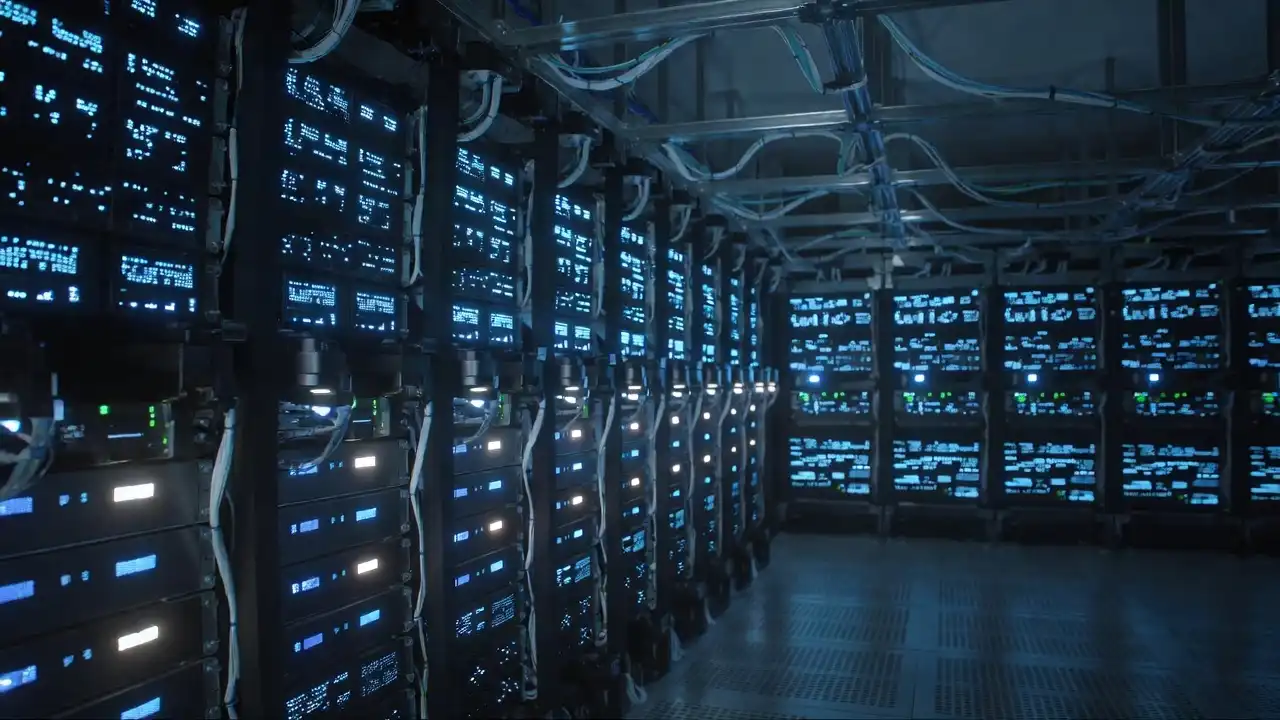
As the primary utility powering Northern Virginia’s “Data Center Alley”—the largest concentration of data centers on Earth, handling an estimated 70% of global daily internet traffic—Dominion occupies a unique position at the intersection of energy infrastructure and technology. During the second quarter alone, Dominion connected over 15 new data center buildings to its electrical grid, adding hundreds of megawatts of continuous baseload demand. The utility projects that total data center electricity demand in its Virginia service territory will scale from roughly 4.5 gigawatts today up to 15 gigawatts by 2030, eventually exceeding 40 gigawatts by 2039.
To satisfy this immense load expansion, Dominion is executing a $43 billion multi-year capital expenditure program dedicated to upgrading high-voltage transmission lines, building solar and battery storage facilities, constructing natural gas peaking plants, and advancing its flagship 2.6-gigawatt Coastal Virginia Offshore Wind project. The utility’s growth trajectory is further supported by historical clearing prices in the PJM Interconnection capacity market, where auction prices surged over 800% to $269.92 per megawatt-day. Soaring capacity prices reflect an acute physical shortage of available power generation across 13 Mid-Atlantic states, providing utility owners of active power assets with high capacity revenues.
TechGolly provides an in-depth financial and energy analysis of Dominion Energy’s quarterly results, evaluating data center interconnection queues, transmission line capital outlays, PJM capacity market dynamics, offshore wind execution, ratepayer cost protections, and the long-term outlook for electric utilities in the AI era.
Unpacking Dominion’s Second Quarter Earnings Beat and Revenue Drivers
Dominion Energy’s second-quarter operating results provide clear financial evidence that the artificial intelligence infrastructure buildout is creating a high-growth environment for regulated electric utilities.
Operating earnings per share reached $0.65, comfortably outperforming Wall Street expectations. The earnings beat was driven by strong operational performance at Dominion Energy Virginia, the company’s primary regulated utility subsidiary. Electric sales volumes to commercial data center customers expanded by double digits year-over-year, providing a stable, high-margin revenue stream that offsets seasonal variations in residential power consumption.
Total quarterly operating revenue reached $3.9 billion, supported by a combination of high data center volumes and above-normal summer temperatures across Virginia, North Carolina, and South Carolina. Summer heat domes pushed residential air conditioning demand to seasonal peaks, while data center server halls drew continuous gigawatt-scale baseload power 24 hours a day, maximizing utility system load factors.
By maintaining its full-year 2026 operating earnings guidance between $2.68 and $2.83 per share, Dominion leadership reassured institutional investors that the company’s multi-year financial plan remains fully on track. The stable earnings guidance follows a multi-year corporate restructuring during which Dominion divested non-core natural gas transmission and storage assets, using the proceeds to pay down corporate debt and re-focus 100% of its capital balance sheet on regulated electric utility operations in high-growth Southeast and Mid-Atlantic markets.
Under regulated utility accounting rules, corporate capital expenditures on approved electrical infrastructure enter the utility’s “rate base.” As Dominion deploys billions of dollars to build new transmission lines and power plants, its authorized rate base expands, generating predictable, government-approved returns on equity between 9.5% and 10.5% that translate directly into steady earnings per share growth for public shareholders.
The Data Center Alley Phenomenon: Northern Virginia’s Gigawatt Explosion
Understanding the fundamental growth engine behind Dominion Energy requires analyzing the unique geographic concentration of digital infrastructure in Northern Virginia’s Loudoun, Prince William, and Fairfax counties.
Northern Virginia established its status as the world’s data center capital due to its early proximity to federal fiber optic backbones, cheap land, and favorable local tax policies. Today, every major global technology hyperscaler—including Amazon Web Services, Microsoft Azure, Google Cloud, Meta Platforms, and specialized AI cloud providers like CoreWeave—operates massive, multi-building data center campuses inside Dominion’s service territory.
However, the arrival of artificial intelligence hardware has transformed data center power requirements dramatically. Traditional cloud data centers housing web-hosting servers drew modest electrical loads averaging 5 to 15 megawatts per building. In contrast, modern liquid-cooled AI data center campuses housing hundreds of thousands of high-power GPUs draw between 500 megawatts and 1,000 megawatts (1 gigawatt) of continuous electrical power—a power draw equivalent to supplying 800,000 residential homes.
Dominion’s operational tracking metrics illustrate the unprecedented speed of this demand expansion:
- The utility successfully connected 15 new data center facilities to its grid during the first half of the year, bringing total connected data center capacity past 4.5 gigawatts.
- Dominion’s long-term engineering load forecasts project data center power demand reaching 15 gigawatts by 2030, representing a more than three-fold increase in less than six years.
- Looking further ahead, Dominion estimates that total requested data center load in its service pipeline exceeds 40 gigawatts by 2039, driven by high-density AI clusters and automated agentic software processing.
Managing a queue of over 100 pending data center interconnection requests requires Dominion to execute continuous, large-scale transmission engineering. To connect a 1,000-megawatt data center campus, Dominion’s engineering crews must construct dedicated high-voltage 500-kilovolt substations, install heavy power transformers, and string high-capacity transmission wires capable of moving massive electrical currents without thermal overheating.
The $43 Billion Capital Expenditure Program and Transmission Infrastructure
To supply gigawatts of new power to Northern Virginia while maintaining strict grid reliability for residential and commercial customers, Dominion Energy is executing a $43 billion multi-year capital expenditure program through 2028 and 2030.
The $43 billion capital allocation represents the largest infrastructure investment program in Dominion’s corporate history. Approximately 85% of total capital spending is directed into zero-carbon and low-carbon regulated infrastructure projects, including high-voltage transmission lines, solar photovoltaic farms, battery energy storage systems, and offshore wind generation.
A primary capital priority is upgrading regional transmission line capacity. Dominion is constructing multiple 500-kilovolt and 230-kilovolt transmission corridors designed to import bulk power from regional generating stations directly into high-density data center parks in Loudoun and Prince William counties. To accelerate transmission throughput along existing rights-of-way, Dominion is deploying advanced composite core conductors that can carry twice the electrical current of legacy aluminum transmission wires without requiring new land permits.
However, executing a $43 billion capital program requires navigating physical supply chain constraints. High-voltage step-up transformers and heavy-duty circuit breakers currently face global manufacturing lead times of 3 to 4 years due to global shortages of specialized grain-oriented electrical steel and copper.
To insulate its construction schedules from supply chain delays, Dominion placed advance multi-year orders for critical substation hardware, securing dedicated factory manufacturing slots that ensure heavy electrical equipment arrives on job sites in synchronization with data center activation dates.
The Coastal Virginia Offshore Wind Project and Clean Energy Integration
A central cornerstone of Dominion’s $43 billion capital program is the 2.6-gigawatt Coastal Virginia Offshore Wind (CVOW) project, located 27 miles off the coast of Virginia Beach.
Carrying a total project budget of $9.8 billion, CVOW represents the largest offshore wind farm currently under construction in the United States. The project involves installing 176 massive 14-megawatt offshore wind turbines anchored to the Atlantic seafloor, connected by 150 miles of subsea high-voltage cables that transmit clean electricity directly to onshore substations in Virginia.
The commercial timing of the CVOW project aligns perfectly with the environmental requirements of Big Tech data center tenants. Major technology companies operating in Northern Virginia—including Amazon, Microsoft, and Google—have committed to strict corporate RE100 pledges targeting 100% clean, carbon-free energy coverage for their data center operations.
When fully operational by late 2026, the 2.6-gigawatt CVOW wind farm will generate enough clean electricity to power nearly 660,000 homes, providing a massive injection of zero-carbon energy into Dominion’s regional grid. Technology hyperscalers can purchase renewable energy certificates generated by CVOW to satisfy their corporate sustainability mandates, allowing Dominion to monetize its offshore wind investment through long-term corporate off-take contracts.
Dominion reported that CVOW construction remains strictly on schedule and within its $9.8 billion budget framework. Offshore monopile installation and subsea cable laying are progressing according to plan, providing utility investors with confidence that this mega-project will successfully enter the regulated rate base without capital cost overruns.
PJM Capacity Market Explosion and Regional Power Grid Tightness
Dominion Energy’s revenue outlook received an additional structural boost from recent capacity auction results published by PJM Interconnection, the regional transmission operator that coordinates wholesale electricity markets across 13 Mid-Atlantic and Midwestern states.
In PJM’s annual base residual capacity auction—which secures generating capacity three years in advance to guarantee grid reliability—clearing prices exploded by over 800% to $269.92 per megawatt-day, up from $28.92 per megawatt-day in the prior auction cycle. In heavily constrained transmission zones encompassing Northern Virginia, capacity clearing prices hit maximum statutory price caps.
The capacity price surge was caused by an acute physical imbalance between supply and demand across the Mid-Atlantic grid. While data center construction added thousands of megawatts of new continuous baseload electricity demand, state and federal environmental compliance rules led to the accelerated retirement of older coal-fired power plants before replacement power facilities could be permitted and built.
For utility owners of active power generation assets like Dominion, high capacity market clearing prices deliver an immediate financial benefit. PJM pays capacity revenues directly to power plant owners simply for keeping their generating units online and available to produce power during peak demand periods.
The higher capacity auction clearing prices will add tens of millions of dollars in capacity revenues to Dominion’s merchant and regulated generation units over upcoming operating years, providing a durable earnings buffer that supports corporate financial guidance.
Ratepayer Cost Protection and Special Utility Tariff Contracting
The concentration of data center power demand and rising wholesale capacity prices have generated intense political and social friction regarding electricity affordability for residential utility customers in Virginia.
Consumer advocacy groups and local manufacturing trade associations raised concerns that multi-billion-dollar transmission grid expansions built specifically to serve private AI data centers could inflate monthly electric bills for everyday homeowners and small businesses.
To prevent unfair cost-shifting, Dominion Energy worked with the Virginia State Corporation Commission and state lawmakers to construct specialized utility tariff frameworks that protect residential ratepayers.
Under updated Virginia utility rules, Dominion enforces special high-density load contracts for large data center customers. These specialized contracts require data center developers to pay 100% of the dedicated substation and high-voltage transmission line construction costs required to connect their facilities to the grid.
Furthermore, the contracts incorporate minimum-take provisions and long-term 10-to-15-year financial commitments. If a technology company reduces its computing operations or closes a data center building, special contract clauses require the technology company to continue paying fixed monthly capacity charges, ensuring that remaining residential utility customers never bear the financial burden of stranded utility infrastructure.
Strategic Outlook for the Electric Utility Sector in the AI Era
Dominion Energy’s strong second-quarter financial results highlight a fundamental, permanent transformation in how Wall Street investors evaluate the electric utility sector.
For decades, electric utilities were viewed as slow-growing, defensive dividend stocks that expanded at the modest 1% to 2% annual rate of population growth. Today, the convergence of artificial intelligence data centers, industrial manufacturing reshoring, and widespread electrification has transformed utilities into high-growth, technology-enabling infrastructure companies.
Looking forward through the late 2020s and 2030s, Dominion’s long-term corporate growth will be defined by its ability to execute a balanced, multi-technology energy generation strategy:
- While clean energy assets like the 2.6-gigawatt CVOW offshore wind farm and solar storage arrays supply zero-carbon volume, Dominion is also constructing modern, low-emission natural gas peaking turbines.
- Because solar and wind generation fluctuate based on weather conditions, gas-fired peaking units provide essential “firm” dispatchable baseload power that can be brought online within minutes during hot summer afternoons or cold winter nights when data center power draw is high and renewable generation is low.
- Maintaining a balanced energy mix of offshore wind, solar storage, nuclear power, and natural gas peaking capacity ensures that Dominion can deliver 99.999% power reliability to mission-critical data center campuses while fulfilling long-term carbon reduction goals.
Key Takeaways for Utility Executives, Cloud Architects, and Investors
Dominion Energy’s quarterly performance delivers vital strategic lessons for corporate decision-makers, utility managers, cloud data center developers, and institutional investors.
First, energy availability is the primary gating factor for artificial intelligence expansion. Technology companies planning multi-billion-dollar AI deployments must secure long-term power purchase agreements and grid interconnection approvals years in advance, treating power availability as an essential site-selection criterion.
Second, regulated utility capital expenditures generate predictable earnings growth. Utilities that operate in high-demand data center corridors can deploy tens of billions of dollars in infrastructure capex, expanding their regulated rate base and generating stable 9.5% to 10.5% authorized returns on equity for shareholders.
Third, specialized utility contracting protects residential ratepayers. Implementing special high-density load tariffs that require tech hyperscalers to fund dedicated substation construction ensures that commercial data center expansion enjoys local political and regulatory support.
Finally, the artificial intelligence boom is a physical infrastructure supercycle. From offshore wind turbines and high-voltage transmission cables to natural gas peaking plants and direct liquid cooling, the utilities and technology companies that build and power the physical energy grid will capture sustained financial growth and control the foundation of the 21st-century digital economy.