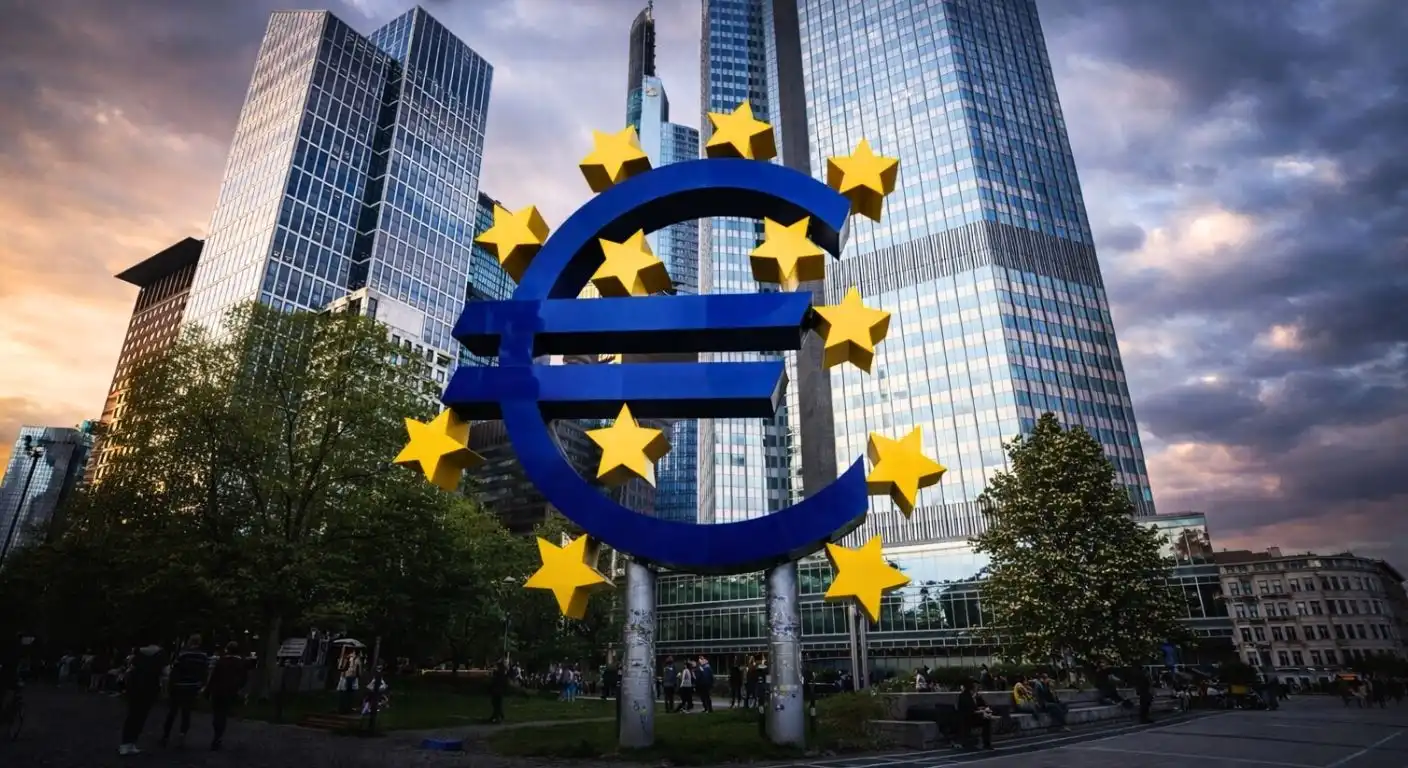
The European Central Bank faces one of the most complex economic challenges in its history. As the Eurozone grapples with a combination of persistent, energy-driven inflation and sputtering economic growth, policymakers appear increasingly willing to prioritize price stability over economic expansion. This difficult trade-off became starkly apparent earlier this month when the central bank announced its first interest rate hike in nearly three years, catching some market participants off guard and reshaping the outlook for European financial markets.
In a detailed assessment of the central bank’s current trajectory, Bank of America analysts warned that this rate hike may not be a one-off adjustment. Despite weak growth and mounting signs of structural stagnation across several key member states, the investment bank expects the central bank to remain on a hawkish path. According to their latest research, the Governing Council’s intense focus on inflation risks suggests that policymakers are prepared to push borrowing costs even higher if price pressures fail to cool rapidly.
This policy direction represents a major pivot for Europe. For months, investors had hoped that a slowing economy would force the central bank to transition toward a period of monetary easing. Instead, a severe energy shock driven by geopolitical conflict in the Middle East has forced a dramatic reassessment of global inflation dynamics. Understanding the forces driving this hawkish turn is critical for businesses, investors, and homeowners across the continent, as the era of cheap credit remains firmly in the past.
The June Surprise: Breaking a Two-Year Pause
On June 11, 2026, the European Central Bank broke its prolonged policy pause by raising its key interest rates by 25 basis points. The unanimous decision lifted the deposit facility rate to 2.25%, the main refinancing rate to 2.40%, and the marginal lending facility to 2.65%, effective June 17, 2026. This move marked the central bank’s first rate hike since September 2023, bringing an end to seven consecutive meetings where policymakers chose to keep rates on hold.
The decision surprised some market observers who believed that Europe’s fragile economic recovery would deter the central bank from raising rates. However, the Governing Council made its priorities clear. The central bank noted that the conflict in the Middle East has generated intense inflationary pressures, pushing energy costs far above previous baseline projections. With consumer prices trending away from the target once again, the central bank concluded that it could no longer justify an accommodative monetary policy stance.
This sudden rate hike has completely shifted the market’s expectations. Rather than debating when the central bank will start cutting rates, financial analysts are now calculating how many additional hikes are needed to bring inflation back under control. The move has also highlighted the growing divergence between major global central banks, as some, like the Bank of England, choose to hold rates steady while Europe moves aggressively to contain price pressures.
Setting the Stage: The Deposit Facility Rate Reaches 2.25%
The decision to lift the deposit facility rate to 2.25% represents a major milestone in the central bank’s ongoing fight against inflation. For nearly a decade following the sovereign debt crisis, the central bank maintained negative interest rates in an attempt to spark economic activity and prevent deflation. The rapid transition to positive rates, which began in 2022, was designed to normalize monetary policy.
By pushing the deposit rate to 2.25%, the central bank is moving deeper into restrictive territory. This rate directly influences the terms on which commercial banks can deposit excess liquidity with the central bank, which in turn drives up the borrowing costs for households and businesses across the Eurozone. While higher rates help cool demand, they also increase the financial burden on heavily indebted governments and corporations, raising the risk of localized credit crunches.
The End of the Easing Dream: Why the ECB Pivoted in June
For the first half of the year, European stock and bond markets rallied on the assumption that falling inflation would pave the way for multiple rate cuts. Wealth managers and retail investors widely expected the central bank to gradually lower borrowing costs to support the sluggish economy. The June rate hike shattered this optimistic narrative.
The primary catalyst for this policy pivot was the sudden outbreak of war in the Middle East, which has disrupted global energy supplies for several months. Rising oil and natural gas prices quickly trickled down into the broader European economy, inflating the cost of goods, transport, and basic services. Faced with the prospect of second-round inflation effects—where rising prices lead to higher wage demands—the central bank decided to act preemptively, prioritizing its inflation-targeting mandate over short-term economic comfort.
Stagflation Redux: High Inflation Meets Contraction
The European Central Bank’s decision to raise rates is particularly striking given the weak economic backdrop. The Eurozone is currently experiencing classic signs of stagflation—a highly challenging economic condition characterized by stagnant growth, high unemployment, and persistent inflation.
Recent macroeconomic data highlights the severity of this dilemma. Eurozone consumer price inflation accelerated to 3.2% in May, up from 3% in April, representing its highest level in over two years. Core inflation, which excludes volatile energy and food prices, also jumped to 2.5% from 2.2% in April. At the same time, the Eurozone’s economic engine is stalling. Revised gross domestic product data for the first quarter of the year revealed a 0.2% quarter-on-quarter contraction, marking the region’s first economic contraction since late 2022.
By raising rates in a contracting economy, the central bank risks worsening the downturn. Higher borrowing costs discourage business investment and reduce household consumption, which could prolong the recession. Yet, the central bank’s leadership argues that failing to contain inflation would cause even greater long-term economic damage. This hardline stance suggests that European policymakers are willing to accept a mild recession if it prevents inflation expectations from becoming unanchored.
Rising Costs in a Cooling Economy: The Eurozone’s Inflation Conundrum
The core challenge facing European policymakers is that the current inflation spike is primarily a supply-side shock, not a demand-side one. Standard monetary theory suggests that raising interest rates is highly effective at cooling an overheated economy driven by strong consumer demand. However, higher interest rates cannot produce more oil, clear blocked shipping lanes, or resolve geopolitical conflicts.
Because the inflation is largely imported through higher energy bills, raising rates acts as a double-edged sword. It reduces the domestic purchasing power of households that are already struggling with high utility bills, while simultaneously making it more expensive for businesses to borrow capital. This dynamic squeezes corporate profit margins, forcing companies to either raise consumer prices further or cut back on employment and production, both of which reinforce the stagflation loop.
Germany’s Industrial Recession and the Drag on European Growth
The weakness in the Eurozone is highly concentrated in its largest economy. Germany is currently grappling with a deep industrial recession, driven by high energy costs, falling export demand from major global markets, and structural challenges in its automotive and manufacturing sectors. As Germany’s industrial output contracts, the negative effects are spreading across the entire Eurozone supply chain.
At the same time, French consumer spending has cooled sharply, and retail activity across the southern member states has plateaued. The weakness in these core economies has dragged the Eurozone’s overall GDP growth projections down. In its updated June forecasts, the central bank trimmed its growth outlook, expecting the Eurozone economy to expand by just 0.8% in 2026 and 1.2% in 2027. These sluggish growth figures highlight the immense headwind that higher interest rates represent for the region’s recovery.
The BofA Analysis: Symmetrical Targets vs. Asymmetrical Fears
In their recent analysis of the central bank’s policy path, Bank of America analysts pointed out a fundamental feature of the Governing Council’s decision-making process. Although the central bank operates under a formally symmetric 2% inflation target—meaning it should fear deflation just as much as inflation—policymakers continue to exhibit an asymmetrical bias toward upside inflation risks.
The investment bank noted that officials have repeatedly emphasized their commitment to maintaining price stability, with recent decisions indicating greater concern about inflation remaining above the 2% target than falling below it. This hawkish bias suggests that the central bank is highly unlikely to pause its tightening cycle simply because economic growth is weak. According to Bank of America, the central bank’s June projections are broadly consistent with market expectations for two to three additional rate hikes during the current cycle.
Symmetrical Target, Hawkish Action: The ECB’s Hidden Inflation Bias
This asymmetrical approach to inflation has major implications for future interest rate decisions. In past economic cycles, a contraction in quarterly GDP would have prompted central bank officials to adopt a more accommodative stance, or at least signal a pause in rate hikes. Today, however, the fear of a prolonged inflation spiral dominates the policy debate in Frankfurt.
The central bank’s internal projections show that inflation is expected to remain above the 2% target until at least 2027, even with additional monetary tightening. This persistent overshoot has made policymakers deeply uncomfortable. By continuing to raise rates despite a weak economy, the central bank is signaling to the public and financial markets that its institutional credibility depends entirely on its ability to crush inflation, regardless of the short-term cost to economic growth.
The Path to 2.50%: Deciphering Bank of America’s Timing Projections
Looking ahead, Bank of America’s research team expects the central bank to deliver at least one more rate hike in the near term. The bank’s baseline forecast projects a 25-basis-point increase at the upcoming policy meeting in July, which would take the deposit facility rate to 2.50%. This projection is based on the assumption that core inflation will remain sticky throughout the summer months.
However, the analysts also noted that recent developments in the Middle East could introduce some flexibility into the timeline. If the recently announced United States-Iran peace framework successfully leads to a sustained drop in global oil prices, the central bank may choose to delay the next rate hike until September, or even implement a temporary pause. Nevertheless, any such delay would represent a change in timing rather than a change in direction. The overall path remains firmly upward, with wealth managers preparing for a terminal deposit rate that could reach 2.75% by the end of the year.
Vigilance and Balance Sheets: Peter Kazimir and Quantitative Tightening
The hawkish outlook presented by Bank of America is reinforced by recent comments from key central bank policymakers. On June 15, 2026, Slovak central bank chief and Governing Council member Peter Kazimir published a strongly worded opinion piece warning against any form of complacency or hesitation.
Kazimir argued that the central bank must take additional action following its June rate increase, noting that elevated energy costs will likely persist longer than many market participants expect. He expressed deep discomfort with the prospect of core inflation remaining above 2% even after the recent tightening measures, stating that “monetary policy has more work to do.” Kazimir’s comments reflect a growing consensus within the central bank that the mission to contain price pressures is far from complete, and that officials must move quickly to keep inflation expectations anchored.
Peter Kazimir’s Rallying Cry: No Room for Complacency
Kazimir’s public stance serves as a clear warning to financial markets that have been hoping for a quick return to lower interest rates. By framing the current inflation challenge as an ongoing battle that requires continuous vigilance, the Slovak policymaker is helping to prepare the public for a prolonged period of restrictive monetary policy.
His arguments also highlight the internal dynamics of the Governing Council. While some dovish members may express concern about the impact of higher rates on weaker Eurozone economies, the hawkish faction currently holds the upper hand. This dominant group believes that any hesitation in raising rates now would only require even larger, more painful rate hikes in the future if inflation expectations become unanchored.
Shrinking the Balance Sheet: The Quiet Tightening Program
Beyond raising interest rates, the European Central Bank is also utilizing a second, quieter tool to tighten monetary policy: shrinking its massive balance sheet. Through years of quantitative easing programs, the central bank accumulated trillions of euros in government and corporate bonds, peaking at an extraordinary €8.3 trillion in 2022.
Since then, the central bank has engaged in a steady program of quantitative tightening, reducing its balance sheet to roughly €6.3 trillion by the end of 2025. This reduction occurs as the central bank allows maturing assets to roll off its books without fully reinvesting the proceeds. Bank of America analysts note that falling excess liquidity in the banking system will eventually influence money-market conditions, pushing up market-driven borrowing costs even faster than the official interest rate hikes. This double-barreled approach—raising rates while simultaneously draining liquidity—ensures that financial conditions will continue to tighten across Europe for the foreseeable future.
The Hard Road Ahead for European Markets
The European Central Bank’s current policy trajectory represents a major test of the Eurozone’s economic resilience. By choosing to raise interest rates in a contracting economy, the central bank is actively prioritizing long-term price stability over short-term economic growth. This strategy, backed by the latest analysis from Bank of America and the hawkish rhetoric of policymakers like Peter Kazimir, suggests that the “high-for-longer” interest rate environment is here to stay.
For businesses and consumers across the continent, this means adjusting to a new financial reality. The days of negative interest rates and endless liquidity are gone. As the central bank continues to lift its key rates and shrink its balance sheet, the cost of borrowing will remain elevated, placing a premium on financial discipline. While the central bank hopes that this aggressive tightening will eventually tame the energy-driven inflation shock, the immediate future for the Eurozone is likely to be characterized by slow growth, tight credit, and persistent economic uncertainty.