A federal judge in San Francisco has delivered a major legal blow to Elon Musk, upholding a landmark jury verdict that found him liable for defrauding Twitter investors. In a highly anticipated ruling released on July 6, 2026, U.S. District Judge Charles Breyer rejected Musk’s post-trial motions to set aside the verdict or order a new trial.
The decision keeps the world’s richest person on the hook for what could become one of the largest securities fraud payouts in corporate history, with shareholder damages estimated to reach up to $2.6 billion.
The class-action lawsuit traces back to the chaotic spring of 2022, when Musk agreed to acquire the social media platform, then known as Twitter, for $44 billion. In the weeks after signing the binding merger agreement, Musk fired off a series of public social media posts questioning Twitter’s disclosures regarding fake and spam accounts, commonly known as bots.
A San Francisco federal jury ruled in March 2026 that these posts were materially false and misleading, designed to drive down the company’s stock price and force a renegotiation of the buyout terms.
By rejecting Musk’s attempt to throw out that verdict, Judge Breyer has officially cleared the way for the multi-billion-dollar class-action payout to proceed. The ruling serves as a vital precedent for the financial and technology sectors, demonstrating that corporate executives cannot use social media as an unregulated playground to manipulate stock markets.
This analysis explores the structural details of the court’s decision, the specific tweets that triggered the liability, the legal standards of the “buyer’s remorse” doctrine, and the broader legal risks facing Musk’s sprawling business empire.
Deconstructing the Twitter Takeover Legal Battle
The roots of the litigation lie in the turbulent acquisition process of 2022. Musk made a formal, unsolicited offer to buy Twitter for $54.20 per share in April of that year. After the Twitter board accepted the offer and both parties signed a definitive merger agreement, the stock market experienced a broad technology selloff.
This market decline left the agreed-upon $44 billion purchase price looking highly expensive compared to the falling valuations of rival social media platforms.
Shortly after the market slide, Musk began publicly raising concerns about the prevalence of spam bots on the platform. Investors argued that Musk used these public complaints as a pretext to either drive down the stock price to force a cheaper renegotiation or build a legal escape hatch to back out of the binding transaction entirely.
The jury focused its attention on two specific communications sent during this period.
The May 13 Bot Tweet and Market Fallout
On May 13, 2022, Musk posted on social media that the Twitter transaction was “temporarily on hold” pending details supporting the company’s calculation that spam and fake accounts represented less than 5% of its user base.
The post sent shockwaves through the financial markets, causing Twitter’s share price to plunge by 18% over the next two days, wiping out billions of dollars in shareholder value.
During the post-trial hearings, Judge Breyer found substantial, credible evidence that this statement was literally false. The court noted that under the terms of the signed merger agreement, the transaction was never legally “on hold,” and Musk had no unilateral authority to pause the acquisition.
Crucially, the judge cited testimony from one of Musk’s own lead investment bankers. The banker testified under oath that she was completely surprised by the post and confirmed that Musk had never actually instructed his financing team to put the acquisition on hold.
The court ruled that a reasonable jury could easily infer that the post was a deliberate misrepresentation designed to harm the stock price.
A Narrow Win on the May 17 Statement
While the court upheld the verdict regarding the May 13 post, Judge Breyer handed Musk a minor, narrow victory concerning a second statement. On May 17, 2022, Musk posted that the transaction “cannot move forward” until Twitter’s chief executive officer provided public proof that the spam bot percentage was indeed below 5%.
In his ruling, Judge Breyer granted Musk’s motion for judgment as a matter of law regarding this specific May 17 post. The judge agreed with the defense’s argument that there was insufficient evidence of market reaction following this second post.
Because Twitter’s share price did not experience a statistically significant drop immediately after the May 17 statement, the court ruled that investors could not prove “loss causation” for that specific day’s communication.
However, because the primary liability regarding the May 13 post remains fully intact, this minor adjustment does not shield Musk from the bulk of the estimated damages.
The “Buyer’s Remorse” Doctrine and Securities Law
The legal reasoning applied by Judge Breyer in his decision represents a stern defense of the integrity of public financial markets. In a highly cited section of his written opinion, the judge addressed the core motivation behind Musk’s chaotic communications.
“Buyer’s remorse is not an exception to the securities laws,” Breyer wrote, emphasizing that these regulations are, in their essence, about trust.
The court established that even if a corporate acquirer experiences a sudden change of heart or experiences momentary regret about a multi-billion-dollar transaction, those personal second thoughts do not justify making false statements to the investing public.
To secure a conviction for securities fraud under Section 10(b) of the Securities Exchange Act, plaintiffs must prove that a defendant made a material misrepresentation with “scienter”—meaning a reckless or deliberate intent to deceive—and that the statement caused actual financial harm to investors who relied on it.
Musk’s legal team tried to argue that his posts were merely informal, stream-of-consciousness thoughts rather than formal corporate announcements.
Judge Breyer flatly rejected this defense. The court ruled that when the world’s most prominent corporate executive, who commands tens of millions of followers, makes specific, factual claims about the status of a pending $44 billion acquisition, reasonable investors will treat those statements as material news.
By confirming that social media posts carry the same legal weight and liability as a formal press release or an SEC filing, the court has sent a powerful warning to the corporate community.
Evaluating the Financial Damage of the Class Action
The financial implications of Judge Breyer’s ruling are immense, threatening to impose a substantial cash liability on the world’s richest person. Following the initial jury verdict, lawyers representing the class of defrauded Twitter investors estimated that total damages could range between $2.5 billion and $2.6 billion.
To protect this potential payout, Judge Breyer denied Musk’s motion to decertify the class of investors.
The defense had argued that the group of shareholders was too diverse and possessed varying investment strategies, meaning they should not be allowed to sue collectively.
By maintaining the class certification, the court ensures that thousands of everyday retail investors and large institutional pension funds who bought or held Twitter stock during the turbulent May 2022 period remain eligible to receive a share of the final payout.
The Impact of Prejudgment Interest
In a move that will significantly inflate the final financial penalty, Judge Breyer granted the investors’ motion for prejudgment interest. Because the fraudulent communications occurred in May 2022, and the legal proceedings have stretched over four years, calculating interest on the billions of dollars in damages at statutory rates will add hundreds of millions of dollars to the final bill.
Additionally, the judge officially approved the plaintiffs’ proposed class notice and claims administration procedure. This administrative step allows the legal team to begin contacting eligible shareholders, setting up the formal process to distribute the damages once the final calculation is resolved.
While Musk’s team will undoubtedly appeal the decision to the US Court of Appeals, the district court’s firm ruling means that the financial coordinates for a massive multi-billion-dollar payout are now officially locked in.
Dismissing the “420” Bias Claim
In a highly unusual defense move, Musk’s lawyers had petitioned the court to overturn the jury’s verdict by claiming that the jurors were biased and were actively “mocking” their client.
The defense focused its argument on the physical verdict form returned by the jury in March. The lawyers pointed out that the jurors had highlighted the figure “$4.20” in bright blue on the document.
The number 420 is widely associated with cannabis culture, and Musk has historically used the number in various public jokes, interviews, and business dealings.
Musk’s team argued that the bright blue highlighting proved the jurors were not taking the case seriously and were using the verdict to “send a message” rather than analyzing the facts objectively.
Breyer’s Common Sense Rejection
Judge Breyer called this bias claim an argument that “defies common sense.” The judge pointed out that the jury had deliberated over nearly four days, demonstrating a highly disciplined and serious approach to the complex financial evidence.
Furthermore, the jury actually sided with Musk on several of the plaintiffs’ broader conspiracy claims, proving that they were analyzing the facts of the case objectively rather than acting out of personal bias.
The judge also noted that the number 420 is naturally connected to Musk’s own business transactions. Musk’s original takeover offer for Twitter valued the company at $54.20 per share.
In another famous example from 2018, Musk posted on social media that he had “funding secured” to take his electric car company, Tesla, private at a price of $420 per share.
That 2018 statement prompted a civil fraud lawsuit from the US Securities and Exchange Commission, which Musk eventually settled for $40 million.
Because Musk chose to integrate this specific number into his own high-profile financial transactions, the court ruled that his lawyers could not claim juror bias simply because the number appeared on the final verdict form.
Broader Legal Risks Across the Musk Empire
The San Francisco ruling is not an isolated legal challenge for Musk. It represents one piece of a growing web of regulatory and shareholder lawsuits currently targeting his business activities.
In a closely related legal battle in Manhattan, a separate group of Twitter investors has sued Musk, claiming he defrauded them by waiting too long to disclose his initial 9.2% stake in the social media company in early 2022.
Under US securities laws, investors must file a public disclosure with the SEC within ten days of acquiring a 5% or greater stake in a public company.
The plaintiffs argue that by delaying his disclosure by eleven days, Musk managed to quietly purchase additional Twitter shares at artificially low prices, saving himself over $143 million while causing selling shareholders to lose out on millions of dollars in potential gains.
In February 2026, U.S. District Judge Sparkle Sooknanan in Washington, D.C., rejected Musk’s bid to dismiss a parallel civil lawsuit filed by the SEC regarding this same delayed disclosure issue.
These back-to-back courtroom losses demonstrate that US regulators and federal judges are increasingly willing to hold the tech billionaire accountable under standard securities laws.
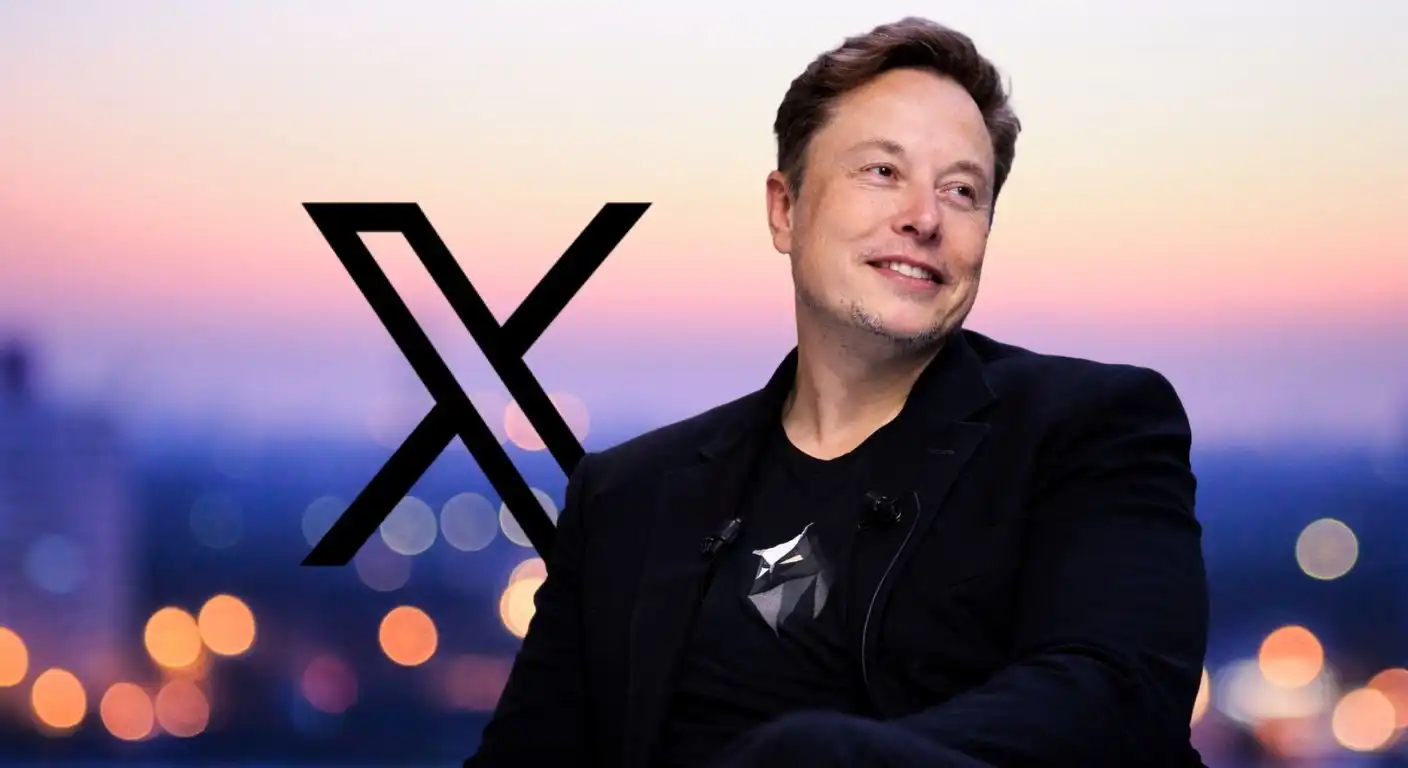
These mounting legal liabilities arrive as Musk continues to integrate the social media platform, which he renamed X, into his broader technology, artificial intelligence, and aerospace ecosystem.
With X now closely aligned with his artificial intelligence company xAI and his satellite network Starlink, any major multi-billion-dollar legal payout could drain valuable liquidity from his broader corporate network.
The San Francisco decision proves that even as Musk navigates the frontier of space exploration and artificial intelligence, his past financial communications remain a major, expensive liability on Earth.
Conclusion and the Path Forward
The decision by Judge Charles Breyer to uphold the Twitter investor fraud verdict is a defining moment for corporate accountability in the digital age. By flatly rejecting the defense’s “informal stream-of-consciousness” argument, the court has firmly established that social media posts are subject to the same strict transparency and truthfulness standards as formal SEC regulatory filings.
While Musk’s legal team is certain to file a swift appeal, the district court’s decision has officially cleared the path for a massive, multi-billion-dollar class-action claims process to begin.
The ruling serves as a stark reminder to corporate executives worldwide that “buyer’s remorse” is not a valid legal defense for misleading the public.
In an era where a single, late-night social media post can instantly wipe out billions of dollars in market value, the courts have made one thing clear: those who move the markets with false claims will eventually have to pay the price.