The European energy market is facing a severe, highly volatile geopolitical shock. In a rapid escalation of trading activity, benchmark natural gas futures in Europe jumped to their highest levels in more than four months. The sudden price surge follows an aggressive flare-up in military hostilities in the Middle East, capped by direct threats from Iranian forces to block the strategic Strait of Hormuz. This development has triggered widespread panic across international trading desks, raising fears of a massive, long-term supply deficit right as European utility companies prepare for the upcoming winter heating season.
The benchmark Dutch Title Transfer Facility front-month natural gas contract, which serves as the pricing standard for the entire European continent, surged by more than 12.5% in a single trading session to cross €42.50 per megawatt-hour. This is the highest trading level recorded since early spring, reflecting how sensitive the continent’s energy infrastructure remains to external geopolitical events. While Europe has spent the past several years attempting to build a secure, diversified energy system that is independent of pipeline imports, the current crisis proves that the region’s economic stability remains deeply tied to volatile maritime shipping lanes.
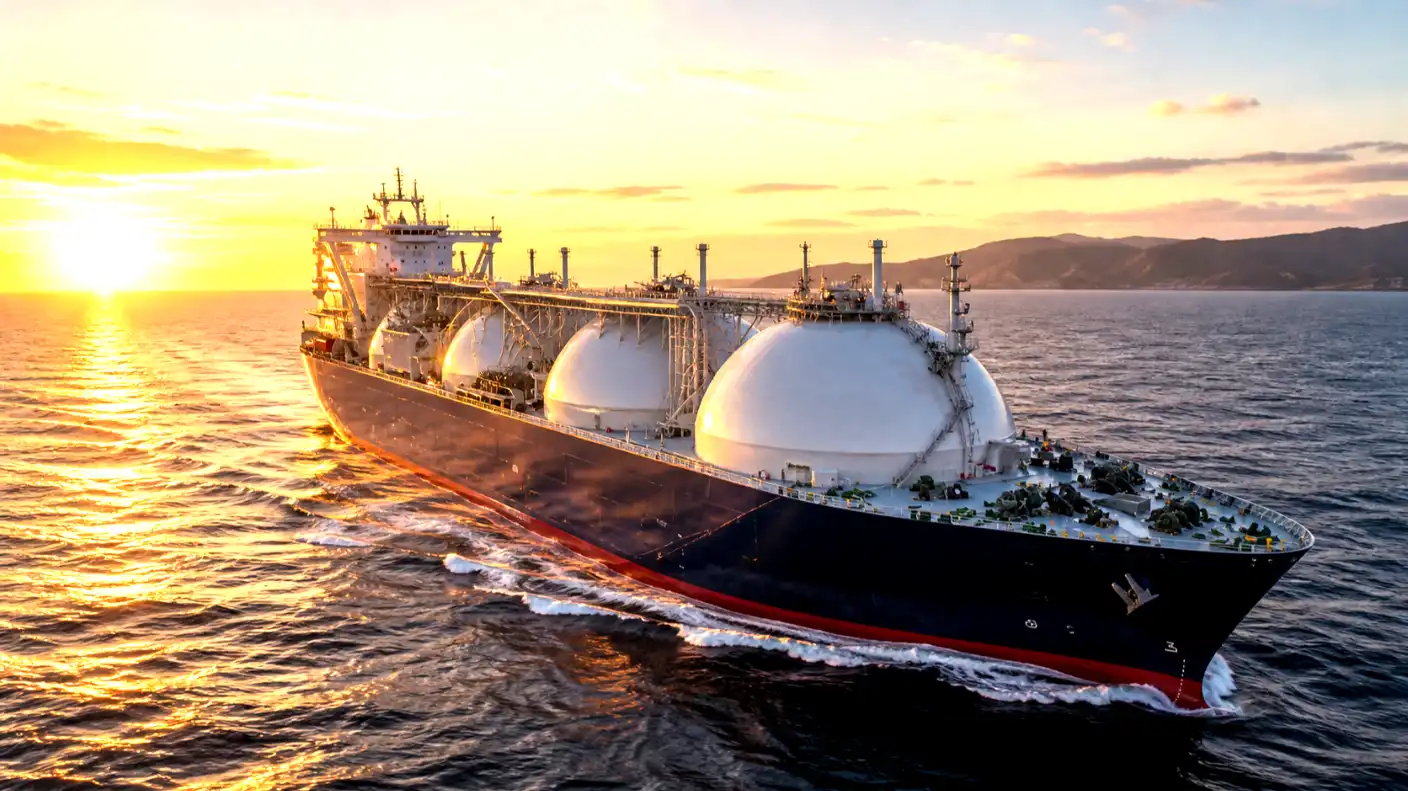
The primary source of concern for energy planners is the physical vulnerability of the global liquefied natural gas fleet. Unlike pipeline gas, which flows continuously under long-term, state-to-state contracts, liquefied natural gas must be transported across the oceans in highly specialized, vacuum-insulated cryogenic vessels. Because a significant portion of this global LNG supply originates in the Persian Gulf, any threat of a military blockade at the Strait of Hormuz represents an existential threat to the European energy grid, leaving the continent highly exposed to sudden supply contractions and extreme price volatility.
The Strait of Hormuz Threat: Why a Blockade Dictates Europe’s Winter Survival
The geopolitical crisis in the Middle East has focused global attention on the world’s most critical maritime chokepoint. The Strait of Hormuz is a narrow waterway situated between the Gulf of Oman and the Persian Gulf, through which approximately 20% of the world’s liquefied natural gas and oil shipments flow daily.
For Europe, the strategic importance of this waterway has skyrocketed over the past three years. Following the total loss of cheap Russian pipeline imports, European nations invested billions of dollars to construct floating regasification terminals and lease massive LNG fleets, turning to international suppliers to meet their basic energy requirements.
A significant portion of this new, critical supply originates in Qatar, which stands as the world’s second-largest exporter of liquefied natural gas. Qatar’s massive export operations are located entirely within the Persian Gulf, meaning every single one of its LNG vessels must transit the Strait of Hormuz to reach international buyers in Europe and Asia.
The Twelve-Point-Five Percent Surge in Dutch TTF Futures
The sudden, 12.5% surge in Dutch natural gas futures is a direct reflection of this geographic vulnerability. When Iranian forces issued direct warnings that they were preparing to block shipping traffic through the strait in retaliation for U.S. and Israeli military strikes, energy traders immediately priced a massive risk premium into the market.
At €42.50 per megawatt-hour, European natural gas has become significantly more expensive than alternative fuels, putting immense pressure on industrial manufacturers and power generation utilities.
While Europe has successfully filled its domestic storage sites to high levels, these reserves are designed to act as a buffer, not a permanent replacement for continuous, daily imports.
If the threat of a blockade transitions into an active, long-term military embargo, the loss of Qatari LNG would instantly push the European energy market into a state of absolute deficit, triggering rolling industrial shutdowns and severe public energy rationing.
The Logistics Nightmare of Rerouting the LNG Fleet
The operational challenges of transporting liquefied natural gas make the threat of a maritime blockade incredibly difficult to manage. To transport natural gas across the ocean, it must first be cooled to an extraordinary -162 degrees Celsius, transforming the gas into a liquid state that occupies just 1/600th of its original volume.
This liquid state can only be maintained inside specialized, double-hulled cryogenic tankers equipped with advanced insulation systems.
Despite this insulation, a small percentage of the cargo naturally warms and transitions back into gas during the voyage, a phenomenon known as Boil-Off Gas.
Because of this constant, natural degradation, LNG cannot be parked or anchored in the ocean for long periods while waiting out a military conflict.
If a tanker cannot transit the Strait of Hormuz on schedule, it must either return to its export terminal to re-liquefy the gas or risk losing its cargo to boil-off, making a predictable, unhindered shipping route an absolute necessity for the economic viability of the entire industry.
The Triple Threat: Intermitters, Maintenance, and Ukraine Transit Expirations
The sudden price spike triggered by the Middle East crisis is being amplified by several other, highly disruptive supply headwinds closer to home. The European energy grid was already operating with a highly narrow safety margin before the news from the Persian Gulf broke, leaving it vulnerable to even a minor supply disruption.
This vulnerability is the result of a “triple threat” of seasonal maintenance outages, declining pipeline flows, and looming geopolitical deadlines. Together, these forces have stripped Europe of its operational flexibility, ensuring that any external supply shock will translate into immediate, highly volatile price increases on the wholesale market.
Norwegian Pipeline Outages Squeeze Supply
The primary domestic source of natural gas for continental Europe is Norway, which expanded its pipeline exports significantly over the past three years to help fill the gap left by Russian energy. Today, Norway’s massive offshore gas fields, managed by state-owned energy giant Equinor, supply over 30% of Europe’s total natural gas requirements.
However, the continuous, high-volume operation of these offshore platforms requires regular, highly complex technical maintenance.
RTE and other European grid operators reported that planned maintenance shutdowns at several of Norway’s largest offshore fields have cut pipeline flows to the continent by 18 percent.
This planned reduction occurred exactly as a powerful summer heatwave swept across southern Europe, driving up electricity demand as households and businesses turned on air conditioners, leaving the market with virtually no buffer to absorb the subsequent news of the Middle East shipping threats.
The Looming Expiration of the Russian-Ukrainian Transit Agreement
The third supply headwind is a major, highly sensitive geopolitical deadline. Despite the ongoing war, a significant volume of Russian pipeline gas continues to flow to central European nations—most notably Austria, Slovakia, and Hungary—via a legacy transit pipeline that travels directly through Ukraine.
This remaining pipeline link is scheduled to close at the end of the year, when the five-year transit agreement between Russia’s Gazprom and Ukraine’s Naftogaz officially expires.
Ukrainian officials have consistently stated they have no intention of renewing the contract, which currently facilitates the movement of roughly 15 billion cubic meters of natural gas annually.
Replacing this massive, reliable volume with LNG will require Europe to purchase an additional 150 cargoes of liquefied gas every year, putting further pressure on an already highly competitive, supply-constrained global market and guaranteeing that prices remain elevated.
The Storage Illusion: Why an Eighty-Five Percent Fill Rate Is Not Enough
To reassure the public and stabilize market expectations, European Union officials frequently highlight the high fill rates of the continent’s domestic underground gas storage facilities. According to data from Gas Infrastructure Europe, the bloc’s collective storage sites are currently filled to an impressive 85% of their total capacity, representing a highly successful, ahead-of-schedule summer accumulation campaign.
However, energy economists warn that this high storage level is a dangerous illusion that can create a false sense of national security.
Underground gas storage sites are designed to meet seasonal peak demand during the winter, not to serve as a country’s sole source of energy.
Even if Europe enters the winter season with its storage facilities filled to 100% capacity, those reserves can only supply about 25% to 30% of the continent’s total winter consumption. The remaining 70% must be supplied by a continuous, daily inflow of imports via pipeline and LNG terminals.
The Danger of a Cold Winter and Blockaded Cargoes
The physical limits of the storage system become clear when analyzing weather-driven demand models. If Europe experiences a normal, mild winter, the 85% storage buffer, combined with steady imports from Norway and North America, will be more than sufficient to keep the lights on without triggering significant price spikes.
However, if the continent experiences a severe, prolonged winter freeze—similar to the infamous “Beast from the East” weather pattern—natural gas consumption will skyrocket as millions of households turn up their heating systems.
In this scenario, if the Strait of Hormuz remains blocked and the Ukrainian pipeline is closed, Europe will be forced to draw down its storage reserves at an unsustainable pace.
By January, many storage sites would face critical depletion, forcing national governments to implement emergency energy rationing programs, shutting down heavy manufacturing plants and restricting electricity use to protect residential homes.
The Cost of Deindustrialization in Europe’s Industrial Heartlands
The persistent volatility and high cost of natural gas are executing a slow, structural destruction of Europe’s industrial core. For decades, the economic power of nations like Germany, France, and Italy relied on a steady supply of cheap energy to run their massive chemical plants, steelworks, and paper mills.
Today, those industries are facing an impossible financial choice. With European natural gas prices trading at €42.50 per megawatt-hour—nearly four times the average price of natural gas in the United States—local manufacturers cannot compete globally.
Many energy-intensive companies are systematically scaling back their European operations, choosing instead to invest their capital in building new facilities in North America or the Middle East, where energy supplies are secure and significantly cheaper.
This slow-moving deindustrialization is eroding Europe’s tax base, destroying high-paying manufacturing jobs, and threatening the long-term economic prosperity of the entire continent, proving that energy security is not just an environmental issue, but a critical prerequisite for national wealth preservation.
The Macroeconomic Squeeze: Inflation and the European Central Bank’s Dilemma
The sudden jump in natural gas prices has introduced a severe new complication for European monetary policy. The European Central Bank has spent over a year attempting to cool the Eurozone economy and bring inflation back down to its long-term 2% target, utilizing restrictive interest rates to slow down credit creation and consumer demand.
While headline inflation has moderated, the persistent threat of imported energy inflation remains a major concern for central bankers.
Because natural gas is the primary fuel used to generate electricity in many European countries, any increase in wholesale gas prices passes directly through to retail electricity bills.
This energy-driven inflation shock threatens to reverse the progress made over the past year, raising concerns that consumer price inflation could remain sticky and elevated well into next year.
This inflationary threat has created a dilemma for ECB President Christine Lagarde and her governing council.
If the central bank cuts interest rates to support the struggling European economy, it risks reigniting inflationary pressures if energy prices remain high.
Conversely, if the bank keeps interest rates elevated to combat energy-driven inflation, it will continue to restrict credit, making it increasingly expensive for European businesses to borrow, invest, and expand, potentially pushing the continent into a deep, prolonged recession.
The upcoming monetary policy meetings will be closely watched as central bankers attempt to navigate this narrow, highly volatile path, with the future of the European economy hanging in the balance.
The escalating crisis over the Strait of Hormuz is a stark, highly instructive reminder that the transition to a modern, digital economy cannot succeed without absolute energy security. While global technology companies continue to build advanced artificial intelligence models, scale up automated robotics, and construct massive server farms, these digital innovations remain firmly anchored in the physical reality of the power grid.
To protect its economic future and defend its technological sovereignty, Europe must move beyond short-term crisis management.
It must implement bold, long-term energy policies designed to build domestic energy independence, expand nuclear and renewable power generation, and secure reliable, long-term supply contracts with stable international allies.
Until the continent can break its ruinous reliance on volatile foreign oil and gas imports, its economic prosperity will remain hostage to distant geopolitical conflicts, and the physical reality of the energy market will continue to dictate the terms of global commerce.