

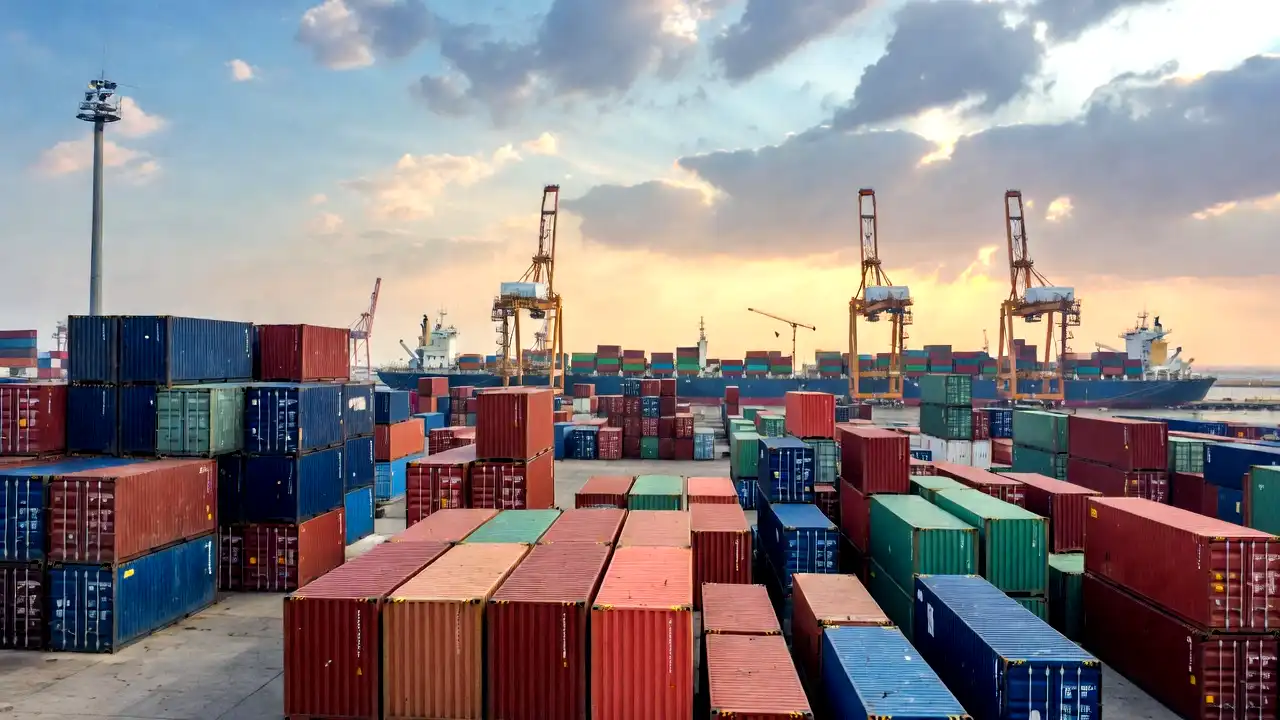
The macroeconomic foundations of the European continent are facing a severe, highly disruptive realignment. In a major disclosure that has caught financial markets completely off guard, the Eurozone unexpectedly recorded a significant trade deficit. Fresh data released by Eurostat, the statistical office of the European Union, revealed that the 20-nation currency bloc suffered a deep deterioration in its international trade balance, swinging from a comfortable, multi-billion-euro surplus into a massive deficit.
The primary catalyst driving this sudden trade collapse is a staggering, import-driven energy bill. As a newly reignited military conflict in the Middle East chokes global energy markets and spikes fuel costs, the Eurozone’s reliance on foreign oil and gas has transformed into a massive financial drain. At the same time, Europe’s traditional export engines—specifically its highly celebrated automotive, machinery, and chemical manufacturing sectors—are struggling to maintain their momentum amid rising global protectionism, supply chain disruptions, and stagnant international demand.
This unexpected trade deficit represents a major warning sign for the health of the European economy. For decades, the Eurozone relied on robust trade surpluses to support its single currency, finance its generous social welfare programs, and maintain its global economic relevance. The sudden collapse of this trade surplus into a deep deficit suggests that the continent’s high-cost, energy-dependent industrial model is becoming increasingly unsustainable, forcing a difficult, highly urgent debate over how Europe can defend its economic survival.
The Sudden Shift: Analyzing the Eurozone’s Abrupt Transition to a Trade Deficit
The trade indicators published by Eurostat laid bare the financial reality of Europe’s changing trade fortunes. The Eurozone recorded an unexpected goods trade deficit of €7.8 billion ($8.94 billion) for the period. This represents a massive, highly alarming turnaround compared to the same period last year, when the currency bloc posted a comfortable trade surplus of €15.0 billion.
The scale of this trade deterioration completely bypassed the baseline expectations of Wall Street and European policy planners. Most market economists had predicted that the Eurozone would continue to defend its traditional trade position, forecasting a comfortable trade surplus of roughly €6.5 billion, or at worst, a minor deficit of €1.6 billion.
Instead, the actual trade print came in billions of euros below the most pessimistic forecasts, marking the largest and most severe monthly trade deficit recorded since the height of the post-pandemic energy crisis in early 2023.
The rapid deterioration was driven by a complete divergence between import and export growth. While the Eurozone’s total exports to the rest of the world remained virtually flat—inching up by a meager 0.1 percent year-over-year to €243.6 billion—its total imports from international markets surged by an extraordinary 10.0 percent over the same period to reach €251.4 billion.
This massive import surge has completely wiped out the trading bloc’s historical surplus, forcing European policymakers to confront the reality that the continent is spending far more on foreign goods than it is earning from its own industrial exports.
The Dual Engines of Deficit: Surging Energy Imports and Stagnant Exports
The mechanical causes of this massive trade collapse are highly concentrated. Rather than a broad, even decline across all trade sectors, the Eurozone’s trade balance was pulled down by two specific, highly disruptive forces: a massive, war-driven spike in energy import expenses and a simultaneous contraction in the export surpluses generated by Europe’s core manufacturing industries.
This combination has created a highly dangerous double-squeeze. While the continent’s energy bill has skyrocketed to historic heights, the industrial profits that historically subsidized those energy imports have steadily evaporated.
As a result, the Eurozone’s trade balance has deteriorated rapidly, exposing the structural vulnerability of an economy that is highly dependent on imported natural resources to run its factories and heat its homes.
The Geopolitical Toll: The US-Iran Conflict and the Thirty-Billion-Euro Energy Drain
The primary driver behind the massive import surge is the ongoing military conflict in the Middle East. The active war involving regional powers and global coalitions has triggered a severe, highly disruptive energy crisis, restricting supply lines and forcing global energy markets to price in an extraordinary geopolitical risk premium.
The impact of this energy shock on European trade is stark. The Eurozone’s total energy trade deficit surged to a massive €30.3 billion, representing a significant increase compared to the typical €18 billion to €20 billion range recorded before the outbreak of the conflict.
Because Europe must import the vast majority of its petroleum, liquefied natural gas, and coal from international markets, any increase in global energy prices acts as a direct, non-discretionary tax on the European economy.
This multi-billion-euro energy drain is pulling massive amounts of capital directly out of the continent, worsening the trade deficit and driving up operational costs for every single business and household.
The Erosion of Europe’s Industrial Core: Chemicals and Machinery Decline
The second, equally concerning aspect of the trade data is the steady, structural decline in the export surpluses generated by Europe’s primary manufacturing sectors. Historically, the Eurozone relied on its world-class chemical, machinery, and automotive industries to generate the massive trade surpluses that offset its natural resource deficits.
Today, those industrial strongholds are facing severe, compounding headwinds. The trade surplus for chemicals and related products dropped to €18.4 billion, down significantly from the €20.5 billion surplus recorded in previous months.
At the same time, the trade surplus for machinery and transport vehicles—historically the single largest driver of European export wealth—plummeted to just €4.4 billion, a sharp decline from the €6.3 billion surplus recorded in previous periods.
This double-digit contraction in manufacturing surpluses proves that high domestic energy prices, rising labor costs, and a lack of technological innovation are actively hollowing out the competitive edge of European industry, making it increasingly difficult for European exporters to compete on the global stage.
Analyzing the Year-to-Date Damage: The Cumulative Collapse of Europe’s Surplus
The structural nature of Europe’s trade crisis becomes even more obvious when looking at the cumulative data for the first five months of the year. Rather than an isolated, short-term anomaly, the transition to a trade deficit represents a persistent, long-term trend that has steadily eroded the continent’s financial strength.
For the cumulative period from January to May, the Eurozone recorded a total trade surplus of just €3.3 billion. This represents a staggering, near-total collapse compared to the same five-month period last year, when the currency bloc posted an extraordinary trade surplus of €78.7 billion.
This multi-billion-euro loss in net export wealth means that the Eurozone has ceased to function as a primary engine of global capital accumulation, instead transforming into a net exporter of financial reserves to energy-producing nations.
The Broader European Union Trade Cracks
The trade crisis is not confined to the 20 nations that utilize the single currency; it has infected the broader, 27-member European Union (EU27) as well. The wider bloc reported a massive goods trade deficit of €12.1 billion with the rest of the world, representing a dramatic reversal from the €12.7 billion surplus recorded during the same month last year.
The primary driver of the wider European Union deficit was a massive, near-unprecedented surge in energy imports, which leaped by 41.6 percent year-over-year to reach €47.7 billion.
This surge pushed the European Union’s total energy deficit to an unsustainable €34.5 billion, proving that the entire continent is facing a coordinated energy-import crisis that is rapidly draining its financial reserves and threatening to derail its long-term economic stability.
The Squeeze on Intra-European Trade
The trade data also revealed an interesting, highly concerning trend within the internal European market itself. While trade between the Eurozone and the rest of the world collapsed, trade among the individual member states of the currency bloc increased by 3.3 percent to reach €1.16 trillion.
This rising internal trade suggests that European companies are increasingly turning inward, trading with one another to avoid the high costs, supply chain bottlenecks, and tariff barriers of the international market.
However, while intra-European trade is vital for maintaining economic cohesion, it cannot generate net wealth for the continent as a whole.
An economy cannot grow sustainably simply by trading with itself; it must export its high-value goods to international markets to capture global capital.
The retreat into domestic trading indicates a dangerous, defensive contraction that could ultimately stifle long-term innovation and reduce Europe’s competitiveness in the global technology and manufacturing sectors.
The Transatlantic and Transpacific Squeeze: Shrinking Surpluses and Widening Gaps
The structural decline in Europe’s trade position is being heavily accelerated by the trade policies of its most important international partners. The European Union finds itself caught in an uncomfortable, highly dangerous global trade squeeze, facing rising protectionist barriers in the West and aggressive, subsidized competition from the East.
This dual-front trade pressure has severely impacted Europe’s traditional trade corridors. The continent is watching its historical trade surpluses with the United States shrink rapidly under the weight of tariff adjustments, while its trade deficits with China continue to widen to historic proportions, leaving European manufacturers increasingly isolated in the global marketplace.
The Narrowing Trade Surplus with the United States
The United States has historically served as a critical, highly lucrative export destination for European luxury goods, industrial machinery, and premium passenger vehicles. This trade corridor regularly generated massive surpluses that helped offset Europe’s natural resource deficits.
The latest trade data reveals that this critical financial lifeline is beginning to fray. The European Union’s trade surplus with the United States narrowed sharply to €7.9 billion, down from the €18.4 billion surplus recorded a year earlier.
This contraction is a direct reflection of shifting trade policies in Washington. As the United States implements aggressive tariff adjustments and massive domestic manufacturing subsidies to protect its own industrial base, European exporters face rising barriers to entry.
This reduction in American demand has hit European industrial hubs like Germany and Italy particularly hard, depriving them of the export revenues needed to sustain their high-cost domestic economies.
The Widening Trade Deficit with China
While its surplus with the United States contracts, Europe’s trade deficit with China continues to widen to alarming proportions. The European Union’s trade deficit with China expanded to €30.8 billion, representing a significant increase compared to the €28.0 billion deficit recorded a year earlier.
This widening gap is driven by a massive influx of highly competitive, subsidized Chinese manufacturing products entering the European market. Chinese companies, backed by extensive state subsidies and integrated domestic supply chains, are flooding Europe with cheap electric vehicles, solar panels, and consumer electronics, directly undercutting domestic European manufacturers.
European utilities and consumers are purchasing these cheap Chinese imports to lower their own costs, but this behavior has a devastating long-term price tag, draining capital out of the domestic economy, worsening the trade deficit, and slowly hollowing out the continent’s own industrial and technological capabilities.
The Strategic Outlook: The Battle for Europe’s Economic Survival
The unexpected transition of the Eurozone to a trade deficit is a clear, unyielding warning to the continent’s political and economic leadership. The trade numbers prove that the old, comfortable economic model—which relied on cheap imported energy to power a high-value export machine—is permanently dead.
To survive and prosper in this highly competitive, protectionist new world, Europe must execute a rapid, fundamental transition. It can no longer afford to remain a passive spectator in the global technology and energy races.
If the continent wants to protect its financial independence, defend the value of the single currency, and maintain its generous social safety nets, it must implement bold, structural reforms designed to rebuild its domestic energy sovereignty, streamline its internal markets, and protect its core industrial base from predatory foreign competition.
The path to economic recovery will require incredible political courage, major capital investments, and a willingness to make highly unpopular decisions.
Governments must aggressively deregulate their domestic business environments to spur innovation and encourage the creation of homegrown technology champions.
They must rapidly build out domestic energy infrastructure—including advanced nuclear networks, offshore wind farms, and hydrogen pipelines—to break their ruinous reliance on volatile foreign oil and gas imports.
Most importantly, European trade officials must establish a more assertive, protective trade policy, utilizing targeted tariffs and reciprocal trade barriers to prevent foreign subsidized products from destroying the domestic manufacturing base.
The global trade war waits for no one, and the window for Europe to secure its economic future is closing fast. The transition is underway, and the choices made in Brussels, Berlin, and Paris over the coming years will determine whether the continent can successfully rebuild its economic power or if it is destined to drift into a state of permanent, high-debt industrial stagnation.






