The global automotive market is going through a massive structural shift, as long-term environmental targets collide with immediate macroeconomic and geopolitical realities. For nearly a decade, the transition to electric vehicles was viewed primarily as a gradual, policy-driven initiative supported by state subsidies and corporate green pledges.
However, a sudden surge in global energy prices has transformed this long-term transition into an immediate financial necessity for millions of households.
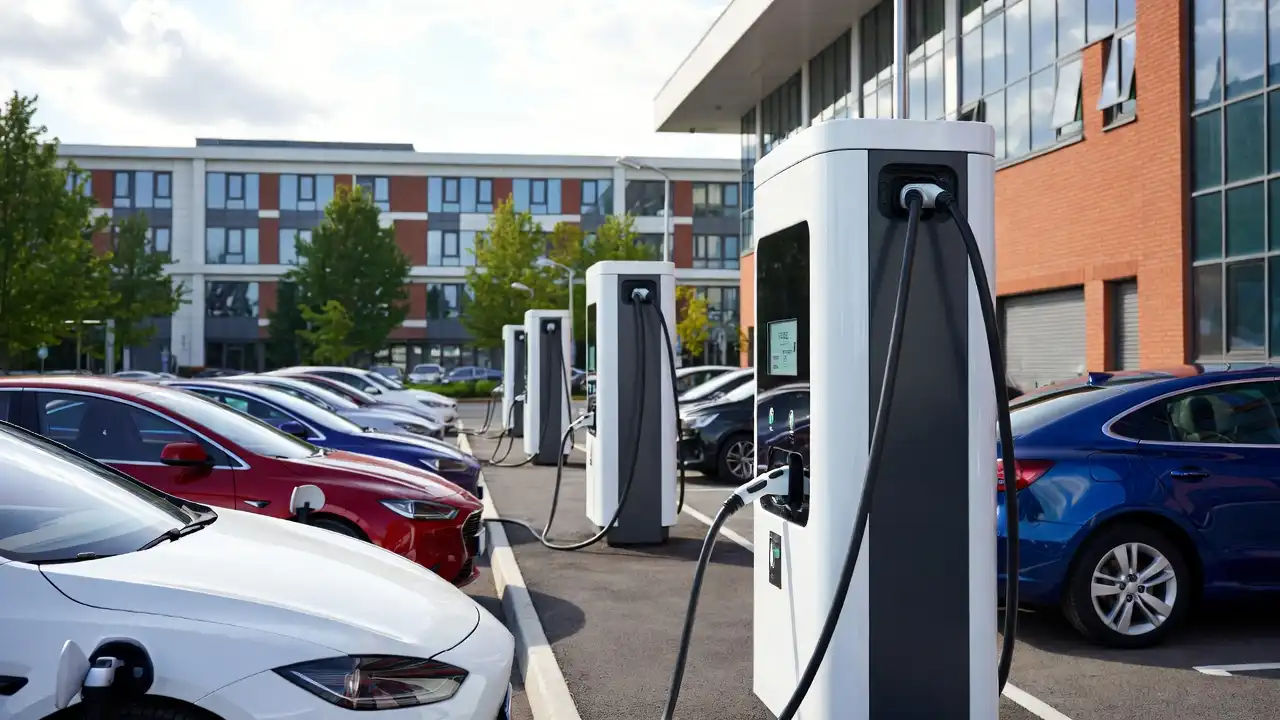
EV charging network data shows that high gas prices are driving more Americans to buy electric vehicles than ever before. This comprehensive analysis explores how soaring fuel costs are changing the way consumers think about electric mobility, detailing the latest market results from ChargePoint, the financial advantages of EV ownership, the rapid expansion of high-speed charging infrastructure, and the global macroeconomic forces pushing the energy transition into overdrive.
Understanding the Acceleration of EV Adoption
To understand why more Americans are choosing to go electric, we must look at the recent volatility in the global oil market. The military conflict in the Middle East and the subsequent blockade of the Strait of Hormuz sent global energy prices into a frenzy. Brent crude oil prices surged past $94 per barrel, driving retail gasoline prices at American pumps to highly elevated levels.
While a recent peace agreement has successfully reopened the shipping lanes, months of extremely high gas prices have left a deep, permanent mark on consumer behavior.
Every time gasoline prices spike, the car-shopping math changes instantly. American households, already struggling with high inflation and elevated borrowing costs, can no longer afford to spend hundreds of dollars a month just to fuel their traditional internal combustion engine (ICE) vehicles.
This financial squeeze has pushed consumer interest in electric mobility to record highs. Rather than viewing electric cars as a luxury, mass-market buyers now see them as a reliable hedge against volatile oil prices.
Key Components of the EV Infrastructure Shift
The physical and digital transition of the global transportation network relies on several critical technical components:
- Dynamic Fast-Charging Networks: Deploying high-speed standalone DC fast chargers, like the Express Solo, to provide up to 600 kW of power to a single vehicle.
- Subscription-Based Charging Models: Software-enabled charging access that generates recurring revenue, making up a massive share of charging companies’ top lines.
- Used EV Market Expansion: The rapid arrival of affordable, off-lease electric vehicles on the secondary market lowers entry barriers for mass-market buyers.
- Convergence of Purchase Prices: The narrowing cost gap between internal combustion engine (ICE) vehicles and brand-new EV models priced under $35,000.
- High-Volume Fleet Electrification: Coordinated corporate programs designed to manage the unique charging and logistics needs of commercial van and truck fleets.
The Financial Case for Going Electric: Shifting the Car-Shopping Math
For many years, the primary barrier to electric vehicle adoption was the “green premium”—the fact that electric cars cost significantly more to purchase upfront than traditional gas-powered cars. However, that premium has largely disappeared, as battery manufacturing technology has improved and raw material costs have dropped.
According to a detailed market analysis, the purchase price of brand-new electric vehicles is rapidly converging with that of traditional ICE vehicles. There is now a massive, highly diverse wave of new electric sedans and SUVs entering the market priced below $35,000.
When combined with generous federal and state tax incentives, these affordable models are making electric mobility highly competitive with traditional gasoline vehicles from a pure, upfront purchase standpoint.
The Widening Operating Cost Advantage
Once a consumer buys an electric vehicle, the operating cost advantages become obvious. Charging an electric vehicle at home overnight using standard residential electricity is significantly cheaper than filling up a gas tank at the local pump, especially when gasoline prices are highly volatile.
Furthermore, because electric vehicles have significantly fewer moving parts than internal combustion engines—completely eliminating the need for oil changes, spark plugs, timing belts, and complex transmission maintenance—owners save thousands of dollars on routine service over the lifetime of the vehicle.
This economic reality has driven highly impressive customer loyalty. ChargePoint CEO Rick Wilmer pointed out that electric vehicle retention rates consistently exceed 90%.
This means that once a consumer makes the switch from a traditional internal combustion engine to an electric vehicle, they almost never go back to a gasoline car. The combination of lower operating costs, smoother driving performance, and the convenience of home charging creates a highly sticky customer experience that permanently locks in the transition.
ChargePoint’s Stellar Q1 Results: Fueling the Transatlantic Boom
This rapid transition to electric mobility has delivered a major financial victory to ChargePoint, the leading provider of electric vehicle charging solutions in North America and Europe. The company recently reported its financial results for the first quarter of fiscal year 2027, exceeding its own guidance ranges and posting solid, year-over-year growth.
The company’s first-quarter financial metrics demonstrate the strength of its capital-light business model:
- Exceeding Revenue Guidance: ChargePoint reported total revenue of $102 million for the quarter, beating the top end of its guidance range and marking its third consecutive quarter of year-over-year revenue growth.
- A Record 32% Gross Margin: Disciplined pricing and operational efficiencies allowed the company to achieve a record non-GAAP gross margin of 32%, up one percentage point from the prior year.
- The Subscription Revenue Engine: Subscription revenue grew 7% year-over-year to $41 million, making up 40% of the company’s total revenue, while Network Charging Systems contributed $53 million.
- European Expansion Surge: While North America contributed 80% of the company’s total revenue, Europe provided a robust 20%. In Europe, sales of fully electric cars in major auto markets increased by almost a third (nearly 33%) in the first quarter, proving that the shift away from fossil fuels is a global phenomenon.
Scaling Up the Charging Footprint: Breaking Through Range Anxiety
For the electric vehicle transition to continue its rapid, global trajectory, charging companies must build a highly reliable, ubiquitous network of chargers to completely eliminate consumer “range anxiety.”
Range anxiety is the fear that an electric vehicle will run out of battery power before the driver can find a working charging station, and it remains the primary concern for prospective car buyers who do not have access to home charging.
To address this challenge, ChargePoint is rapidly expanding its physical footprint. The company now manages approximately 406,000 charging ports globally, including over 44,000 high-speed DC fast charging ports.
Through extensive roaming agreements with other major networks, ChargePoint provides its 1.48 million monthly active users with seamless, single-app access to more than 1.41 million charging ports across North America and Europe.
The Launch of the Express Solo
A major milestone for the company is the launch of its newest hardware platform, the Express Solo. Designed specifically for mass-market passenger EVs, the Express Solo is the world’s fastest standalone DC fast charger, capable of delivering up to 600 kW of power to a single vehicle.
This high-speed capability allows drivers to add hundreds of miles of range to their vehicle in just a few minutes, matching the speed and convenience of a traditional gasoline fill-up. By placing these high-speed chargers along major highways and busy retail corridors, the company is successfully breaking down the physical barriers to EV adoption.
Fleet Electrification: Protecting Corporate Bottom Lines
While individual consumer adoption is growing rapidly, the transition to electric mobility is also taking place at an industrial scale across the commercial sector.
Faced with highly volatile fuel prices, commercial logistics firms, delivery companies, and corporate fleet operators are realizing that they must electrify their delivery vans and trucks to protect their operational margins.
However, commercial fleet electrification presents a highly complex set of challenges. Unlike individual consumers, commercial fleet managers need absolute certainty that their delivery vehicles can complete their daily routes without needing mid-day charging delays.
If a delivery van runs out of power during a shift, it ruins the company’s delivery schedules and costs thousands of dollars in lost productivity.
To solve this challenge, ChargePoint has partnered with automotive giant Ford Pro to deliver an integrated, multi-scenario charging solution for commercial fleets across the United States and Europe.
The joint program connects fleet managers with a comprehensive suite of depot charging hardware, advanced software management tools, and on-the-road charging access.
This software-driven approach allows fleet managers to schedule charging during cheap, off-peak utility hours, monitor battery health across their entire fleet in real time, and ensure that their vehicles are fully charged and ready to deploy every single morning.
The Federal NEVI Funding Catalyst
The rapid expansion of the physical charging network is also being accelerated by a massive wave of federal funding. Under the federal National Electric Vehicle Infrastructure (NEVI) formula program, the United States government is distributing billions of dollars to states to build a highly reliable national network of high-speed chargers along major highway corridors.
The NEVI program has reached a major inflection point, with more than 40 states actively signing contracts to build new fast-charging stations in rural areas, underserved cities, and highways where private development might not have made immediate economic sense.
This government funding has acted as a massive catalyst for charging companies like ChargePoint, providing them with a steady stream of contract revenues to manufacture and deploy their hardware across the country.
Conclusion
The successful transition to electric mobility has reached a major point of no return, driven by the powerful economic forces of volatile gasoline prices and rapid technological innovation. As the latest EV charging network data demonstrates, the sudden, geopolitically driven spike in fuel costs has forced millions of Americans to reconsider their traditional internal combustion engine vehicles, with EV retention rates consistently exceeding 90%. Supported by ChargePoint’s record-breaking first-quarter results, the rapid expansion of high-speed charging infrastructure like the Express Solo, and the steady influx of affordable new EV models priced below $35,000, the economic case for going electric has never been stronger. As corporate fleets and consumer buyers alike scramble to escape their dependence on expensive oil imports, the physical infrastructure of the new fueling network is being built right now under real economic pressures, securing a cleaner, cheaper, and completely electrified transport future for generations to come.