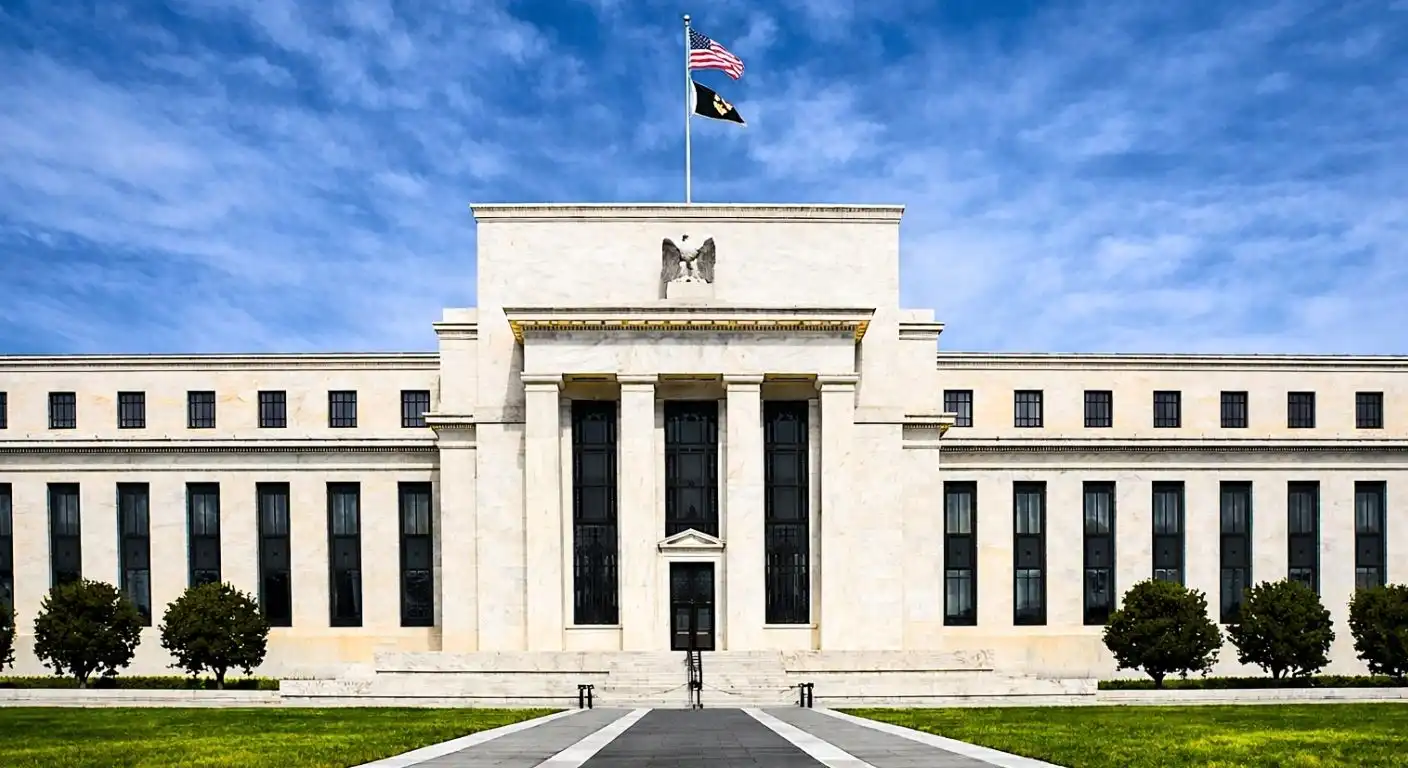
The global financial landscape is shifting rapidly under the pressure of renewed inflation. Investors, policymakers, and corporate leaders are bracing for a highly anticipated data release from the US Bureau of Economic Analysis. On Thursday, June 25, 2026, the government will release the Personal Consumption Expenditures (PCE) price index for May. This report, widely recognized as the Federal Reserve’s favorite inflation gauge, will serve as the first major test of the central bank’s newly adjusted policy stance.
The upcoming data arrives at a critical moment. Just last week, the Federal Open Market Committee (FOMC) held its policy rate steady at 3.50% to 3.75%, but the accompanying statement delivered a distinctly hawkish tone. Economists and market strategists widely anticipate that the May report will reveal a sharp acceleration in consumer prices, further validating the central bank’s cautious path. Early projections suggest that headline PCE inflation could climb from April’s 3.8% to a hot 4.1%, driven by a combination of geopolitical oil disruptions and a massive technology investment boom.
If these projections hold true, the era of near-term interest rate cuts is officially over. In its place, the market must prepare for a persistent period of high rates, and potentially even another rate hike before the end of the year. Understanding the underlying forces behind this sudden inflation surge is critical for any long-term financial strategy. The path to price stability is proving to be far more complex and volatile than previous forecasts assumed.
Understanding the Fed’s Hawkish Pivot: The Kevin Warsh Era Begins
The Federal Reserve underwent a major leadership transition in May 2026 with the confirmation of Kevin Warsh as the new central bank chairman. His first FOMC meeting on June 17-18, 2026, marked a decisive break from prior guidance. While the committee voted unanimously to maintain the federal funds target rate range at 3.50% to 3.75%, the overall communication strategy signaled a much tighter monetary policy regime.
Most notably, the June policy statement removed the central bank’s long-standing easing bias. Instead, the updated Summary of Economic Projections revealed a deeply divided committee. Out of the 18 policymakers who submitted forecasts, nine now anticipate at least one interest rate hike in 2026. Six of those members expect two or more hikes. This sudden hawkish shift caught many market participants off guard, as federal funds futures contracts quickly repriced to reflect a higher-for-longer rate environment.
Furthermore, the central bank implemented a radical revision of its macroeconomic outlook. The median forecast for headline PCE inflation at the end of 2026 jumped to 3.6%, up significantly from the previous estimate of 2.7%. The core PCE projection, which strips out volatile food and energy components, was also revised upward to 3.3% from 2.7%. These numbers indicate that the central bank expects price pressures to remain stubbornly high, forcing policymakers to abandon any plans for near-term monetary relief.
The Missing Dot and the Removal of Forward Guidance
A closer look at the Federal Reserve’s interest rate projections reveals a unique dynamic within the committee. While the dot plot showed a near-even split on whether rates should rise, newly appointed Chairman Kevin Warsh chose not to submit his own interest rate projection. This omission created a “missing dot” on the chart, leaving investors with limited direct guidance on how the new chairman plans to steer the committee in the coming months.
However, Warsh’s public comments during his post-meeting press conference left little room for doubt. He strongly reaffirmed the Fed’s commitment to its 2% inflation target and emphasized that the central bank would not hesitate to tighten policy further if data warranted. The deliberate removal of forward guidance from the official statement gives the Fed maximum flexibility. By refusing to pre-commit to a specific rate path, the central bank can pivot much faster in response to incoming economic reports.
The May PCE Projections: A Threat to Rate Stability
The upcoming May PCE release is the first inflation report to fall within this new, highly flexible policy framework. Because the Fed favors the PCE price index over the Consumer Price Index (CPI), this data carries immense weight. The PCE index adjusts more dynamically to shifts in consumer behavior, such as when buyers substitute cheaper products for expensive ones, making it a more accurate reflection of broad living costs.
Unfortunately for the central bank, the data is trending in the wrong direction. April’s PCE report already showed headline inflation accelerating to 3.8% year-on-year, a significant increase from the 2.9% rate recorded just two months prior. The core PCE reading also crept upward to 3.3%. This acceleration put an end to the downward inflation trend that dominated 2025, raising concerns that price pressures are building momentum once again.
From April’s 3.8% to May’s Projected 4.1%: Tracking the Numbers
Leading economic models and institutional forecasts suggest that the May report will deliver another blow to inflation optimists. Investment banks like Wells Fargo predict that headline PCE will accelerate to 4.1% year-on-year in May, while core PCE is expected to rise to 3.4%.
A print above 4% would mark a critical psychological threshold for the market. It would represent the highest level of headline inflation since mid-2023 and put the Fed’s 2% target even further out of reach. Month-on-month, economists expect a headline increase of around 0.5%, driven largely by a sharp rebound in retail fuel prices. If these numbers materialize, the central bank’s hawkish posture will be fully vindicated, and the probability of a rate hike at the next policy meeting will surge.
The Energy Catalyst: Geopolitics and the Strait of Hormuz Disruptions
The primary driver behind the sudden acceleration in headline inflation is the geopolitical crisis in the Middle East. The ongoing military conflict involving Iran has directly impacted global energy markets, creating a classic supply-side shock. Oil transportation through the Strait of Hormuz, a critical maritime chokepoint through which 20% of the world’s petroleum liquids pass daily, has faced severe disruptions and temporary closures.
The impact on crude oil prices was immediate and severe. Oil prices have surged by more than 50% since the conflict began, driving the cost of retail gasoline higher across the United States. In April and May, consumers faced a sharp increase in fuel costs, which directly inflated the headline PCE numbers. Because energy costs are a foundational input for almost every sector of the economy, these price increases are rapidly spreading beyond the gas pump.
The Cost of Geopolitical Strains: Strait of Hormuz Oil Volatility
Volatility in the oil market complicates the Federal Reserve’s decision-making process. Typically, central banks prefer to look through temporary energy shocks, assuming that prices will eventually normalize once geopolitical tensions ease. However, the persistent nature of the current conflict suggests that high energy costs could remain a structural feature of the economy for the foreseeable future.
Higher oil prices increase transport, shipping, and manufacturing costs for businesses. When transportation companies face double-digit increases in fuel expenses, they pass those costs along to retailers, who then raise prices for consumers. This secondary pass-through effect is already visible in the rising cost of imported goods and industrial materials, preventing core inflation from returning to the Fed’s target.
The Technology Catalyst: The AI Capex Cycle and Resource Squeezes
While energy prices drive the headline inflation numbers, a different and highly modern force is keeping core inflation elevated: the generational artificial intelligence capital expenditure cycle. Technology giants, cloud providers, and enterprise corporations are engaged in an unprecedented spending boom to build out global AI infrastructure.
Capital expenditure in the AI sector is projected to reach a massive $750 billion in 2026, with forecasts pointing to $1.25 trillion in 2027. This level of spending is historically unique, representing one of the largest capital expenditure booms in generations. This massive influx of capital is driving up structural demand and prices for highly specialized technological components, creating localized inflation pressure.
The Generational AI Capex Cycle: $750 Billion Fueling Price Pressures
The physical reality of building AI data centers requires vast amounts of raw materials, electrical components, and specialized hardware. This intense demand has triggered severe supply constraints. For example, the surge in demand for high-performance flash memory cards led to a cumulative 20% price increase in the computer software and accessories index.
Because these high-tech components carry a higher statistical weight in the PCE price index than in the CPI, this technology-driven price spike has boosted the Fed’s favorite gauge more than other measures. This dynamic explains why core PCE has remained stubbornly high even as other, more traditional sectors of the economy show signs of cooling. The AI boom is actively working against the Fed’s efforts to cool the economy, proving that technology can sometimes act as an inflationary force in the short term.
Hysteresis and the Wage-Price Spiral: The Risk of Persistent Inflation
The combination of geopolitical energy shocks and intense technology spending is raising fears of a phenomenon known as hysteresis. In economics, hysteresis describes a state where temporary shocks permanently alter the structure of an economy. Once a system is pushed into a new state of high inflation, simply removing the initial shock is no longer sufficient to restore the old equilibrium.
The Federal Reserve Bank of San Francisco recently noted that while cyclical inflation—the portion of price growth most sensitive to monetary policy—has returned to normal levels, acyclical inflation continues to rise. Acyclical inflation is driven by sector-specific factors, such as tariffs, regulatory costs, and supply chain constraints. This suggests that the broad economy is becoming less responsive to interest rate hikes, making the Fed’s task incredibly difficult.
Hysteresis in Action: Why Temporary Shocks are Becoming Permanent
The greatest risk of hysteresis lies in the labor market. When consumers face higher living costs due to expensive gasoline and food, they naturally demand higher wages to preserve their purchasing power. Economists already see evidence of this dynamic in the most cyclical sectors of the labor market, where wage growth is accelerating significantly faster than the national average.
When wages rise to match inflation, businesses must raise their prices further to maintain their profit margins, creating a classic wage-price feedback loop. If the public resets its long-term inflation expectations higher, the Fed will have to keep interest rates elevated for years to break the cycle. The upcoming May PCE report will provide critical clues on whether these second-round effects are taking root in the broader economy.
Conclusion: Navigating the High-for-Longer Era
The impending May PCE report will likely confirm what many market participants have feared: the battle against inflation is far from over. With headline PCE projected to reach 4.1% and core PCE climbing to 3.4%, the Federal Reserve’s hawkish shift under Chairman Kevin Warsh appears completely justified.
The combination of the US-Iran geopolitical conflict and the $750 billion AI investment boom has created a complex macroeconomic environment where traditional monetary tools are less effective. As the central bank prepares to navigate this high-for-longer rate environment, investors must adapt their strategies. Navigating this new era requires a deep respect for economic levels over market narratives, as the path to price stability continues to be defined by volatility and structural change.