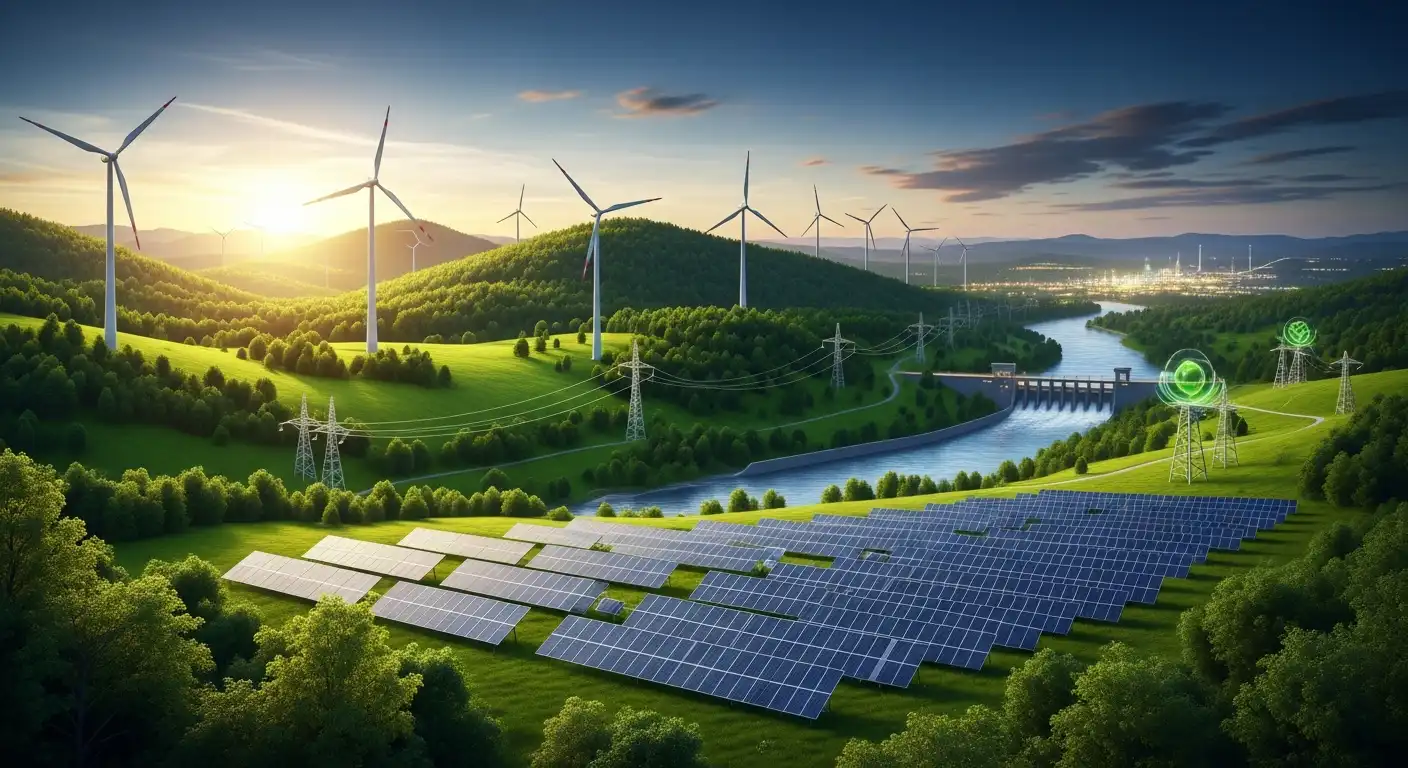
Germany’s historic push to lead the global energy transition has produced an unintended economic paradox. Across the country’s northern coastal plains and southern farmland, thousands of wind turbines and expansive solar farms generate record volumes of clean electricity. Renewable sources now supply more than 58% of the nation’s total electrical consumption, keeping the country on track toward its ambitious statutory target of 80% green power by 2030.
However, this clean power surge has triggered an acute financial crisis for the very independent developers who built the infrastructure. Massive midday solar generation and persistent wind output regularly overwhelm the national power grid, causing wholesale electricity prices to plunge below zero for hundreds of hours each year.
Combined with delayed north-to-south transmission lines, soaring grid redispatch expenses exceeding 4.2 billion euros, and the phase-out of government subsidies during negative pricing hours, independent power producers face crashing revenues and strained debt covenants. As merchant cash flows evaporate, renewable energy developers across Europe’s largest economy are fighting for financial survival, forcing a fundamental restructuring of clean energy business models.
The Economics of the Green Power Cannibalization Crisis
The primary mechanism threatening the financial stability of green energy developers is market cannibalization, a structural condition where rapid additions of identical generation assets destroy wholesale market prices during peak output hours.
Record Negative Electricity Price Hours on Wholesale Exchanges
On the European Power Exchange, electricity prices are dictated by supply and demand in 15-minute and hourly trading intervals. When thousands of solar installations generate maximum power simultaneously on sunny summer afternoons, wholesale electricity supply massively exceeds industrial and residential consumer demand.
This supply glut causes power prices to fall into negative territory, frequently dropping to minus 50 euros or even minus 100 euros per megawatt-hour. During these negative pricing intervals, power generators must pay grid operators and commercial consumers to take electricity off the system.
Over the past year, Germany recorded more than 450 hours of negative wholesale electricity pricing, setting an all-time national record. For independent solar developers who sell electricity on merchant markets, this dynamic means that their assets produce the maximum volume of physical electricity precisely when the market value of that electricity is zero or negative, wiping out daily operating revenues.
Slashing State Feed-In Subsidies Under Revised EEG Rules
To shield public finances from paying developers to produce unwanted electricity, the German federal government has restructured its foundational Renewable Energy Sources Act.
Under legacy regulations, renewable developers received guaranteed feed-in tariffs or market premiums from the state, even when wholesale market prices dipped below zero. The updated legal framework eliminates state remuneration whenever electricity prices remain negative for consecutive hours, with revised rules eliminating subsidies immediately upon prices turning negative.
This legislative change removes the financial safety net that project developers historically relied on to service bank debt. Developers that built utility-scale solar farms assuming predictable government-backed revenues are experiencing sharp revenue drops, leaving project balance sheets exposed to unhedged wholesale market volatility.
Grid Congestion and the Multi-Billion-Dollar North-South Bottleneck
The financial distress confronting developers is magnified by deep geographic imbalances within Germany’s physical electrical transmission network.
Delayed High-Voltage Transmission Corridors SuedLink and SuedOstLink
Germany’s energy geography features a fundamental spatial divide. The vast majority of the nation’s utility-scale onshore and offshore wind generation is concentrated in windy northern coastal states like Lower Saxony and Schleswig-Holstein. Conversely, the nation’s primary industrial power consumers—including automotive plants, chemical complexes, and heavy machinery factories—are located hundreds of miles away in southern industrial powerhouses like Bavaria and Baden-Württemberg.
Moving clean power from north to south requires massive high-voltage direct current transmission lines. However, flagship transmission corridors—most notably the multi-billion-dollar SuedLink and SuedOstLink projects—have suffered multi-year construction delays, bureaucratic permitting bottlenecks, and local political resistance regarding underground cable routing.
Initially scheduled to begin full commercial operation years earlier, these critical transmission links will not achieve full transmission capacity until the late 2020s. Without sufficient high-voltage transmission pipelines to transport surplus northern wind power southward, the physical grid becomes overloaded during high-wind periods, leaving vast volumes of clean electricity trapped in the north.
Surging Redispatch and Curtailment Expenses Exceeding 4 Billion Euros
When transmission lines reach maximum capacity, transmission system operators must intervene to prevent cascading electrical blackouts. Operators execute emergency redispatch measures: ordering northern wind farms to curtail production while simultaneously paying expensive fossil-gas and coal plants in the south to fire up and generate localized power.
These emergency interventions have become an immense financial drain on the German economy. Annual grid redispatch and curtailment expenses surged past 4.2 billion euros, or roughly $4.6 billion, with costs passed directly to consumers through elevated grid network charges on monthly utility bills.
For wind farm operators, forced curtailment means idling operational turbines during peak wind conditions. While operators receive regulated compensation for curtailed generation, the administrative claims process is slow and complex, tying up millions of euros in operating cash flow for independent power producers.
Corporate Insolvencies, Stranded Assets, and Squeezed Project Returns
The combination of negative power prices, reduced subsidies, and transmission congestion is eroding the financial foundations of the renewable energy development sector.
Bank Debt Covenants and Falling Internal Rates of Return
Developing utility-scale solar and wind farms is a capital-intensive business that relies heavily on debt financing. A typical 50-megawatt solar project requires between 35 million and 45 million euros in upfront capital expenditure, with commercial banks providing 70% to 80% of project costs through non-recourse project finance loans.
Commercial lenders establish strict Debt Service Coverage Ratios, requiring projects to generate predictable operating cash flows that exceed annual debt principal and interest payments by at least 1.2 to 1.3 times.
As captured solar prices plunge during summer months, project cash flows are falling short of debt covenants. Equity Internal Rates of Return, which developers originally projected between 7% and 9%, have compressed to under 3% to 4% for unhedged merchant assets.
Regional commercial banks and infrastructure funds are tightening lending standards, requiring developers to post higher equity cushions of 35% to 40% and demanding complex revenue-hedging structures before approving construction loans.
Power Purchase Agreement Renegotiations and Merchant Risk
To secure project financing without relying entirely on state subsidies, developers turned to corporate Power Purchase Agreements, signing multi-year contracts with industrial buyers to deliver clean power at fixed prices.
However, the proliferation of negative wholesale pricing has destabilized the corporate PPA market. Industrial corporate buyers are demanding steep discounts on long-term power contracts, pointing out that spot electricity is available for free or negative prices during midday hours.
Furthermore, corporate offtakers are insisting on pay-as-produced contract structures that place volume and price risks entirely onto the project developer. Independent power producers that lack diversified energy portfolios or strong corporate balance sheets are struggling to negotiate viable contracts, with several mid-sized developers entering insolvency or selling distressed asset pipelines to well-capitalized international energy majors at steep valuation discounts.
Strategic Survival Pivots: Battery Storage and Industrial Offtake
Faced with severe merchant market risks, forward-looking renewable energy developers are overhauling their engineering and operational strategies to capture value from volatile electricity markets.
The Boom in Co-Located Battery Energy Storage Systems
The most effective technical solution to negative power pricing is the mass deployment of Battery Energy Storage Systems. Instead of dumping surplus electricity onto an overloaded grid at negative prices, developers are installing high-capacity lithium iron phosphate battery banks directly alongside solar and wind farms.
Co-located battery systems charge from on-site solar arrays during midday peak generation, soaking up zero-cost or negative-price electricity. When the sun sets and wholesale electricity prices rebound during evening peak demand windows—often climbing above 120 to 180 euros per megawatt-hour—the battery storage system discharges stored energy back onto the grid at high commercial prices.
This daily price arbitrage transforms a loss-making solar farm into a highly profitable, dispatchable energy hub. Driven by falling battery cell prices, which have dropped by more than 40% over recent manufacturing cycles, developers have submitted grid connection applications for more than 30 gigawatts of utility-scale battery storage across Germany, marking a major investment shift from pure generation toward integrated flexibility assets.
Powering High-Density Data Centers and Green Hydrogen Hubs
Developers are also bypassing the public transmission grid entirely by establishing direct-wire connections with heavy industrial consumers and digital infrastructure operators.
The rapid construction of high-performance computing centers for artificial intelligence has created an immense demand for dedicated, low-cost electrical power. Renewable developers are signing private wire agreements with data center operators, supplying continuous clean energy directly from adjacent solar and wind installations without using public transmission lines.
Simultaneously, developers are constructing localized green hydrogen electrolyzer plants in northern coastal hubs. These industrial electrolyzers consume trapped, curtailed wind power to split water into green hydrogen fuel for local steelworks and chemical refineries.
By selling electricity directly to on-site industrial consumers through localized private microgrids, developers bypass public grid connection queues, avoid transmission network charges, and secure stable long-term cash flows that remain insulated from wholesale spot-market price volatility.
Long-Term Outlook for Germany’s Clean Energy Transition
The financial crisis confronting German renewable developers represents a critical structural turning point for European energy policy and electricity market design.
Reforming National Power Market Architecture and Capacity Mechanisms
The structural mismatch between renewable generation and grid capacity has ignited an intense policy debate regarding the fundamental design of the European electricity market. Academic economists and grid operators are advocating for the introduction of locational marginal pricing, which would divide Germany into multiple bidding zones with distinct regional electricity prices.
Under a nodal or zonal pricing model, electricity prices in the windy north would fall, while prices in the industrial south would rise, creating powerful market price signals that incentivize energy-intensive factories and data centers to relocate northward near cheap wind generation.
However, heavy industrial manufacturers and southern state politicians strongly oppose market splitting, warning that higher southern electricity prices would harm regional manufacturing competitiveness.
As a middle ground, the German Federal Ministry for Economic Affairs and Climate Action is developing a comprehensive Capacity Mechanism. This framework will provide structured availability payments to flexible assets—including battery storage banks, demand-response industrial aggregators, and hydrogen-ready gas turbines—ensuring that grid flexibility providers receive stable, non-market revenues for keeping the national power system balanced.
Balancing Decarbonization Targets with Developer Financial Viability
Germany’s statutory energy targets require the nation to install 215 gigawatts of solar capacity, 115 gigawatts of onshore wind, and 30 gigawatts of offshore wind by 2030. Achieving this massive buildout requires deploying tens of billions of euros in private capital every year.
If independent developers cannot earn a sustainable return on invested capital, the pace of new solar and wind construction will slow dramatically, threatening national climate targets and leaving the economy dependent on imported fossil fuels.
To maintain construction momentum, policymakers must accelerate the expansion of transmission lines, streamline permitting for co-located battery storage, and establish predictable market frameworks that reward flexibility over unconstrained, raw generation volume. The transition must move past the early phase of simply adding more solar panels toward building a balanced, flexible, and digitally orchestrated power ecosystem.
Navigating the Next Phase of the Energy Transition
The economic challenges confronting German renewable energy developers deliver a vital lesson for energy transitions worldwide. Building record volumes of green generation is only the first step in the decarbonization of modern industrial economies.
When clean generation expands faster than electrical grid transmission and energy storage infrastructure, the resulting market distortions can undermine the financial health of the entire renewable energy sector. The developers that survive this difficult market transition will not be those that build the largest unhedged solar farms, but those that master market integration: pairing renewable generation with utility-scale battery storage, securing direct industrial offtake contracts, and optimizing dispatch using real-time algorithmic trading.
As Germany works to upgrade its transmission corridors, reform wholesale market rules, and deploy gigawatts of battery storage, the nation is once again serving as the testing ground for the global energy transition. By solving the challenges of market cannibalization and grid congestion today, Germany is building the resilient, flexible, and financially viable clean energy architecture of the 21st century.