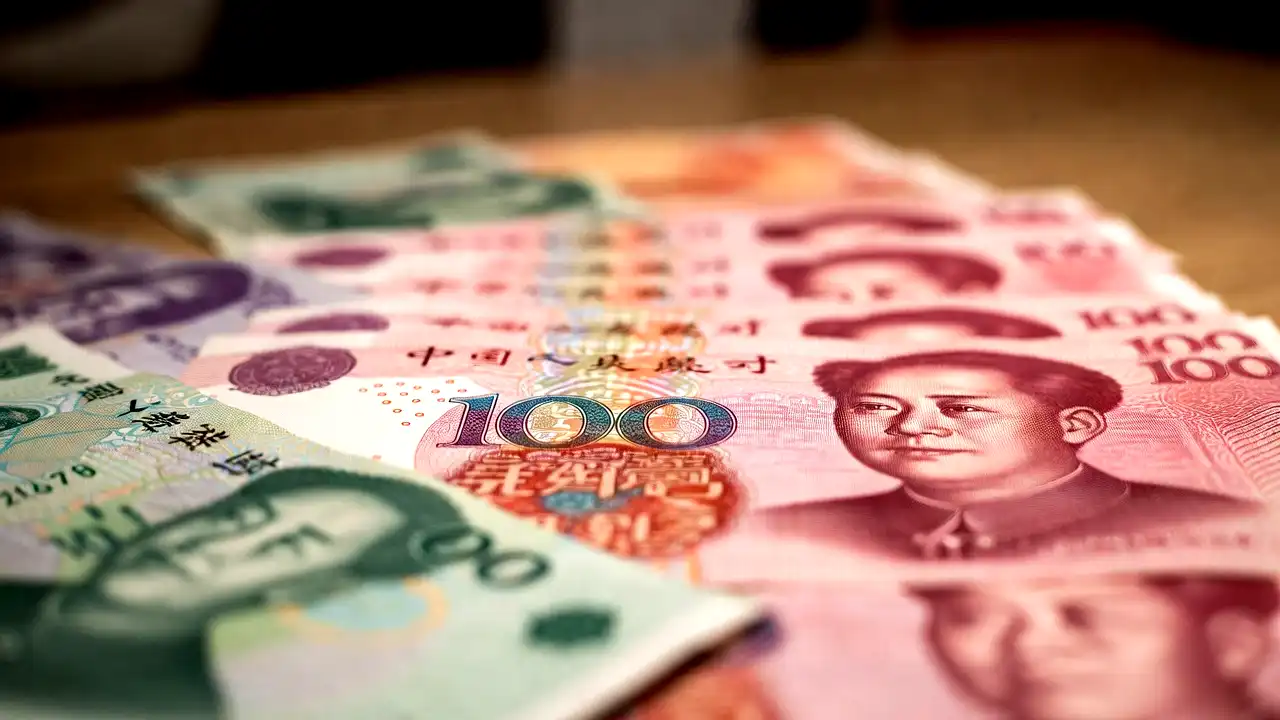
The landscape of global finance is going through its most significant structural shift since the Bretton Woods conference of 1944. For nearly eight decades, the United States dollar operated as the undisputed king of international trade, debt, and foreign reserves. However, as trade protectionism rises, geopolitical tensions escalate, and Western nations increasingly weaponize their financial infrastructure, the global community is actively searching for reliable, non-dollar alternatives.
To address this demand and secure its own economic sovereignty, the People’s Bank of China (PBOC) has unveiled a series of historic reforms at the annual Lujiazui Forum in Shanghai, designed to aggressively accelerate the global use of the yuan.
According to a financial report published by The Wall Street Journal, China is taking decisive steps to boost the international standing of the renminbi (RMB) by launching a first-of-its-kind offshore yuan repo facility. This advanced liquidity channel will allow foreign central banks, monetary authorities, and sovereign wealth funds to secure immediate yuan liquidity directly from the PBOC using high-quality collateral.
Combined with an aggressive legislative mandate to transform Shanghai into a mature offshore financial hub by 2027, this policy shift represents a highly coordinated, state-backed campaign under China’s new 15th Five-Year Plan (2026-2030) to build a highly resilient, sanctions-proof alternative to the Western-dominated global banking system.
The New Offshore Repo Facility: Solving the Liquidity Bottleneck
To understand why the launch of this offshore repo facility is such a massive milestone, one must first look at the traditional bottlenecks that have historically limited the internationalization of the Chinese currency. While foreign central banks, multinational corporations, and sovereign wealth funds were willing to accept and hold Chinese yuan as part of their reserve assets, they frequently ran into a major operational hurdle: a lack of offshore liquidity.
Unlike the highly liquid U.S. dollar market, where foreign institutions can easily borrow, swap, or trade assets through established offshore markets in London and New York, the offshore yuan market (CNH) has historically faced strict capital controls and limited liquidity channels. If an international bank or a foreign central bank faced a sudden, short-term liquidity crisis, it could not easily borrow against its yuan holdings, making the currency less attractive to hold during volatile economic periods.
The People’s Bank of China’s new offshore repo facility solves this structural liquidity bottleneck. Under the new program, eligible foreign central banks, monetary authorities, international financial organizations, and sovereign wealth funds can access immediate, on-demand yuan liquidity directly from the PBOC.
By allowing these overseas institutions to use high-quality collateral—including Chinese government bonds and highly rated policy bank debt—to secure yuan liquidity, the central bank has successfully established a reliable, international lender-of-last-resort mechanism. This facility gives foreign investors and central banks the absolute confidence that they can safely hold and trade yuan-denominated assets without risking a sudden liquidity freeze during a global financial crisis.
Key Components of China’s Currency Internationalization
The massive, long-term program to elevate the global standing of the Chinese renminbi relies on several critical technical, legal, and financial components:
- Offshore Yuan Repo Facility: A central bank liquidity channel allowing foreign central banks to borrow yuan using high-quality assets as collateral.
- Shanghai Offshore Financial Hub: A planned regulatory and legal zone set to launch by 2027, establishing international-standard offshore finance rules.
- The 15th Five-Year Plan (2026-2030): The national economic blueprint that prioritizes current account liberalization and capital account convertibility.
- Cross-Border Interbank Payment System (CIPS): The independent, yuan-denominated alternative to the Western-dominated SWIFT messaging network.
- Dim Sum Bond Market Expansion: Scaling up offshore Renminbi (CNH) debt issuance, which recently surpassed 1 trillion yuan ($143.8 billion) in volume.
The 15th Five-Year Plan (2026-2030): Shifting the Exchange Rate Strategy
This massive push to internationalize the yuan is not an isolated, short-term policy. It is a central, highly strategic pillar of China’s newly drafted 15th Five-Year Plan, which runs from 2026 through 2030. The national economic blueprint, which will guide the country’s development over the next four years, represents a major structural shift in how the People’s Bank of China manages the renminbi exchange rate.
Historically, China’s central bank prioritized a highly managed, tightly controlled exchange rate, focusing heavily on preventing currency volatility to protect its export-driven manufacturing sector. The new five-year plan completely updates this strategy, prioritizing current account liberalization and capital account convertibility over a managed appreciation of the currency.
Economists like Guan Tao, the global chief economist at BOCI China, suggest that raising the renminbi’s capital account convertibility is a crucial task for the 15th Five-Year Plan period. He suggested lifting the combined share of capital account transactions classified as “basically convertible” or “convertible” to over 80% by the year 2030, up from the current 60%.
By opening up the capital account and allowing more cross-border securities investments to flow freely, the Chinese government aims to build a highly robust, liquid onshore financial market that can easily absorb external economic shocks.
This current account reform is designed to give China’s emerging technology champions, renewable energy giants, and advanced manufacturing firms a highly stable, domestic-denominated financial platform to expand their global operations, shielding them from Western currency fluctuations and potential geopolitical trade sanctions.
The Erosion of Greenback Dominance: Trade and Debt Metrics
The structural reforms introduced by the PBOC are designed to build upon an already impressive foundation of global adoption. Over the past several years, the Chinese renminbi has made massive, rapid gains across all major international trade and debt metrics, steadily eroding the global dominance of the U.S. dollar.
This upward momentum is backed by China’s massive position as the world’s top trading nation:
- The $6.66 Trillion Trade Foundation: In 2025, China’s total goods trade reached a historic 45.47 trillion yuan (approximately $6.66 trillion), marking nine consecutive years of uninterrupted growth. This massive volume of global trade provides an exceptionally stable, physical foundation for the international use of the currency.
- The 8% Trade Finance Milestone: For the first time in history, the Chinese yuan reached a record 8% global market share in trade finance, according to data from Standard Chartered Bank. This milestone establishes the yuan as the second-largest trade finance currency on Earth, surpassing the euro and trailing only the U.S. dollar.
- The 12.48% IMF SDR Weighting: The International Monetary Fund (IMF) has assigned the renminbi a substantial 12.48% weighting in its Special Drawing Rights (SDR) basket, ranking third behind the U.S. dollar and the euro. This rating proves that a currency does not need a fully liberalized capital account to be recognized as an elite global reserve asset.
Furthermore, the offshore Renminbi (CNH) bond market—commonly referred to as the “dim sum” bond market—has experienced explosive growth. Total dim sum bond issuance surpassed 1 trillion yuan (approximately $143.8 billion) last year, with Hong Kong serving as the primary offshore hub.
This massive liquidity pool, combined with foreign holdings of RMB assets reaching a 43-month high of 10.42 trillion yuan ($1.47 trillion), proves that global investors are increasingly comfortable allocating their capital to yuan-denominated assets.
The Geopolitical Catalyst: Sanctions and Sovereign Alliances
The primary driver behind this rapid de-dollarization trend is not just economic efficiency; it is geopolitical survival. The sweeping, unprecedented financial sanctions imposed by the United States and the European Union on Russia—including freezing over $300 billion of Russia’s central bank reserves and cutting Russian banks off from the SWIFT messaging network—sent a shockwave of fear through developing nations.
Sovereign countries across the BRICS+ alliance—which now includes major oil-producing nations like Iran, Saudi Arabia, and the United Arab Emirates—realized that keeping 100% of their national reserves in U.S. dollars or euros is highly dangerous. If they find themselves in a diplomatic dispute with Washington, their national wealth can be frozen with a single pen stroke.
Consequently, these countries are aggressively diversifying their portfolios, moving their assets into gold and the Chinese renminbi, which operates under an independent, non-Western clearing system.
This geopolitical shift has solidified the Petroyuan trade. Oil exports from Iran, Russia, and the UAE to China are increasingly settled directly in yuan, completely bypassing the U.S. dollar clearing system.
By using the Cross-Border Interbank Payment System (CIPS) instead of SWIFT, these nations can trade billions of dollars in energy resources with absolute security, protecting their economies from Western financial blockades and securing China’s massive Belt and Road Initiative (BRI) infrastructure projects.
Shanghai’s 2027 Vision: Building a Mature Offshore Financial Hub
The People’s Bank of China’s currency internationalization strategy also relies on building world-class financial infrastructure onshore. During his keynote address at the Lujiazui Forum, Vice Premier He Lifeng announced a major administrative plan to transform Shanghai into a highly advanced, globally competitive offshore financial center.
Under the new plan, the Shanghai local government is legally mandated to draft a comprehensive, modern set of offshore financial rules by the end of 2027. These new rules will establish a highly flexible, low-tariff regulatory environment designed to compete directly with Hong Kong, Singapore, and London.
The ultimate goal of this initiative is to build a fully mature, internationally recognized offshore financial legal system by the end of 2030. By creating a highly secure, legally predictable onshore environment, China hopes to encourage more foreign companies, international banks, and sovereign wealth funds to issue bonds, trade assets, and establish regional headquarters in Shanghai.
This local hub, combined with Hong Kong’s established offshore business, will provide the physical and legal architecture needed to support the global use of yuan for decades to come.
Conclusion
The People’s Bank of China’s decision to launch an offshore repo facility and establish Shanghai as a world-class offshore hub represents a historic, structural shift in the global financial order. By systematically solving the offshore liquidity problem and raising capital account convertibility under the 15th Five-Year Plan, China is successfully accelerating the global use of the yuan. Supported by its massive $6.66 trillion trade foundation, a record 8% global market share in trade finance, and a substantial 12.48% IMF SDR weighting, the renminbi has emerged as a highly credible, secure alternative to the U.S. dollar. While the greenback will likely remain the dominant reserve currency for the foreseeable future, the rapid expansion of CIPS, the growth of the dim sum bond market, and the rising de-dollarization trend among BRICS+ nations prove that a multipolar financial world has officially arrived, and China is firmly in the driver’s seat of the new monetary era.