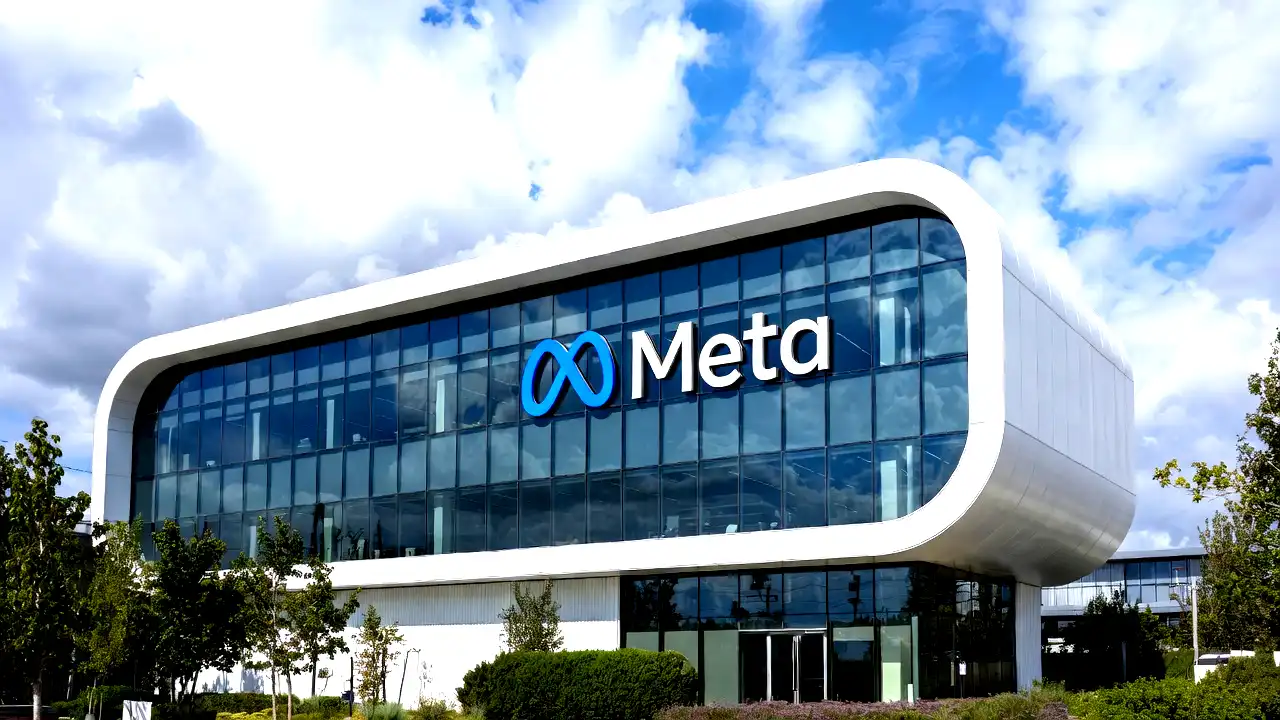
The global artificial intelligence and cloud computing markets are experiencing a profound, highly strategic realignment. In an extraordinary development that has completely upended the competitive dynamics of the technology sector, Meta Platforms is in advanced negotiations to sign a massive, multi-year $10 billion data center lease with AI pioneer Anthropic. The proposed transaction, first disclosed in an investigative report by the New York Times, represents a major structural shift in how tech giants build, fund, and monetize the physical infrastructure of the digital age.
The deal’s potential scale is truly historic. Under the proposed terms, Meta would lease a significant portion of its massive, state-of-the-art data center clusters directly to Anthropic, granting the startup access to more than 100,000 of its most advanced graphics processing units and high-speed network connections. For Meta, this transaction represents a dramatic pivot in its corporate strategy. The social media giant is transforming itself from a pure-play digital advertising company into a major commercial cloud computing landlord, attempting to prove to Wall Street that its massive capital expenditures can generate immediate, predictable revenue.
For Anthropic, the potential partnership is an essential lifeline. The San Francisco-based developer of the highly acclaimed Claude models has spent the past year battling severe, systemic hardware shortages that have threatened to slow down its technological progress. By securing a massive, dedicated supply of computing power outside of its existing, highly restrictive relationships with Amazon and Google, Anthropic can rapidly accelerate the training of its next-generation models while establishing its absolute corporate independence ahead of its highly anticipated initial public offering.
The Birth of “Meta Compute”: Monetizing Zuckerberg’s One-Hundred-Forty-Five-Billion-Dollar CapEx
The strategic decision by Meta to lease its raw computing power directly to a third-party developer represents a direct response to growing skepticism from the investment community. Throughout the first half of the year, major technology conglomerates faced intense pressure from Wall Street regarding their massive, unselective capital expenditures on artificial intelligence.
Meta, in particular, spent heavily to build out its physical infrastructure, guiding toward an extraordinary capital expenditure budget of $125 billion to $145 billion for the year. This level of spending, which accounts for over 35 percent of the total capital spending among the world’s largest tech companies, triggered deep-seated anxieties among shareholders.
Investors worried that these massive cash outlays would severely compress the company’s profit margins if it could not prove that the physical data centers were generating immediate, bottom-line financial returns.
Easing the Wall Street Capex Skepticism
The potential $10 billion contract with Anthropic provides the perfect, high-volume answer to this investor anxiety. By converting its excess data center capacity into a commercial leasing service, Meta can immediately begin recouping its massive capital investments.
A $10 billion deal spread over several years would generate billions of dollars in highly predictable, recurring revenue, transforming what was once viewed as a highly risky, speculative expense into a steady cash-generating asset class.
This financial validation helps defend the premium valuation multiples of Meta’s stock, giving investors the confidence to support continued capital investments in the sector. By proving that it can successfully monetize its cleanrooms, electricity grids, and server racks, Meta is establishing a new corporate standard.
The company is demonstrating that in the AI era, the ultimate winner is not necessarily the one who writes the best consumer software application, but the one who can build and lease the physical foundations of compute most efficiently.
Recruiting the AWS Tech Force: Hiring Dave Brown
The launch of the “Meta Compute” initiative is supported by a series of high-level talent acquisitions designed to bring enterprise cloud expertise directly into the company’s social-media-focused culture. The most significant of these hires was Dave Brown, a legendary former senior executive at Amazon Web Services, who joined Meta’s infrastructure team to lead the development of its commercial cloud offering.
Brown’s hiring represents a direct, highly aggressive challenge to the traditional cloud oligopoly. During his tenure at AWS, Brown oversaw the scaling of the world’s most dominant elastic compute services, mastering the complex supply chain, billing, and virtualization systems needed to run a multi-billion-dollar cloud enterprise.
By putting Brown at the helm of Meta Compute, Mark Zuckerberg is signaling that his cloud ambitions extend far beyond a single, passive leasing deal with Anthropic. The company is actively building the operational capabilities required to compete directly with AWS, Microsoft Azure, and Google Cloud, aiming to turn its massive, global data center network into a highly competitive, alternative cloud option for enterprises worldwide.
The Insatiable Compute Appetite: Why Anthropic is Hoarding Hardware
While the proposed compute deal represents a major strategic shift for Meta, it is an absolute operational necessity for Anthropic. The company, which pioneered the concept of safety-first, constitutional artificial intelligence, has built an exceptionally strong product moat through its highly acclaimed Claude model series.
However, the company’s commercial growth has been severely constrained by a persistent, highly frustrating lack of raw computing power. To train its next-generation models and support its rapidly expanding enterprise customer base, Anthropic requires an extraordinary volume of graphics processing units.
The hardware shortages have been so severe that the company was recently forced to place strict usage limits on its most advanced models, including the highly rated Claude Fable, to prevent its systems from crashing under the weight of high-volume user traffic, limiting its near-term revenue generation.
Underwriting the October IPO Roadshow
The timing of the Meta negotiations is closely linked to Anthropic’s upcoming corporate milestones. According to financial advisers close to the matter, the startup is actively preparing to launch a highly anticipated initial public offering as early as October, targeting an ambitious valuation of up to $60 billion.
To secure this massive valuation and win the backing of Wall Street’s most conservative fund managers, Anthropic must prove that its business model is physically and operationally sustainable. Going into a public market roadshow with a single hardware supplier or a severe, ongoing capacity constraint would be a massive strategic liability.
By securing a second, massive $10 billion compute agreement with Meta, Anthropic can go to investors with a highly stable, diversified, and legally guaranteed infrastructure roadmap, demonstrating that it has the computing power necessary to hit its technological targets and expand its market share without risk of operational bottlenecks.
Building a Distributed Infrastructure Network: Bypassing the SpaceXAI Monopoly
The potential agreement with Meta is also a crucial, defensive move to reduce Anthropic’s reliance on its existing, highly expensive hardware partners. Earlier in the year, Anthropic signed a massive $45 billion, three-year compute agreement with Elon Musk’s newly merged corporate giant, SpaceXAI, securing access to the massive “Colossus” supercomputing complex in Memphis and Southaven.
While the SpaceXAI partnership solved the company’s immediate hardware emergency, relying entirely on a single, highly volatile supplier who also operates a competing AI division introduced significant strategic risks.
By adding Meta as a second major infrastructure partner, Anthropic is successfully building a distributed, platform-agnostic infrastructure network.
This diversified approach reduces the company’s dependency on any single tech giant, protecting its operational continuity and giving its management team massive negotiating leverage with all of its hardware and cloud suppliers.
The Co-Opetition Paradox: When Your Competitor is Your Landlord
The proposed deal between Meta and Anthropic highlights a fascinating, highly unique structural dynamic that has become the norm in the modern artificial intelligence industry: “co-opetition.” In traditional business cycles, companies competed with one another in clear, cleanly separated verticals. A company was either a direct competitor or a close partner; it was rarely both at the same time.
In the AI era, these traditional boundaries have completely dissolved. Meta is one of Anthropic’s most formidable software competitors, developing and releasing its own highly advanced Llama series and its newly launched, ultra-low-cost “Muse Spark 1.1” coding models.
Under the terms of the proposed lease, however, Meta will simultaneously serve as Anthropic’s primary infrastructure provider, hosting and powering the very same Claude models that compete directly with Meta’s own products.
Models as a Commodity, Compute as the Real Currency
This co-opetition paradox is driving a realization among Wall Street analysts that the underlying business model of artificial intelligence is splitting into distinct, highly specialized layers. The software and model layers are becoming increasingly commoditized, as open-source platforms and rapid algorithmic optimizations allow smaller teams to build highly competitive models at a fraction of the historical cost.
In this environment, the real, defensible value has shifted to the physical infrastructure layer. The companies that possess the raw computing power, the secure cleanrooms, the reliable energy contracts, and the specialized cooling technologies can charge a premium to any software developer, regardless of what the two sides are doing on the model side.
By acting as a primary infrastructure provider, Meta is building a highly profitable, recurring revenue engine that is completely insulated from the volatile, fast-moving software and algorithm wars.
The Transition to High-Performance “Methane-Powered” Datacenters
The physical execution of this massive $10 billion compute agreement will require an extraordinary level of logistical and environmental engineering. Modern, high-density graphics processing units consume vast, unprecedented amounts of electricity and water, putting immense strain on municipal utility grids and triggering intense public backlash from local communities.
To bypass these local grid constraints and ensure absolute operational uptime, Meta and Anthropic are actively exploring innovative, off-grid energy solutions.
The companies are designing and building their next-generation data center campuses around advanced, on-site methane gas and natural gas turbine networks, allowing them to generate their own, continuous electricity off the grid.
While this off-grid strategy has drawn some criticism from environmental groups, it is currently the only viable, fast-track solution capable of delivering the hundreds of megawatts of continuous electricity required to run advanced AI accelerators at a commercial scale, making energy procurement the ultimate battleground of the technology boom.
Strategic Outlook: The Fragmenting Global Computing Power Landscape
The advanced negotiations between Meta and Anthropic are a clear, undeniable signal that the global technology market is entering a highly mature, infrastructure-focused era. The initial excitement of the AI boom, which was defined by abstract software capabilities and rapid model releases, has faded, replaced by the physical, high-cost realities of the data center.
As the physical limits of power, water, and hardware continue to dictate the speed of technological progress, the companies that control the infrastructure will continue to command the highest valuations on Wall Street.
By building out its own massive, global data center network and transforming it into a commercial cloud hosting business under the Meta Compute banner, Meta is successfully securing its long-term financial future.
At the same time, by building a distributed, secure infrastructure network, Anthropic is proving that the future of artificial intelligence will be won by the firms that can successfully marry advanced software engineering with robust, highly efficient, and politically secure physical hardware.
The age of unrestricted, frictionless digital growth has officially ended. The next generation of global commerce will be built and powered inside the highly secure, master-planned cleanrooms of the physical data center, ensuring that the physical reality of the power grid remains the ultimate referee of the technological era.