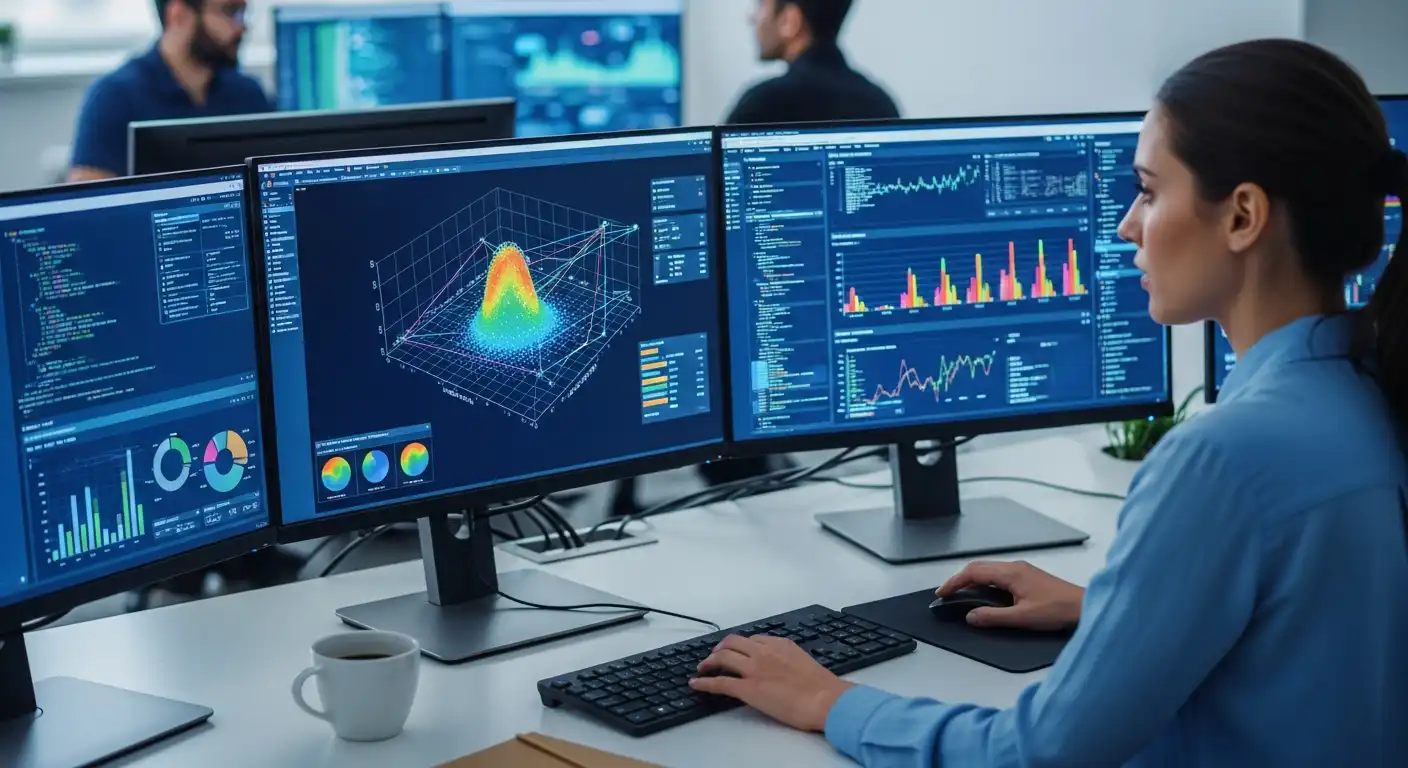
We once viewed retail as a simple game of supply and demand. A shop owner purchased a stock of winter coats, stacked them on shelves, and hoped that winter would bring freezing temperatures. If the weather stayed warm, the coats gathered dust, and the owner lost money. We accepted this guessing game because we lacked any alternative. Today, in 2026, running a retail business on hope is a fast track to bankruptcy. We operate in a highly competitive, fast-moving global market. To survive, businesses have turned to predictive analytics. By using data to look through the windshield instead of the rearview mirror, retailers are transforming how they buy, stock, and sell their products.
The Death of the Monthly Sales Report
For decades, retail managers relied on monthly sales reports to plan their next moves. They looked at what customers bought last month and assumed they would want the same things next month. This slow approach fails in a world where viral social media trends can make a product obsolete in forty-eight hours. Predictive analytics replaces these historic post-mortems with real-time foresight. Modern systems do not just record past sales; they analyze real-time search queries, weather forecasts, local events, and competitor prices simultaneously. The software predicts what customers will want tomorrow, allowing retailers to adjust their inventory before the demand even peaks.
Sizing Up the Supply Chain
Managing a supply chain has always been a balancing act. If you stock too much inventory, you tie up your cash in boxes that sit in a warehouse. If you stock too little, you face empty shelves and lose customers to faster rivals. Predictive analytics solves this logistical nightmare. By analyzing historical shipment times, port delays, and weather patterns, the software tells a retail manager exactly when to order raw materials. If a major shipping channel faces an upcoming bottleneck, the system automatically reroutes the cargo or selects a closer supplier. We turn the supply chain from a fragile series of links into a highly resilient, self-correcting network.
The End of the Clearance Rack
The clearance rack represents a massive, expensive failure of retail planning. It exists only because a buyer guessed wrong and overstocked a product that nobody wanted to buy at full price. To clear the shelf space, the store must slash its margins and sell the item at a loss. Predictive analytics is quietly killing the discount rack. By predicting exact customer demand at the individual store level, retailers manufacture and ship only the items they know will sell. A store in a rainy coastal city receives waterproof boots, while a store in a sunny valley receives light sneakers. We stop wasting fabric, we stop wasting shipping fuel, and we protect our profit margins.
Hyper-Personalization at the Checkout
We used to treat our customers as generic demographics. We grouped people by age or zip code and showed them the same advertisements. This impersonal approach is losing its power. Modern consumers expect brands to understand their individual habits. Predictive analytics uses data from loyalty cards, mobile apps, and past purchases to build a unique profile for every customer. When you open a retail app today, the system does not show you a generic catalog. It highlights the exact jacket you need for your upcoming weekend trip, in your size, and at a price that fits your budget. We move from selling products to providing immediate, personal convenience.
Fighting the Crisis of Customer Churn
It costs five times as much to win a new customer as to retain an existing one. Yet, in a crowded online marketplace, customer loyalty is incredibly fragile. People switch brands with a single click. Retailers are using predictive models to spot the early warning signs of “churn”—the moment a customer is about to abandon the brand. The software notices if a regular buyer stops opening emails, delays their usual monthly order, or leaves a negative review. Before the customer walks away forever, the system automatically intervenes. It sends a personalized offer or a direct message to resolve the issue, saving the relationship before it breaks.
Turning the Store into a Fulfillment Center
The line between online shopping and physical retail has blurred completely. Customers want to buy an item on their phone and pick it up at their local store an hour later. Meeting this expectation requires incredible local efficiency. Retailers are using predictive analytics to turn their physical shops into micro-fulfillment centers. The system predicts exactly which items local online shoppers will order today. It ensures those specific products are packed and ready on the local shelves before the customer even clicks the buy button. We use our physical stores as strategic springboards, combining the speed of digital ordering with the convenience of local pickup.
Navigating the Ethical Boundaries of Data
We must acknowledge that this level of prediction carries a real risk. When a retail system knows when you sleep, where you travel, and how much money you earn, it can easily cross the line from helpful assistant to invasive spy. If a brand uses predictive data to exploit a customer’s vulnerability—such as targeting a stressed parent with impulse-buy ads at midnight—it destroys its own reputation. True retail leadership in 2026 requires strict ethical boundaries. We must build transparent systems that allow customers to opt out of tracking with a single click. Trust is the most valuable asset a retailer can hold, and we must never trade it for a quick, manipulative sale.
Conclusion
The competitive retail market of the future belongs to those who can see it coming. By embracing predictive analytics, retailers are eliminating the waste of overstocking, the delays caused by broken supply chains, and the frustration of generic marketing. They are building businesses that are lean, fast, and deeply personal. We still have significant challenges to clear regarding data privacy and system complexity, but the benefits of foresight are undeniable. The days of guessing are over. The era of knowing has finally arrived, and the retailers who use this knowledge responsibly will continue to lead the world.