

Feeding the world has never been more difficult. We face a growing global population, shrinking water reserves, and extreme weather patterns that destroy crops overnight. The old ways of farming—where we simply relied on a predictable rainy season, cheap fertilizers, and manual labor—no longer work. Today, we are entering a high-stakes era of food security in which the survival of our cities depends on how quickly we modernize our fields. Smart agriculture represents our best hope. By putting data, sensors, and automation into farmers’ hands, we are turning agriculture from a game of chance into a precise, resilient science.
The Muddy Frontier of Digital Data
For thousands of years, farmers looked at the sky and made their best guess. They used their intuition to decide when to plant seeds, how much water to pour, and when to harvest. But intuition cannot predict a flash flood or a sudden pest outbreak. Smart agriculture puts a digital nervous system into the mud. Tiny, inexpensive sensors buried in the soil now track moisture, temperature, and nutrient levels in real-time. Instead of flooding an entire field with water, smart irrigation systems drip exact drops only onto the dry patches. We stop wasting precious resources and give the crop exactly what it needs to thrive.
Drones as the Eyes of the Farm
A farmer can only see what is right in front of them. If a disease starts to infect a crop in the middle of a massive hundred-acre field, the farmer often finds out only after the damage has already spread. Today, we are using autonomous drones to patrol the skies. These flying helpers carry specialized cameras that can see light reflections invisible to the human eye. They fly over fields, scan the plants, and identify early signs of dehydration, disease, or pest invasion weeks before the leaves turn yellow. The farmer receives an alert on their phone, allowing them to treat a single small patch of crops before an entire harvest collapses.
The Rise of the Robotic Harvester
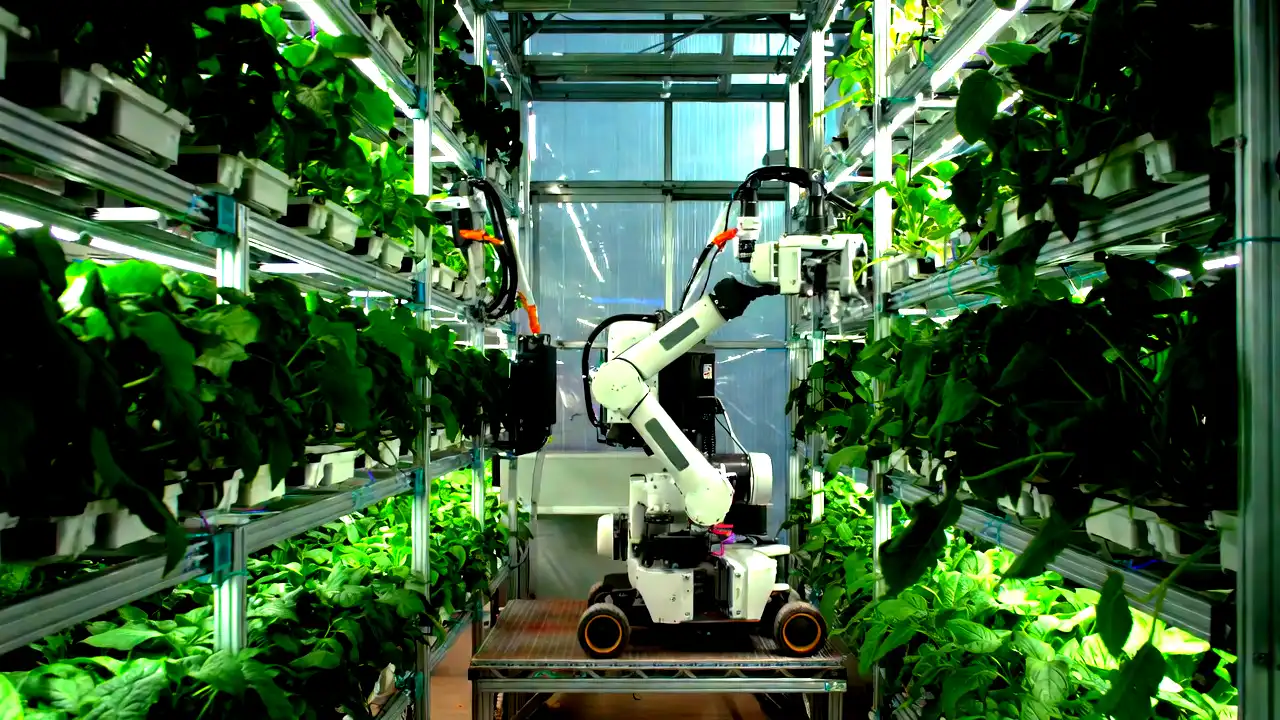
Finding people willing to perform the hard, back-breaking work of harvesting crops is becoming increasingly difficult worldwide. At the same time, food often rots in the fields because there are not enough hands to pick it in time. To solve this labor bottleneck, engineers are building a new generation of robotic harvesters. These machines use artificial intelligence to examine a fruit, determine whether it is perfectly ripe, and gently pick it without causing any damage. They work through the night, keeping our supply chains moving and ensuring that we do not waste the food we spent months growing.
Growing Up Instead of Growing Out
We are running out of fertile land. We cannot keep cutting down forests and destroying natural habitats just to build more farms. The future of food security in crowded cities relies on vertical farming. These are indoor agricultural facilities where we stack crops in layers under energy-efficient LED lights. We do not use soil; instead, we grow the plants in nutrient-rich water solutions. By perfectly controlling light, temperature, and humidity, we can grow food twenty-four hours a day, all year round, regardless of the blizzard or heatwave outside. We bring the farm inside the city walls, slashing the cost and fuel required to ship food across continents.
Turning Farmers into Tech Directors
This technological shift is completely changing what it means to work in agriculture. A farmer is no longer just someone who drives a tractor and pulls weeds. The modern farmer acts like the director of a high-tech operation. They sit in a home office, monitor data dashboards, and direct fleets of automated machines. We need to invest heavily in training our rural workforces to use these digital tools. If we do not make this technology simple and accessible, we will create a dangerous divide in which only wealthy mega-farms can afford to grow food, while small family farmers are left in the dust.
The Fight for Clean and Open Software
Just like in other tech sectors, we face a massive risk of corporate monopoly in agriculture. A few giant corporations build the smart sensors, write the software, and control the seeds. They often try to lock farmers into closed systems, forcing them to pay high subscription fees just to read the data from their own soil. We must fight for open-source agricultural software. We need standards that allow any farmer to connect any sensor to any tractor without needing permission from a massive tech firm. The keys to our food security must remain in the public domain, not behind a corporate paywall.
Keeping the Food Grid Safe from Hackers
When you connect our farms, water pumps, and supply chains to the internet, you create a new target for cybercriminals. If a hostile group hacks the digital system controlling a country’s irrigation network or automated greenhouses, it can freeze food production instantly. This is a terrifying national security threat. We must build robust, offline backup systems for all smart agricultural hardware. A smart farm must have a manual override switch so that a farmer can still water their crops by hand if the network goes dark. We cannot trade physical resilience for digital convenience.
Conclusion
We do not have to accept a future of global food shortages and empty store shelves. The smart agriculture revolution is already underway, proving that we can grow more food using less water, less land, and less chemical fertilizer. By putting data in the soil, eyes in the sky, and automation on the ground, we can secure our food systems against the unpredictable storms of the future. We must ensure this technology remains affordable, open, and secure for every farmer on Earth. The fields are ready, the tools are here, and the future of our food is in our hands.






