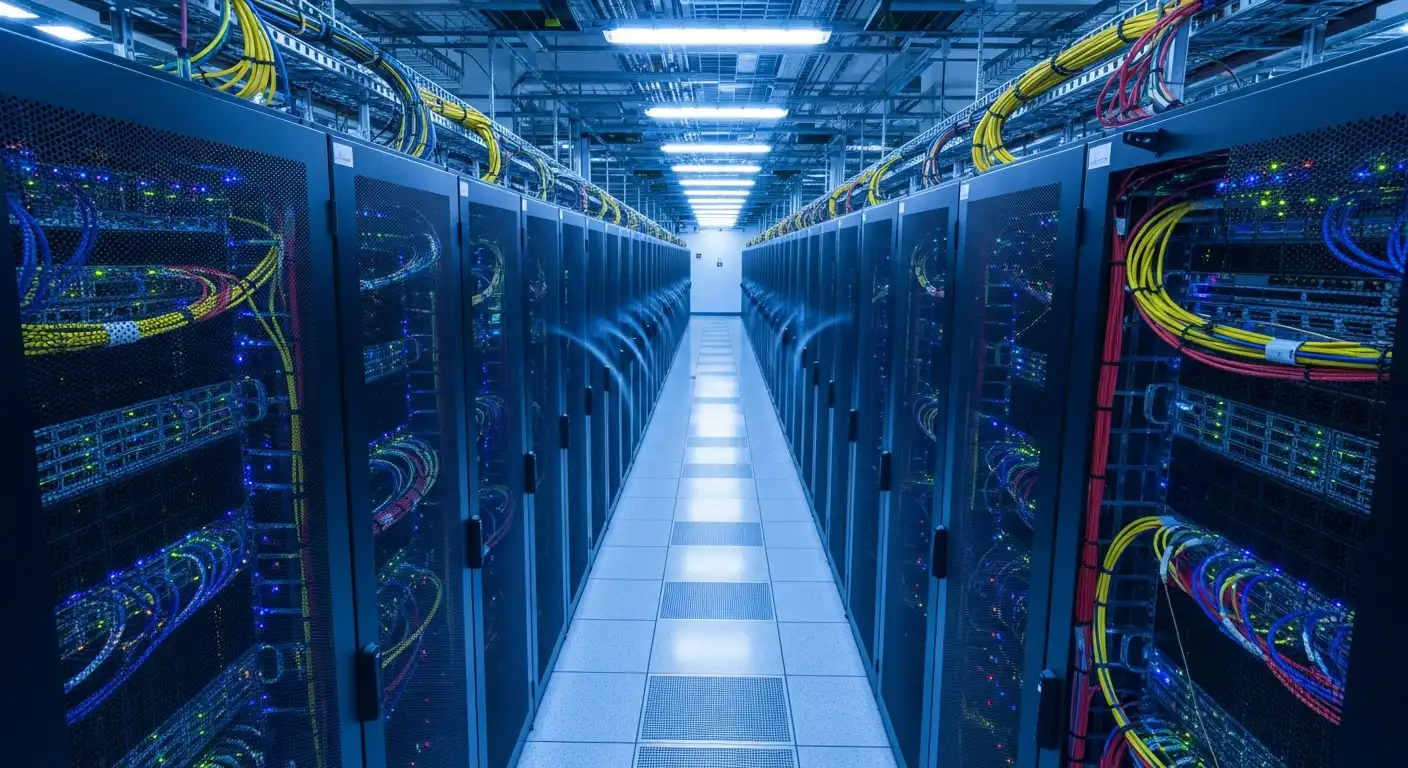
The artificial intelligence revolution has triggered an unprecedented land grab for physical infrastructure. To support the massive computing requirements of large language models, technology giants are racing to construct next-generation data centers at a record-breaking pace. However, building these high-density computing facilities is incredibly capital-intensive, requiring immense quantities of land, physical fiber-optic cables, heavy-duty cooling equipment, backup batteries, and massive energy storage.
To fund this historic build-out, infrastructure and utility players are seeking fast access to the public capital markets. But with traditional initial public offering (IPO) pipelines crowded with blockbuster tech giants, smaller infrastructure firms are struggling to secure the attention of institutional investors. Instead, a growing number of these companies are turning to a familiar, once-criticized financial shortcut: the Special Purpose Acquisition Company (SPAC).
According to veteran financial dealmaker and “SPAC Queen” Betsy Cohen, the founder and chairman of Cohen Circle, the disciplined rebound of blank-check companies is providing a vital pathway to the public markets for businesses tied to the artificial intelligence data-center build-out. Rather than competing in a congested traditional IPO market, companies specializing in data center hardware, green energy generation, and physical components are using SPAC mergers to bypass the traditional bottleneck, raising billions of dollars in public capital to fund the physical layer of the AI era.
The Rebound of the SPAC Market in 2026
To understand why blank-check companies have become such a critical funding tool for digital infrastructure, it is necessary to examine how the SPAC market has matured over the past few years. During the pandemic-era boom of 2020 and 2021, the market was flooded with hundreds of speculative shell companies, often led by celebrities and promoters with little to no financial background. Many of these speculative vehicles struggled to find viable targets or delivered dismal returns for retail investors after going public.
Reversing the Post-Pandemic Slump with Disciplined Storytelling
The speculative excesses of the early boom led to intense regulatory scrutiny and a sharp contraction in the market. The Securities and Exchange Commission (SEC) enacted strict guidelines regarding financial projections, marketing practices, and sponsor liabilities, bringing traditional public disclosures for SPACs in line with rigorous IPO standards. This regulatory cleanup drove out the short-term speculators, leaving behind a highly disciplined, professionalized landscape.
In 2026, the SPAC market is staging a major comeback driven by experienced, institutional sponsors with proven track records. Today’s blank-check deals are no longer built on vague, long-range projections of pre-revenue software companies. Instead, sponsors are targeting mature, capital-intensive businesses with tangible assets, real-world revenue, and established customer backlogs. This disciplined approach has restored institutional confidence, allowing blank-check mergers to re-emerge as a reliable alternative to traditional listings.
Mass Funding Ready for Deployment: Dry Powder Statistics
The financial metrics of the current SPAC market demonstrate the sheer scale of the capital waiting to be deployed. According to transaction data compiled by Dealogic, globally, 44 SPAC mergers have been announced this year, worth an estimated $36.9 billion. This represents a massive increase from the same period last year, which saw 33 deals announced worth roughly $15 billion.
Furthermore, there is an immense pool of unused capital—often referred to as “dry powder”—sitting in trust accounts. Data compiled by SPAC Research shows that as of mid-June, approximately 359 active SPACs are holding more than $56.8 billion in capital that has already been raised and is waiting to be deployed into operating companies. This massive backlog of capital is under intense pressure to find target businesses, as most SPAC charters carry a strict two-year timeline to complete a merger or return the cash to investors. With tens of billions of dollars ready for immediate deployment, blank-check sponsors are actively looking for capital-intensive, high-growth industries to absorb these funds.
Why the AI Data Center Boom is Primed for Blank-Check Mergers
The rapid rise of generative artificial intelligence has created a perfect match for this pool of ready-to-deploy capital. Data centers supporting advanced machine learning models are fundamentally different from traditional, cloud-hosting facilities. They require immense physical resources, making them a natural target for value-focused, asset-backed public investments.
The Enormous Capital Demands of AI Physical Infrastructure
AI workloads require exponential power density compared to traditional web servers. While a standard enterprise data center rack typically operates on 5 to 10 kilowatts of electricity, a rack hosting advanced AI chips like Nvidia’s H100 or Blackwell architectures can demand up to 100 kilowatts. Managing this extreme power draw requires entirely new physical components, including liquid cooling loops, high-voltage transformers, and complex fiber-optic link systems.
This massive technical upgrade requires staggering amounts of capital upfront. To build a modern, gigawatt-scale AI data center, developers must spend billions of dollars on hardware and raw utilities before they can generate their first dollar of recurring compute revenue. Because traditional commercial banks are often hesitant to fund such rapid, large-scale capital projects for younger startups, private developers must look to the public equity markets to finance their construction pipelines.
Outcompeting Mega-IPOs for Public Investor Attention
At the same time, the traditional IPO market is facing a significant bottleneck. A flood of blockbuster, multi-billion-dollar listings from tech giants like SpaceX, Anthropic, and OpenAI is expected to dominate Wall Street’s attention throughout the year.
Industry analysts note that this parade of mega-IPOs makes life incredibly difficult for mid-market and smaller infrastructure issuers. These massive names soak up institutional bandwidth, analyst coverage, and the lion’s share of available investment capital. For a mid-sized company manufacturing advanced data center cooling systems or heavy-duty electrical components, a traditional IPO risks being completely ignored or undervalued.
A SPAC merger offers these companies a quick, highly efficient side entrance. By merging with a blank-check company that is already listed on the Nasdaq or New York Stock Exchange, a private infrastructure developer can secure hundreds of millions of dollars in cash directly from the SPAC’s trust, avoiding the expensive, months-long roadshows and marketing campaigns associated with a traditional IPO.
Case Study: ZincFive’s $600 Million SPAC Merger
The intersection of the data center boom and the SPAC resurgence is perfectly illustrated by the recent public listing of ZincFive. Based in Tualatin, Oregon, ZincFive is a leading developer of nickel-zinc battery systems designed specifically to provide reliable backup power for massive data center operations.
Powering Data Centers with Nickel-Zinc Battery Chemistry
Data centers require robust, instant backup power to keep servers running if the primary electrical grid fails. Historically, operators relied on traditional lead-acid or lithium-ion battery banks to provide this critical backup window. However, lead-acid batteries have a large physical footprint, require intensive maintenance, and have a relatively short operating lifespan. Lithium-ion batteries offer higher energy density but carry a real risk of thermal runaway, which can trigger catastrophic fires in high-temperature environments.
ZincFive’s nickel-zinc battery chemistry addresses these safety and operational limitations. The company’s battery units offer a much smaller physical footprint than lead-acid setups, contain no toxic lead, and do not carry the risk of thermal runaway associated with lithium-ion systems. This unique combination of safety and density has made the technology highly attractive to data center operators scrambling to maximize the physical space inside their server halls.
Scaling Financial Performance and Order Backlogs
To fund the rapid scaling of its manufacturing capacity to keep up with surging demand, ZincFive announced a merger with a special-purpose acquisition company backed by SparkLabs Group. The deal values the combined company at $600 million before additional private investments in public equity (PIPE) are factored in.
Unlike the speculative SPAC targets of previous years, ZincFive is entering the public market with a highly mature, revenue-generating business. The company reports that its revenue more than doubled from 2024 to approximately $66.9 million last year, and it ended the fiscal year with a massive order backlog totaling $81 million.
Furthermore, the battery maker has nearly 2 gigawatts of energy storage systems either sold or under contract. This strong financial performance and deep order backlog show that today’s SPAC targets are stable, high-growth industrial and tech companies that can easily justify their public valuations. The capital raised through the merger will allow ZincFive to expand its production facilities and explore opening a new factory in the United States, giving it the physical capacity to supply the global data center market as it continues to grow.
The Broader M&A Context: Private Equity and Renewables
The rise of SPAC deals as a funding source for data centers is happening alongside a massive wave of mergers, acquisitions, and private investments across the broader energy and utility sectors. To power the computing infrastructure of the future, the world requires an unprecedented amount of green energy.
Private Equity Flooding the Power Grid and Utilities
According to data compiled by S&P Global Market Intelligence, private equity and venture capital firms are pouring billions of dollars into renewable energy generation to keep up with the soaring electrical demands of data centers. In 2025, private equity investment in U.S. renewable energy deals totaled $7.11 billion, representing a sharp 28% increase from the $5.57 billion invested in 2024.
This momentum has carried forward into 2026, with approximately $4.48 billion already deployed into U.S. renewable energy transactions as of mid-May. This massive investment is a direct response to the staggering electricity consumption of modern digital infrastructure.
Data from 451 Research shows that U.S. data centers consumed 64.4 gigawatts of electricity from the national grid in 2025—an annual total that has nearly tripled since 2020. With industry forecasts projecting that domestic data center power demand will triple again by 2030, the need for rapid capital deployment in the utility, battery, and grid sectors has never been more urgent, creating a highly lucrative pipeline of targets for cash-rich SPACs.
Shifting from Soft Tech to Hard Assets
This physical infrastructure boom has changed what public investors look for in a target company. During the low-interest-rate era, investors eagerly backed unprofitable software-as-a-service (SaaS) startups that promised rapid user growth but had no tangible physical assets.
However, with higher interest rates and changing market conditions, that speculative enthusiasm has evaporated. Today’s public market participants are showing a strong preference for hard, tangible assets that generate highly visible, recurring cash flows.
As Betsy Cohen noted, this shift fits the data center infrastructure theme perfectly. Companies that build physical components—such as advanced optical fiber networks, cooling systems, or industrial batteries—possess real, physical assets that can be valued, audited, and protected. This structural stability makes them excellent candidates for public listings, and the mature, transparent SPAC market of 2026 is proving to be the ideal tool to deliver these asset-backed businesses to public investors.
Financing the Digital Backbone
The artificial intelligence revolution cannot exist without a massive, physical grid of computing power. As technology companies scramble to build the highly complex data centers required to run advanced AI models, the demand for physical components, green energy, and advanced battery storage has reached historic heights.
The successful resurgence of the SPAC market in 2026 has provided a vital, highly disciplined pathway to fund this digital backbone. By bypassing the traditional, congested IPO pipeline, high-growth infrastructure developers like ZincFive can quickly secure the public capital needed to scale their operations.
As tens of billions of dollars in blank-check cash continue to chase viable targets in the energy, hardware, and utility sectors, the once-maligned SPAC has transformed into an indispensable tool of global technology finance, showing the world that the future of artificial intelligence is fundamentally tied to the physical machinery of the modern financial system.