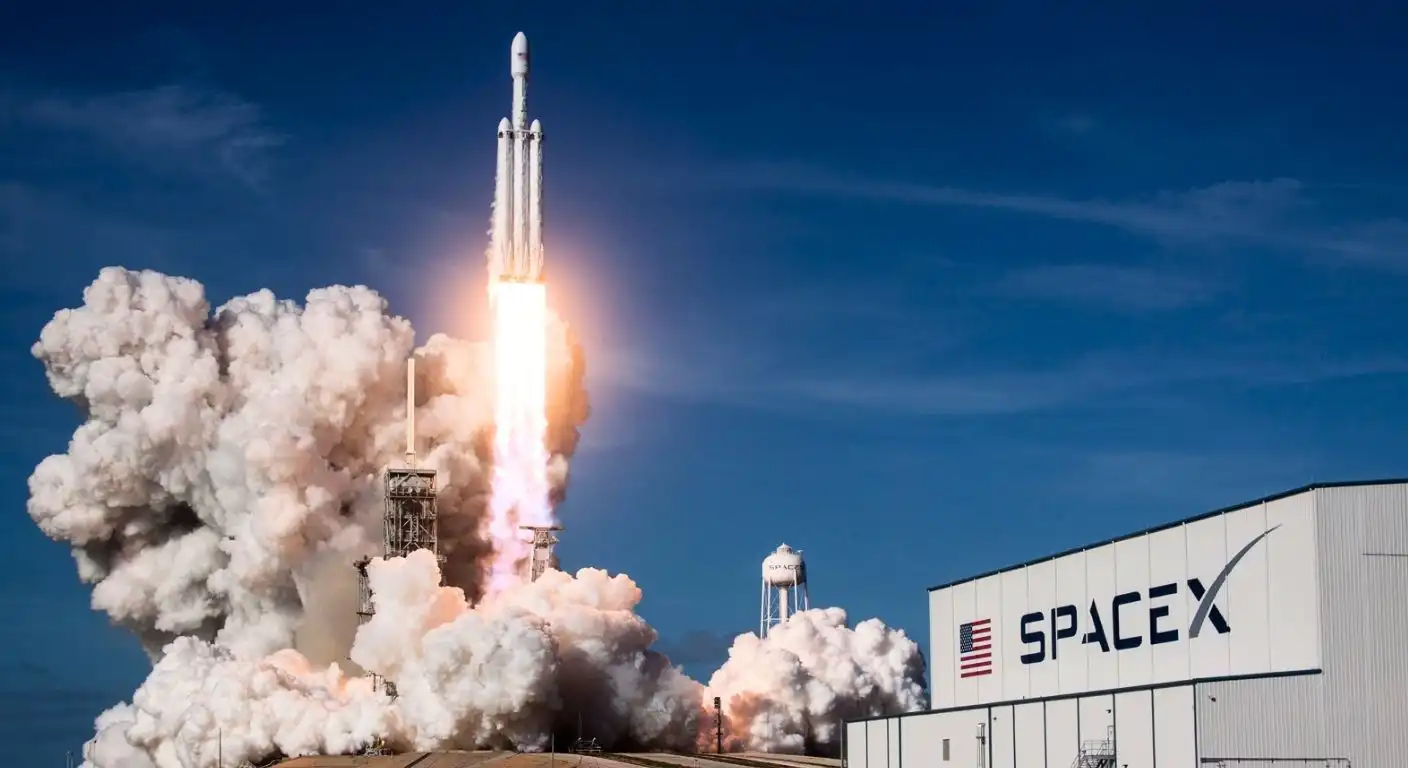
The corporate capital markets have witnessed an extraordinary transition as technology and aerospace giant SpaceX solidifies its presence in the global financial system. Following its historic, record-breaking $25 billion debut bond sale, credit-default swaps (CDS) tied to the company have officially started actively trading on Wall Street. This development represents a key evolutionary step for the aerospace and artificial intelligence conglomerate, moving its credit risk pricing into a highly liquid, transparent, and mature phase.
Major Wall Street bond dealers began providing price indications and making active markets on swaps tied to SpaceX. This development allows institutional investors to protect against potential losses, hedge their exposure to the company’s debt, or actively speculate on the company’s long-term creditworthiness. The launch of an active credit derivative market gives investors a real-time gauge of how institutional traders view the financial health of one of the world’s most valuable companies, adding vital price discovery around its growing debt load.
For SpaceX, which recently went public and has rapidly scaled its capital needs, this financial maturity is an essential milestone. The company is currently executing some of the most capital-intensive industrial programs in human history, including building out its Starlink satellite constellation, developing its multiplanetary Starship systems, and constructing massive artificial intelligence computing hubs. Having access to a liquid debt and derivative pricing framework ensures that the company can sustain these multi-billion-dollar projects over the long term.
Decoding the Debut of SpaceX Credit-Default Swaps
The entry of SpaceX into the credit derivatives market is a highly significant event for global fixed-income investors. Credit-default swaps function as insurance-like protection against a corporate borrower defaulting on its debt obligations. If a corporation fails to pay bond interest or principal, the holder of the credit derivative receives a payout, protecting them from capital losses.
How Wall Street Bond Dealers Are Pricing SpaceX Risk
Wall Street dealers began providing buying and selling protection levels to institutional investors. This market-making activity started even before the company’s formal bond offering was completed, highlighting the intense interest that investment banks have in the aerospace giant’s debt.
According to pricing sheets reviewed by Bloomberg, the cost of protecting SpaceX’s debt against default for five years settled at a mid-point of approximately 1.255% to 1.26% annually. This pricing means that an institutional investor must pay roughly $125,500 to $126,000 per year to insure every $10 million of principal protected. This premium is paid to the seller of the swap, who agrees to take on the risk of a potential default in exchange for a steady stream of premium payments. The launch of this active market provides a highly reliable, real-time risk assessment tool for evaluating the company’s overall leverage and solvency.
The Pricing Disparity: Why Insuring SpaceX Costs More Than Intel
While the pricing of SpaceX credit-default swaps is solid, a comparative analysis reveals that institutional investors are demanding a significant risk premium to insure the rocket maker’s debt compared to similarly rated corporate peers.
For example, the cost of guaranteeing the debt of Intel Corp. against default for five years stands at roughly 0.64% annually, or about $64,000 per year for every $10 million of principal protected. Both companies carry similar, solid BBB-tier investment-grade ratings from major credit agencies, yet insuring SpaceX’s debt costs nearly double the amount required to insure Intel’s.
This substantial pricing gap shows that despite the aerospace giant’s massive cash reserves and market dominance, bond investors still perceive its highly aggressive, capital-intensive operations and risk-tolerant corporate culture as carrying a higher baseline risk, prompting them to demand a larger premium to write default protection.
Market Reaction and Post-Issuance Bond Performance
While the initial debut of the credit derivatives has been a major success, the underlying bonds have faced some moderate selling pressure in the secondary markets, reflecting the volatile macroeconomic environment facing all high-grade corporate debt.
The centerpiece of SpaceX’s $25 billion bond sale was a $6 billion, 10-year note. When the company priced the bonds, the yield spread was set at 1.4 percentage points, or 140 basis points, over comparable U.S. Treasuries, indicating exceptionally strong initial demand from institutional buyers.
However, in the days following the sale, the bonds weakened modestly in secondary trading. The yield spread on the 10-year notes widened to approximately 1.57 percentage points, or 157 basis points, over Treasuries. This spread widening indicates that some investors chose to lock in short-term profits by selling their newly acquired bonds, or that the market is adjusting its pricing to account for the massive wave of high-grade debt supply currently hitting Wall Street.
Because credit default swaps are typically easier and cheaper to trade than physical bonds, the launch of an active CDS market will help stabilize this secondary trading, giving investors a highly liquid tool to hedge their bond portfolios during periods of market volatility.
Behind the Landmark Twenty-Five Billion Dollar Bond Sale
The launch of the credit derivatives market is the direct result of SpaceX’s historic entry into the high-grade bond market, a transaction that has permanently altered the company’s financial profile.
A Spectacular Order Book Drawing Eighty-Nine Billion Dollars in Demand
To fund its massive, long-term capital requirements, SpaceX executed its debut investment-grade bond offering. The transaction was structured across five distinct tranches, with maturities ranging from five to thirty years, allowing the company to build a highly diverse, long-term debt profile.
The offering was met with overwhelming demand from institutional investors, drawing a spectacular order book that exceeded $89 billion. This meant the transaction was roughly 3.5 times oversubscribed, allowing lead underwriters to tighten pricing and expand the total deal size to $25 billion.
Major credit rating agencies, including S&P, Fitch, and Moody’s, assigned the company BBB-tier investment-grade ratings ahead of the sale. This solid credit rating allowed SpaceX to access a massive pool of institutional capital that is legally barred from investing in high-yield or junk-rated debt, giving the company the ability to borrow at significantly lower rates than it could through its previous private financing arrangements.
The Post-IPO Treasury Strategy and Refinancing the X and xAI Legacy Debt
The decision to issue $25 billion of high-grade bonds is a key element of SpaceX’s broader treasury management strategy. The transaction came just two weeks after the company completed the largest initial public offering in history, raising a record-breaking $75 billion by selling 555 million shares at $135 each under the ticker SPCX.
Following that blockbuster IPO, SpaceX reported a massive cash position exceeding $100 billion. Some retail investors have questioned why a company with over $100 billion of cash on hand would choose to take on an additional $25 billion of debt.
The primary operational reason behind this borrowing wave is the need to refinance a $20 billion bridge loan. Earlier in the year, SpaceX secured this temporary, short-term bridge loan to retire roughly $17.5 billion of high-interest junk debt that had been accumulated by Elon Musk’s other major business ventures, including the social media platform X (formerly Twitter) and his artificial intelligence startup, xAI, to bridge their rapid cash drains.
The bridge loan carried an effective interest rate of roughly 4.5%. By issuing permanent, investment-grade bonds, SpaceX has successfully converted that short-term, temporary financing into stable, long-term capital market debt, dramatically reducing its annual interest expenses and securing its corporate balance sheet.
The Future of SpaceX in the High-Grade Credit Markets
As SpaceX transitions into a mature, publicly traded corporate giant, its ongoing capital requirements will remain a primary focus for Wall Street analysts. The company’s ambitious, long-term business goals require an unprecedented, sustained capital spend.
Funding the CapEx-Heavy Future of Starlink, Starship, and AI
Despite its massive cash reserves and strong revenue growth, SpaceX is projected to continue burning cash through 2029. The company must fund several high-stakes, capital-intensive programs simultaneously, including:
- The continuous construction and deployment of its Starlink satellite constellation, which requires launching hundreds of new satellites every month to maintain its global internet dominance.
- The advanced development of its multiplanetary Starship systems requires a series of expensive, high-risk test launches and the construction of massive launch facilities in Texas and Florida.
- The build-out of massive, localized AI data centers to support its autonomous navigation, satellite routing, and deep-space communication systems.
To sustain this massive capital spend without constantly diluting its existing shareholders through dilutive stock sales, SpaceX must maintain deep, continuous access to the global debt markets.
By completing its debut bond sale and establishing an active, highly liquid credit derivatives market, the company has built the necessary financial infrastructure to support its long-term goals. The CDS market will provide investors with a continuous, real-time risk assessment tool, helping to lower borrowing costs, increase liquidity, and ensure that the world’s most valuable aerospace pioneer has the financial firepower to turn its ambitious multiplanetary dreams into a highly profitable, self-sustaining reality.
A Watershed Moment for Corporate Finance
The launch of active credit default swap trading tied to SpaceX is a watershed moment for both the company and the broader global capital markets. By providing a highly transparent, real-time gauge of corporate credit risk, Wall Street has officially welcomed Elon Musk’s rocket and satellite pioneer into the elite club of mature, mainstream corporate borrowers.
While the moderate widening of bond spreads in secondary trading indicates that investors remain cautious about the company’s aggressive, capital-intensive risk profile, the massive $89 billion order book and the solid BBB-tier ratings prove that institutional trust remains exceptionally high.
As SpaceX continues to convert short-term, high-cost liabilities into permanent, low-cost capital market debt, the establishment of this liquid derivative pricing framework will provide the company with the financial stability and structural flexibility needed to fund its massive Starlink, Starship, and AI ambitions, ensuring that the future of global space exploration remains backed by the deepest and most sophisticated financial systems on earth.