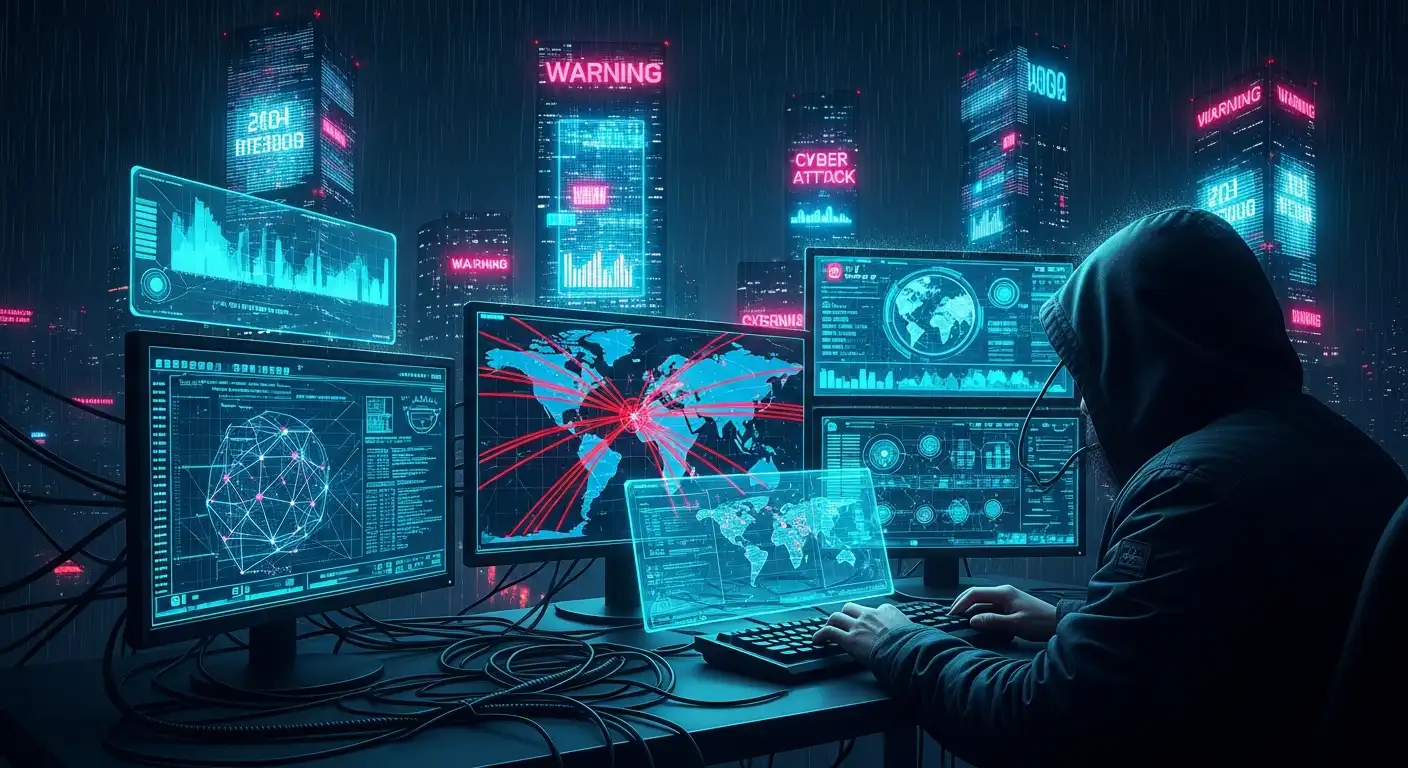
For decades, we’ve understood cybercrime on a human scale. We picture a clever hacker in a dark room, writing code, finding a vulnerability, and exploiting it. It’s a game of cat-and-mouse, with human defenders trying to outsmart human attackers. But that entire paradigm is about to be shattered. The same artificial intelligence that can write a poem or create a stunning piece of art is about to become the most powerful weapon in the hands of cybercriminals, and we are not prepared for the storm that’s coming.
Phishing Gets Personal (and Perfect)
We’ve all gotten good at spotting basic phishing emails. The bad grammar, the generic greeting, the suspicious link—these are the tell-tale signs. AI will make these signs extinct. Imagine a phishing email written with perfect grammar, in the exact tone of your boss, referencing a project you discussed last week. An AI can scrape your LinkedIn profile, your company’s website, and even your public social media posts to craft a personalized, context-aware attack that is virtually indistinguishable from a legitimate message. One attacker could use AI to launch a million of these perfectly tailored attacks simultaneously.
The Malware That Thinks
Traditional computer viruses are static. They are fixed pieces of code, and once antivirus software identifies their “signature,” they can be blocked. An AI-powered virus is a different beast entirely. It would be a shapeshifter. This new breed of malware could enter a network, learn its environment, identify the defenses in place, and then rewrite its own code to evade detection. It could lie dormant, study patterns, and choose the perfect moment to strike. Defending against this would be like trying to fight an enemy that can read your mind and change its face at will.
Hacking at Machine Scale
Hacking has always been limited by human time and effort. An attacker must manually search for vulnerabilities. But what if they could unleash a swarm of a thousand intelligent AI agents to do it for them? A single cybercriminal could deploy an autonomous AI swarm to attack a corporate network from thousands of different angles simultaneously. These agents could coordinate with one another, share what they learn in real time, and relentlessly probe for a single weak point. No human security team could defend against an attack of this speed, scale, and intelligence.
The Defender’s Dilemma
This creates a terrifying imbalance. In cybersecurity, the defender has to be perfect. They must protect every door and every window at all times. The attacker only has to find one unlocked window, just once. AI gives a massive advantage to the attacker. It is far easier to train an AI to find a single flaw than it is to build an AI that can anticipate and defend against every possible type of attack. The only way to fight an AI-powered attack will be with an AI-powered defense, leading to an invisible, high-speed arms race happening in the background of our digital lives.
The Smartest Hacker Isn’t Human
This is no longer science fiction. The tools for building such attacks are becoming increasingly accessible. We are entering an era where the most dangerous hacker in the world won’t be a person or a group, but an algorithm. The old walls we built to protect our digital lives were designed to keep humans out. They will crumble against the coming wave of intelligent, autonomous, and relentless machine-driven attacks. We must fundamentally rethink our approach to security, or we will be left defenseless.