Key Points:
- U.S. dry natural gas production is projected to climb to a new record of 111.0 billion cubic feet per day in 2026, rising further to 113.6 bcfd in 2027.
- Domestic natural gas consumption will reach a new high of 92.1 billion cubic feet per day this year, driven by demand from the industrial manufacturing and power sectors.
- U.S. liquefied natural gas exports will surge to 17.2 bcfd in 2026, reflecting America’s growing role as a crucial supplier to energy-strapped European and Asian markets.
- Coal production is projected to drop to 518.4 million short tons in 2026, on track to hit its lowest level since 1963 as power grids phase out coal.
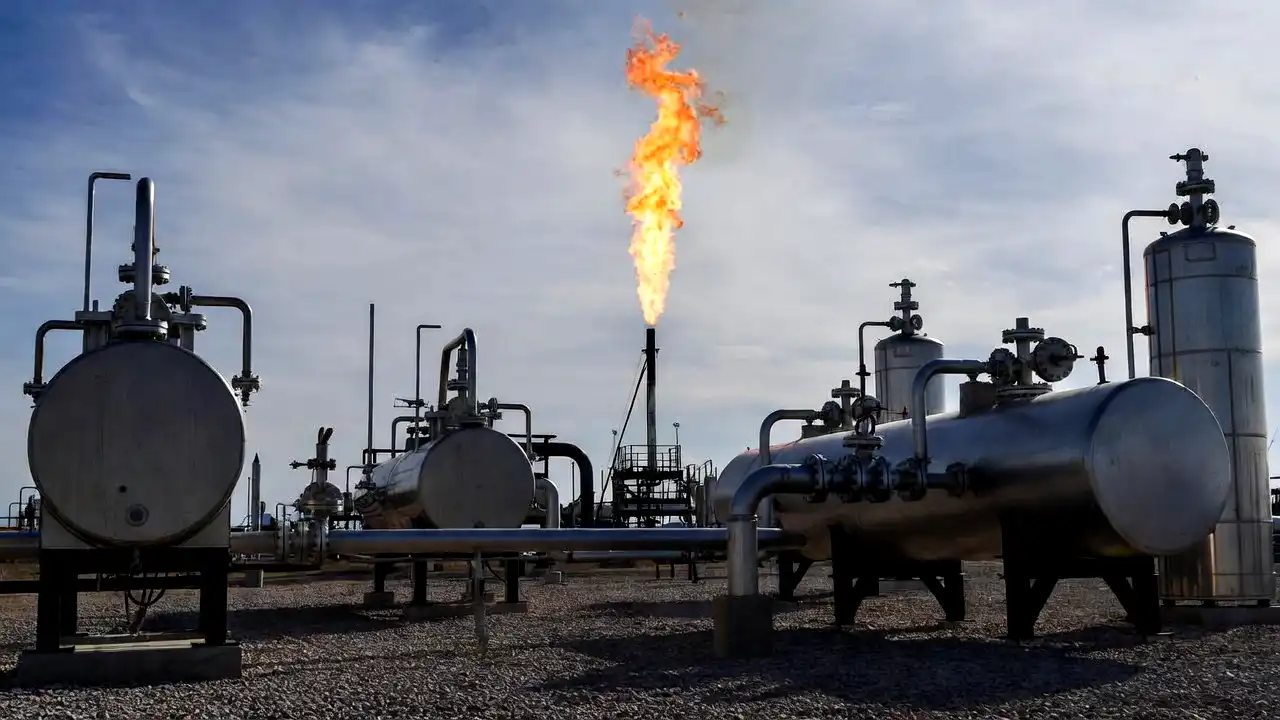
The United Kingdom and Europe are scrambling to secure alternative energy supplies amid severe geopolitical disruption, but across the Atlantic, the world’s largest energy producer is accelerating toward unprecedented milestones. According to the newly released June Short-Term Energy Outlook (STEO) from the U.S. Energy Information Administration, the U.S. natural gas market in 2026 is on track to set historic, consecutive records for both dry gas production and domestic consumption. Driven by rising industrial demand, new export terminal capacity, and robust associated gas production in oil-rich basins, the U.S. energy grid is rapidly expanding its output to support both local manufacturing and energy-strapped allies overseas.
The supply-side figures in the federal report show an incredibly steep upward trajectory in American natural gas extraction. The agency projected that U.S. dry natural gas production will rise to a record-breaking 111.0 billion cubic feet per day (bcfd) in 2026, up from the previous record of 107.7 bcfd established in 2025. This 2026 projection represents a notable upward revision from the agency’s May forecast of 110.6 bcfd. Looking further ahead, the government expects dry gas production to expand to 113.6 bcfd in 2027, confirming that American drillers are successfully scaling up their operations to meet rising global demand.
This massive supply expansion is occurring in tandem with robust, record-setting domestic natural gas consumption. The updated June report forecasts that U.S. domestic gas consumption will rise to a new record high of 92.1 bcfd in 2026, up from the previous peak of 91.9 bcfd recorded in 2025. This domestic demand is expected to climb further, reaching 95.0 bcfd in 2027. Much of this domestic demand is driven by the chemicals subsector and other heavy manufacturing industries, where natural gas serves as a crucial feedstock and fuel for generating process heat, manufacturing plastics, and producing fertilizers.
The growth in industrial natural gas consumption represents a steady, structural shift across the American manufacturing base. The government projects that U.S. industrial gas use will rise by 1.2% in 2026 and by an additional 1.7% in 2027, establishing consecutive annual records. While these percentage increases appear modest, they translate into massive, highly significant volume changes because the industrial sector already consumes more than 23 bcfd. Furthermore, because modern factories are constantly implementing high-efficiency machinery and software-driven energy monitoring systems, actual industrial output is growing much faster than raw fuel consumption.
A primary driver behind this massive, concurrent rise in oil and gas production is the Permian Basin, which spans western Texas and southeastern New Mexico. Although the Permian is predominantly an oil-producing region, operators there extract a massive volume of “associated” natural gas alongside crude oil. The agency projects that Permian gas production will grow by 6% in 2026 to 29.2 bcfd, then accelerate by an additional 10% in 2027 as new pipeline projects come online to alleviate regional transport bottlenecks. Because Permian drillers operate on oil-driven budgets, high crude prices are actively subsidizing this massive, low-cost gas surplus.
Beyond satisfying domestic demand, the United States is rapidly expanding its role as the world’s most critical exporter of liquefied natural gas (LNG). The updated STEO projects that average U.S. liquefied natural gas exports will rise to a record-breaking 17.2 bcfd in 2026, up significantly from the 15.1 bcfd record established in 2025. Looking further ahead, the agency expects LNG export volumes to climb to 18.6 bcfd in 2027 as massive new liquefaction terminals, including the Plaquemines LNG plant in Louisiana, continue to ramp up their operating capacity to supply energy-starved European and Asian markets.
The critical importance of this American LNG supply has intensified due to the ongoing geopolitical crisis in the Middle East. The effective closure of the strategic Strait of Hormuz since late February has choked off seaborne energy shipments from major Gulf producers, removing more than 11 million barrels of oil per day from global markets. Because this regional blockade has forced European and Asian utilities to bypass Middle Eastern suppliers, global energy benchmarks have soared. While international prices remain highly volatile, the massive domestic gas surplus has insulated U.S. consumers from these price shocks, keeping Henry Hub spot prices highly stable, averaging $3.60 per million British thermal units (MMBtu) in 2026.
As natural gas increasingly dominates the national power grid, traditional coal-fired power generation is facing a rapid, irreversible collapse. The agency projects that U.S. coal production will drop from 528.4 million short tons in 2025 to 518.4 million tons in 2026, before plunging further to 496.8 million tons in 2027—marking the lowest national coal output recorded since 1963. Because natural gas burns far more cleanly than coal, this rapid transition is delivering significant environmental benefits, helping to drive down the country’s total fossil-fuel-related carbon dioxide emissions to 4.818 billion metric tons in 2026.
This massive transition toward natural gas and LNG exports requires a monumental, highly coordinated capital investment campaign. To construct the pipelines, storage caverns, and export terminals necessary to connect American gas wells with global buyers, energy infrastructure companies are spending billions of dollars annually. Even a minor 1.5% delay in pipeline permits or environmental approvals can stall these critical projects, prompting developers to secure long-term hardware and supply contracts early to protect their budgets. As companies collectively invest over $30 billion in new liquefaction terminals, representing multiple individual projects worth over $1 billion each, the U.S. energy sector is successfully building the physical engines of the next century.
Ultimately, the updated June energy outlook highlights a permanent structural transition for the global energy market. By successfully scaling its dry natural gas production to a record 111.0 bcfd while expanding its LNG exports to 17.2 bcfd, the United States is proving that its massive domestic resources are the essential backbone of global energy security. As the Strait of Hormuz remains restricted and coal continues its rapid decline, the massive, tech-driven expansion of the American gas market ensures that both domestic industries and international allies remain powered by a secure, reliable, and highly competitive energy supply.