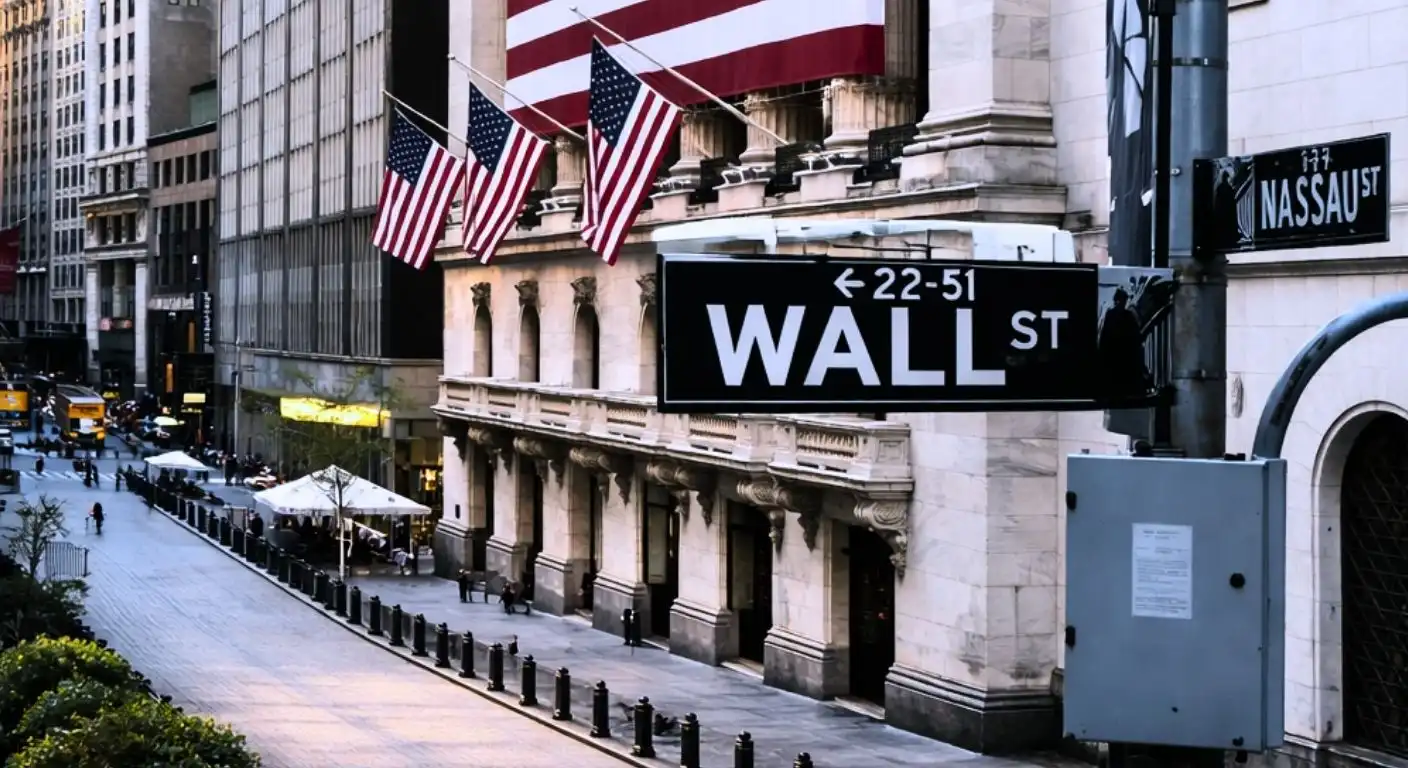
Global financial firms are facing an entirely new category of operational danger. In August 2026, a series of highly coordinated, sophisticated cyberattacks targeted several of the most prominent money managers and hedge funds on Wall Street. The list of targets included legendary financial institutions like Two Sigma Investments, Citadel, and Point72 Asset Management, alongside several high-profile private equity firms.
The attackers did not rely on traditional software vulnerabilities or brute-force network intrusions. Instead, they utilized generative artificial intelligence to launch a highly advanced voice phishing campaign, commonly referred to as a vishing campaign. By cloning the voices of senior executives and corporate colleagues, the hackers attempted to bypass expensive security systems and trick employees into granting access to critical internal networks.
While some targeted firms successfully neutralized these attempts, the campaign highlights the terrifying speed at which consumer-grade artificial intelligence is being weaponized. Wall Street manages trillions of dollars in assets, and its dependency on digital communication makes it a prime target for these advanced social engineering tactics. This wave of attacks demonstrates that the line between science fiction and real-world cybersecurity threats has officially vanished.
The Mechanics of AI-Powered Vishing: Voice Cloning at Machine Speed
To understand the severity of this modern threat, it is necessary to examine how artificial intelligence has transformed traditional phishing. For years, cybercriminals used emails, text messages, and phone calls to deceive employees. Historically, these attacks were relatively easy to detect. Phishing emails often contained spelling errors, and fraudulent phone calls relied on actors who struggled to mimic the specific accents, speech patterns, or insider terminology of corporate executives.
Generative artificial intelligence has eliminated these historical tells. Today, advanced voice-cloning software requires only a few seconds of high-quality audio to create an indistinguishable digital replica of a human voice. The technology captures the exact pitch, rhythm, breathing patterns, and emotional undertone of the speaker, allowing hackers to generate realistic, customized speech in real time.
How Generative AI Democratizes Voice Mimicry
In the past, executing a highly accurate voice mimicry campaign required expensive recording studios, professional voice actors, and days of painstaking audio editing. Now, open-source AI models and commercial voice-cloning platforms allow anyone with an internet connection to generate realistic voice deepfakes.
Hackers can feed a short audio clip into a web-based program, type out a script, and instantly download a voice recording that sounds exactly like a targeted executive. Some advanced tools even allow real-time voice conversion. A hacker can speak directly into a microphone, and the AI software will instantly convert their voice into the voice of a cloned target, enabling live, interactive phone conversations with unsuspecting employees.
The Double-Edged Sword of Publicly Available Executive Audio
Wall Street executives are particularly vulnerable to voice cloning due to their extensive public profiles. Founders, chief executive officers, and managing partners at firms like Citadel and Point72 regularly speak at public industry conferences, participate in televised news interviews, and address investors on quarterly earnings calls.
This vast library of public audio provides hackers with an endless supply of high-quality training data. A criminal can download a high-definition recording of an executive speaking at a financial summit, extract a clean sample, and train a voice clone within minutes. The very public presence that builds a firm’s brand and investor trust also serves as the perfect ammunition for digital thieves.
Inside the Attack: Targeting Two Sigma, Citadel, and Point72
The recent campaign targeted the absolute peak of the hedge fund hierarchy. These firms manage immense amounts of capital and employ some of the most sophisticated mathematical minds in the world.
Two Sigma Investments, which manages approximately $60 billion in assets, confirmed that its internal security team successfully detected and neutralized the vishing attempt. Because the firm’s security systems and staff flagged the unusual nature of the communications, the hackers failed to compromise any data or steal any assets.
Citadel, which manages over $60 billion in assets, and Point72 Asset Management, which manages more than $30 billion, were also named as targets of the coordinated vishing campaign. Unlike Two Sigma, these firms have kept their responses quiet, reflecting a broader trend of private financial institutions minimizing public discussions surrounding successful or near-miss security incidents.
Neutralizing Threat Vectors at Two Sigma Investments
The success of Two Sigma’s security team in stopping the attack underscores the importance of proactive security modeling. According to individuals familiar with the incident, the hackers attempted to call specific personnel within the firm’s operational and administrative departments. Using cloned voices of senior leadership, the attackers instructed employees to reset security credentials and share sensitive system login details.
Because Two Sigma had already implemented strict verification protocols, employees did not immediately comply with the fraudulent phone requests. Instead, they cross-referenced the requests through internal, secondary verification channels. This double-check allowed the firm to identify the calls as fraudulent, block the incoming numbers, and alert their entire workforce to the active vishing threat.
Why Hedge Funds Minimize Public Disclosure After Attack Attempts
In the highly competitive world of asset management, reputation is everything. Hedge funds operate on trust, and their ability to attract and retain capital from wealthy institutional investors relies heavily on their perceived stability and security.
A successful or even highly public cyberattack can severely damage an investment firm’s reputation, prompting nervous clients to withdraw their assets. Consequently, many Wall Street firms choose to manage cyber incidents quietly, sharing details only with specialized law enforcement agencies, regulators, and close cybersecurity partners. This lack of transparency helps protect their public image but can make it harder for the broader financial industry to prepare for emerging threat vectors.
The Financial Vulnerability: Why Hedge Funds are Prime Cyber Targets
Cybercriminals do not target hedge funds simply because they manage large sums of money. They target them because these firms possess highly valuable intellectual property and operate as critical conduits for global capital markets.
Unlike traditional consumer banks, which hold millions of individual accounts, hedge funds manage highly concentrated pools of wealth. A single successful intrusion into a major fund could allow hackers to divert hundreds of millions of dollars before security systems trigger an alarm.
Furthermore, quantitative hedge funds utilize highly proprietary trading algorithms and computer models that represent billions of dollars in development costs. If a competitor or a state-sponsored actor can steal these algorithms, they can neutralize the fund’s market edge, destroying the business from the inside out.
High-Frequency Algorithms and Proprietary Trading IP under Threat
The proprietary trading systems used by firms like Citadel and Two Sigma are among the most closely guarded secrets in the financial world. These systems execute millions of trades per day, reacting to market movements in milliseconds.
If hackers gain administrative access to a hedge fund’s network, they do not necessarily need to steal cash directly. They can steal the underlying source code of these trading engines. Because these models are designed to identify and exploit tiny market inefficiencies, a leak of the source code would render the algorithm completely useless, resulting in catastrophic losses for the fund and its investors.
Escalating Cybersecurity Budgets and the Fight Against Third-Party Risk
The rising threat landscape has forced investment firms to dramatically increase their defensive spending. An industry survey released in early 2026 by the Hedge Fund Association and SeaGlass Technology revealed that 80% of hedge funds and asset managers boosted their cybersecurity budgets over the preceding year.
This spending increase is highly justified. The same survey revealed that approximately 50% of these investment firms had suffered some form of digital security breach over the prior twelve-month period.
The survey highlighted that phishing and social engineering remain the top concern for roughly two-thirds of financial executives. However, third-party vendor risk has quickly emerged as an equally dangerous vulnerability, with nearly 50% of respondents linking security incidents to external suppliers, consultants, or cloud providers. As financial ecosystems become more interconnected, hackers are increasingly targeting smaller, less-secure third-party partners to gain back-door entry into major financial networks.
Geopolitical Tensions and the Rise of State-Sponsored Cyber Warfare
The surge in sophisticated attacks targeting Wall Street does not occur in a vacuum. It is deeply connected to a highly volatile geopolitical environment. As international conflicts intensify, cyber warfare has become a primary tool for nation-states looking to disrupt Western economies and fund domestic operations.
State-Backed Threat Actors and Persistent Backdoor Exploits
The financial sector has faced heightened alerts throughout 2026 due to regional conflicts, particularly in the Middle East. Security agencies have warned that state-sponsored groups are actively targeting critical Western infrastructure, including payment systems, clearing houses, and trading platforms.
Federal agencies, including the Cybersecurity and Infrastructure Security Agency and the Federal Bureau of Investigation, recently updated their security warnings regarding groups like Seedworm, an Iranian-affiliated advanced persistent threat group also known as MuddyWater or Static Kitten. These state-backed hackers have been active on multiple U.S. and European networks, deploying custom backdoors like Dindoor and Fakeset to monitor corporate communications and prepare for potential disruptive attacks.
While the exact perpetrators of the vishing campaign targeting Two Sigma, Citadel, and Point72 remain unidentified, the level of sophistication and coordination points to highly organized criminal syndicates or state-affiliated groups. These actors recognize that paralyzing major Wall Street players would not only yield immense financial gains but also cause significant psychological panic across global markets.
SIFMA’s Collaborative Drills and Financial Sector Vigilance
To prepare for the reality of coordinated cyber warfare, the Securities Industry and Financial Markets Association regularly coordinates industry-wide defense exercises. These simulations bring together hundreds of financial institutions, government agencies, and utility providers to test how the financial system would survive a major, synchronized digital assault.
These drills focus heavily on operational resilience, ensuring that if a major payment gateway or trading platform goes offline due to a cyberattack, other institutions can step in to maintain market liquidity and public trust. The recent vishing wave has served as a real-world test of this vigilance, proving that the financial sector must remain permanently prepared to fight off attacks that move at machine speed.
Strengthening Defensive Shields Against AI-Driven Social Engineering
The reality of AI-cloned voice attacks is forcing corporate security teams to realize that traditional technical defenses are no longer sufficient. An organization can install the most expensive firewalls, intrusion detection systems, and antivirus software in the world, but none of these tools can prevent an employee from voluntarily typing in their password or authorizing a wire transfer if they believe they are speaking directly to their chief executive officer.
To combat the threat of AI-driven social engineering, Wall Street firms are adopting a strict zero-trust security architecture. Under a zero-trust model, the system assumes that every user, device, and communication channel is potentially hostile, even if it appears to originate from an internal source.
Implementing Multi-Factor Authentication and Out-of-Band Verification
To protect against vishing, firms are moving away from simple phone-based approvals. If an employee receives a call from an executive requesting a sensitive action, such as a password reset or a large financial transfer, company policy must require an out-of-band verification process.
This means the employee must hang up and contact the executive back through a separate, pre-verified corporate directory line, or confirm the request through an encrypted, multi-factor messaging platform. Additionally, firms are deploying physical hardware security keys for multi-factor authentication, ensuring that even if an attacker successfully tricks an employee into sharing their password, the hacker still cannot log in without possessing the physical USB key.
Continuous Vishing Drills and Human Firewalls
Because human psychology is the primary target of social engineering, companies must invest heavily in employee training. Rather than relying on annual training videos, advanced security teams are running simulated vishing attacks.
During these simulated drills, the security department uses AI voice-cloning tools to call their own employees, testing if they will follow proper verification protocols. By exposing employees to the realistic nature of AI voice deepfakes in a controlled environment, organizations can transform their workforce into a highly effective human firewall, capable of identifying and reporting fraudulent communications before they can cause real harm.
Navigating the New Frontier of Financial Risk
The coordinated vishing campaign against Two Sigma, Citadel, and Point72 serves as a watershed moment for the financial services industry. It proves that generative artificial intelligence is no longer just a productivity tool or a novel piece of technology. It is a powerful, highly accessible weapon that is actively being deployed by sophisticated criminals to target the heart of global finance.
As Wall Street navigates this new frontier of risk, the old methods of cybersecurity are no longer enough. To survive in an era of machine-speed deception, investment firms must combine advanced technical defenses with strict operational protocols and continuous employee education. The successful defense mounted by Two Sigma demonstrates that these attacks can be stopped, but doing so requires constant vigilance, rapid adaptation, and a deep understanding of the evolving digital battlefield.