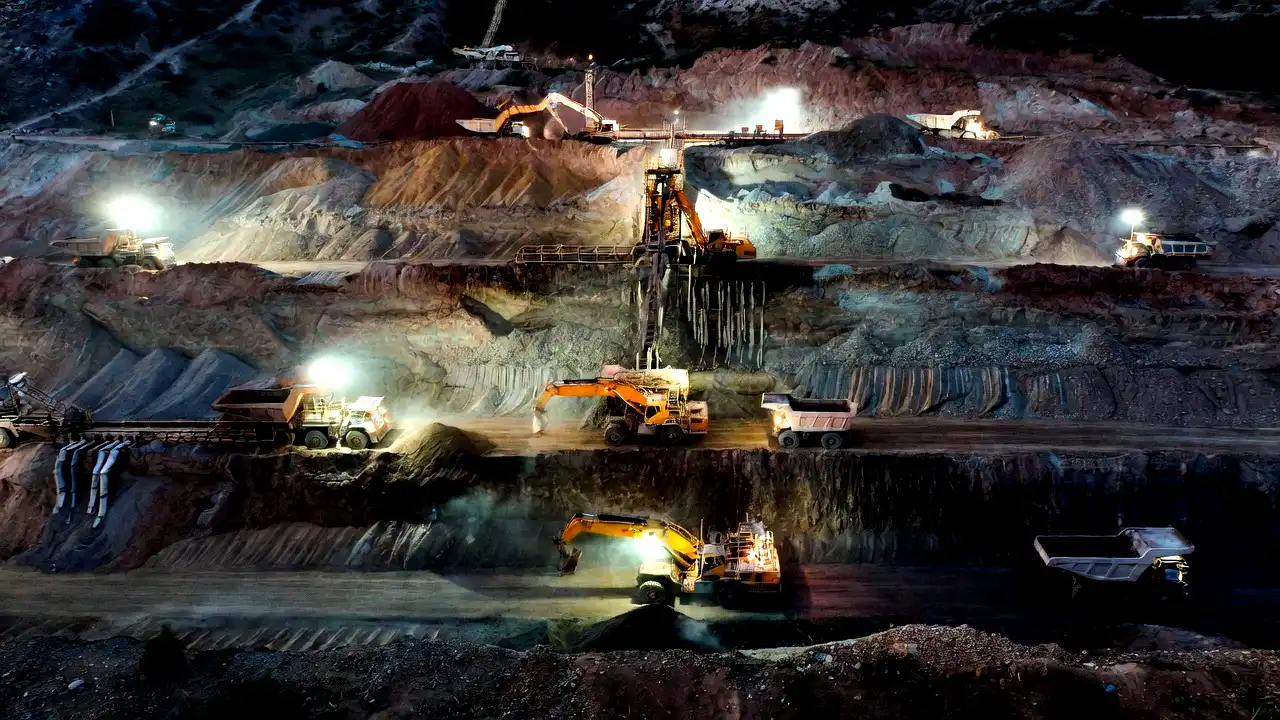
Equity research analysts at UBS issued a high-conviction “Buy” rating and named MP Materials Corp. as its top stock pick in the rare earths sector, pointing to accelerating Western efforts to break China’s monopoly over critical energy transition minerals. Wall Street research desks raised their 12-month price targets on the Las Vegas-headquartered mining and processing enterprise, forecasting substantial capital appreciation as the company transforms its flagship Mountain Pass mine in California into a fully integrated, domestic chemical separation and permanent magnet manufacturing hub.
The Wall Street rating upgrade reflects a fundamental structural shift across global industrial supply chains. For over two decades, Western technology companies, automakers, and defense contractors relied almost exclusively on Chinese state-backed enterprises for refined rare earth elements. However, escalating geopolitical trade friction, tightening export controls from Beijing on critical metals like dysprosium and gallium, and stringent Western national security mandates have forced global manufacturers to seek verified, non-Chinese supply sources.
MP Materials stands as the primary beneficiary of this global supply chain decoupling. Operating the only scaled, active rare earth mining and refining site in North America, the company is successfully executing a three-stage vertical integration strategy. By expanding beyond raw mineral concentrate sales into local Neodymium-Praseodymium (NdPr) chemical separation and domestic magnet manufacturing, MP Materials is positioning itself to capture high-margin, long-term supply contracts with major automakers and the United States Department of Defense.
TechGolly provides an in-depth financial and industry analysis of the Western rare earths sector, evaluating MP Materials’ Stage 2 and Stage 3 expansion, NdPr oxide pricing supercycles, Department of Defense funding programs, alternative Western producers, and the strategic outlook for global critical mineral independence.
Unpacking the Western Rare Earths Decoupling Imperative
To understand why Wall Street investment banks are placing premium valuation multiples on Western rare earth producers, financial analysts must evaluate the extreme geographic concentration governing the global critical minerals market.
Rare earth elements—a group of 17 specialized metallic elements including neodymium, praseodymium, dysprosium, and terbium—possess unique magnetic and electrochemical properties that make them indispensable for modern high-technology manufacturing. Despite their name, rare earths are relatively abundant in the Earth’s crust, but finding economically viable ore deposits that can be extracted and chemically separated without environmental devastation is extraordinarily rare.
Over the past thirty years, China built an overwhelming global monopoly across the entire rare earths value chain through targeted state subsidies, low environmental compliance costs, and massive capital investments. Current commodity market metrics confirm the extent of this global concentration:
- First, China controls approximately 70% of global rare earth mining output.
- Second, China commands over 85% to 90% of global chemical separation and refining capacity.
- Third, China produces over 90% of the world’s high-strength neodymium-iron-boron (NdFeB) permanent magnets.
This near-total market monopoly gives Beijing immense geopolitical leverage over Western industrial supply chains. The risks of this concentration were vividly demonstrated when Chinese trade authorities enacted export licensing restrictions on critical technical metals like gallium, germanium, antimony, and heavy rare earth separation technology.
In response, Western governments enacted sweeping industrial policies—including the United States Inflation Reduction Act, the U.S. Defense Production Act, and the European Union Critical Raw Materials Act—designed to force domestic sourcing. Automakers, defense contractors, and industrial equipment manufacturers are legally mandated or financially incentivized to procure non-Chinese critical minerals, creating a massive, captive Western market for domestic producers like MP Materials.
MP Materials and the Mountain Pass Transformation
At the center of North America’s critical mineral independence campaign is MP Materials’ flagship Mountain Pass mine, located in the Mojave Desert of San Bernardino County, California. Mountain Pass represents one of the richest, highest-grade rare earth bastnäsite deposits in the world, featuring an average geological ore grade exceeding 8.0% total rare earth oxides.
The commercial evolution of MP Materials is structured across three distinct operational phases:
- Stage 1 focused on restarting open-pit mining operations, crushing raw bastnäsite ore, and producing a 60% rare earth oxide concentrate. During Stage 1, because North America lacked functional chemical refining infrastructure, MP Materials was forced to ship its raw concentrate to Asian processors for chemical separation.
- Stage 2 represents the critical chemical refining breakthrough. MP Materials invested hundreds of millions of dollars to construct a state-of-the-art chemical separation facility at Mountain Pass. Using advanced multi-stage liquid-liquid solvent extraction circuits, the Stage 2 facility processes raw concentrate locally, separating individual high-purity rare earth elements.
The primary financial engine of Stage 2 is the production of separated Neodymium-Praseodymium (NdPr) oxide. MP Materials’ Stage 2 facility is scaling toward a target production capacity exceeding 6,000 tonnes of separated NdPr oxide annually. Achieving full-scale domestic NdPr separation allows MP Materials to eliminate raw concentrate export dependencies, selling high-value, refined chemical products directly to Western industrial customers at premium spot and contract prices.
The Stage 3 Magnetics Revolution: Fort Worth, Texas Production
While Stage 2 provides domestic chemical refining, MP Materials’ Stage 3 initiative establishes full vertical integration by transforming refined NdPr oxide into finished, high-strength permanent magnets inside the United States.
In Fort Worth, Texas, MP Materials constructed a 200,000-square-foot advanced magnetics manufacturing facility. The Stage 3 factory is engineered to convert NdPr oxide into high-coercivity Neodymium-Iron-Boron (NdFeB) metal alloys, casting the metal into specialized permanent magnets used in electric vehicle traction motors, industrial robotics, wind turbine generators, and military defense systems.
The Fort Worth facility is supported by major long-term commercial off-take agreements:
- First, a foundational commercial agreement with General Motors. MP Materials will supply American-made permanent magnets directly to General Motors to power electric vehicle assembly lines across North America, securing a high-volume commercial off-taker for its Stage 3 production.
- Second, a strategic manufacturing agreement with the United States Department of Defense. The Pentagon requires American-made permanent magnets for critical defense hardware, including flight control actuators on F-35 stealth fighters, guidance systems for precision munitions, and propulsion systems for naval vessels.
Achieving complete mine-to-magnet vertical integration—from open-pit mining in California to chemical separation at Mountain Pass and magnet manufacturing in Texas—positions MP Materials as the only fully integrated, domestic rare earth magnet supplier in the Western Hemisphere, insulating its business model from international trade disputes.
Commodity Price Supercycles: NdPr Oxide Market Dynamics
The financial valuation of MP Materials and Western rare earth stocks is intimately linked to the spot and contract pricing of Neodymium-Praseodymium (NdPr) oxide, the primary commercial product used in permanent magnet manufacturing.
Following a period of cyclical price weakness where NdPr prices hovered near $55 to $60 per kilogram due to temporary Chinese oversupply and global destocking, Wall Street commodity analysts project a powerful multi-year price recovery. Research models published by UBS and major commodity desks project NdPr oxide prices to climb toward $85 to $100 per kilogram over the coming years as demand outstrips global supply.
The structural demand engine driving NdPr pricing is the global clean mobility and industrial automation supercycle:
- Electric vehicle traction motors represent the largest single growth vector. Every new electric vehicle requires between 1 and 2 kilograms of high-grade NdPr permanent magnets inside its electric motor to achieve high torque density and energy efficiency. With global electric vehicle sales continuing to expand toward tens of millions of units annually, automotive magnet demand will require tens of thousands of additional tonnes of NdPr oxide per year.
- Offshore wind energy represents a secondary high-volume growth sector. Direct-drive offshore wind turbines utilize massive permanent magnet generators, requiring up to 5 tonnes of high-purity rare earth magnets per multi-megawatt turbine unit.
- Robotics, defense hardware, and industrial automation round out the demand profile. As industrial manufacturing plants deploy automated guided vehicles, robotic arms, and energy-efficient electric pumps, demand for high-performance NdPr magnets will expand continuously across all developed economies.
Because constructing new rare earth mines and chemical refining plants requires 5 to 10 years of environmental permitting, engineering design, and capital investment, global supply cannot easily accelerate to match demand. This structural supply lag guarantees a tight market environment, supporting high commodity prices and expanding profit margins for operational Western producers.
Federal Policy Tailwinds: Defense Funding and Section 45X Tax Credits
The commercial success and financial resilience of MP Materials are heavily reinforced by federal industrial policy incentives designed to establish domestic critical mineral sovereignty.
Recognizing that rare earth supply chain vulnerabilities represent an immediate threat to national defense, the United States Department of Defense awarded MP Materials over $45 million in direct funding under Title III of the Defense Production Act. Federal defense grants assisted in funding the construction of Stage 2 heavy rare earth processing circuits at Mountain Pass, specifically targeting the separation of dysprosium and terbium.
Furthermore, the United States tax code provides a powerful ongoing financial tailwind through the Section 45X Advanced Manufacturing Production Credit. Under Section 45X, domestic producers of critical minerals receive a tax credit equal to 10% of total production costs incurred in producing refined critical minerals within the United States.
The Section 45X tax credit delivers direct cash-flow benefits to MP Materials’ balance sheet, lowering net refining costs, expanding operating cash margins, and providing a durable financial buffer during periods of temporary commodity spot price weakness.
Global Allies in the Western Supply Chain: Lynas and Iluka Resources
While MP Materials leads North American production, international investment banks highlighting the Western rare earths supply chain are also pointing to key allied producers in Australia that form the broader non-Chinese critical mineral network.
Australia’s Lynas Rare Earths stands as the largest producer of separated rare earths outside of China. Lynas operates the high-grade Mount Weld bastnäsite mine in Western Australia, and processes concentrate at its advanced refining facilities in Kalgoorlie, Australia, and Kuantan, Malaysia. To support North American defense requirements, Lynas is constructing a specialized heavy rare earth separation facility in Seadrift, Texas, supported by over $258 million in funding from the U.S. Department of Defense.
The coordinated capital outlays across MP Materials in the United States, alongside Lynas and Iluka in Australia, demonstrate the emergence of a unified, multi-nation Western critical mineral alliance. By pooling mining assets, refining capacity, and capital resources across trusted allied jurisdictions, Western nations are building a resilient industrial network capable of supplying global automakers and defense contractors independently of foreign trade controls.
The Race for Heavy Rare Earths: Dysprosium and Terbium Challenges
While Western producers have achieved major milestones in separating light rare earths like neodymium and praseodymium, mastering the chemical separation of heavy rare earth elements (HREEs)—specifically dysprosium and terbium—remains the final frontier of technical independence.
Heavy rare earths are significantly less abundant in natural ore bodies than light rare earths, but they play an essential structural role in high-performance permanent magnets. Adding small percentages of dysprosium and terbium to NdFeB magnets drastically increases their coercivity, allowing the magnets to maintain their high magnetic strength at operating temperatures exceeding 180 degrees Celsius without demagnetizing.
Electric vehicle motors operating under heavy load and high-performance military flight control actuators require dysprosium and terbium additives to function safely under high-temperature conditions.
Currently, China controls virtually 100% of global commercial heavy rare earth separation capacity, processing ion-adsorption clay deposits found in southern China and Myanmar. Both MP Materials at Mountain Pass and Lynas in Texas are constructing specialized heavy rare earth separation circuits designed to process dysprosium and terbium locally. Achieving commercial-scale heavy rare earth separation over the next 24 months will complete the final missing link in Western critical mineral independence.
Strategic Outlook for the Global Rare Earths Market into the 2030s
The structural transformation of the global rare earths market marks a permanent shift away from hyper-globalized commodity sourcing toward regionalized, security-audited industrial supply chains.
Looking forward through the late 2020s and into the 2030s, the global rare earths market will operate under a two-tier pricing structure:
- In the non-regulated global spot market, standard unvetted rare earth materials will trade at baseline commodity prices, heavily influenced by Chinese domestic production quotas and state export policies.
- In the Western corporate and defense market, premium-priced, ESG-compliant, and origin-verified rare earth oxides and magnets will trade at a structural price premium. Automakers, defense primes, and technology enterprises will willingly pay a premium to secure supply contracts backed by non-Chinese origin guarantees, complying with strict federal sourcing laws and protecting their production lines from geopolitical supply shocks.
MP Materials, supported by its low-cost Mountain Pass mining asset, state-of-the-art Texas magnet factory, and strong federal government backing, occupies the premier position to dominate this high-value Western supply chain. As electric vehicle adoption expands, wind turbine installation accelerates, and defense technology modernizes, fully integrated Western producers will generate high-margin cash flows and deliver long-term capital growth for institutional investors.
Key Takeaways for Auto Executives, Defense Directors, and Investors
The Wall Street rating upgrades and strategic growth trajectory of MP Materials deliver crucial insights for corporate decision-makers, supply chain directors, defense procurement officers, and global commodity investors.
First, critical mineral supply chain security is a non-negotiable operational requirement. Automotive manufacturers and technology developers must establish direct, multi-year supply contracts with fully integrated Western rare earth producers to protect production lines from foreign export restrictions.
Second, vertical integration captures maximum corporate value. Mining companies that expand beyond raw mineral concentrate sales into chemical separation and finished magnet manufacturing capture higher operating profit margins and protect their balance sheets from raw commodity price volatility.
Third, federal industrial policy provides a permanent competitive moat. Government grants, Defense Production Act funding, and Section 45X manufacturing tax credits significantly lower operational capital costs for domestic producers, enhancing cash flows and de-risking project execution.
Finally, the global energy transition is anchored to physical material availability. Investors and corporate executives who deploy capital into fully integrated, environmentally compliant Western critical mineral producers will control the physical building blocks of the 21st-century clean energy and defense economy.