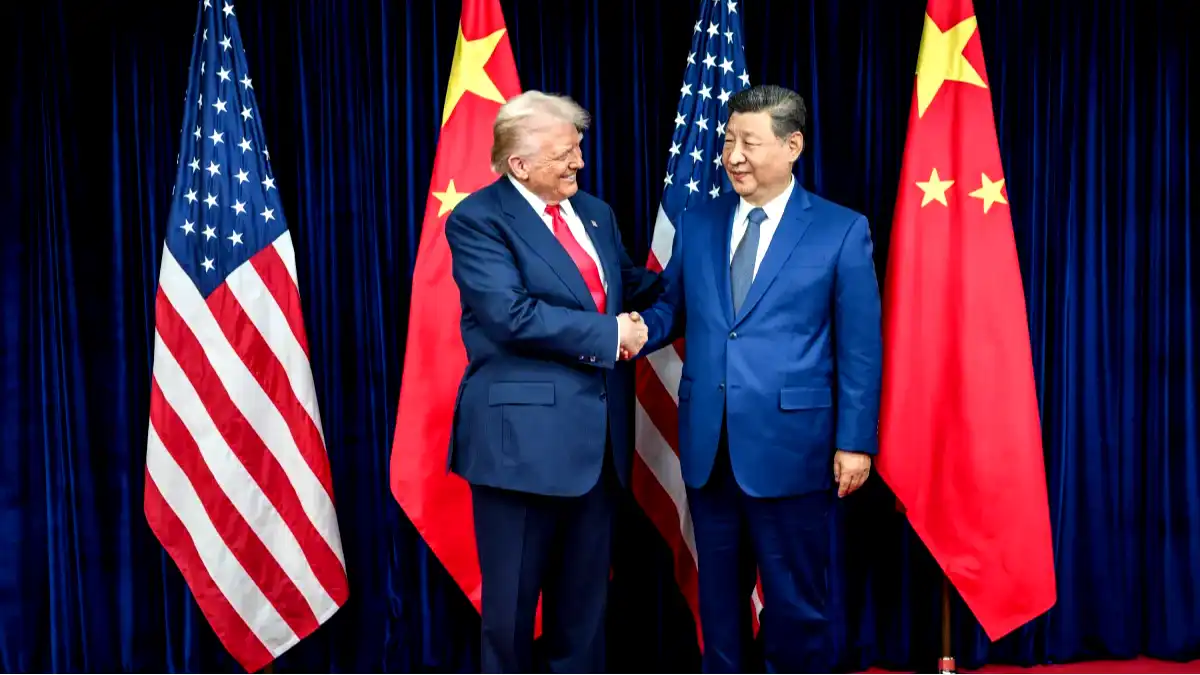
Key Points:
- US President Donald Trump will visit China from May 13 to May 15 following an official invitation from Chinese President Xi Jinping.
- Economic teams from both countries plan to meet in South Korea from May 12 to May 13 to discuss trade and tariffs.
- The two leaders previously met in Busan to prevent miscalculations and stabilize relations between the two major economies.
- Global markets expect the 2026 summit to protect supply chains and help secure the fragile international economic recovery.
Chinese President Xi Jinping invited US President Donald Trump to Beijing for an official state visit. Trump will stay in China from May 13 to May 15. The Chinese Foreign Ministry announced this major diplomatic trip on Monday. The world faces prolonged geopolitical stress and a very fragile economic recovery right now. Global markets and political leaders closely watch this summit. They want to see if the two presidents can calm the international landscape and bring some much-needed certainty to the world.
Observers share one major hope for this meeting: maintaining stability in the relationship between Washington and Beijing. Foreign policy experts regularly view direct talks between heads of state as the anchor that holds everything together. Wu Xinbo works as the dean of the Institute of International Studies at Fudan University. He stated that direct leader-to-leader diplomacy sets the tone and defines the actual direction of the entire bilateral relationship.
Sun Taiyi teaches as an associate professor at Christopher Newport University. He agreed with Wu and noted that direct communication between the top leaders helps prevent dangerous miscalculations. When Trump and Xi talk directly, they reduce uncertainty and signal to the rest of the world that keeping things stable remains their absolute top priority. Over the past 12 months, the two leaders have stayed in touch by phone. They also held a crucial face-to-face meeting in Busan, South Korea.
During that Busan meeting, Xi used a vivid metaphor to describe their massive shared responsibility. He told Trump that the two nations must navigate through tough winds and dangerous waves. Xi said they need to steer the giant ship of their bilateral relationship on a steady course. This idea of steering the ship actually produced some concrete results over the past year.
Since the start of 2025, economic teams from both countries have held multiple rounds of serious talks. Because of these discussions, the two governments paused any large-scale tariff escalations. Now, financial negotiators plan to hold a brand new round of consultations in South Korea. They will meet from May 12 to May 13, finishing just hours before the big Beijing summit begins.
Regular citizens also feel the shift in relations. People-to-people exchanges finally regained serious momentum this year. In April, Beijing hosted special events to celebrate the 55th anniversary of historic ping-pong diplomacy. Hundreds of young Chinese and American citizens participated in sports games and cultural events. Educational groups also started sending more American youth to China for actual study programs.
The United States and China operate the two largest economies on Earth. Therefore, the outcome of this summit impacts much more than just their own citizens. Chad Bown serves as a senior fellow at the Peterson Institute. He simply noted that virtually everyone around the world has a stake in how these two leaders get along. Eswar Prasad, an economist at Cornell University, took that thought even further. He suggested this specific meeting could change global trade rules and shift geopolitical borders.
Other researchers highlight exactly how cooperation helps everyday life. Zhang Tengjun works as an associate research fellow at the China Institute of International Studies. He explained that deeper cooperation between Beijing and Washington injects fresh energy into the global economic recovery. Stable relations directly protect international supply chains. When the two countries get along, they reduce the risk of massive financial volatility and prevent the world from splitting into isolated factions.
The two nations also dominate the global technology sector. Dean Wu pointed out that China and the United States possess the capacity to generate real progress for everyone. He believes they can support broader scientific growth through practical cooperation. Cui Fan, vice dean of the University of International Business and Economics, emphasized a similar point. He said both governments share a massive duty to maintain stable global governance.
Xi highlighted this exact shared duty during his previous meeting in Busan. He pointed out that the modern world faces many incredibly tough problems. He argued that China and the United States must shoulder their responsibilities as major world powers. Xi wants both nations to work together to achieve concrete goals that benefit their own citizens and the broader global population.
The current year offers a massive window to test this mutual responsibility. Later in 2026, China will host the massive APEC summit, while the United States will host the G20 Leaders Summit. These two major global events create new space for the two countries to coordinate on major issues. They can work together to solve food shortages, secure energy pipelines, manage huge debt risks, and reform global governance structures.
In a phone call back in February, Xi set out a very practical path for the future. He told Trump that if both sides work in the same direction and show mutual respect, they can easily find ways to fix each other’s concerns. The entire world will watch the upcoming Beijing summit this week. Everyone wants to see if Washington and Beijing can turn those positive words into real actions. People hope that 2026 will be the year these two giants finally build mutual trust and achieve peaceful coexistence.