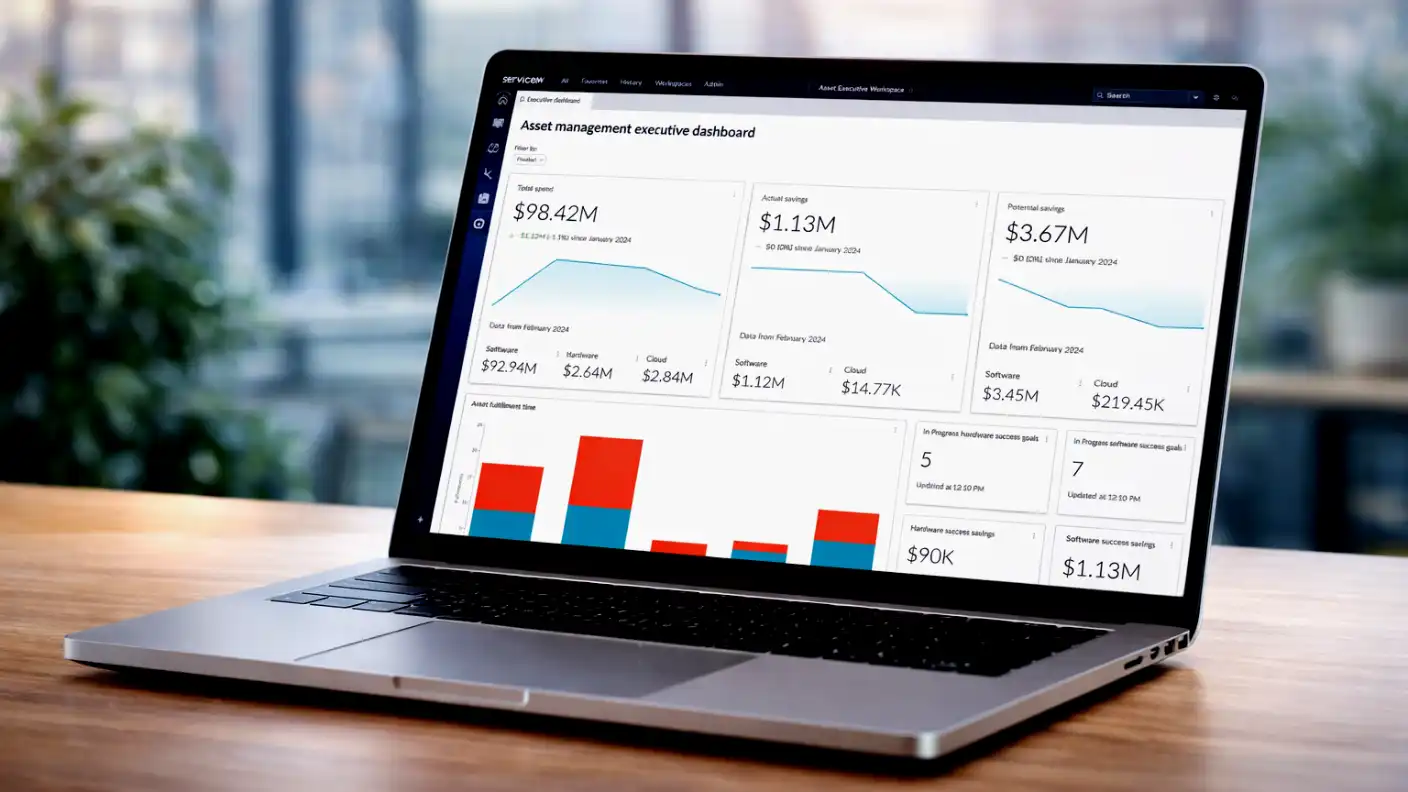
In the modern digital enterprise, the ability to track, manage, and optimize technology infrastructure is a massive competitive advantage. As businesses pivot toward hybrid cloud environments and complex remote work setups, legacy spreadsheets are no longer sufficient. ServiceNow IT Asset Management (ITAM) has emerged as the definitive solution for large organizations that need to bridge the gap between their IT operations and their bottom line.
ServiceNow doesn’t just treat assets as entries in a database; it treats them as vital components of a larger business ecosystem. By integrating asset data directly with incident management, change control, and financial operations, it provides a “single pane of glass” view that is unmatched in the industry. In this review, we examine whether ServiceNow ITAM’s comprehensive suite justifies its enterprise-grade price tag for your organization.
What is ServiceNow IT Asset Management?
ServiceNow ITAM is an end-to-end platform designed to track the full lifecycle of hardware, software, and cloud assets. Unlike siloed tools that focus solely on inventory, ServiceNow integrates asset data into the core of its Now Platform, enabling IT teams to automate procurement, maintenance, and retirement workflows across the enterprise.
The software is built on the Configuration Management Database (CMDB) concept, which serves as the source of truth for all IT relationships. This allows the system to understand not just that a server exists, but exactly which business applications, employees, and security patches rely on that specific piece of hardware.
Key Features and Capabilities
ServiceNow provides a modular approach to asset management, allowing enterprises to start with basic inventory tracking and scale toward full-blown automated lifecycle management. The platform is designed to handle the complexity of global, multi-departmental operations.
Hardware Asset Management (HAM)
Managing physical hardware—from laptops and mobile devices to complex data center racks—requires a system that can automate the mundane and flag the critical. HAM automates the entire journey of a physical asset from the moment it is ordered to the moment it is decommissioned.
- Procurement Automation: Automatically triggers purchase orders based on stock levels and connects directly to vendor catalogs.
- Inventory Lifecycle: Tracks assets through receiving, deployment, maintenance, and eventually secure disposal.
- Financial Tracking: Automatically monitors depreciation and total cost of ownership (TCO), providing clear data for budget forecasting.
Software Asset Management (SAM)
Software audits are the nightmare of every IT director, often resulting in massive non-compliance fines. SAM is designed to eliminate this risk by providing complete visibility into what is installed versus what you are actually entitled to use.
- License Compliance: Automatically reconciles software installations against entitlement records to highlight potential audit risks before they happen.
- Optimization Insights: Identifies unused or “shelf-ware” licenses, enabling teams to reclaim and reassign them to reduce subscription costs.
- SaaS Management: Integrates directly with cloud platforms to manage SaaS subscriptions, ensuring you aren’t paying for accounts that are no longer active.
Advantages and Disadvantages
Choosing an ITAM platform as massive as ServiceNow is a strategic decision that affects every department in an enterprise. It is essential to weigh the platform’s incredible depth against the reality of its implementation requirements.
Advantages
The following points highlight why ServiceNow is the preferred choice for Fortune 500 companies and large-scale enterprises.
- Integrated Ecosystem: The biggest strength is its integration; asset data flows automatically into IT Service Management (ITSM), Security Operations (SecOps), and GRC modules.
- Workflow Automation: It enables highly complex, custom workflows, such as automatically triggering a security patch when a specific vulnerable asset is detected.
- Superior Reporting: The platform offers arguably the best executive-level reporting and analytics dashboard in the ITAM space.
Disadvantages
It is important to understand the technical and operational trade-offs involved in implementing such a massive enterprise platform.
- High Complexity: The platform is notoriously difficult to configure correctly; organizations often require dedicated ServiceNow developers or external consultants.
- Significant Cost: ServiceNow is positioned at the top end of the market, making the licensing and implementation costs prohibitive for smaller organizations.
- Implementation Time: Because of its deep integration with other enterprise systems, a full rollout can take months or even years, depending on the complexity of your current data.
Final Verdict
ServiceNow IT Asset Management is the “gold standard” for large-scale enterprises that demand perfect visibility and control. It effectively turns ITAM from a reactive, manual task into a proactive business function that actively saves money and reduces security risks.
However, it is not a “plug-and-play” solution. It is a powerful engine that requires professional handling to reach its full potential. For large organizations seeking deep integration, automated workflows, and world-class compliance reporting, there is simply no better option on the market. If you have the budget and the technical resources to support it, ServiceNow is the ultimate tool to master your enterprise infrastructure.