Key Points:
- The United States government placed new financial sanctions on three Chinese satellite imagery companies for aiding Iranian military operations.
- Secretary of State Marco Rubio stated the firms provided detailed intelligence on American troop movements during Operation Epic Fury.
- The sanctions arrive exactly one week before President Donald Trump and Chinese President Xi Jinping hold a high-stakes summit in Beijing.
- China currently operates the largest commercial Earth imaging program outside the United States in a rapidly growing technology sector.
The United States government just placed new financial sanctions on three Chinese satellite imagery companies. Washington claims these businesses supplied critical intelligence to Iran, helping Tehran launch military strikes against American troops deployed in the Middle East. According to a recent Bloomberg report, this aggressive move serves as part of a much broader strategy. American officials want to completely sever the technological support chains that keep the Iranian military running while regional conflicts continue to escalate across multiple borders.
The government named three specific companies in this latest round of financial restrictions. The list includes Meentropy Technology Company, a Hangzhou-based firm that also operates under the name MizarVision. The government also targeted a company called The Earth Eye, as well as Chang Guang Satellite Technology Company. By cutting these businesses off from the American financial system, Washington hopes to cripple their ability to sell valuable data to hostile nations.
United States Secretary of State Marco Rubio announced the restrictions to the public on Friday. He stated that the three technology firms gathered detailed satellite imagery and collected sensitive data regarding American military movements. Rubio said these companies directly monitored United States forces during a recent military campaign known as Operation Epic Fury. He claims the companies handed that valuable information directly over to Iranian commanders who used it to plan their own strikes.
Rubio singled out Chang Guang Satellite Technology Company for its specific actions. The Secretary of State accused the firm of answering direct requests from Tehran to spy on United States forces and their regional allies. The American government already knew about Chang Guang, having imposed other trade restrictions on the firm in the past for similar behavior. Now, officials claim the company actively works as a paid intelligence arm for the Iranian military.
The State Department did not stop with Chinese firms. The new sanctions package also slapped penalties on several businesses operating in Belarus and the United Arab Emirates for their connections to the Iranian network. Additionally, Washington designated the Ministry of Defense Export Center in Iran. Officials pointed to the center’s direct role in buying illegal weapons and managing the complex supply chain that fuels the nation’s military operations.
These penalties arrive at a highly sensitive moment for international diplomacy. President Donald Trump and Chinese President Xi Jinping plan to meet in Beijing next week for a high-stakes summit. This new clash over satellite intelligence adds heavy tension to a meeting already packed with intense trade and security disputes. Both leaders want to secure better economic terms for their countries, but these fresh sanctions will likely dominate the early conversations and make negotiations much harder.
Beijing strongly opposes such actions by Washington. The Chinese government routinely instructs its domestic corporations to ignore unilateral American sanctions. For example, Washington previously penalized a major Chinese private oil refiner for doing business with Iran. In response, Beijing told the refiner to keep operating normally and ignore the American threats. Chinese officials view these sanctions as an illegal overreach of American power and rarely force their companies to comply.
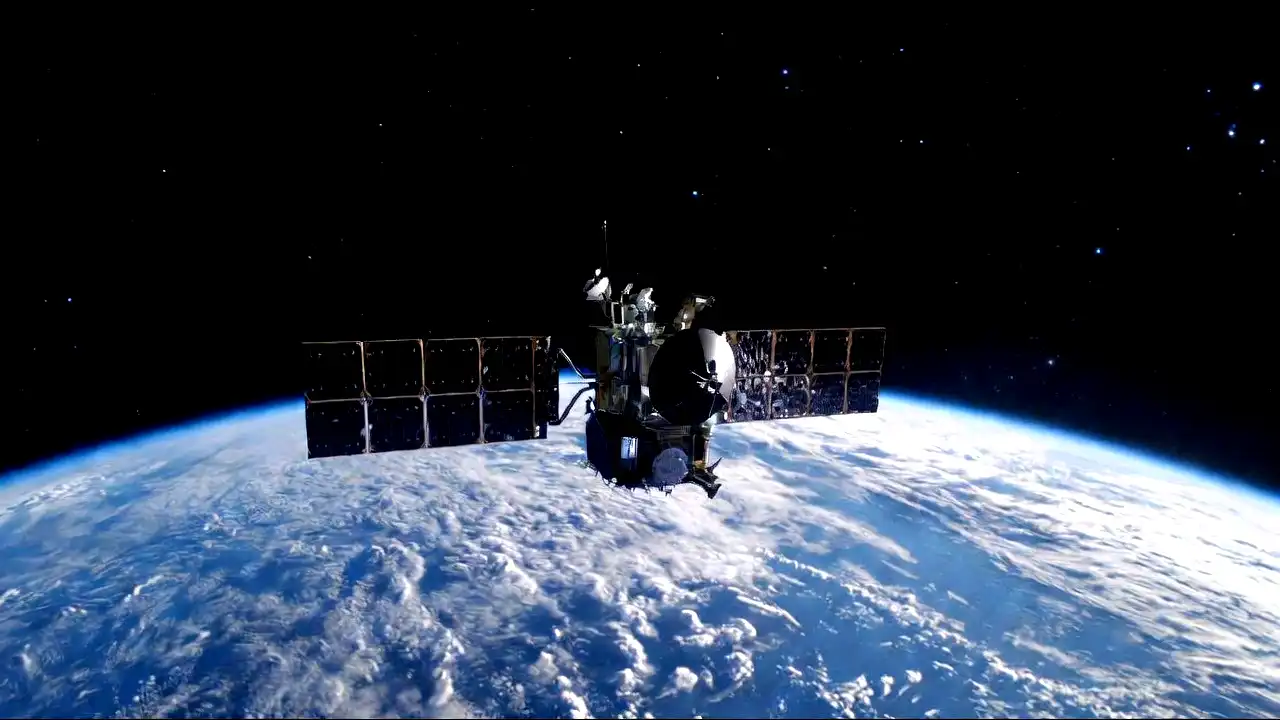
Behind the political fight sits a massive commercial market. The Earth observation sector has exploded into an industry worth well over $1 billion over the last few years. Companies now launch hundreds of small satellites into orbit to photograph almost every inch of the globe daily. Today, China runs the largest commercial imaging program outside the United States, giving its companies massive influence over the global data market and generating significant revenue for the Chinese economy.
High-resolution satellite data creates severe security risks when it falls into the wrong hands. Modern commercial satellites take pictures clear enough to count individual military vehicles and track troop movements in real time. To protect soldiers on the ground, the Trump administration recently asked commercial satellite providers to voluntarily stop sharing pictures of active conflict zones in the Middle East. The administration wants to blind enemy forces that rely on commercial maps to plan their attacks.
American companies like Planet Labs PBC quickly agreed to these government requests and restricted access to their data. They understand the national security risks and work closely with federal agencies to keep American troops safe. However, Chinese firms operate entirely outside American jurisdiction and continue selling their services to anyone willing to pay the price. This ongoing activity drives a massive wedge between the two largest economies in the world. As commercial space technology advances, the fight over who gets to see and sell pictures of the Earth will only intensify.