Key Points:
- Memory component costs now consume 54 percent of the total budget for entry-level smartphones.
- Qualcomm and MediaTek canceled production orders for between 20,000 and 30,000 silicon wafers.
- The canceled orders equal roughly 15 million to 20 million mobile chips that factories will no longer produce.
- AMD aggressively took over the empty 4-nanometer and 5-nanometer factory lines to build more computer processors.
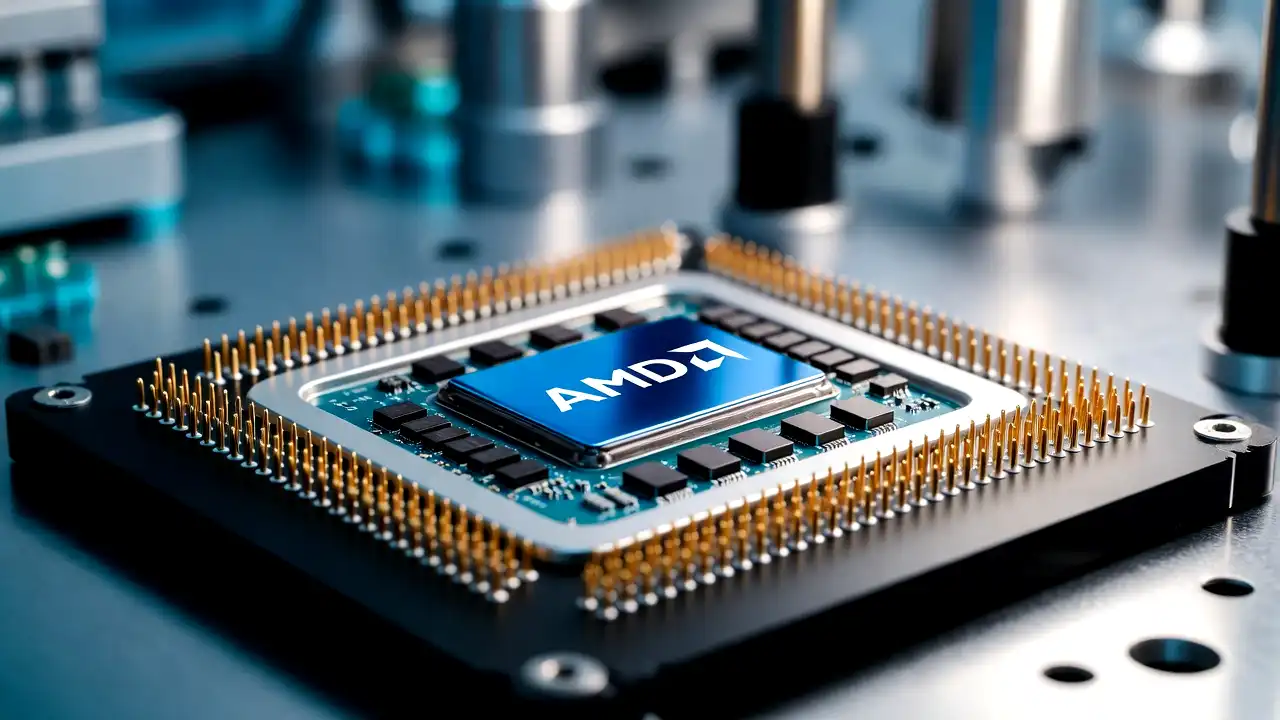
AMD found a massive business opportunity in the recent struggles of the global smartphone industry. Rival chipmakers Qualcomm and MediaTek recently canceled large production orders at Taiwan Semiconductor Manufacturing Company. The computer processor giant quickly moved in to take over the empty factory lines. This sudden shift gives AMD a huge advantage in producing its popular computer chips and meeting global demand.
A severe shortage of basic computer memory started this chain reaction across the technology sector. Memory manufacturers currently focus almost all their resources on building High Bandwidth Memory. Technology companies desperately need this highly specialized memory to run massive artificial intelligence workloads. Because factories prioritize artificial-intelligence components, the supply of standard dynamic random-access memory has completely crashed.
This memory shortage created a financial nightmare for companies that build cheap smartphones. Mobile phone brands rely on inexpensive parts to make a profit on entry-level and mid-tier devices. Today, dynamic random-access memory costs consume a massive 35 percent of the total build materials for a single budget smartphone.
The financial pain does not stop there. Flash storage, known in the industry as NAND, adds another 19 percent to the total manufacturing cost. When you combine these two parts, memory components eat up a staggering 54 percent of the total budget for an entry-level handset. Phone makers have zero room to maneuver because they cannot raise retail prices without scaring away budget-conscious shoppers.
Faced with these crushing component costs, smartphone brands slowed down their manufacturing lines. Consumer demand for these affordable phones entered a deep freeze as buyers held onto their older devices. Because phone makers stopped ordering parts, mobile chip designers Qualcomm and MediaTek had to alter their immediate business plans. The two mobile giants slashed their orders for advanced 4-nanometer and 5-nanometer mobile processors.
These sudden cutbacks left a massive hole in the production schedule at Taiwan Semiconductor Manufacturing Company. Qualcomm and MediaTek abandoned between 20,000 and 30,000 silicon wafers. To put that massive scale into perspective, those canceled wafers equal roughly 15 million to 20 million mobile chips that will never see the inside of a smartphone.
AMD watched this situation unfold and aggressively bought up the vacated factory space. Taiwan Semiconductor Manufacturing Company is the world’s premier chip foundry, and companies often fight tooth and nail for access to its advanced manufacturing nodes. Finding empty 4-nanometer and 5-nanometer production lines is incredibly rare. AMD recognized this lucky break and snatched up the capacity before any other competitors could make an offer.
The company already enjoys incredibly high production yields on its 5-nanometer computer processors. High yields mean the factory produces very few defective chips per silicon wafer. Securing these extra manufacturing lines allows the company to pump out massive volumes of highly profitable computer chips without waiting in long lines for factory time. This efficiency turns the extra factory space into pure profit for the processor giant.
Company leadership openly confirmed this massive boost in production. Chief Executive Officer Lisa Su spoke directly to investors during a recent first-quarter earnings call. She explained that the company experienced significant financial growth recently and attributed that success directly to the sheer volume of units leaving the factory floor.
Su detailed exactly what products the company pushed through these newly acquired factory lines. She told investors that AMD shipped huge numbers of central processing units across multiple product categories. The company manufactured plenty of its high-end Turin family processors to satisfy its top-tier customers.
At the same time, the extra factory space allowed AMD to flood the market with older, highly reliable technology. Su noted that the company shipped a large number of Genoa processors, which use the Zen core architecture. Tech companies use these massive processors to run huge data centers and enterprise servers. Producing these server chips on the 5-nanometer lines generates massive profits because the manufacturing process runs flawlessly after years of constant refinement.
Industry experts call this situation the ultimate semiconductor butterfly effect. A sudden surge in artificial intelligence programs caused a shortage of basic phone memory. That shortage killed the budget smartphone market, which forced mobile chipmakers to cancel factory orders. In the end, a desktop computer company reaped all the rewards and dominated the market with sheer production volume.