Key Points:
- Indian Foreign Minister Subrahmanyam Jaishankar opened the 2026 BRICS meeting by demanding safe maritime routes through the Strait of Hormuz.
- Deep internal divisions plague the group as Iran and the United Arab Emirates clash over the ongoing United States and Israeli military actions.
- India faces a severe foreign currency shortage, prompting Prime Minister Narendra Modi to ask citizens to stop buying gold for 1 year.
- Israeli Prime Minister Benjamin Netanyahu allegedly made a secret visit to the United Arab Emirates, sparking fierce social media threats from Iran.
Indian Foreign Minister Subrahmanyam Jaishankar opened the BRICS gathering in New Delhi on Thursday with a strong plea for global stability. He demanded safe and clear shipping lanes through international waters, specifically pointing to the highly contested Strait of Hormuz. As India holds the BRICS chair for 2026, Jaishankar wants the powerful economic bloc to act as a calming force amid extreme global chaos.
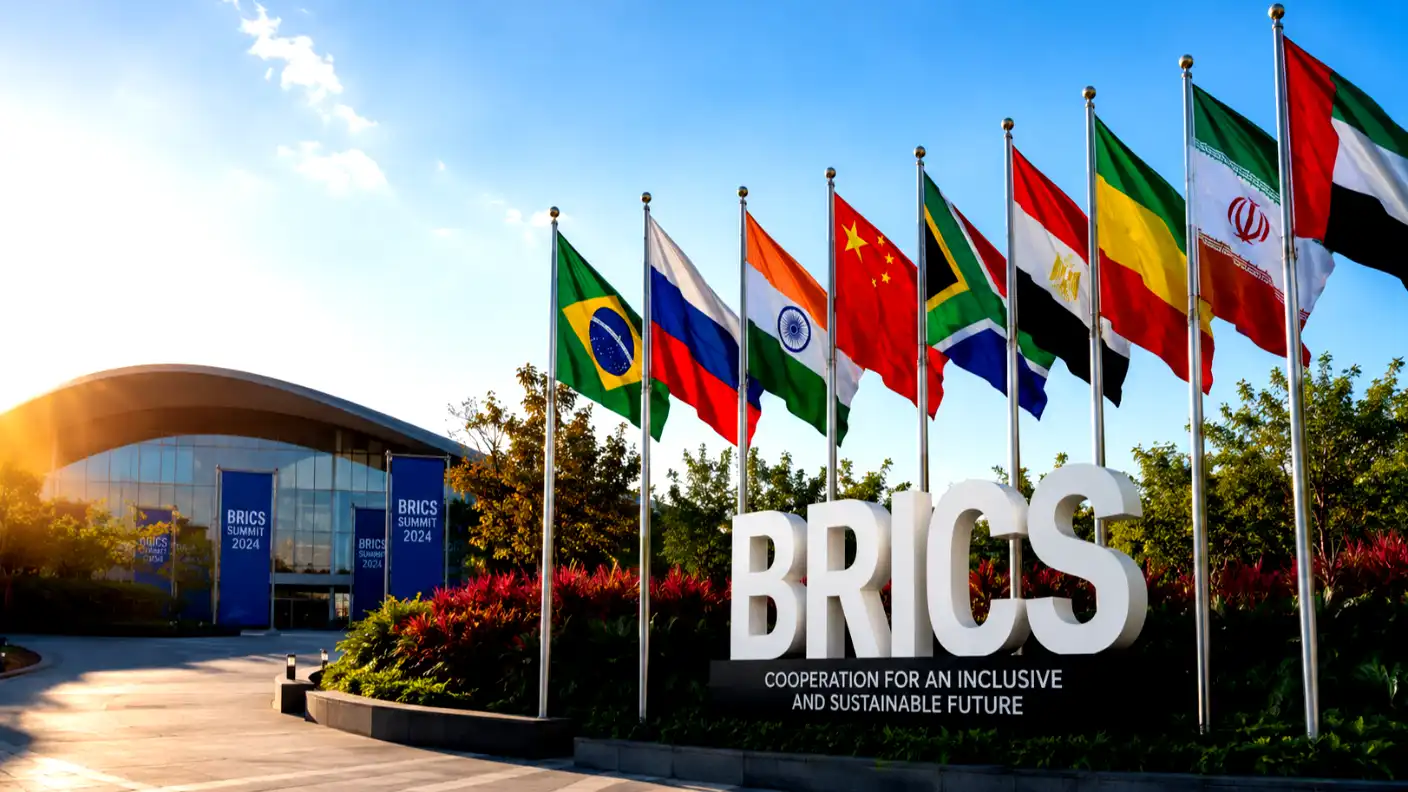
Jaishankar noted that developing countries and emerging markets expect BRICS to step up and solve major problems. The group originally formed to counter Western dominance and provide a different voice in global politics. Over the years, the founding members—Brazil, Russia, India, China, and South Africa—invited several new nations to join their ranks. Today, the expanded coalition officially includes Egypt, Ethiopia, Iran, Indonesia, and the United Arab Emirates.
Despite the hopeful opening speech, deep internal cracks threaten to tear the expanded group apart. Member nations currently struggle to find common ground on major global issues. The most intense friction exists between Iran and the United Arab Emirates. These 2 Middle Eastern neighbors remain sharply at odds over the ongoing war involving the United States, Israel, and Iran.
The divisions run so deep that experts worry the bloc cannot even agree on basic words to describe the Middle East conflict. Iranian Foreign Minister Abbas Araghchi arrived at the meeting with strict demands. He asked all BRICS members to unequivocally condemn the United States and Israel for their recent military attacks against Tehran. However, nations like the United Arab Emirates and Saudi Arabia will almost certainly reject his aggressive demands.
While the members argue over the war, Jaishankar tried to steer the conversation toward shared economic grievances. He urged the foreign ministers to stand together against countries that use unilateral sanctions and coercive financial measures. He argued that these punishing tactics violate international law and ignore the core rules of the United Nations Charter.
Beyond geopolitics, the ongoing war causes massive economic headaches for the host nation. The Middle East conflict severely disrupts the global supply of oil, natural gas, and essential raw materials. India currently faces a dangerous shortage of foreign currency reserves due to these rising import costs. To manage this severe crisis, Indian Prime Minister Narendra Modi recently asked his citizens to stop buying gold for 1 entire year and urged them to conserve fuel immediately.
Because of these heavy financial pressures, energy security dominated the agenda of the Thursday meeting. The ministers focused heavily on keeping the Strait of Hormuz open for massive oil tankers. They also held deep discussions about shifting global trade away from the American dollar and conducting business using their own local currencies instead.
Adding fuel to the existing regional fire, a major diplomatic scandal broke just hours before the New Delhi summit began. The office of Israeli Prime Minister Benjamin Netanyahu released a shocking statement. The office claimed that Netanyahu recently made a secret trip to the United Arab Emirates to strengthen ties during the ongoing war with Iran. The Israelis described the secret gathering with President Sheikh Mohammed bin Zayed Al Nahyan as a historic breakthrough in their relationship.
The United Arab Emirates quickly fired back, denying the secret visit outright. Officials in Abu Dhabi stated that their relationship with Israel remains entirely public and does not rely on unofficial or hidden arrangements. The 2 nations originally normalized their relations back in 2020 under the Abraham Accords.
Iranian Foreign Minister Araghchi did not ignore the Israeli claims. He posted a thinly veiled threat on social media without directly naming the United Arab Emirates. Araghchi called enmity with Iran a foolish gamble and labeled any collusion with Israel an unforgivable offense. He promised that Tehran would hold anyone working with Israel strictly accountable.
These threats carry real weight given recent history. The current conflict came to life at the end of February after the United States and Israel launched combined military strikes on the Islamic Republic. In response, Iran heavily targeted the United Arab Emirates more than any other country in the region. Tehran constantly criticizes the 2020 Abraham Accords and routinely accuses Israel of hiding military and intelligence agents inside the United Arab Emirates.