Key Points:
- The world’s largest single-site solar station covers over 13 square kilometers in China’s Gurbantunggut Desert.
- Massive rows of solar panels reduce near-surface wind speeds by 30% to 50% to stop shifting sand dunes.
- Workers are finalizing China’s largest standalone energy storage station to shift daytime solar power to the night.
- With only 20% of the planned capacity currently connected to the grid, the project has immense room to expand.
China is turning its massive deserts into high-tech power plants that can also stop the spread of sandstorms. In the Gurbantunggut Desert, located in northwest China’s Xinjiang Uygur Autonomous Region, a mega solar project is successfully turning the tide against desertification. The massive project does not just generate clean electricity. It actively changes the physical environment, proving that industrial expansion can actually heal a damaged local ecosystem.
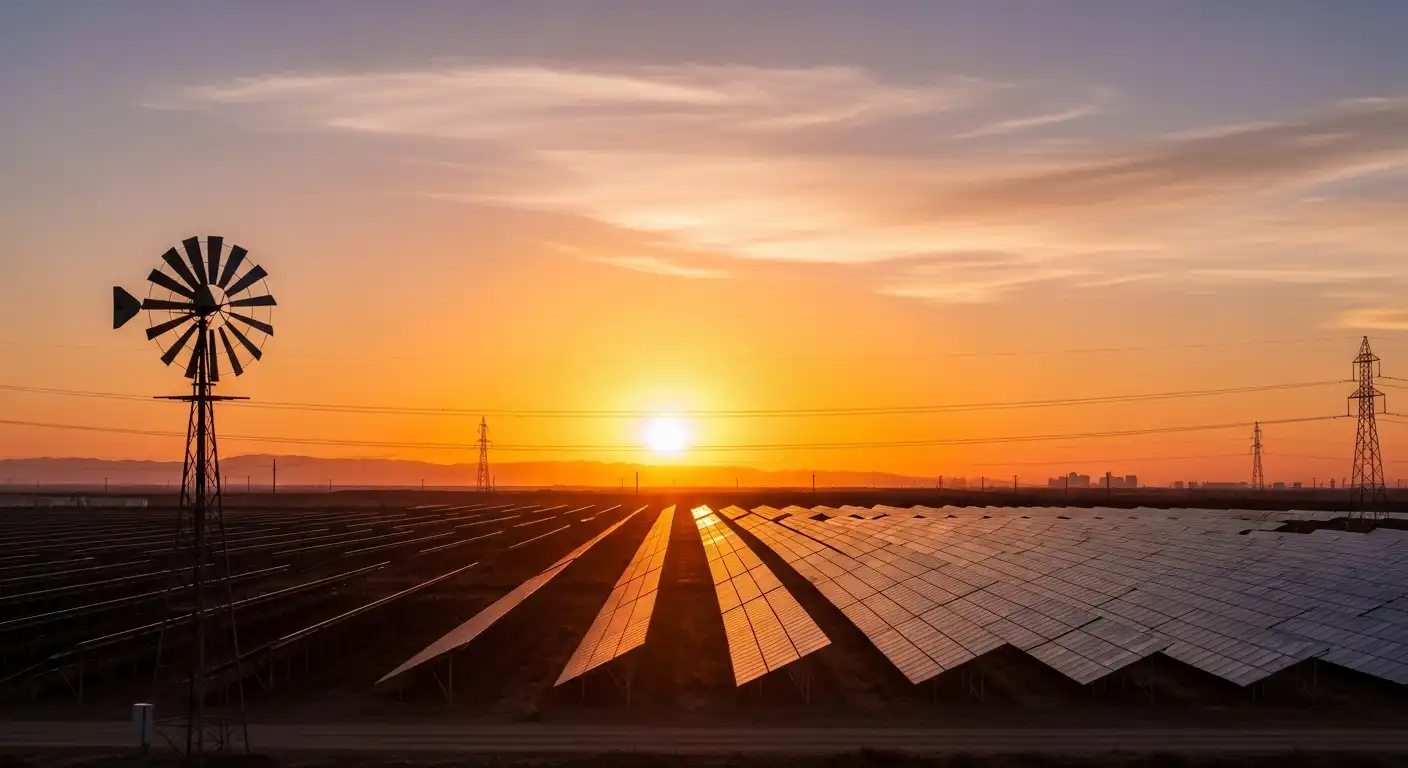
The project stands out as the world’s largest single-site solar station. The facility covers a colossal area of more than 13 square kilometers, which equals roughly 1,300 hectares of arid land. From a bird’s-eye view, endless rows of dark blue solar panels blanket the massive, shifting sand dunes, creating a striking contrast against the pale yellow desert sand.
The physical presence of these solar panels has a powerful stabilizing effect on the surrounding landscape. The massive rows of structures serve as physical windbreaks, reducing near-surface wind speeds by 30% to 50%. In the desert, strong winds constantly move the sand, creating shifting dunes that slowly swallow up nearby roads and Auricular farmland. By slowing down the wind, the solar panels transform these volatile, semi-fixed dunes into stable, fixed ones that stay in place.
Shading the ground also triggers a surprising ecological chain reaction. The solar panels block the intense desert sun, which lowers the temperature of the soil directly beneath them. This shade reduces water evaporation from the ground, keeping what little moisture exists trapped in the soil. Hardy desert grasses, moss, and biological soil crusts quickly take advantage of these cooler, wetter conditions. They begin to grow under the panels, forming a green carpet that permanently anchors the loose sand.
To maximize the usefulness of this clean electricity, workers are currently finalizing China’s largest standalone energy storage station. Solar panels naturally produce the most electricity during the middle of the day when the sun shines brightest. However, cities and factories usually experience their peak power demand in the evening. This giant battery storage facility will solve the timing problem, soaking up abundant daytime solar power and releasing it back into the grid at night.
Currently, only 20% of the project’s planned capacity connects to the national power grid. This means the facility is in its early stages of deployment, yet it already produces massive amounts of clean electricity. As workers continue to build out the infrastructure and connect the remaining 80% of the planned capacity, the facility’s clean energy output will skyrocket.
Shipping this electricity to consumers presents a major logistical challenge. The Gurbantunggut Desert lies thousands of miles from China’s coastal megacities, where most of the country’s population and factories are concentrated. To bridge this vast distance, the state relies on ultra-high-voltage direct-current transmission lines. These giant electrical highways carry the green power across the country with very little energy loss along the way, successfully linking remote desert winds and sun to distant urban homes.
This integrated project perfectly illustrates the new “ecology plus industry” model that Chinese planners are championing. In the past, builders viewed industrial development and environmental protection as natural enemies. This project proves that smart industrial design can actually drive ecological restoration. The solar farm does not destroy the desert environment; instead, it uses industrial technology to fix the sand and bring life back to a barren wasteland.
As China pushes hard to meet its ambitious carbon neutrality goals, this desert solar model offers a highly scalable blueprint for other dry regions worldwide. It shows that governments can combat climate change and desertification simultaneously. By covering dry sands with solar panels, countries can secure their energy future while reclaiming lost land from the desert.