

Key Points:
- SpaceX officially published its S-1 prospectus, revealing a potential $737 billion compensation package for CEO Elon Musk.
- To unlock the largest share of the pay deal, Musk must build a permanent colony of 1 million people on Mars.
- A second, smaller award ties $154 billion in stock to the operation of massive, space-based supercomputing data centers.
- Musk currently controls 85.1% of SpaceX’s total voting power through his ownership of Class B super-voting shares.
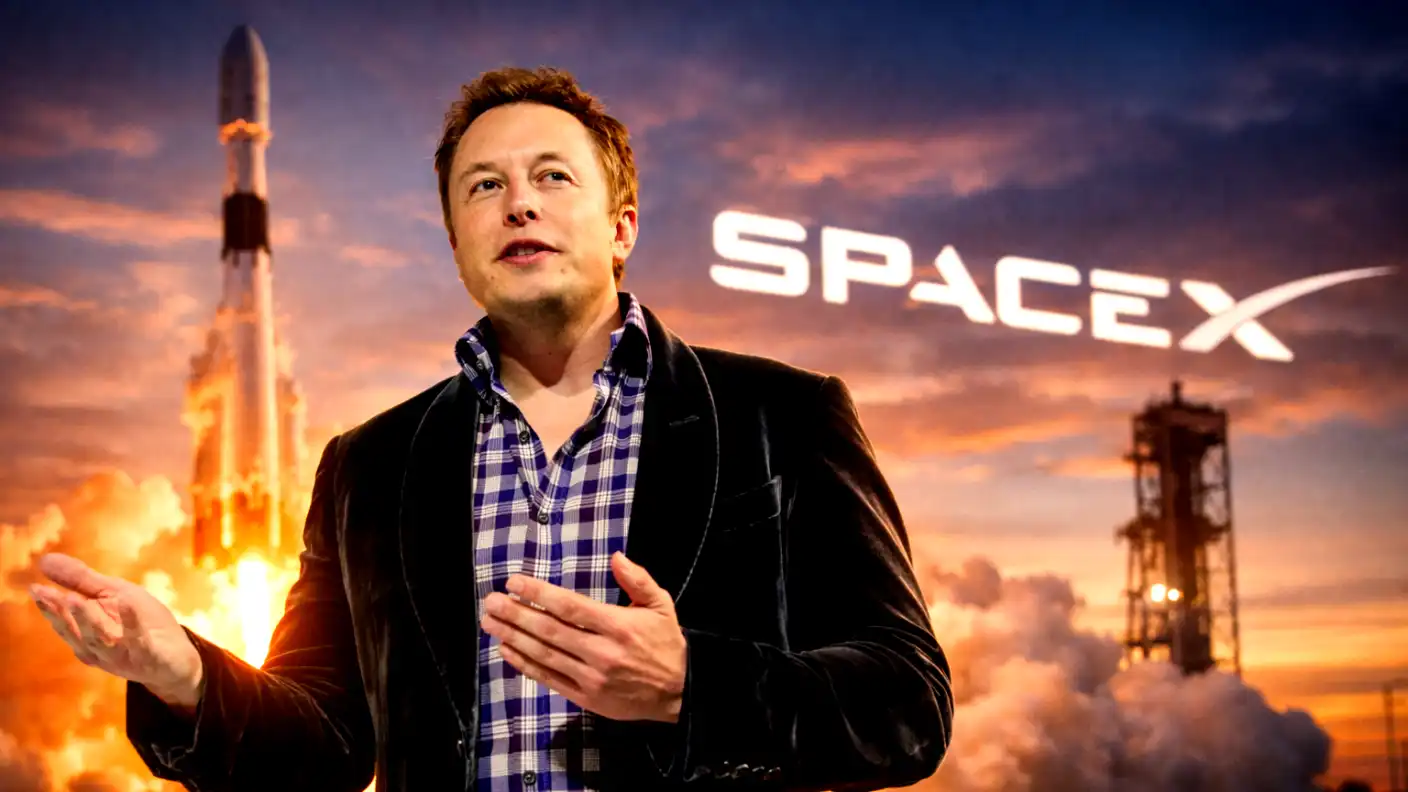
SpaceX officially published its S-1 prospectus with the Securities and Exchange Commission on Wednesday, setting the stage for the largest initial public offering in Wall Street history. While investors prepare for a potential listing targeting a $1.75 trillion to $2 trillion valuation, the most mind-boggling detail of the filing lies inside the executive compensation section. The board of directors has approved a highly unusual, record-breaking pay package for CEO Elon Musk that could award him up to $737 billion in equity. To unlock the full value of this massive package, Musk must achieve something never before seen in corporate history: establish a permanent colony of 1 million people on Mars.
The compensation plan consists of two performance-based stock awards. The first and largest award grants Musk 1 billion performance-based restricted shares. This massive chunk of equity would vest in 15 equal tranches. If SpaceX reaches a $1.5 trillion valuation, those shares would be worth roughly $117 billion. However, if the company hits the package’s highest target of a $7.5 trillion market capitalization, the value of those shares would theoretically swell to an astonishing $583 billion. To unlock any portion of this money, Musk must also achieve the “human colony” milestone, proving he can populate the Red Planet.
The second, smaller part of the compensation package awards Musk about 302 million restricted shares, which could be worth up to $154 billion. To secure this second payout, SpaceX must reach a separate market capitalization milestone of $6.56 trillion. Additionally, the company must successfully build and operate space-based orbital data centers capable of delivering at least 100 terawatts of computing power annually. This massive amount of space-based compute power is equivalent to approximately 100,000 gigawatts, which dwarfs anything currently existing on Earth and equals the energy output of thousands of nuclear power plants.
SpaceX’s filing reads less like a traditional financial document and more like a high-budget science fiction movie. The prospectus explicitly frames the company’s long-term purpose as safeguarding humanity from extinction. “We do not want humans to have the same fate as dinosaurs,” the document states, explaining that the ultimate goal is to make humanity an interplanetary species. Musk has previously argued that establishing a self-sustaining city of 1 million people on Mars is essential to prevent a potential extinction event on Earth, and now his personal wealth is directly tied to that mission.
To fund these incredibly expensive Mars and computer-in-space ambitions, SpaceX relies heavily on its satellite internet business, Starlink. The S-1 filing reveals that Starlink is generating massive, reliable recurring revenue, serving over 5 million subscribers globally as of late 2025. The high-margin satellite internet business is essentially the financial engine bankrolling the highly expensive development of the next-generation Starship rocket, which is necessary to carry astronauts and cargo to the Moon and Mars.
The actual financial numbers inside the S-1 prospectus show just how much money the company is burning to fund these projects. SpaceX reported a total revenue of $18.6 billion last year, but posted a massive annual net loss of $4.9 billion. The financial drain has continued into the first quarter of 2026. During the first three months of this year, the company’s space division—which includes the Super Heavy booster and the Starship rocket—expended $1.05 billion, while its artificial intelligence division spent a massive $7.72 billion, showing where the company is focusing its cash.
However, the company has also secured massive commercial deals to offset some of these high expenses. The filing disclosed a stunning partnership with the artificial intelligence startup Anthropic. Anthropic has agreed to pay SpaceX a massive $1.25 billion every month in exchange for secure cloud computing capacity. This three-year contract runs from May 2026 to May 2029, bringing in a total contract value of roughly $15 billion to help fund SpaceX’s data center infrastructure.
Assuming the upcoming IPO goes ahead as planned in the coming weeks, the public listing could raise to $75 billion. An offering of this size would easily surpass the current title holder, Saudi Aramco, which raised $26 billion in its 2019 IPO. The public listing will also likely push Musk, who already has a net worth of $839 billion, according to Forbes, to become the world’s first trillionaire officially. Musk currently controls 85.1% of SpaceX’s total voting power through his ownership of 12.3% of Class A shares and 93.6% of the super-voting Class B shares.
The historic compensation package is bound to raise eyebrows on Wall Street, especially after a Delaware court previously voided Musk’s $56 billion compensation deal at Tesla. However, some analysts believe the new structure will actually reassure investors. Shareholder advocate groups have previously worried that Musk’s attention was shifting too much toward other companies like xAI. By tying his massive SpaceX payout directly to operational milestones, the board has ensured that the world’s richest man will remain focused on the rocket company’s long-term success.
Ultimately, the SpaceX IPO prospectus proves that Elon Musk is playing a completely different game than any other executive in corporate history. While other companies worry about quarterly earnings per share and safe dividend payouts, Musk is betting his entire financial legacy on building cities on Mars and deploying supercomputers in space. Investors wanting a piece of this historic public listing must decide whether they are willing to take this multi-trillion-dollar ride with him, accepting that they have zero say in how he runs his interplanetary empire.






