Key Points:
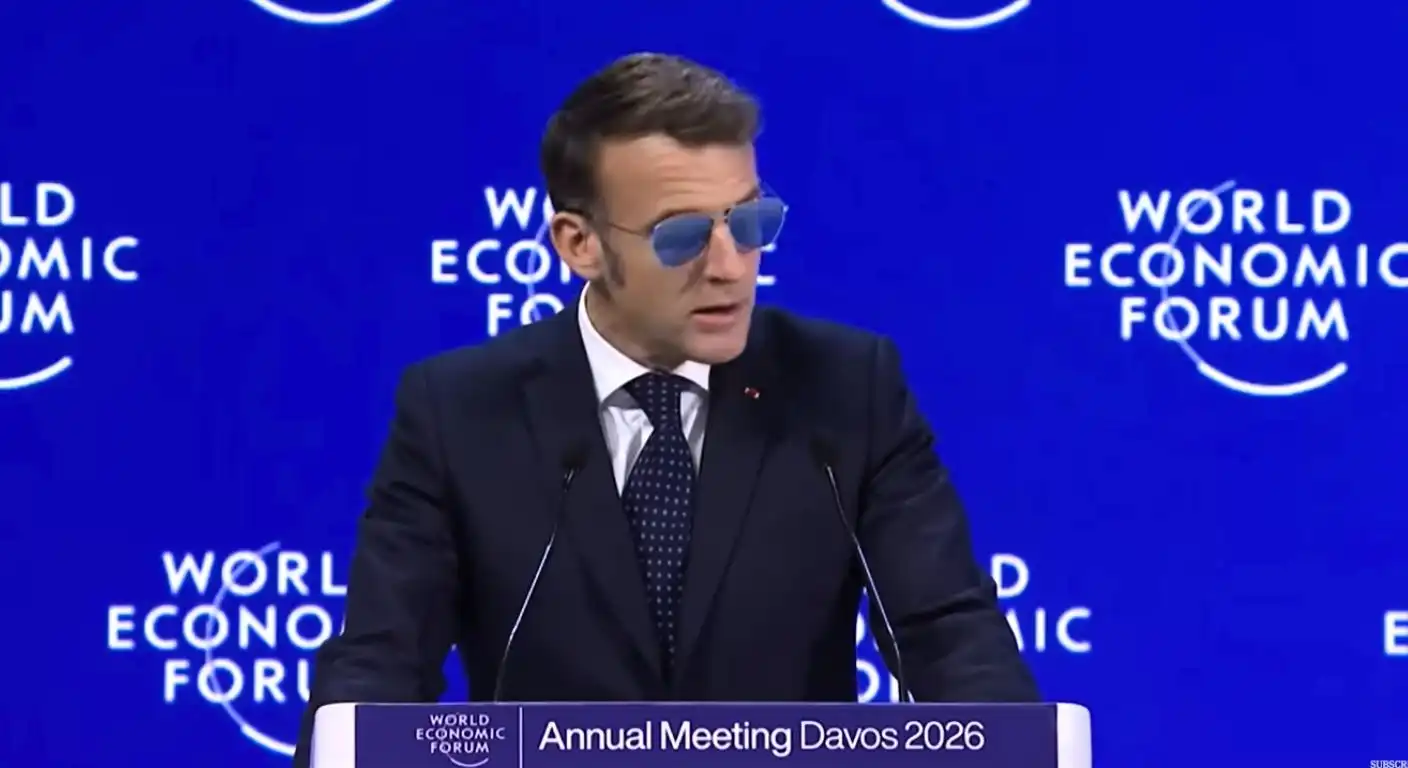
- French President Emmanuel Macron warned that Europe risks being “swept aside” by the US and China if it fails to protect its strategic industries.
- The proposed Industrial Accelerator Act would favor European-made, low-carbon products in key public contracts and subsidies.
- The draft law introduces strict local-content rules, requiring automotive projects to meet a 70 percent European assembly threshold.
- Under pressure from US Section 301 tariffs, Macron urged Europe to fund a €1.2 trillion annual investment strategy.
Europe’s political and economic leadership is currently facing a critical choice. French President Emmanuel Macron has issued a stark warning to the continent, calling on the European Union to boost investment in its strategic sectors aggressively. He warned that if Europe fails to act with speed and power, the relentless competitive forces of the United States and China will quickly sweep the bloc aside.
The warning comes as Brussels prepares to vote on a bold new “Made in Europe” framework. Earlier this year, EU Industry Commissioner Stéphane Séjourné unveiled the Industrial Accelerator Act, a legislative proposal designed to channel massive public funds toward European-manufactured products. The proposed law targets key strategic sectors, including electric vehicles, clean energy, and advanced semiconductors, to accelerate decarbonization and bolster local industry.
For Macron, this protective stance represents a necessary, symmetrical response to the aggressive industrial strategies of Europe’s main rivals. The United States has spent years using Section 301 investigations to slap heavy tariffs on imports and protect its own companies. At the same time, China’s massive state-led industrial subsidies have created a severe competitive imbalance, flooding global markets with cheap goods and undercutting European manufacturers.
Macron argues that Europe must abandon its role as the last powerless defender of a dying, liberal international trade order. He points out that the global trading system has transitioned from free trade to blatant mercantilism. To survive this shifting world, the French president believes Europe must embrace its own “power strategy” and “de-risking strategy” rather than trying to preserve outdated multilateral rules that other nations openly ignore.
To secure this strategic autonomy, the financial stakes are incredibly high. Macron estimates that the European Union needs around €1.2 trillion, or approximately $1.4 trillion, per year in combined public and private investment. This massive capital injection must target future-oriented green technologies, digital infrastructure, advanced research, and military defense. To fund these expenditures, he has renewed his controversial call for common European borrowing, urging the creation of future-oriented Eurobonds.
The French leader warned European nations against complacency, referencing what he calls a “Greenland moment” in transatlantic relations. Earlier this year, US President Donald Trump threatened to impose heavy tariffs on European countries that opposed his plan to annex Greenland. Although Washington eventually performed a U-turn, Macron warned that such threats and intimidation are far from over. He pointed out that US policies constantly target Europe’s critical sectors, including pharmaceuticals and digital technology.
Under the proposed Industrial Accelerator Act, the European Commission is taking concrete steps to force domestic preference. For the first time, Brussels is not merely giving member states more room to subsidize local factories; it is imposing strict local production thresholds. In the automotive sector, for example, the act introduces a three-tier definition of a European vehicle. This new rule requires final assembly within the Union, a 70 percent local-content threshold, and a 50 percent threshold for critical components such as batteries.
However, this defensive push has exposed deep divisions within the European Union. While France has championed “Made in Europe” quotas for years, other member states urge caution. In Germany, Chancellor Friedrich Merz has argued that Europe’s trading partners should be included in supply chains rather than excluded. Critics also warn that the strict local-content rules risk adding immense bureaucratic complexity to public procurement, potentially slowing the very green transition the bill aims to accelerate.
The upcoming debates over the Industrial Accelerator Act will determine whether Europe can finally unite to defend its economic sovereignty. With the global trade order in a state of complete disintegration, the choices made in Brussels in the coming months will shape the continent’s industrial future. As Macron warned, if Europe does not build up its own power strategy, it risks becoming a vassal state in the geopolitical crossfire between Washington and Beijing.