Key Points:
- The 22nd China (Shenzhen) International Cultural Industries Fair concluded its five-day run, showcasing over 120,000 cultural products.
- Over 6,312 online and offline exhibitors gathered to highlight the digital intelligence empowerment of cultural industries.
- Cutting-edge technologies, including humanoid robots, robotic dogs, and VR immersive experiences, dominated the exhibition halls.
- The fair set up dedicated zones for APEC economies and cross-border e-commerce to facilitate international cultural trade.
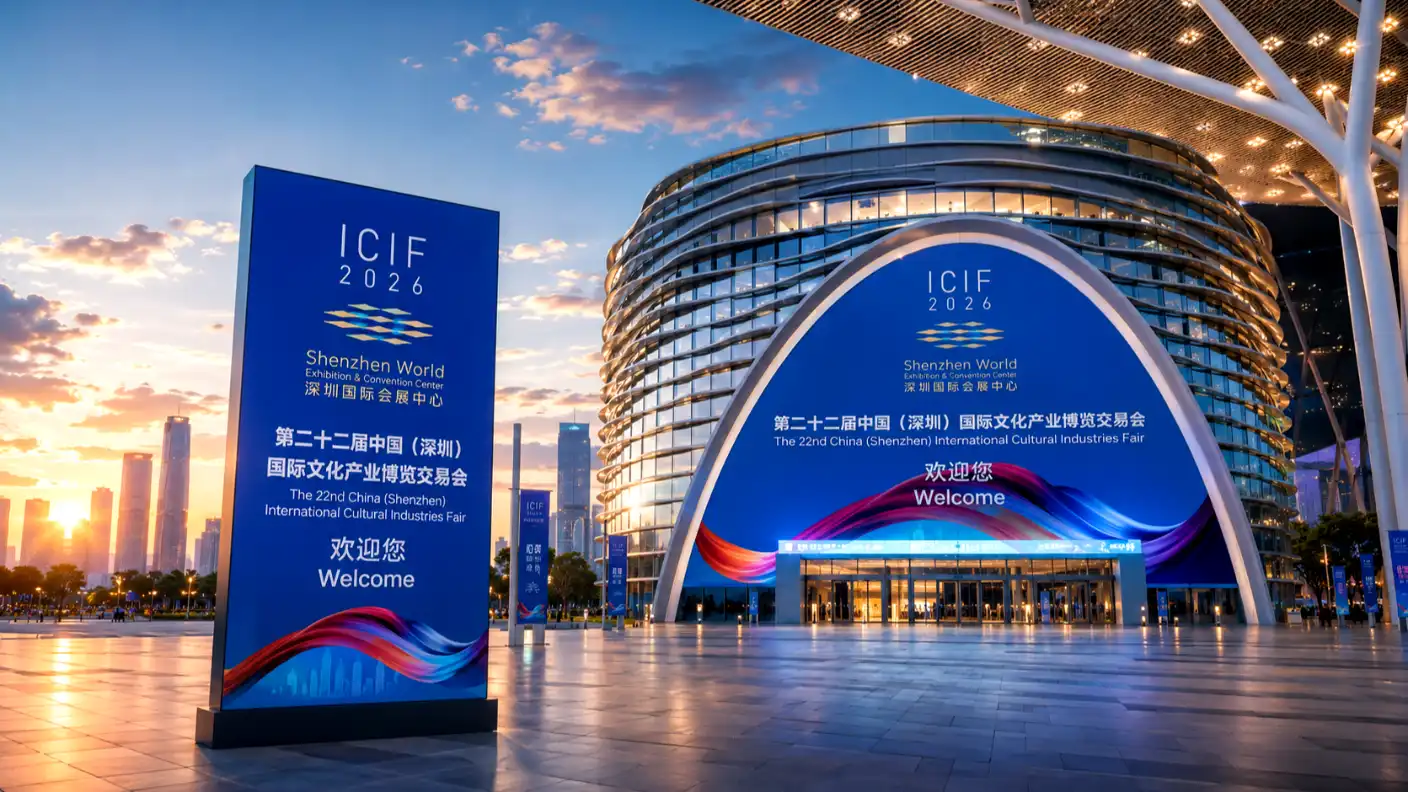
The intersection of ancient cultural traditions and futuristic digital technologies took center stage at the 22nd China (Shenzhen) International Cultural Industries Fair (ICIF). The premier five-day event, which concluded on Monday, May 25, 2026, transformed the massive Shenzhen World Exhibition & Convention Center into a playground of technological innovation. By focusing on the digital intelligence empowerment of creative sectors, the expo highlighted the rapid cultivation of what economists call “new quality productive forces”—redefining how the world creates, trades, and consumes cultural content.
This year’s fair attracted a record-breaking 6,312 exhibitors participating both online and offline. The sprawling exhibition halls hosted more than 120,000 individual cultural products, drawing thousands of international buyers, tech enthusiasts, and local families. Analysts estimate that China’s domestic cultural and creative industry now generates over $200 billion in annual revenue, and the Shenzhen ICIF’s massive scale demonstrates how deeply digital technology has penetrated this high-growth sector.
Among the eight massive exhibition halls, the most popular zones featured highly interactive, artificial intelligence-powered displays. Visitors crowded the stalls of the Chinese internet and digital-tech giant Tencent, which showcased its latest AI-driven generation tools. Near Tencent’s pavilion, human-like automation became a physical reality. Audiences gathered to watch humanoid robots and robotic dogs perform synchronized dances, while nearby exhibits invited visitors to play fast-paced table tennis games against high-speed robotic opponents.
Other digital exhibits demonstrated how physical hardware can bring historical heritage to life. In a highly popular showcase, children interacted with a robotic panda that used advanced natural language processing to respond to questions in real time. Elsewhere, children tried their hand at a digital shadow-puppet show, where motion-tracking sensors mapped their hand gestures onto a high-definition digital screen, instantly rendering traditional Chinese folklore characters.
Virtual and augmented realities also offered visitors a chance to escape physical boundaries. Multiple exhibition zones set up advanced virtual reality (VR) immersive experiences. Wearing lightweight headsets, participants traveled virtually through reconstructed palaces of ancient Chinese dynasties, strolled through virtual representations of the Palace Museum, or explored the scenic landscapes of distant APEC economies. This level of digital rendering shows how museums can leverage immersive tech to make national historical relics accessible to a global audience.
For the first time in its history, the fair established a dedicated exhibition area for Asia-Pacific Economic Cooperation (APEC) economies. The specialized zone showcased the cultural tourism achievements, regional delicacies, and intangible cultural heritage products of diverse member nations. The strategic addition of this zone aligns with local plans as Shenzhen prepares to host the 33rd APEC Economic Leaders’ Meeting in November 2026. The new area gave visiting foreign dignitaries an early taste of China’s technological and organizational readiness.
Additionally, a newly established cross-border e-commerce exhibition area brought together dozens of relevant enterprises to facilitate international trade. Rather than relying on traditional physical exports, these digital merchants are using algorithmic recommendation engines and live-streaming tools to sell regional cultural goods globally. The platform enables smaller, local craftsmen to bypass traditional retail intermediaries, helping them export everything from Zhuang brocade to local art toys directly to international buyers.
As the five-day fair wrapped up, the consensus among industry leaders remained clear: technology is no longer just a supporting tool for culture, but its primary driver. By successfully blending virtual reality, advanced robotics, and AI with traditional art forms, the 22nd Shenzhen ICIF has set a new benchmark for global creative expos. The event proves that when nations leverage digital intelligence, they can preserve historical heritage while generating massive, sustainable economic value in the digital era.