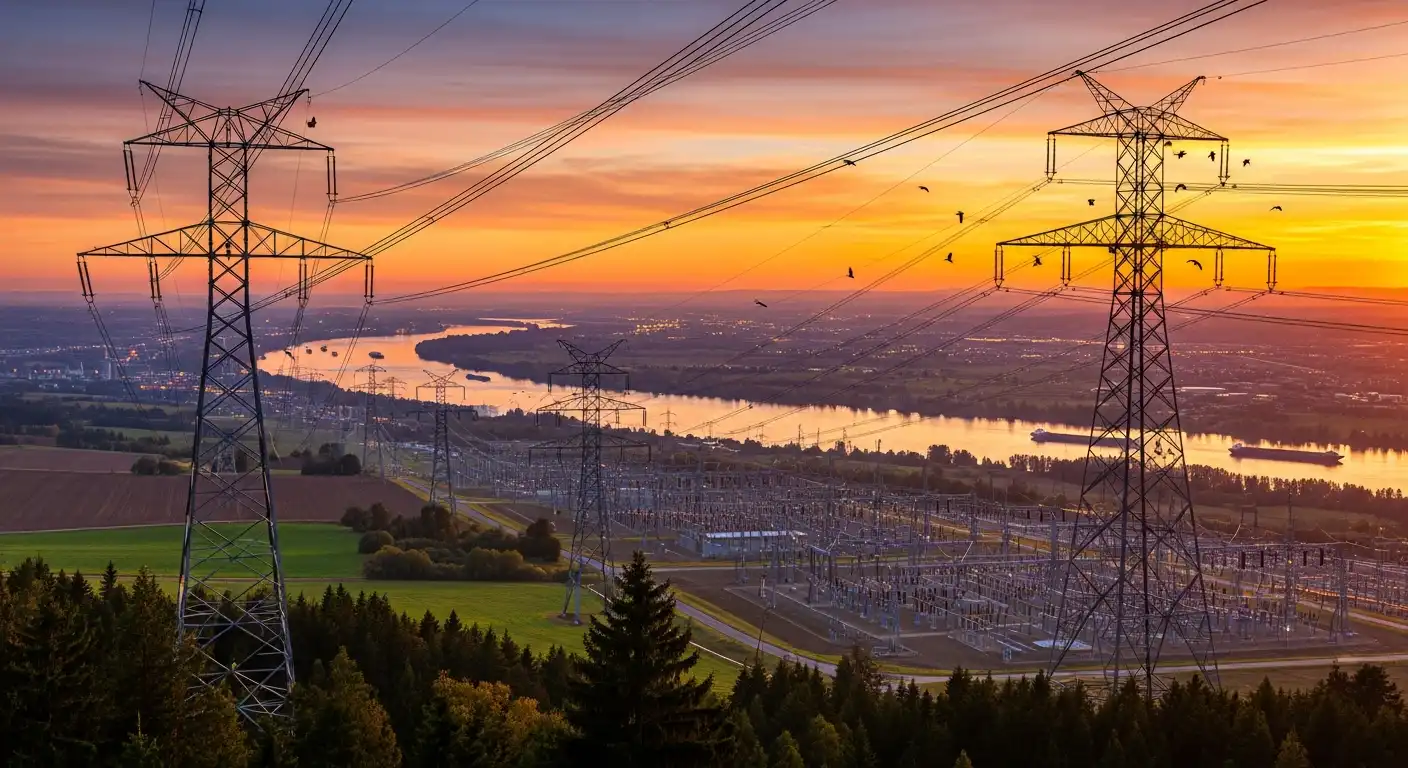
Electrical power grids across the United States have reached a critical operational tipping point as extreme, widespread summer heatwaves featuring temperatures exceeding 100°F converge with the explosive electricity consumption of artificial intelligence data centers. Regional transmission organizations from the Mid-Atlantic to the Sunbelt are issuing emergency grid warnings, deploying demand-response measures, and operating electrical infrastructure at maximum thermal limits. The simultaneous pressure of residential cooling demand and gigawatt-scale data center loads is exposing severe structural vulnerabilities in North America’s aging power grid.
The crisis is reflected in wholesale power market pricing. In the PJM Interconnection market—the nation’s largest regional power grid, serving 65 million people across 13 states—annual capacity auction clearing prices exploded by over 800% to $269.92 per megawatt-day. The extraordinary price spike was driven directly by accelerating data center load additions in Northern Virginia and Ohio alongside the scheduled retirement of older fossil fuel power plants, signaling an acute physical shortage of available generating capacity.
For technology hyperscalers including Microsoft, Amazon Web Services, Alphabet, and Meta Platforms, grid constraints represent an immediate operational hurdle. Technology giants are committing over $200 billion annually in capital expenditures to construct liquid-cooled artificial intelligence server halls. However, utility providers in major data center markets are informing corporate developers that connecting new 1,000-megawatt data center campuses will require waiting 4 to 7 years due to long queues for electrical grid impact studies and severe shortages of heavy electrical hardware.
TechGolly provides a detailed analysis of the United States power grid tipping point, evaluating heatwave grid physics, PJM capacity market surges, regional transmission bottlenecks in Texas and the Midwest, equipment supply chain backlogs, Big Tech’s behind-the-meter power strategies, and long-term grid modernization solutions.
Unpacking the Dual Forces Driving the Grid Tipping Point
To understand why United States power grids are reaching operational limits, energy engineers and corporate strategists must analyze the physical interaction between extreme ambient temperatures and continuous industrial electricity loads. When summer weather systems push temperatures above 100°F across multi-state regions, electrical transmission systems suffer from a phenomenon known as thermal derating.
High ambient temperatures cause overhead copper and aluminum transmission wires to expand and sag toward the ground, reducing the maximum electrical current that wires can safely carry without touching tree branches or triggering automatic circuit breaker trips. Thermal derating can reduce the physical transfer capacity of high-voltage transmission corridors by 10% to 15% at the exact moment when consumer demand reaches annual peaks.
Simultaneously, high ambient heat reduces the operating efficiency of critical substation transformers and power plant cooling systems. Step-up power transformers, which increase electrical voltage for long-distance transport, generate intense internal heat during operation. When surrounding air temperatures remain near 100°F overnight, transformer cooling fans work continuously at maximum speed, accelerating equipment wear and increasing the likelihood of catastrophic insulation failures.
The arrival of massive artificial intelligence data center clusters fundamentally alters the grid load profile. Traditional summer peak loads were cyclical: residential air conditioning usage surged during hot afternoon hours and dropped significantly overnight, giving electrical transformers and underground cables time to cool down.
In contrast, gigawatt-scale artificial intelligence server halls draw continuous, flat power loads 24 hours a day, 365 days a year. A single gigawatt-scale data center campus consumes 1,000 megawatts of electricity—enough power to supply 800,000 residential homes. When continuous 1,000-megawatt data center draws are superimposed over extreme afternoon residential cooling peaks, regional power grids lose their traditional night-time cooling windows, driving transmission equipment into thermal exhaustion.
PJM Interconnection Capacity Market Explosion
The financial epicenter of the grid crisis is visible in the recent capacity auction results published by PJM Interconnection. PJM manages the high-voltage transmission grid spanning Delaware, Illinois, Indiana, Kentucky, Maryland, Michigan, New Jersey, North Carolina, Ohio, Pennsylvania, Tennessee, Virginia, West Virginia, and the District of Columbia.
In PJM’s annual capacity auction—a market mechanism designed to guarantee that sufficient power plant generation will be available three years in advance—clearing prices surged from $28.92 per megawatt-day in the previous auction up to $269.92 per megawatt-day. In heavily constrained data center sub-regions, such as Northern Virginia’s “Data Center Alley,” capacity prices cleared at even higher localized caps.
The 800% capacity price explosion was caused by two intersecting trends:
First, the rapid physical expansion of artificial intelligence data centers in Northern Virginia and central Ohio added thousands of megawatts of new continuous baseload electricity demand to PJM’s long-term forecast models.
Second, strict state and federal environmental compliance rules led to the accelerated retirement of older coal-fired power plants before replacement baseload generation could be permitted and constructed.
The multi-billion-dollar cost of higher capacity auction clearing prices will pass directly through to regional electricity consumers. Commercial real estate operators, industrial manufacturing factories, and everyday residential homeowners across the Mid-Atlantic region will face estimated monthly utility bill increases of 15% to 30% over upcoming billing cycles as utilities recover capacity payments.
Regional Grid Stress: ERCOT, MISO, and the Southern Energy Corridor
While PJM captures national headlines due to its high concentration of technology data centers, regional power grids across the American Sunbelt and Midwest are experiencing similar operational stress.
In Texas, grid operator ERCOT recorded record-breaking peak electricity demand approaching 85,000 megawatts during recent summer heat domes. Texas has become a primary expansion hub for data center developers seeking rapid land permitting and low corporate tax environments. However, ERCOT’s isolated power grid—which maintains limited electrical interconnections with neighboring states—relies heavily on intermittent solar and wind generation.
During summer heat domes, extreme high-pressure weather systems frequently cause wind generation across West Texas to drop to near zero. When solar generation fades during late afternoon hours, grid operators must rapidly ramp up simple-cycle natural gas turbine facilities and utility-scale battery energy storage systems to prevent grid frequency drops. The sudden loss of wind generation during peak 100°F afternoon heat forces ERCOT to issue voluntary conservation appeals, asking residents and industrial facilities to reduce power consumption.
In the Midwest and South, grid operators MISO and Georgia Power are managing unprecedented data center expansion requests. Georgia Power updated its long-term integrated resource plan, revealing that projected electricity demand growth over the next decade is 17 times higher than previously estimated, driven almost entirely by data centers, electric vehicle battery plants, and solar panel manufacturing facilities.
To prevent localized power blackouts during summer heatwaves, MISO and Georgia Power are issuing Level 1 and Level 2 Energy Emergency Alerts. Under emergency protocols, utilities activate industrial demand-response programs, paying large commercial manufacturers to shut down production lines during peak afternoon hours to ensure sufficient electricity remains available to power hospital facilities, residential homes, and critical computing infrastructure.
Equipment Supply Chain Bottlenecks: Transformers and Turbines
Even when state utility commissions approve new power plant construction and grid expansion plans, utility companies face severe physical manufacturing bottlenecks for specialized heavy electrical equipment.
High-voltage step-up transformers—critical industrial units that convert power plant electricity to 500-kilovolt transmission levels—currently face order-to-delivery lead times of 3 to 4 years from major global manufacturers including Siemens Energy, GE Vernova, and Hitachi Energy. Prices for large power transformers have increased by over 80% since 2020 due to global shortages of specialized raw materials, specifically high-grade grain-oriented electrical steel and heavy copper windings.
Similarly, heavy-duty industrial gas turbines used in combined-cycle natural gas power plants are virtually sold out through the late 2020s. Global turbine manufacturers are running production lines at maximum capacity, with backlog order books extending past 2028.
These equipment delivery lead times create a major operational mismatch. A technology company can construct an artificial intelligence data center building and install thousands of server racks in 18 to 24 months. However, the electric utility supplying that building cannot obtain primary step-up transformers, high-voltage circuit breakers, and gas turbines in less than 36 to 48 months, leaving fully built data centers sitting un-energized as “shell” facilities waiting for power connections.
Big Tech’s Energy Pivot: Behind-the-Meter Power and Nuclear Off-Take Deals
Recognizing that public utility grid interconnections cannot keep pace with artificial intelligence growth, major technology hyperscalers are deploying corporate capital to build private, off-grid power solutions and secure dedicated zero-carbon baseload energy.
A rapidly growing trend among data center developers is behind-the-meter generation. Rather than waiting 5 years to connect to the public transmission grid, technology companies are constructing dedicated natural gas power plants or solar-plus-battery microgrids co-located directly beside server hall buildings. Operating behind the meter allows data center operators to generate electricity locally, bypassing regional utility queues and beginning server operations years faster.
Simultaneously, Big Tech’s binding corporate sustainability commitments are driving a historic commercial renaissance in nuclear power. Because technology companies operate under strict carbon-reduction mandates targeting 100% clean energy coverage by 2030 or 2040, they are providing the private capital required to restart closed nuclear facilities and commercialize advanced Small Modular Reactors.
In a landmark corporate energy agreement, Constellation Energy contracted to restart the 835-megawatt Three Mile Island Unit 1 nuclear reactor in Pennsylvania—renamed the Crane Clean Energy Center—under a 20-year Power Purchase Agreement with Microsoft. The agreement will deliver 100% of the plant’s electricity directly to power Microsoft data centers across the Mid-Atlantic region.
Amazon Web Services executed a similar strategic move, acquiring a 960-megawatt nuclear-powered data center campus in Pennsylvania located adjacent to Talen Energy’s Susquehanna nuclear station. The acquisition allows Amazon to connect its server halls directly to the nuclear power plant’s high-voltage busbar, drawing clean nuclear electricity without burdening local municipal transmission networks.
Google joined the advanced nuclear movement by signing a corporate agreement with Kairos Power to construct a portfolio of advanced molten-salt reactors delivering 500 megawatts of clean power by 2035. These multi-billion-dollar corporate commitments provide advanced reactor developers with guaranteed long-term revenue streams, satisfying institutional bank underwriting requirements and unlocking private debt capital for greenfield reactor construction.
Ratepayer Backlash and Public Utility Commission Friction
The concentration of data center power demand and rising electricity prices are generating intense political and social friction across state legislatures and local communities.
In major data center states—including Virginia, Ohio, Georgia, Maryland, and Texas—residential consumer advocates and industrial manufacturing trade groups are organizing public protests and filing formal legal complaints with state Public Utility Commissions. Local communities argue that residential families and small business owners should not pay higher monthly utility bills to fund multi-billion-dollar high-voltage transmission lines and substation upgrades that serve private technology corporations.
State utility commissioners are responding by enforcing strict protective regulations. Utility commissions are requiring data center developers to sign special high-density load contracts that require technology companies to pay 100% of dedicated transmission and substation construction costs upfront.
Furthermore, state regulators are implementing strict exit-fee structures and minimum-take contractual clauses. If a technology company builds a data center and later reduces its power consumption or closes the facility, special contract clauses require the company to continue paying fixed capacity charges for 10 to 15 years, ensuring that remaining residential ratepayers are not left holding unrecoverable utility debt.
Strategic Outlook for National Energy Infrastructure and Grid Modernization
Resolving the United States power grid tipping point will require a multi-decade overhaul of national energy policy, transmission planning, and electrical engineering standards.
To expand grid throughput without waiting 10 years for new high-voltage transmission corridors, electric utilities are deploying advanced grid-enhancing technologies. Replacing legacy steel-reinforced ACSR conductor cables with advanced composite core conductors allows utilities to double the electrical current capacity of existing transmission towers without requiring new land rights-of-way or lengthy environmental permits.
Simultaneously, the Federal Energy Regulatory Commission is executing FERC Order 1920, a landmark regulatory mandate that requires regional grid operators to execute long-term, 20-year transmission planning that accounts for changing generation mixes, extreme weather trends, and surging industrial technology loads.
Ultimately, the convergence of 100°F+ heatwaves and the artificial intelligence boom has highlighted a fundamental truth: the digital economy is anchored to physical energy infrastructure. The future expansion of artificial intelligence, cloud computing, and advanced technology manufacturing will be governed not by algorithmic code, but by the speed at which engineers can build, power, and protect the physical electrical grid.
Key Takeaways for Technology Executives, Utilities, and Investors
The tipping point facing United States electrical power grids offers vital strategic insights for technology executives, utility managers, cloud architects, and institutional investors.
First, energy procurement must be integrated into early-stage technology planning. Technology companies can no longer treat electricity as a ubiquitous utility; securing long-term power generation and grid interconnection agreements must precede real estate and hardware acquisition.
Second, behind-the-meter generation and advanced nuclear power represent high-conviction investment sectors. Developing co-located natural gas facilities, long-duration battery storage, and Small Modular Reactors will yield high financial returns as technology hyperscalers deploy capital to secure zero-carbon baseload power.
Third, supply chain lead times must dictate project scheduling. Utility executives and data center developers must place advance orders for large power transformers, circuit breakers, and gas turbines years before breaking ground on physical construction.
Finally, public-private alignment is essential for sustainable growth. Technology corporations that partner transparently with local utilities, invest in regional grid modernization, and protect local ratepayers from unfair cost shifting will secure community support and build the resilient physical foundation required to power the future digital economy.