Key Points:
- Foreign ministers of Japan, Australia, India, and the U.S. agreed to mobilize up to $20 billion for critical mineral supply chains.
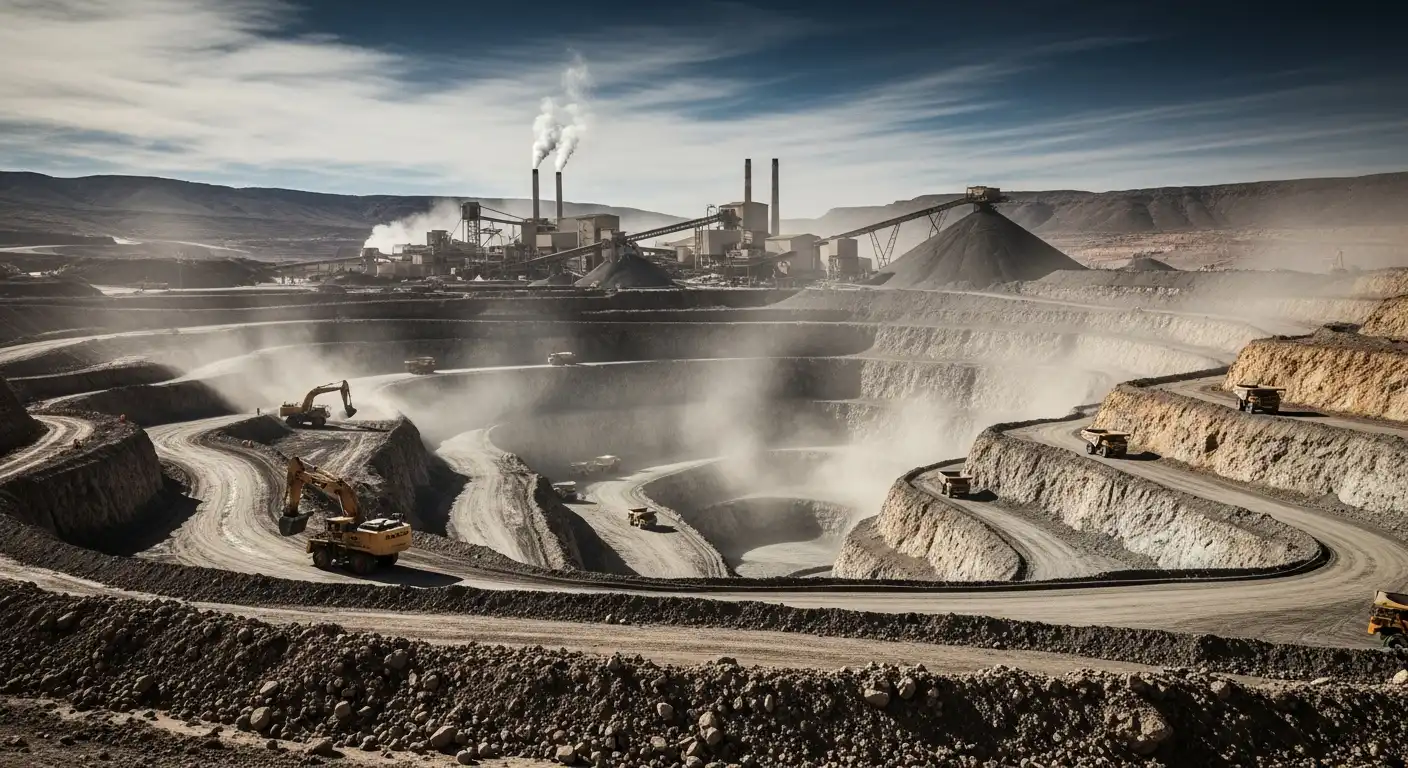
- The initiative will fund mining, processing, and recycling to break China’s monopoly on strategic rare earth metals.
- The four democracies also agreed to collaborate on the development of vital port infrastructure in the Pacific island nation of Fiji.
- Beijing strongly opposed the gathering, warning against “exclusive small blocs” and regional confrontation in the Indo-Pacific.
The foreign ministers of the Quadrilateral Security Dialogue, or the Quad, have launched a massive financial initiative to secure global supply chains for critical minerals and energy. Meeting in New Delhi on Tuesday, May 26, 2026, the top diplomats of Japan, Australia, India, and the United States pledged to mobilize up to $20 billion in combined government and private sector support. The highly strategic agreement aims to establish alternative networks for mining, processing, and recycling, directly countering China’s growing dominance and assertive behavior in the tech-hardware supply chain.
The newly announced $20 billion initiative marks a major shift for the Quad from a diplomatic talk-shop into an active, project-focused economic alliance. Over the past year, China has steadily tightened its export controls on critical minerals and rare earths, causing severe panic among Western electronics, defense, and electric vehicle manufacturers. Today, China controls approximately 70% of global rare earth mining and over 90% of the world’s refining capacity. Japanese Foreign Minister Toshimitsu Motegi expressed serious concerns over these export restrictions, emphasizing that securing these strategic inputs is essential to maintain the technological lead of democratic nations.
Beyond critical minerals, the foreign ministers discussed closer cooperation on regional energy security. The ongoing conflict in the Middle East has severely disrupted global shipping routes, particularly transit through the Strait of Hormuz. Australian Foreign Minister Penny Wong stated that Canberra strongly opposes any plans to impose transit or passage fees in the strait, which Iran has effectively closed. With the U.S.-Israeli strikes on Iran since late February driving fuel prices past historic highs, the ministers agreed that diversifying energy supplies is a national security priority.
To strengthen regional connectivity and counter Beijing’s growing maritime influence, the Quad nations also agreed to collaborate on port infrastructure development in Fiji, a Pacific island nation. By funding and building robust, modern port facilities, the alliance hopes to bind Pacific island nations closer to democratic trade networks. U.S. Secretary of State Marco Rubio highlighted this proactive approach, stating that the group’s collective goal is to bring its unique capabilities to bear on some of the world’s most significant problems, including transport logistics, energy security, and freedom of navigation.
The high-profile gathering also laid the groundwork for the next official Quad leaders’ summit, although the ministers have not yet finalized a specific date. The alliance has faced significant scheduling hurdles recently. The alliance shelved an Indian summit planned last year due to diplomatic strains between Washington and New Delhi over India’s purchases of discounted Russian oil. Additionally, regional disagreements surrounding mediation efforts after armed clashes between India and Pakistan had temporarily slowed down cooperation. This successful ministerial meeting signals a crucial reset in their multilateral relations.
Securing this agreement represents a major diplomatic victory for the ministers, especially under the second administration of U.S. President Donald Trump, who has frequently expressed skepticism toward traditional multilateral alliances. Tuesday’s gathering represents only the third Quad foreign ministers’ meeting since Trump returned to the White House. By focusing strictly on tangible, high-value economic and supply chain security initiatives—such as the $20 billion mineral fund—proponents have successfully convinced the Trump administration of the alliance’s practical utility.
Unsurprisingly, the meeting of the four democratic nations triggered a sharp, negative reaction from Beijing. Chinese Foreign Ministry spokeswoman Mao Ning publicly opposed the gathering, describing the Quad as an “exclusive small bloc” designed to foster regional confrontation. She warned that state-to-state cooperation must remain conducive to regional peace and stability rather than targeting third parties or harming mutual trust among neighboring countries. Beijing has frequently accused the U.S. of attempting to build an “Asian NATO” to contain its rise.
As the Quad nations begin implementing their $20 billion critical minerals roadmap, the global technology and defense sectors will closely monitor their progress. Rebuilding complex, global refining and mining infrastructure will require years of sustained capital expenditure and close collaboration with private corporations. However, as geopolitical tensions in the Middle East and East Asia continue to threaten traditional trade routes, the Quad’s proactive focus on energy and material security remains essential to ensure that democratic economies can withstand the next major global supply shock.