Key Points:
- South Korea’s major retail companies recorded a 7.2% year-on-year increase in revenue in April, driven by strong demand across both online and offline channels.
- Online retail platforms now dominate the domestic market, accounting for a massive 60.3% share of total retail sales.
- High-end department stores logged a stellar 21.7% surge in sales, representing a tenth consecutive month of growth.
- Traditional offline supermarkets experienced a 6.6% decline in revenue as consumers increasingly shifted to e-commerce platforms.
South Korea’s retail sector is experiencing a significant growth wave, driven by a powerful double engine of online marketplaces and a major rebound in high-end brick-and-mortar shopping. According to official government data released by the Ministry of Trade, Industry and Energy on Wednesday, May 27, 2026, total retail sales in April climbed 7.2% compared to the same period last year. This solid growth highlights a resilient domestic consumer market, even as households navigate broader macroeconomic challenges, including rising food and energy prices.
The newly released data confirms that digital shopping has firmly established itself as the dominant force in the country’s multi-billion-dollar retail economy. Online retail platforms accounted for an unprecedented 60.3% of all domestic retail sales in March, leaving traditional physical stores to split the remaining portion of the market. This substantial online dominance reflects the rapid integration of digital technologies into daily life in South Korea, where fast-delivery networks, mobile payment systems, and AI-driven personalized shopping applications have become the norm.
In April, revenue at major online retail platforms climbed 7.5% year-on-year. This digital expansion relied heavily on several key categories, with cosmetics, groceries, and home appliances leading the charge. Consumers are increasingly trusting e-commerce networks to deliver fresh food and high-value household electronics directly to their doorsteps. Analysts suggest that the convenience of automated subscription services and targeted digital discount campaigns will likely keep this online momentum strong throughout the second half of 2026.
Despite the massive pressure from the digital sector, traditional physical stores proved remarkably resilient, posting a collective 6.7% year-on-year sales growth. However, this offline recovery was highly uneven, benefiting premium and local convenience formats while leaving traditional mid-market retailers behind. The contrasting fortunes of different physical formats demonstrate that to survive in an era dominated by e-commerce, physical stores must offer unique experiences or ultimate local convenience.
High-end department stores emerged as the absolute star of the physical retail recovery, registering a spectacular 21.7% year-on-year revenue surge. This marked the tenth consecutive month of revenue growth for department stores, indicating that wealthier consumers continue to spend heavily on luxury experiences. These establishments saw their sales improve significantly across all major product categories, including premium fashion lines, high-end accessories, and gourmet food halls, proving that physical retail can still thrive by targeting affluent demographics.
Local convenience stores also contributed to the physical retail recovery, registering a steady 3.3% gain in monthly revenue. Like department stores, convenience stores marked their tenth consecutive month of positive sales growth. The recent boost in revenue relied heavily on a surge in sales of processed food and cold beverages. This category enjoyed a major lift as early-season heat blanketed the Korean Peninsula, prompting consumers to flock to local stores to purchase refreshing drinks and packaged snacks.
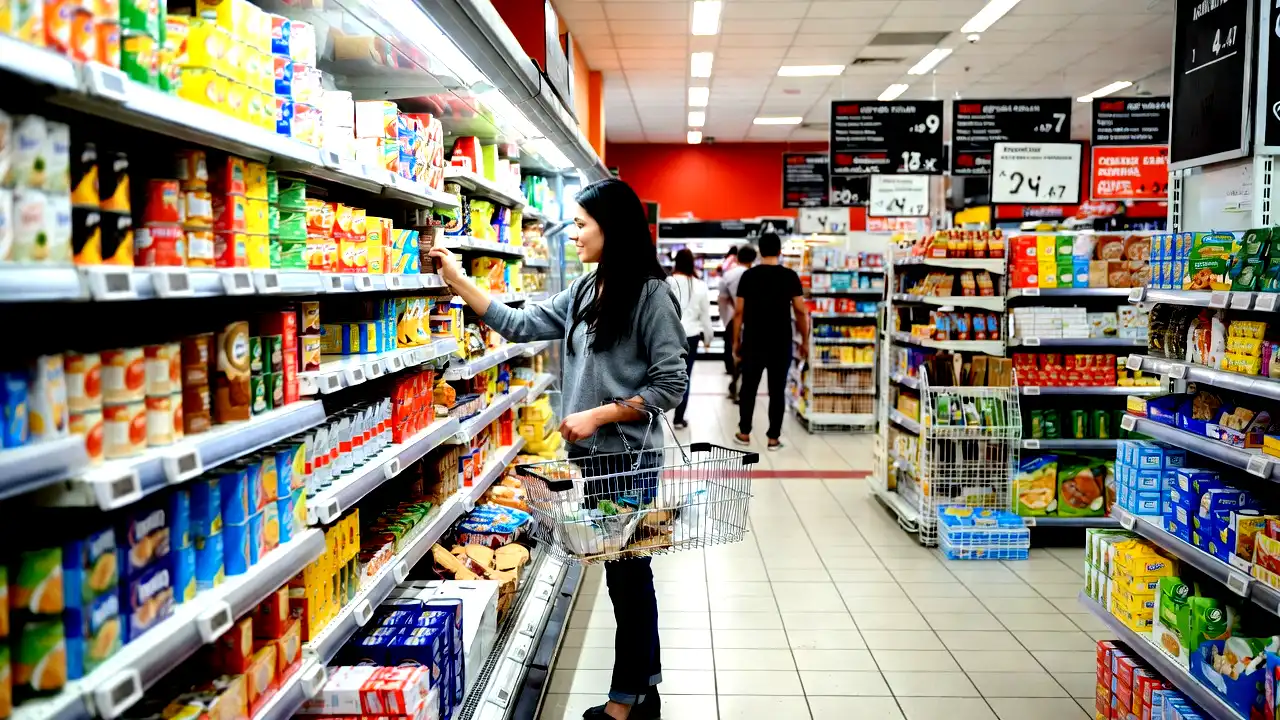
In contrast, traditional offline supermarkets became the primary casualties of the ongoing expansion of e-commerce. Supermarkets saw their monthly revenue drop by 6.6% year-on-year, as consumers increasingly bypass physical grocery aisles in favor of next-day online grocery delivery services. This structural decline has forced major supermarket chains to rethink their business models, with many closing unprofitable locations or converting physical space into automated micro-fulfillment centers to support their own online delivery fleets.
The shift in retail power has completely reorganized the industry’s market share dynamics. According to the ministry’s compiled data for March, online platforms accounted for the largest share of the market at 60.3%, while department stores held a 15.3% share of total retail sales. Local convenience stores followed closely behind at 14.6%, while traditional supermarkets saw their share shrink to just 7.9%. This market share distribution proves that the domestic retail landscape has divided into two primary worlds: fast, convenient digital platforms and high-end, experiential luxury malls.
As South Korea heads into the summer months, the divergence between online and offline retail will likely continue to reshape municipal development and urban planning. While the massive 60.3% online market share demonstrates that digital platforms have won the battle for everyday commodity purchases, the 21.7% surge in department store sales proves that consumers still value physical luxury experiences. Retailers who can successfully bridge these two worlds through omni-channel technologies and smart logistics will remain the ultimate winners of the modern consumer economy.