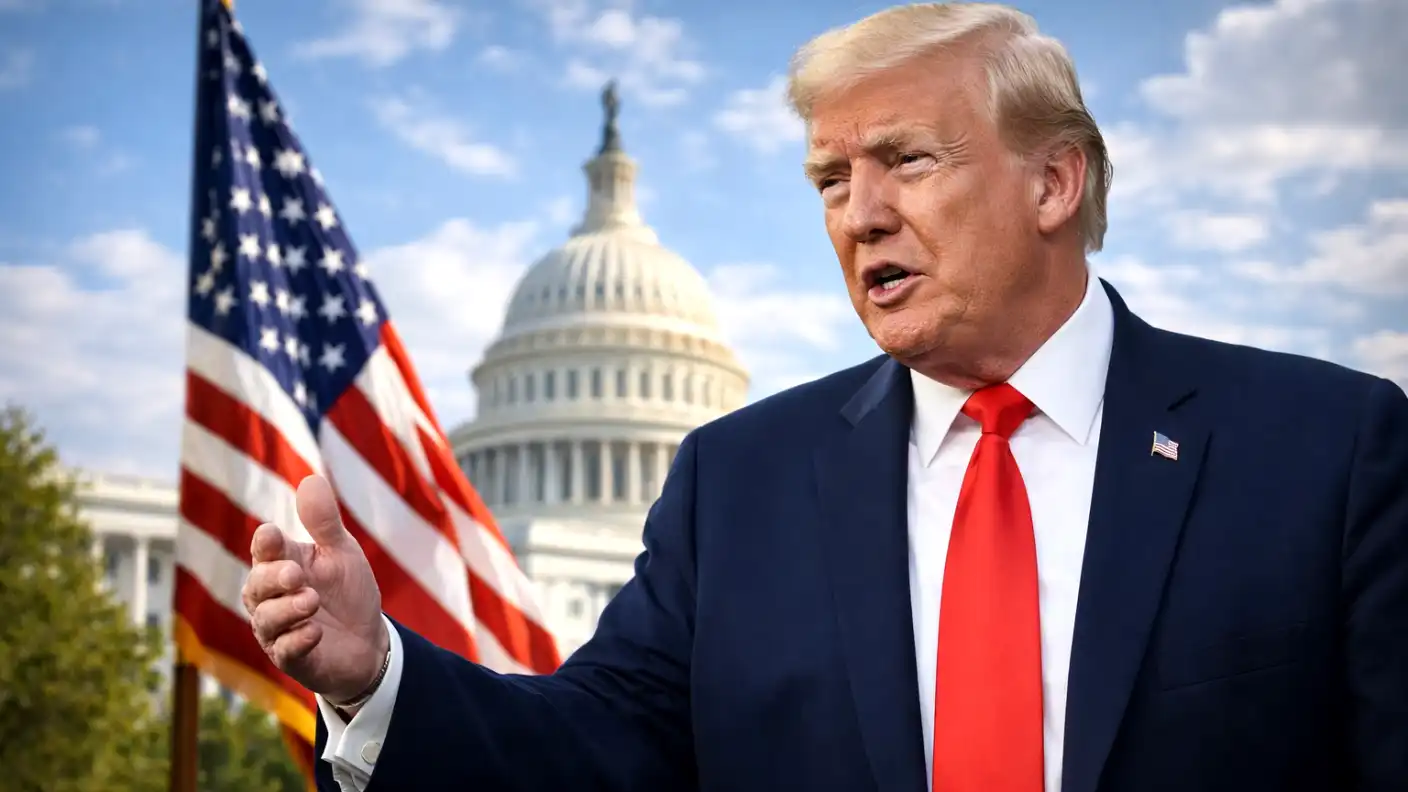
The global trade landscape just underwent its most radical shift in nearly a century. President Donald Trump has officially invoked the Tariff Act of 1930—historically known as the Smoot-Hawley Tariff Act—to restructure American trade relations. This move represents a dramatic return to the era of industrial protectionism. By utilizing these long-dormant executive powers, the administration intends to bypass traditional congressional debates and implement sweeping, unilateral tariffs on a vast array of imported goods. This decision sends a clear, unmistakable message to international trading partners: the era of frictionless globalization is officially over, replaced by a new framework of national economic sovereignty.
The 1930 legislation holds a dark reputation in modern economic history, as it famously intensified the Great Depression by triggering a global trade war. However, the current administration views the law through a completely different lens. White House economic advisers argue that the act provides the executive branch with the necessary legal teeth to defend domestic manufacturing, punish foreign entities that manipulate currency, and force multinational corporations to shift their factory footprints back to American soil. Whether this bold gamble will revitalize the manufacturing heartland or spark a catastrophic, multi-billion-dollar retaliatory trade war remains the central question facing the global economy.
The Legal Foundation: Rediscovering the 1930 Tariff Act
For generations, lawyers and trade experts considered the Tariff Act of 1930 a relic of a bygone era. The original legislation was signed during a period of deep economic despair, designed to protect American farmers and industrial workers from foreign competition. The law gave the executive branch broad authority to set import duties, a power that Congress gradually reclaimed and limited over the subsequent decades through the creation of the modern, rules-based international trade system.
President Trump’s decision to dust off this century-old law relies on a controversial legal interpretation of executive privilege. The administration argues that the act’s language remains legally active and confers upon the President the right to impose duties without waiting for formal congressional approval. This interpretation effectively removes the traditional, multi-year consultative processes used by the U.S. Trade Representative, allowing the White House to impose significant, market-moving taxes on specific countries or industrial sectors with a simple signature.
This pivot toward unilateralism highlights the White House’s impatience with the current global trade system. Trade officials have spent years expressing their frustration with the slow-moving, often paralyzed dispute-resolution mechanisms of the World Trade Organization. By invoking 1930-era powers, the administration is intentionally sidestepping these international forums, choosing instead to engage in direct, hardball bilateral negotiations where the threat of immediate, devastating tariffs serves as the primary diplomatic language.
Impact on Global Supply Chains and Domestic Manufacturing
The implementation of these tariffs will force a massive, multi-billion-dollar reorganization of global supply chains. Multinational corporations that spent thirty years optimizing their logistics for low-cost production in East Asia and Latin America are now facing an existential choice: stay abroad and pay the high, tariff-inflated import tax, or pack up their factories and build new facilities inside the United States.
Industry analysts estimate that the initial wave of these tariffs will cover over $500 billion in annual imports. This effectively acts as a major, regressive consumption tax on American families, as retail companies will be forced to pass these increased import costs directly to consumers. However, the White House maintains that the resulting domestic job creation and the strengthening of the industrial supply base will eventually far outweigh these short-term inflationary costs, creating a more resilient, self-sufficient American economy.
Automotive and Semiconductor Industry Consequences
The automotive and semiconductor sectors stand directly in the crosshairs of this new trade policy. For decades, automakers built highly integrated supply chains, with components traveling across three different continents before a final car rolled off an assembly line. These supply chains are now being violently disrupted.
Automotive manufacturers who rely on Mexico and Canada for critical parts are scrambling to determine how the new tariffs apply to their specific cross-border workflows. If a vehicle contains more than 15 percent of foreign-sourced content from a country subject to the new tariff regime, the entire vehicle could be subject to an extra 10 percent surcharge. This is forcing carmakers to accelerate their plans to build new battery plants, engine assembly facilities, and chassis factories inside the U.S. to ensure their final products remain tariff-free.
The semiconductor industry faces a similar, highly complex puzzle. While the government already provides massive subsidies under the CHIPS and Science Act, the new tariff regime puts pressure on chip designers to source their entire packaging and testing pipeline within the United States. The goal is to ensure that a technological disruption or maritime blockade in the Pacific cannot bring the entire American digital economy to a standstill.
Reconfiguring the Global Logistics Hubs
The shipping and logistics industry is also bracing for a massive, structural change in global trade flows. As companies move their manufacturing operations out of tariff-heavy countries, the busiest maritime routes in the world will see a significant decline in traffic, while domestic rail, trucking, and inland port traffic in the United States will experience a historic, multi-year boom.
The massive volume of shipping containers that previously moved from Asia to West Coast ports will likely shift toward East Coast and Gulf Coast hubs, as manufacturers look to bring production closer to the major consumer markets of the Eastern United States.
This shift will require billions of dollars in new infrastructure investment, ranging from deep-water port expansions to the construction of massive new industrial logistics centers and high-capacity inland rail yards, completely redefining the industrial map of the American interior.
Economic Strategy: Why the White House Prefers Trade Friction
The administration’s embrace of protectionism is not an accidental policy; it is a fundamental, core element of its broader economic philosophy. White House officials argue that the post-World War II global trade order systematically hollowed out the American middle class by rewarding companies for moving manufacturing jobs to the lowest-cost jurisdiction on the planet.
This belief system holds that true national power is based on physical production, not just digital services or financial engineering. The administration believes that by creating a “tariff wall,” it can force a structural increase in the cost of importing goods, making it once again economically viable to build factories in places like Pennsylvania, Ohio, and Michigan.
Balancing Protectionism with Inflation Risks
The primary political risk of this aggressive strategy is inflation. If the government slaps a 15 percent or 20 percent tax on everything coming into the country, retailers will have no choice but to raise prices. This could easily reignite the high inflation rates that hurt American households in the early 2020s, turning the public against the administration’s trade agenda.
To manage this risk, the White House has focused its tariff efforts on specific, high-value manufacturing sectors and countries that it identifies as “unfair competitors.”
The administration is attempting to thread a narrow needle: raising prices enough to force companies to return to the U.S., but not so much that the average family’s grocery or gasoline bill triggers a massive, voter-led backlash.
This delicate balancing act requires near-constant monitoring of consumer spending data, retail price indices, and corporate profit margins, as officials tweak the tariff lists on a weekly basis to manage the inflationary fallout.
The Role of Industrial Policy and Federal Subsidies
This return to 1930s-style protectionism is being heavily subsidized by 21st-century federal spending programs. The government is not just relying on tariffs to force companies home; it is providing massive, multi-billion-dollar incentives to make that move easy.
Through the Inflation Reduction Act and the Infrastructure Investment and Jobs Act, the administration provides tax credits, low-interest federal loans, and direct cash grants to companies that build manufacturing facilities in the United States.
The goal is to create a powerful, self-reinforcing loop where high tariffs make imports expensive, while federal subsidies make domestic manufacturing incredibly cheap, effectively removing the economic choice from the board and forcing corporate decision-makers to prioritize American soil for their factory footprints.
Challenges to the 1930 Tariff Act Authority
The decision to invoke the 1930 Tariff Act is not without significant, highly volatile legal risk. Legal scholars, constitutional experts, and opposition lawmakers are already preparing to challenge the move in federal court. They argue that the Tariff Act of 1930 was effectively repealed or rendered obsolete by decades of subsequent trade legislation, including the creation of the modern U.S. Trade Representative office and the country’s accession to global trade agreements.
A central point of contention is whether the executive branch can legitimately use a law from the Great Depression era to fundamentally alter the modern, digitalized trade landscape without receiving a specific mandate from Congress. The Supreme Court has increasingly shown a skepticism of expansive executive authority, potentially setting the stage for a landmark court ruling that could either validate the administration’s power to manage trade or permanently restrict the President’s ability to act unilaterally in the economic sphere.
The Congressional Pushback and Bipartisan Skepticism
The legislative branch is far from united on the issue of aggressive protectionism. While many lawmakers in both the Republican and Democratic parties support the goal of bringing manufacturing jobs back to the United States, they are deeply divided over the tariff strategy.
Some legislators worry that by invoking 1930-era powers, the administration is dangerously overstepping its authority and destabilizing the international rules-based order.
If the courts do not intervene, lawmakers are considering new legislation that would limit the scope of the 1930 Act, requiring a mandatory congressional vote before any massive, across-the-board tariff hike can take effect.
This legislative push highlights the extreme fragility of the current trade environment, as any change in the political balance of power in Washington could immediately reverse the administration’s protectionist agenda.
Global Retaliation and the Threat of an International Trade War
The biggest risk remains the retaliatory capacity of the European Union, China, Japan, and other primary trade partners. These nations have already begun drafting their own retaliatory tariff lists, targeting American agricultural exports, industrial goods, and digital services.
If the United States begins to aggressively tax foreign goods, the target nations will strike back, effectively closing off their own markets to American exporters.
This tit-for-tat dynamic creates the risk of a “race to the bottom” where the volume of global trade declines significantly, causing a synchronized, international economic slowdown.
For an economy like the United States, which relies heavily on global demand to support its high-tech exports, a trade war could have severe, unintended consequences, potentially negating the very jobs the administration is trying to create at home.
Looking Ahead: Building the Manufacturing Base of the Future
As the American economy navigates this shift back to protectionism, the most important question for technology companies is how to build a global business in a world of rising trade barriers. The era of pure globalism is over. The new reality requires a “localized-scale” approach, where companies build separate, complete manufacturing ecosystems in every major region where they want to sell their products.
This represents a massive, multi-year, multi-billion-dollar investment challenge. It requires companies to become master logistics experts, building local supply chains, recruiting specialized labor, and navigating the unique regulatory codes of every nation they operate in.
It is a significantly more expensive and complicated way to run a business, but it is the only way to insulate the company from the sudden, unpredictable trade policy shocks that defined the first half of 2026.
As the administration continues to deploy its new trade arsenal, the manufacturing sector will be the primary bellwether for the success of this policy. If the reshoring of semiconductors, electric vehicle batteries, and pharmaceutical ingredients continues at its current, rapid pace, the administration will be vindicated. If the costs of these tariffs lead to persistent, high-level inflation and industrial stagnation, it will trigger a major, highly visible reassessment of the American industrial policy for the remainder of the decade.
The decision to invoke the 1930 Tariff Act is a bold, high-stakes gamble on the future of American industrialism. By intentionally raising the cost of imported goods, the administration is betting that it can force a fundamental, long-term shift in the global supply chain, bringing millions of high-paying manufacturing jobs back to American soil.
This transition will be incredibly expensive, highly volatile, and politically contentious, but it reflects a deep-seated belief that national security and economic sovereignty are the only foundations upon which a lasting, prosperous future can be built.
The coming years will determine whether this aggressive return to protectionism successfully secures the nation’s industrial destiny, or whether it ultimately leaves the globalized economy more fragmented, more expensive, and less efficient for everyone involved.